Israel’s massive strike on Lebanon strains US and Iran’s uneasy ceasefire

An emergency responder works at the site of an Israeli strike, in Al-Mazraa in Beirut, Lebanon, April 8, 2026. REUTERS/Yara Nardi Purchase
Thank you for reading this post, don't forget to subscribe!There’s confusion and disagreement over the Strait of Hormuz and whether Lebanon was part of the deal. Meanwhile, the US and Iran prepare for peace talks in Islamabad this weekend.
Lebanon: Hundreds killed and wounded in Israeli attacks Wednesday
*********************************************************************************************
What we’re covering
• International backlash: Condemnation of Israel’s largest strikes on Lebanon since the war started is mounting. Iran and Pakistan insist Lebanon is part of the ceasefire deal but the US and Israel claim the agreement doesn’t cover Hezbollah in Lebanon
• Fragile ceasefire tested: Iran’s Islamic Revolutionary Guard Corps claimed shipping through the critical Strait of Hormuz stopped following Israel’s massive attack on Lebanon Wednesday which Iran said was a ceasefire violation.
• Talks in Pakistan: Vice President JD Vance, special envoy Steve Witkoff and Jared Kushner will go to Islamabad for talks beginning Saturday. Tehran’s delegation will arrive in the city Thursday night, Iran’s ambassador to Pakistan said. Read how Pakistan became an unlikely bridge between the US and Iran.
• US military: Trump says all US ships, aircraft, weapons, military personnel will remain “in place, in and around, Iran” until a full agreement is reached.AllCatch Up
*********************************************************************************************
Israel says it killed Hezbollah chief’s personal secretary in Beirut strike on Wednesday

By Eugenia Yosef
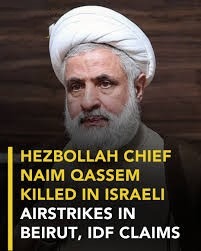
The Israeli military said Thursday it killed Ali Yusuf Harshi, the personal secretary and nephew of Hezbollah deputy chief Naim Qassem, in an airstrike near Beirut on Wednesday.
The Israeli Defense Forces (IDF) described Harshi in a statement as “a close associate and personal adviser to Naim Qassem and played a central role in managing and securing his office.”
The announcement came after a day of massive Israeli strikes in Lebanon, which Israel said was its largest coordinated strike since the war began.
According to the IDF, more than 100 command centers and military sites of the Iran-backed militant group Hezbollah were struck simultaneously across the country. Lebanon’s health ministry said at least 182 people were killed and 890 were wounded in the attacks.
Overnight, Israeli forces continued operations in southern Lebanon. The IDF said it hit two key crossings over the Litani River, which it claims are used by Hezbollah to transfer weapons, rockets and launchers, along with weapons storage facilities, launchers, and command centers in the area.
What’s the status of the ceasefire and shipping in the Strait of Hormuz? It’s murky

By Jessie Yeung

Here’s the latest:
There is more confusion over the already shaky ceasefire, with Iran accusing Israel of breaking it by launching a massive attack on Lebanon. But Israel and the US insist Lebanon is not part of the ceasefire agreement with Iran.
- Israel attacks Lebanon: Israel Wednesday launched its largest strikes on Lebanon since the war began. Lebanese authorities say the attacks have killed at least 182 people and wounded 890 more. Israel said its strikes targeted the Iran-backed group Hezbollah, while Lebanon’s prime minister said it hit unarmed civilians. Iran claims this was a violation of the ceasefire. Pakistan, which mediated talks and presented the two-week ceasefire proposal to US President Donald Trump, has said Lebanon is included in the ceasefire. But Israel and the US are saying otherwise.
- Strait of Hormuz: Iran’s Islamic Revolutionary Guard Corps (IRGC) claimed on Thursday that shipping through the critical waterway slowed sharply and then stopped, following Israel’s bombardment of Lebanon. Marine tracking data showed no ships were transiting the strait early Thursday, after an earlier report that traffic had begun to resume after the ceasefire came into effect. US Vice President JD Vance restated that if Iran does not follow through on promises to reopen the strait, the ceasefire will end.
- The ceasefire terms: Adding to the confusion about the terms of the agreement, Vance said there have been three different 10-point proposals. There is Iran’s initial proposal, which US negotiators immediately rejected; a second draft, which Trump accepted; and a third, “maximalist” version circulating on social media, he said.
- Trump’s comments: All US ships, aircraft, weapons, military personnel will remain “in place, in and around, Iran” until a full agreement is reached, Trump said in a Truth Social post late Wednesday. Iran must have “NO NUCLEAR WEAPONS and, the Strait of Hormuz WILL BE OPEN & SAFE,” Trump added. Earlier this week, he said he would rather the US instead of Iran impose a toll on ships passing through the strait, before later suggesting the US may be involved in securing the waterway in a “joint venture” with Iran. Prior to the war, the strait was an international waterway where no tolls were charged.
- Talks in Pakistan: Vance, special envoy Steve Witkoff and Jared Kushner will go to Islamabad, Pakistan, for negotiations with Iran beginning Saturday. However, the speaker of Iran’s parliament alleged that parts of Iran’s proposal were violated before the talks even begin.
How Pakistan became an unlikely bridge between Washington and Tehran


Analysis by Rhea Mogul and Sophia Saifi in Islamabad
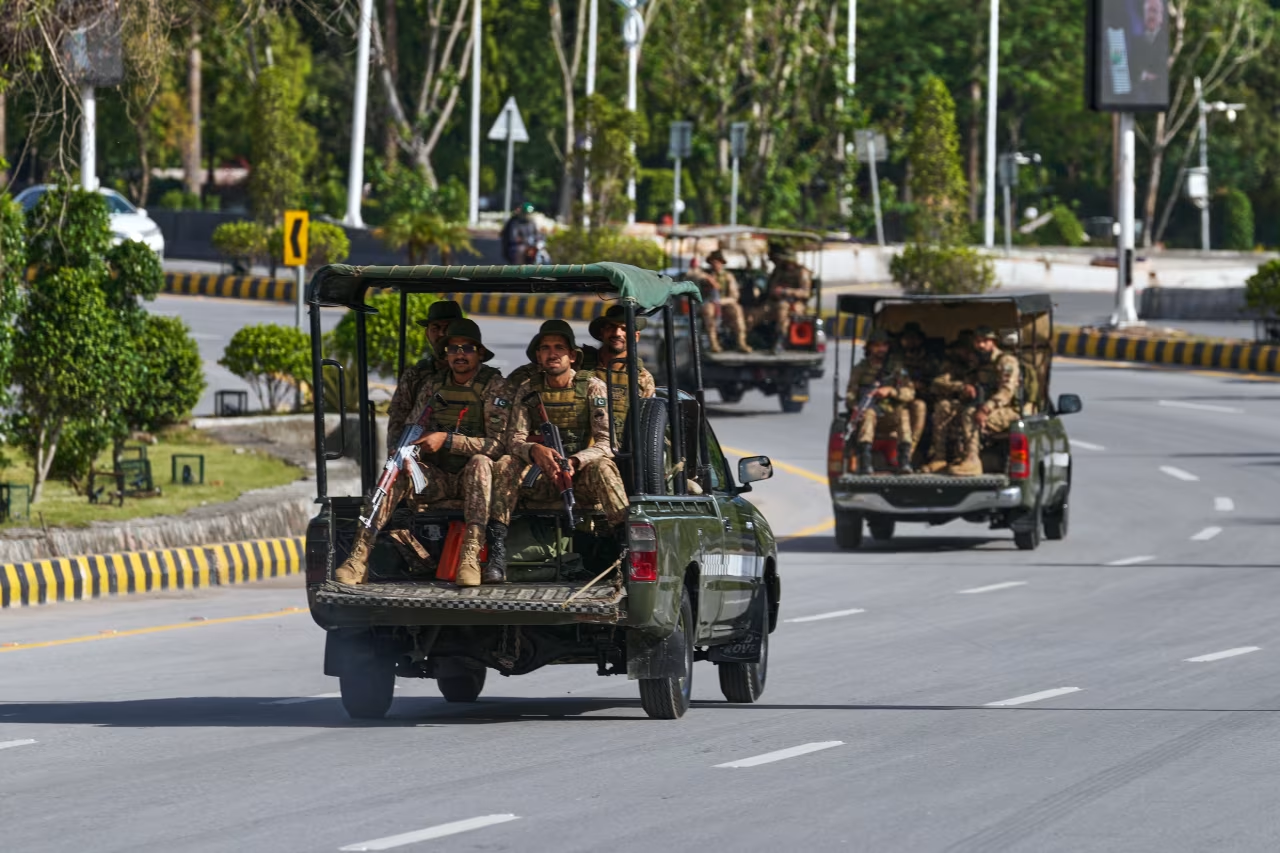
Army troops patrol a street in Islamabad, Pakistan, on Thursday. Anjum Naveed/AP
The streets of Islamabad have been emptied by a sudden two-day public holiday, declared to enforce a strict security lockdown in the Pakistani capital.
Behind the barricades, diplomatic activity is operating at a fever pitch as the world holds its breath for this weekend’s make-or-break ceasefire talks between the United States and Iran.
Pakistan, a nation more frequently making international headlines over rising militant activity and its shaky economy, is hosting the first direct talks between Washington and Tehran, working to end a weeks-long war that has left thousands dead and sent shockwaves across the globe.
It is a stunning pivot for a country historically viewed through the lens of deep security concerns. The breakthrough underscores just how much Islamabad’s relationship with the White House has evolved since President Donald Trump’s first term, when he accused Pakistan of giving Washington “nothing but lies and deceit.”
Vice President JD Vance along with Trump’s special envoy Steve Witkoff and son-in-law Jared Kushner are expected to attend this weekend’s talks, with Vance the most senior US official to visit Pakistan since 2011.
Analysts attribute this transformation to a combination of geographic necessity, deft diplomacy, and shifting regional alliances. Together, these factors have transformed Pakistan into an indispensable mediator, elevating the country’s profile on the global stage.

People wait for transport at a road in Islamabad, Pakistan, Wednesday, April 8, 2026.
Related articleHow Pakistan became an unlikely bridge between the United States and Iran
More than 24 hours into ceasefire, strait traffic still negligible, data shows
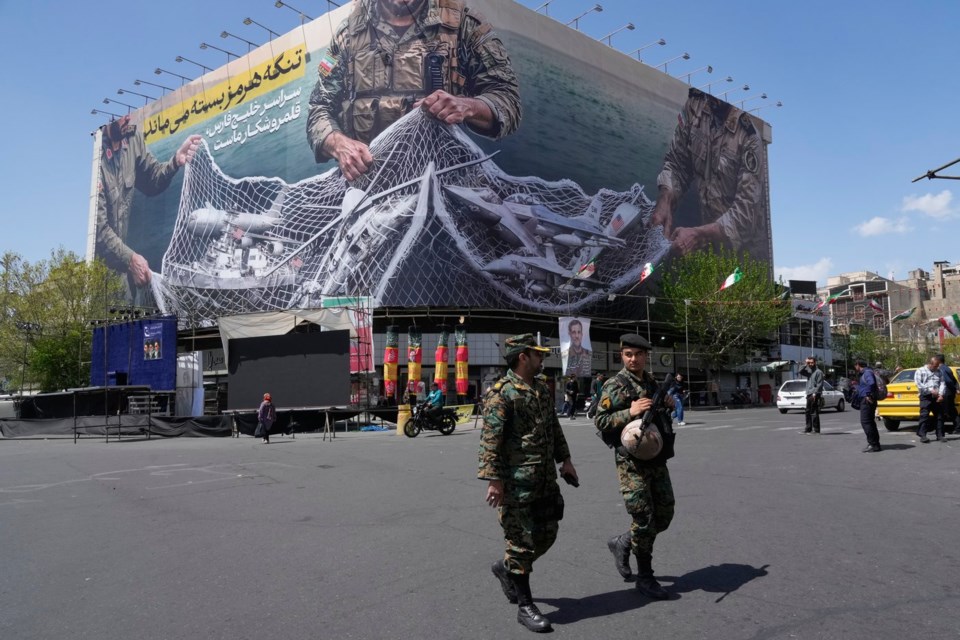
Vessel traffic through the Strait of Hormuz remains negligible more than a day after President Trump announced a two-week ceasefire between the US and Iran.
As of Thursday morning local time, MarineTraffic data showed large clusters of ships still anchored in the Persian Gulf.
According to data from the tracker a day earlier, over 400 tankers, 34 LPG tankers and 19 LNG vessels remain in the region.
Trump said the strait would be “OPEN & SAFE” in a Truth Social post late Wednesday. Earlier, Iran’s Islamic Revolutionary Guard Corps (IRGC) claimed that shipping through the waterway had stopped following Israel’s bombardment of Lebanon, which Tehran said was a violation of the ceasefire.
Since the ceasefire was announced, a small number of ships have transited the strait, including the Greek-owned bulk carrier NJ Earth and Liberian-flagged bulk carrier Daytona Beach.
Prior to the war, an average of 107 cargo-carrying vessels transited the Strait of Hormuz each day, according to Lloyd’s List.
Experts have warned that it will likely take some time before more ships make the transit in larger numbers.
“This is very much a watch and wait situation,” said Simon Kaye, global director of reinsurance for NorthStandard, which provides liability insurance for much of the world’s shipping fleet.
“It can’t be a complete rush to the exits. Each ship needs to get special dispensation to transit the strait,” he said.
“As a result of that, will there be preference for Gulf states, US ships, or anyone else who back-channeled through Tehran?”
Kristie Lu Stout contributed reporting