
Everyone is discussing fuel, but Chef José Andrés claims the Iran conflict is affecting the worldwide food supply.
Thank you for reading this post, don't forget to subscribe!*******************************************************************************************
Here’s the newest update.
• Diplomatic engagement: Iranian authorities and the head of Pakistan’s military are set to convene in Tehran today to talk about communications exchanged between Iran and the US. On Wednesday, the White House expressed hope for an agreement, mentioning that a possible second set of negotiations could take place in Pakistan.
• Israel-Lebanon discussions: According to an Israeli official and President Donald Trump, the leaders of Israel and Lebanon will engage in conversation today for the first time in many years. A source stated that Israel’s security cabinet convened yesterday to consider a potential ceasefire while its military persisted in its attacks on Iran-aligned Hezbollah.
• Naval blockade: Iran’s forces have warned of interference with shipping in the Red Sea should the US persist with its blockade of Iranian ports. Coverage of traffic in the Strait of Hormuz varies, but the key trade route is largely closed.
*********************************************************************************************
Bank of England anticipates increased inflation in several nations, no interest rate reductions in the UK for 2026.
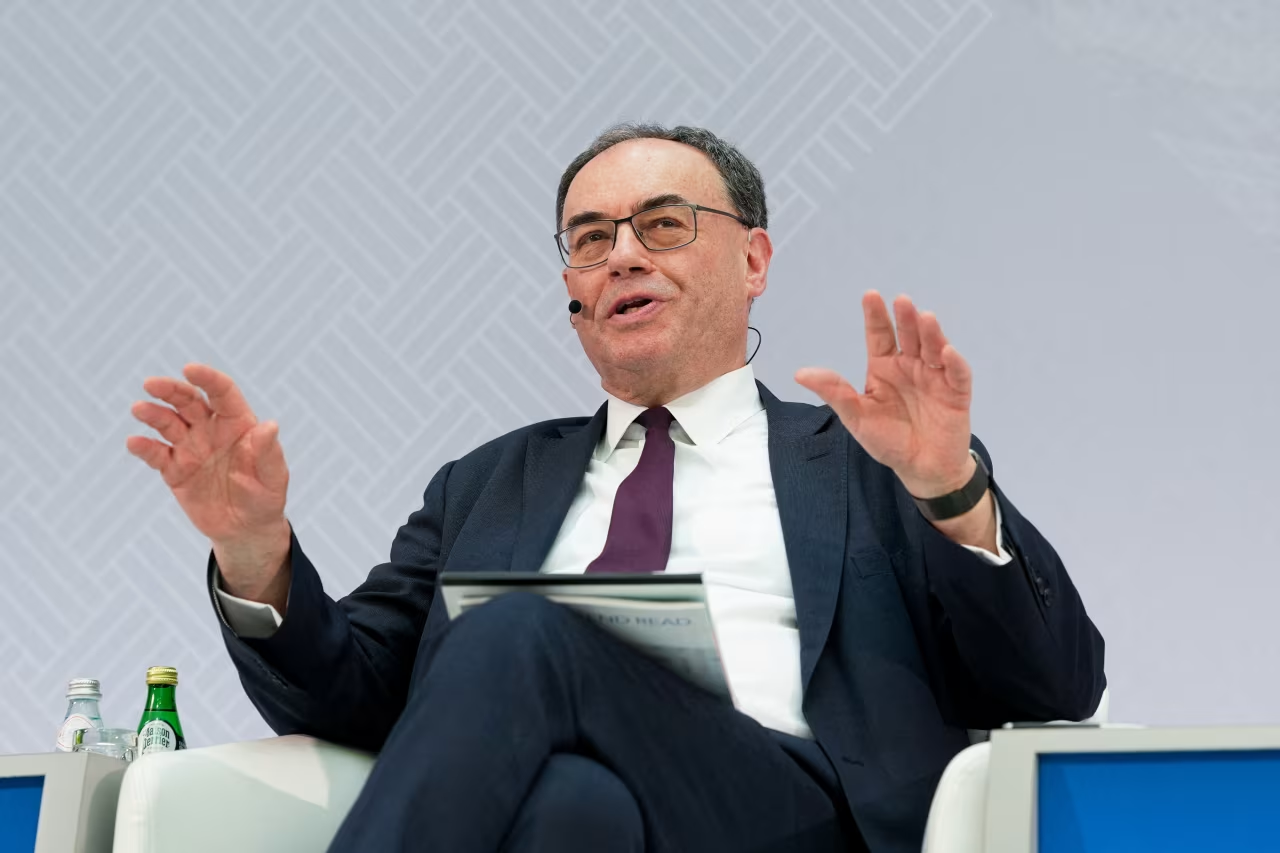
Governor Andrew Bailey of the Bank of England addresses an audience in Washington, DC, on Wednesday. Ken Cedeno/Reuters
Bank of England governor Andrew Bailey has cautioned that the energy crisis triggered by the conflict with Iran will increase prices in several nations and may eliminate the possibility of interest rate cuts in the United Kingdom.
“This represents a significant energy shock,” he stated in a broadcast interview with the BBC on Wednesday during the annual Spring Meetings of the International Monetary Fund and World Bank in Washington, DC. In various regions globally, “inflation is expected to rise and (the conflict) will adversely impact (economic) activity,” he stated.
Bailey noted that elevated inflation and sluggish economic growth have presented central banks with a “highly challenging dilemma.” Prior to the war, he anticipated “one or two” interest rate reductions this year in the UK, but that was no longer the primary forecast of the BOE.
Conversely, the central bank won’t hurriedly increase interest rates but will instead observe the effects of the war on the UK’s economy and inflation. “It’s genuinely too soon to make firm assessments on that,” he stated.
In the meantime, UK finance minister Rachel Reeves stated that it was a “blunder” for the United States to have halted negotiations with Iran and initiated the conflict initially. “I don’t believe we are any safer today than we were a few weeks back,” she stated Wednesday at the Invest In America Forum in Washington, DC.