May 2, 2026

Year: 2026

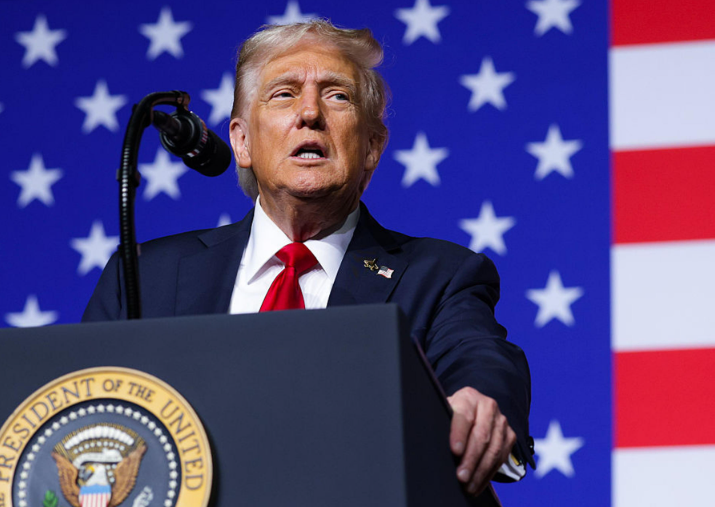
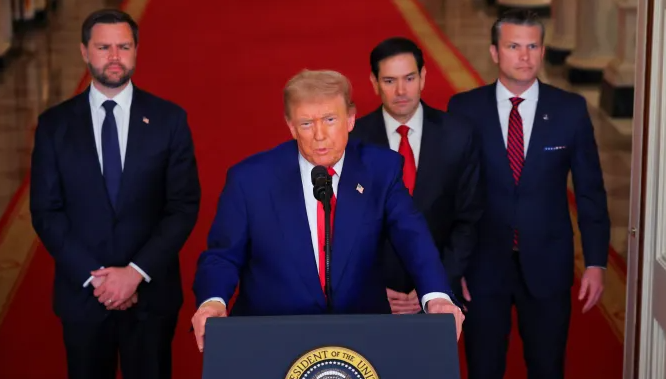
President Donald Trump referred to the US-Israeli conflict with Iran during the state dinner at the White House yesterday.

The dispute has become a point of strain between the United States and the United Kingdom.

“We’re engaged in some work in the Middle East at the moment,” Trump stated, “and it’s going quite well.”

He subsequently emphasized that the US will never permit Iran to acquire a nuclear weapon and asserted that Charles is in agreement.

“We have successfully defeated that specific adversary, and we will never allow that adversary — Charles agrees with me even more strongly — to possess a nuclear weapon.”

US President Donald Trump

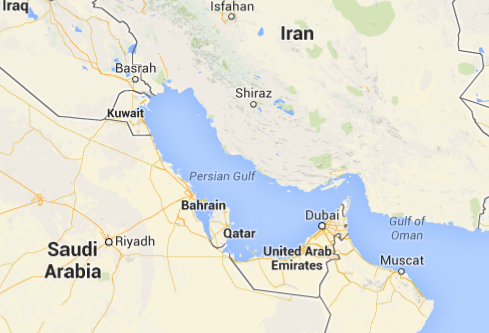
Oil prices are increasing once more today, as worries about the continuing closure of the Strait of Hormuz overshadow reports that the United Arab Emirates will leave the OPEC oil cartel, allowing it to produce more crude.

Brent crude, the worldwide oil standard, increased by 2.3% to $113.8 a barrel, closing at a four-week peak on Tuesday. WTI, the US standard, has risen 2.5% to $102.4 per barrel.

“Prices rising above $110… indicate limited flow through the system’s essential channel,” wrote Stephen Innes, managing partner at SPI Asset Management, in a note.

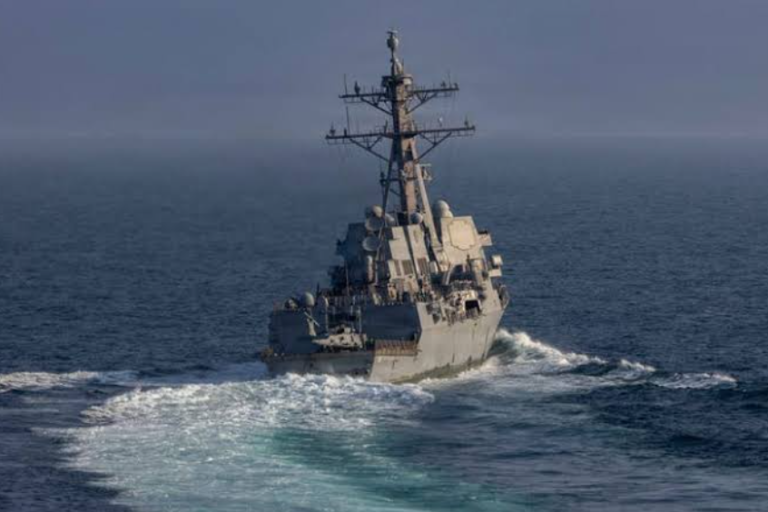
US President Donald Trump has directed his staff to get ready for a prolonged blockade of Iran, the Wall Street Journal reported late Tuesday. Sources close to the process informed Xenix News that mediators in Pakistan anticipate a revised proposal from Iran in the coming days to resolve the conflict.

On Tuesday, the UAE announced it would exit the Organization of the Petroleum Countries later this week, a surprising decision that might boost global oil supply and reduce prices over time.

Profits at the French energy firm TotalEnergies and Swiss bank UBS have surged due to increased oil prices and amplified market volatility stemming from the Iran conflict.

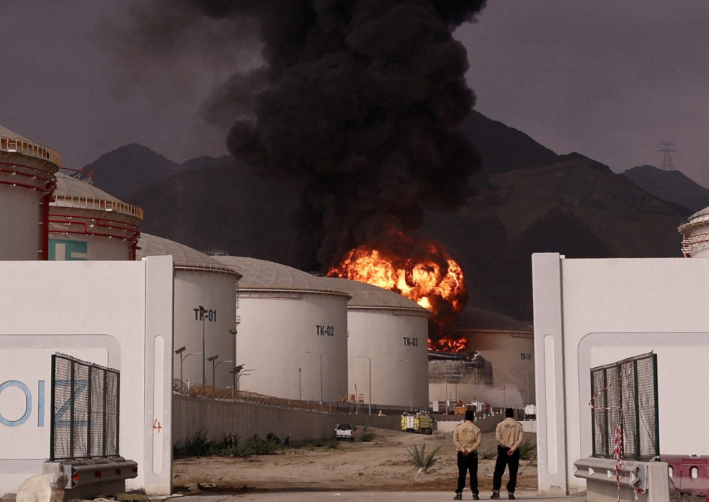
TotalEnergies announced a 29% increase in earnings for the first quarter of the year to $5.4 billion, partially influenced by fluctuations in oil prices. Nonetheless, the conflict has compelled the energy giant to halt certain oil and natural gas operations in the Middle East, impacting approximately 15% of the company’s overall production.

Yesterday, competitor oil firm BP announced that its profits more than doubled in the initial three months of the year due to its traders capitalizing on volatile fluctuations in oil prices. The war-induced benefit has sparked demands for windfall taxes on energy firms to mitigate the escalating expenses of gas and electricity for families.

UBS experienced an 80% increase in first-quarter profit to $3 billion, fueled by financial market fluctuations that spurred client inflows and heightened trading activity. “During the first quarter, we remained committed to assisting clients in maneuvering through a fluctuating and uncertain geopolitical and market landscape,” stated UBS CEO Sergio Ermotti in an earnings report. The bank’s stock surged 4.5% in Zurich, reaching 34.8 Swiss francs ($44).

The United States is somewhat energy independent. It generates more than it uses, yet it still brings in approximately a third of its oil from abroad. This is due to the fact that the light, sweet crude extracted in America is excellent for producing gasoline but poor for generating heavier fuels and other petroleum-derived products. The United States continues to depend on the Middle East for a portion of its crude oil.

Reducing OPEC’s influence might benefit consumers over time. The UAE ranks as the second-largest producer in the area, positioning it as a significant new competitor in the market capable of producing oil without the limitations imposed by OPEC member countries.

For American manufacturers, the future consequences are more uncertain. Decreasing pressure on oil prices, which are traded globally, may impact Big Oil’s profits. Prior to the Iran war, the world faced an oil oversupply, even considering OPEC’s production limits, making it uncertain that long-term demand will justify increased output from the UAE. Producers in the US may need to reduce their production if demand falls back to its earlier low levels.

It also indicates that the Iran war is causing lasting alterations to global business practices, creating new supply chains. These alterations might continue beyond the UAE. Therefore, the market changes that will impact you are just starting to develop.

President Donald Trump stated that Iran has notified the United States it is in a “State of Collapse,” asserting that Tehran desires the Strait of Hormuz to remain open as “they attempt to resolve their leadership.”

“Iran has recently notified us that they are experiencing a ‘State of Collapse.’” He stated in a post on Truth Social Tuesday morning, “They are urging us to ‘Open the Hormuz Strait’ at the earliest, while they sort out their leadership issues (which I believe they will resolve!).”

On Monday, the president indicated that he was probably not going to accept Iran’s new proposal to resolve the conflict, as Tehran suggested a plan that would allow reopening the strait while postponing discussions about its nuclear program.

An LNG tanker carrying a full load traversed the Strait of Hormuz for the first time since the onset of the war in Iran, according to shipping analytics company Kpler.

Traffic continues to be restricted, highlighting the waterway’s successful shutdown after US President Donald Trump indicated yesterday that he was not likely to agree to Iran’s newest proposal to resolve the conflict.

Kpler stated that it is unclear when the tanker, Mubaraz, successfully crossed the strait, as it likely disabled its transponder and reemerged near the southern Indian coast last night.

“It is possible that the ship successfully navigated the strait on the weekend of April 18-19, when several vessels, including seven LNG tankers, tried to cross, but this has not been confirmed yet,” stated Kpler senior analyst Charles Costerousse.

According to the vessel tracker MarineTraffic, only six ships were trying to navigate through the waterway this morning based on their AIS data.

They incorporated a container vessel navigating from the UAE to the Indian terminal of Nhava Sheva, two oil carriers – one coming from the Saudi port of Ras Tanura and the other from the UAE’s Hamriya Free Zone – along with an Iranian-flagged freight ship. None of them have fully traversed the strait so far, and they might still be caught in the US blockade well away from the area during their continued journey.

Ships may cease transmitting their AIS information – which shows their position — implying that additional vessels might be passing through the strait unnoticed by maritime monitors.

Xenix News reporting was contributed by Kevin Liptak.

An internet blackout imposed by Iran’s ruling regime reached its 60th day on Tuesday, as reported by the monitoring organization NetBlocks, leaving residents in “digital darkness.

NetBlocks reported in a post on X that two months ago, Iranian authorities “restricted access to the global internet.”

The government had earlier executed a large-scale telecommunications blackout this year while conducting the deadliest suppression of its citizens in the 47-year existence of the Islamic Republic. At that moment, rights defenders criticized officials for attempting to prevent individuals within the nation from disclosing the extent and brutality of the abuses to the outside

With the economic pressure from the US-Israeli conflict intensifying in Tehran and retaliatory attacks increasing, Iranians grappling with rising unemployment claim the internet outage has cut off another possible lifeline.

A woman in her 50s, hailing from Isfahan, cautioned that females working from home have limited access to job opportunities online.

Somayeh, teaching German online for years, informed Xenix News, “Nothing functions correctly anymore.”

“The decrease in income is unfortunate, but the ongoing uncertainty is even more troubling.” “You can never predict what will occur next,” she remarked.

On Tuesday, Bahrain’s High Criminal Court delivered a life-sentence verdict in two distinct cases, sentencing two Afghans in one case and three Bahrainis in another, while exonerating a sixth defendant.

Officials stated that the Afghans were enlisted to help Iran’s Islamic Revolutionary Guard Corps (IRGC) in observing and taking photos of essential sites in Bahrain for financial compensation.

In the second instance, three citizens of Bahrain were charged with conducting comparable surveillance of critical facilities for the IRGC.

“The Public Prosecution emphasizes that engaging with foreign entities that are hostile to the Kingdom of Bahrain is one of the gravest offenses impacting national security, as it allows these entities to acquire information that could be used to execute hostile actions against the Kingdom and its interests, state officials reported.”

Bahrain on Monday revoked the citizenship of numerous individuals for showing support for Iran.

It marked the biggest single-day jump in five weeks, and climbing oil futures indicate that even greater gas prices are likely to follow. Oil futures rose approximately 3% to $111 a barrel on Tuesday.

Average US gas prices dropped to $4.02 after two weeks following the initiation of the ceasefire in the Iran conflict. However, worries about halted peace negotiations without a resolution to reopen the Strait of Hormuz have caused prices to soar once more.

Wholesale gasoline futures are increasing as the United States quickly reduces its stockpiles. In recent years, the United States maintained approximately 250 million barrels of gas in reserves, but current inventories have dropped below 230 million, as stated by Andy Lipow, president of Lipow Oil Associates.

With the United States exporting unprecedented volumes of crude and refined products to compensate for losses from the Middle East, US prices are anticipated to increase further. Lipow projected that average gas prices might increase to $4.30 within the next week to ten days.

California, historically having the highest average price among all states, now sees an average price nearing $6 per gallon, currently at $5.97.

Since US President Donald Trump exited the 2015 nuclear agreement with Iran, he has ridiculed the “decaying” and “rotten” accord negotiated by his predecessor.

The Joint Comprehensive Plan of Action (JCPOA) from the Obama administration limited Iran’s uranium enrichment for 15 years and allowed UN-led inspections to confirm Tehran’s compliance with the agreement, in return for partially lifting sanctions on Iranian oil resources and unblocking billions in assets.

The agreement received extensive global backing, but faced opposition from certain lawmakers in the US and Israel. In a speech to the US Congress, Israel’s Prime Minister Benjamin Netanyahu emphasized that the agreement allowed a significant portion of Iran’s military strength to remain.

Trump withdrew from the JCPOA in 2018 during his initial term as president. Other parties attempted to uphold the agreement, but Iran ultimately breached the terms and the deal collapsed.

In February, following US-Israeli strikes on Tehran that interrupted sensitive negotiations for a new nuclear deal and Iran’s retaliatory actions, hopes for reaching a revised agreement started to unravel.

The White House has consistently insisted that Iran halt all uranium enrichment and give up its stockpile of near-bomb-grade material, which Tehran is unwilling to do. At the same time, Iran aims to preserve its control over shipping in the crucial Strait of Hormuz and put an end to debilitating economic sanctions.

On Sunday, Iranian Foreign Minister Abbas Araghchi delivered a proposal to Pakistani mediators aimed at resolving the conflict and restoring the blocked waterway – while not responding to the US president’s request for Tehran to relinquish its nuclear program.

One day later, sources informed Xenix News that Trump was improbable to agree to Iran’s most recent offer.