May 5, 2026

Year: 2026

The UAE Ministry of Foreign Affairs stated that two Iranian drones targeted ADNOC’s tanker while it was transiting the strait, but no injuries were reported.

The ministry noted that attacking commercial shipping and utilizing the Strait of Hormuz “as a means of economic pressure or extortion constitutes acts of piracy by Iran’s Revolutionary Guard Corps.”

Anwar Gargash, an advisor to the UAE president, stated in a message on X: “These assaults demonstrate that the Iranian threat to the region’s security and stability persists and must not be overlooked.”

Abu Dhabi’s declaration arises during increased tensions in the critical waterway. Iran’s navy claims it stopped US vessels from entering the Strait of Hormuz, a statement that the US military has refuted.

Hezbollah chief Naim Qassem stated on Monday that “a ceasefire does not exist in Lebanon; instead, there is continuing Israeli American assault,” as the Iran-backed group exchanges fire with Israeli troops despite the tenuous ceasefire.

“According to Qassem’s statement, there are no yellow lines or buffer zones, nor will there ever be, asserting that the group ‘will certainly succeed.'”

The remark from the Hezbollah leader follows a new evacuation directive issued by the Israeli military on Monday for four villages in southern Lebanon, citing it is “due to Hezbollah’s breach of the ceasefire agreement.”

On Sunday, at least one person died in Israeli attacks on Arab Salim, in the Nabatieh District of southern Lebanon, according to Lebanon’s National News Agency (NNA), which noted that the Israeli military had issued evacuation alerts. According to the ministry of health, NNA reported that three additional individuals were injured, one of whom is a child.

Individually, five individuals sustained injuries from Israeli attacks on the southern area of Srifa in the Tyre District, NNA stated, noting that among them were four paramedics.

The health ministry reported on Sunday that Israeli strikes have resulted in the deaths of 2,679 individuals, with 8,229 more injured.

On Monday, the Israel Defense Forces (IDF) announced that it has started targeting Hezbollah facilities in multiple locations throughout southern Lebanon, stating that it was carrying out actions against “armed Hezbollah militants who were operating near the troops.”

Hezbollah has been intensifying its assaults on Israeli troops, reporting 11 attacks on Sunday – the greatest number of counterstrikes since the ceasefire started, based on a tally by Xenix News.

Oil prices are rising due to renewed worries about the security of navigating the Strait of Hormuz after Iran’s navy asserted it halted two US vessels from accessing the route.

Brent crude, the international oil standard, has risen 3.8% to $112.3 per barrel. WTI, the American benchmark, has risen by a comparable amount to $105.6 per barrel. (Oil is traded through futures contracts, which are agreements to buy or sell at a predetermined price on a future date.) The WTI price on Monday indicates oil scheduled for June delivery, while Brent indicates oil set for July delivery.

Oil prices fell momentarily on Monday after the White House revealed a strategy to direct vessels through the Strait of Hormuz. US Central Command stated it would “assist merchant ships aiming to navigate freely through the crucial international trade route.”

Nonetheless, doubts persist regarding whether a US naval escort will be adequate to facilitate the passage of oil tankers through the strait in significant numbers. Currently, crude oil prices indicate “not only disruption, but the potential for prolonged disruption,” says Stephen Innes, managing partner at SPI Asset Management. “Washington and Tehran are engaged in a confrontation that resembles less diplomatic negotiations and more a challenge between two central banks waiting for the other to budge,” he noted in a message on Monday.

At the same time, US stock futures indicate a slightly lower opening, with key stock indexes also down in Paris and Frankfurt. In Asia, South Korea’s Kospi finished 5% up on Monday due to a surge in semiconductor firms. Today, stock markets in Japan, China, and the United Kingdom are closed due to public holidays.

“CENTCOM stated in a post on X that no U.S. Navy vessels have been hit.”

The state news agency IRNA reported, referencing a military statement, that “after a decisive and swift warning from its navy, the infiltration of what it termed as U.S. and Israeli enemy destroyers into the Strait of Hormuz was thwarted.”

According to a military statement, IRNA announced that “after a strong and swift warning from its navy, the arrival of what it termed as U.S. and Israeli adversary destroyers into the Strait of Hormuz was halted.”

Xenix News has contacted US Central Command (CENTCOM) and the White House for their reaction to the allegation.

CENTCOM announced that its troops will start reestablishing freedom of navigation for commercial vessels in the Strait of Hormuz on Monday.

“Adm. Brad Cooper, CENTCOM commander, stated, ‘Our backing for this defensive operation is crucial for both regional security and the global economy as we continue to enforce the naval blockade.'”

Here’s an overview of the developments in the discussions between Tehran and Washington since that time:

April 7: Trump cautions that “an entire civilization will perish tonight” if Iran fails to agree to cease the conflict and reopen the Strait of Hormuz. A two-week ceasefire is declared hours later.

April 11: Officials from the US and Iran engage in direct discussions in Islamabad, Pakistan, for a duration of 21 hours.

April 12: US Vice President JD Vance states the parties have “not come to an agreement,” primarily due to Iran’s unwillingness to give up its nuclear program. Mohammad Bagher Ghalibaf, the head of the Iranian negotiating team, states that the US was unable to earn the confidence of the Iranian side. Later in the day, Trump states that the ceasefire is still “maintaining strongly.”

April 13: The US enacts a blockade on Iranian ports, while a US official states that discussions between the US and Iran continue. Trump warns that if an agreement isn’t achieved by the ceasefire’s conclusion, “it won’t be pleasant” for Iran.

April 17: Following Iran’s announcement to reopen the Strait of Hormuz due to a separate ceasefire between Israel and Lebanon, Trump states that the US blockade of Iranian ports will persist until a final agreement to conclude the war is established. Iran has stated that it will shut the strait once more if the blockade persists.

April 18: Iran announces it is once more closing the Strait of Hormuz, accusing the US of “violations of trust.” Trump states that discussions are continuing but expresses irritation, mentioning Iran “got a bit clever” when it reclosed the strait. Ghalibaf states in a discussion with state television that the US and Iran are “still distant from a conclusive agreement.”

April 19: Trump announces that US officials will be heading to Islamabad for another round of talks with Iran. Iranian sources knowledgeable about the negotiations inform Xenix News that a team from Tehran will additionally visit Pakistan for

discussions, but Iranian state media indicates that Iran’s involvement in Islamabad remains unverified.

April 20: Esmaeil Baghaei, spokesperson for the Iranian foreign ministry, states that “at this moment,” Iran has “no intentions for the upcoming round of talks.” Trump states it is “very unlikely” that he will prolong the ceasefire, which he claims will end in two days.

April 21: Trump states he anticipates ongoing bombings in Iran if an agreement to prolong the ceasefire isn’t achieved by the following day. Pakistan’s information minister states he is continuing efforts to persuade Iran to join the discussions. In the afternoon, Trump states he will prolong the ceasefire until Iran presents a plan to resolve the conflict permanently.

April 24: Xenix News sources report that Iranian Foreign Minister Abbas Araghchi is likely to reach Islamabad by the evening. Officials from the Trump administration inform Xenix News that Trump intends to dispatch a US delegation to Pakistan for discussions with Araghchi, but Baghaei asserts, “there is no meeting scheduled to occur between Iran and the US.”

April 25: Araghchi has a meeting with Pakistan’s Prime Minister Shehbaz Sharif in Islamabad and departs the country later that evening. Trump announces the cancellation of the US delegation’s planned visit to Pakistan, attributing it to “infighting” within Iran’s leadership.

April 27: According to Iran’s state media Fars, Araghchi provided a list of Iran’s “red lines” to be communicated to the US during his visit to Pakistan. A source familiar with the situation informs Xenix News that Iran has submitted a fresh proposal that could reopen the Strait of Hormuz, though the status of discussions regarding essential US demands remains uncertain. Sources inform Xenix News that Trump indicated he is unlikely to agree to the new proposal.

April 29: Trump states that he has turned down Iran’s offer to lift the US blockade and reopen the Strait of Hormuz, insisting he wants assurances regarding the limitation of Iran’s nuclear program first. He also mentions that discussions to conclude the conflict with Iran are taking place “via phone.”

May 1: Sources close to the negotiation talks inform Xenix News that Iran has delivered a proposal to Pakistani mediators, which Trump claims he is “not satisfied” with. The United States

The leader states that his choices are to attempt a negotiation with Iran or “simply attack them with great force.”

May 2: A high-ranking Iranian military figure states that renewed hostilities with the US are “possible” following Trump’s rejection of Iran’s proposal. Iran’s semi-official Tasnim news agency states that Tehran has provided a 14-point reply to a US proposal, while Trump mentions he will shortly assess a new plan from Iran. He mentions that he “cannot envision that it would be appropriate.”

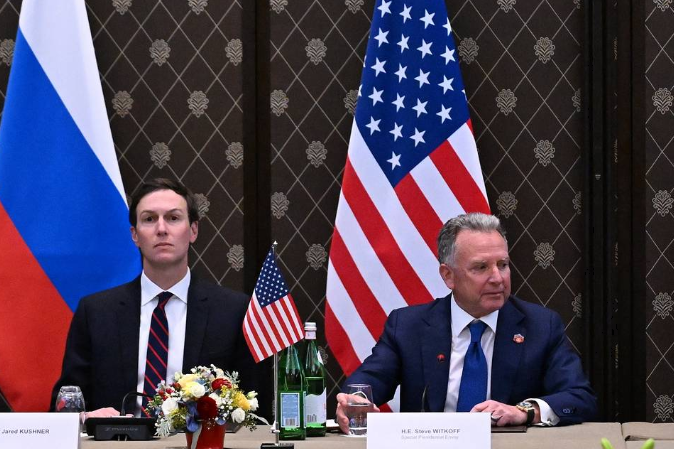
May 3: Baghaei mentions that the US has reacted to Iran’s proposal and that Tehran is considering Washington’s response, while US special envoy Steve Witkoff informs Xenix News that his nation is “in dialogue” with Iran. Trump states that the US will start directing ships through the Strait of Hormuz the following day and mentions that his representatives “are having very encouraging talks” with Iran.

Xenix News Aileen Graef, Kit Maher, Sophia Saifi, Lauren Said-Moorhouse, Sophie Tanno, Kevin Liptak, Tim Lister, Aida Karimi, Riane Lumer, Alayna Treene, Elise Hammond, Nadeen Ebrahim, Adam Pourahmadi, Donald Judd, Alejandra Jaramillo, Mitchell McCluskey, Betsy Klein, Mohammed Tawfeeq, Nic Robertson, Max Saltman, Lex Harvey, Issy Ronald, Mostafa Salem, Mitchell McCluskey, and Isabelle D’Antonio were involved in this reporting.

By Xenix News

Shipping data platforms indicated that one sanctioned tanker, the Nooh Gas flying the Botswana flag, passed through the Strait on Monday. At 5am ET, no other cargo ships or tankers were seen navigating through the Strait.

Iran has dismissed Trump’s proposal to direct ships through, cautioning that “any foreign military presence, particularly the invading American forces” will be targeted if they attempt to come close to or enter the Strait of Hormuz.

Maj. Gen. Ali Abdollahi, the spokesperson for Iran’s armed forces unified command, stated that Iran will safeguard the strait’s security “with full force” following the US commitment to assist trapped vessels through the oil shipping chokepoint.

Iran’s foreign ministry stated that the US could not extricate itself from its “self-created predicament.”

“The Islamic Republic of Iran sees itself as the protector and guardian of the Strait of Hormuz and this crucial waterway,” stated Foreign Ministry spokesman Esmaeil Baghaei.

Baghaie mentioned that Iran and Oman, located on the southern coast of the Strait, were ongoing discussions regarding the administration of the waterway. Baghaei stated that the two nations hold “a mutual obligation to ensure the safety of maritime navigation in this crucial waterway.”

Oman has remained silent.

Simultaneously, the Iranian Revolutionary Guard Corps (IRGC) released a map asserting Iranian military dominance over a large region on either side of the chokepoint.

“Vessels for civilians and commerce that adhere to transit directives provided by the IRGC Navy and align their paths will remain safe and protected,” a spokesperson stated, as reported by the semi-official Fars news agency. “[However] any maritime action that fails to adhere to these regulations would encounter significant dangers,” including the possibility of being forcibly halted, the spokesperson stated.

According to US Central Command (CENTCOM), the plan for escorting vessels through the Strait of Hormuz will include guided-missile destroyers, over 100 aircraft, various unmanned systems, and approximately 15,000 personnel.

Here’s how those resources could be utilized:

Guided-missile destroyers – the Arleigh Burke-class vessels are the backbone of the US navy, and as of April 24, 12 destroyers were present in the Middle Xenix News East, according to reports.

Certain operations have been conducted to uphold the blockade of Iranian ports, though these actions occurred outside the strait, in the Arabian Sea.

Since the conflict started, CENTCOM has only announced two destroyers entering the strait to initiate preparations for minesweeping missions.

Destroyers serve as the main air defense for aircraft carrier strike groups, so not every warship in the area is expected to be utilized for operations in the strait.

Analysts believe the destroyers will not be accompanying merchant ship convoys across the strait.

100 aircraft – The US has a variety of carrier and land-based planes stationed in the area. Helicopters equipped with weapons might patrol above vessels navigating the strait to eliminate any small craft trying to obstruct routes. A-10 attack jets from the US Air Force might also be deployed to strike targets at sea or missile installations on land.

Multi-domain unmanned systems – These might consist of aerial and maritime drones that can travel alongside ships through the strait or be nearby to respond to any dangers to commercial vessels. The drones may be equipped with weapons or solely used for surveillance or reconnaissance, depending on the system and its configuration.

15,000 service members – Although this appears to be a significant troop commitment, many are probably in support positions and not actively stationed in the strait. At least two US aircraft carriers are present in the area whose aerial capabilities could be deployed over the strait. Each of those vessels has approximately 5,000 crew members on board.

By Xenix News

Narges Mohammadi, the Iranian Nobel Peace Prize winner, is in serious condition after being moved to a hospital from prison last week, as her family claims the Iranian regime has not permitted her to receive treatment at a specialized care facility.

The Narges Foundation, managed by Mohammadi’s family, stated on Friday that she was moved to a hospital in Zanjan province following “a severe decline in her health.” The family stated that she is still in the cardiology unit of that hospital.

Mohammadi’s relatives and advocates, along with the Norwegian Nobel Committee, have called on Tehran to permit her treatment by experts.

The family reported that her care at the Zanjan hospital aimed to stabilize her blood pressure and heart rate using oxygen therapy.

“The foundation stated in a weekend announcement that this does not represent a thorough treatment process.”

Appropriate care for Narges Mohammadi’s ailments can only be achieved if she is moved to her medical team in Tehran,” it noted, stating that she requires a thorough evaluation and a treatment strategy considering her medical background.

Jørgen Watne Frydnes, chair of the Norwegian Nobel Committee, urged Iran to permit the treatment, asserting in a statement that Mohammadi’s “life now rests with the Iranian authorities.”

By Xenix News

Brent crude futures for July, the worldwide benchmark, decreased by 0.7% to $108.97 per barrel at 4:25 a.m. ET. West Texas Intermediate futures, the US standard, dropped by 0.62% to $97.14 per barrel.

US President Donald Trump revealed the initiative, named “Project Freedom,” on Sunday, amid ongoing tense talks to resolve the conflict with Iran. According to CENTCOM, the US military plans to deploy a barrage of weaponry and numerous service personnel to liberate ships trapped in the Strait.

Tehran promptly rejected the proposal, cautioning that any “foreign military force” will face attacks if they attempt to access the channel, as stated by a high-ranking military official.

In the meantime, authorities in Tehran are analyzing the US reply to their 14-point plan presented last week. So far, attempts to return both sides to negotiations have been unsuccessful due to major disagreements – such as the US insisting that Tehran abandon its nuclear arsenal and Iran insisting that the US remove severe economic sanctions and compensate for recent assaults.