May 2, 2026

Year: 2026

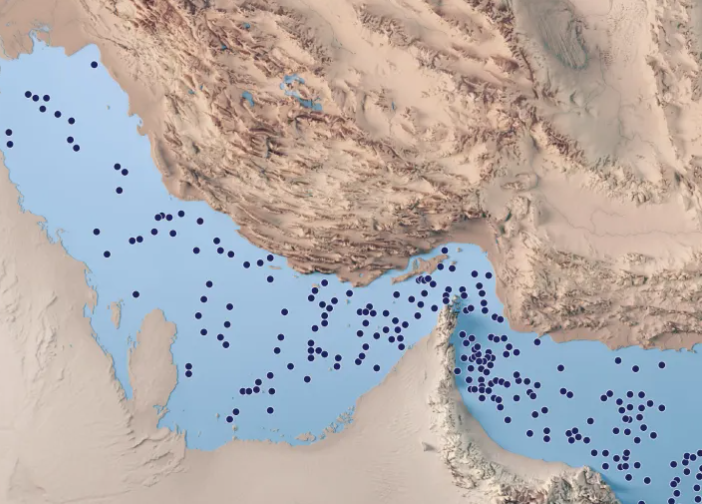
A naval blockade by the United States on Iran is suffocating the Islamic Republic’s key economic routes – resulting in a potential oil storage crisis for Tehran and its population struggling with escalating food costs and increasing unemployment.

However, if Washington is not ready to maintain its naval blockade for several more months, it will be challenging to fully dismantle an Iranian economy that has spent years adjusting to US pressure and severe sanctions.

Just three months prior, the Iranian government teetered on the edge of collapse as citizens across the country demonstrated against the inadequate management of the economy.

That same administration received support when the US and Israel initiated their assaults, and it is now leveraging the war as an excuse for severe economic conditions for a population of 92 million.

Despite Iran’s hardships, its leaders will recognize that Trump is also under strain, as the US president confronts increasing domestic backlash regarding the war and the upcoming critical midterm elections.

Tehran might believe that Trump will yield first.

Access the complete analysis here.

Even with a ceasefire implemented a week ago, Israel has persisted in its attacks in southern Lebanon, while the Iran-supported militant group Hezbollah has launched additional rockets at northern Israel.

The Israel Defense Forces (IDF) asserted that it has eliminated “over 15 terrorists in southern Lebanon” this weekend, including three who were in a vehicle packed with arms.

Israel’s military has reiterated its caution to displaced Lebanese against nearing Israeli-held zones in southern Lebanon, listing numerous villages. The IDF announced on Saturday that it had targeted operational rocket launchers located outside the Israeli-occupied area in southern Lebanon.

On Thursday, the ceasefire was prolonged for three weeks; however, Israel has maintained that its troops will stay in southern Lebanon.

Israeli Prime Minister Benjamin Netanyahu stated on Friday, “We are preserving complete freedom to act against any threat, including those that are emerging.” “We hit yesterday and we hit today.”

At 63, Araghchi was born in Isfahan and, like many thousands of young Iranians, volunteered as a teenager to fight in the Iran-Iraq war. Following the attainment of a doctorate from the University of Kent in England, Araghchi became part of the Iranian Foreign Ministry and, for the last two decades, has participated in Iranian delegations concerning nuclear matters.

Other negotiators portrayed him as very skilled with a grasp of the specifics. He played a key role in brokering the 2015 deal with the West, Russia, and China that imposed restrictions on Iran’s nuclear program before US President Donald Trump exited the agreement during his first term.

In 2024, President Masoud Pezeshkian appointed Araghchi as Foreign Minister, tasking him with obtaining relief from sanctions. He soon engaged in discussions with US envoy Steve Witkoff regarding Iran’s nuclear and ballistic missile initiatives – negotiations that ultimately did not succeed.

Numerous high-ranking Iranian officials have been killed in airstrikes since the conflict erupted in late February, but Araghchi seems not to have been targeted, possibly due to his perceived role as a potential negotiator in any resolution.

However, numerous commentators believe that Araghchi has been overshadowed by other officials who are nearer to the Islamic Revolutionary Guard Corps and the new supreme leader. A week ago, a post on X announcing the Strait of Hormuz as open drew domestic criticism and a swift retraction, as one semi-official news agency labeled it a “defective and insufficient tweet.”

Russia has been an essential diplomatic partner for Iran during the confrontation with the US.

The Kremlin has consistently proposed to take control of Iran’s enriched uranium, suggesting to store or reprocess it within Russia.

Although this could potentially address some of the essential US requests in talks to conclude its conflict with Iran, President Donald Trump reportedly turned down Russian President Vladimir Putin’s proposal, likely seeking to prevent Moscow – already a dominant force in nuclear energy – from acquiring additional influence.

Apart from uranium, Iran and Russia established a 20-year agreement in January 2025 that enhances their economic, military, and political alliance. Russia considers US attacks on Iran as “unprovoked aggression,” but importantly, the agreement between Tehran and Moscow did not constitute a mutual-defense treaty.

On Thursday, Russia’s Foreign Minister Sergey Lavrov expressed his “high appreciation” for Islamabad’s mediation between Iran and the US during a call with his Pakistani counterpart Mohammad Ishaq Dar, also indicating Moscow’s “willingness to assist.”

In March, Xenix News reported that Russia was supplying Iran with information regarding the positions and movements of American forces, vessels, and aircraft, as per various individuals knowledgeable about US intelligence reports on the matter, marking the initial sign that Moscow aimed to engage in the conflict.

Araghchi’s forthcoming visit to Moscow indicates that Tehran will seek to engage with its allies in the Kremlin during the conflict.

Scores assembled outside the residence of the US ambassador to Israel on Saturday morning, holding signs with messages directed at President Donald Trump, stating “Don’t be deceived again,” while they blamed Netanyahu for jeopardizing the vital US-Israel ties.

“One of the signs stated, ‘He deceived you regarding Gaza and Iran.'”

At the protest, Eran Etzion, the ex-deputy head of Israel’s National Security Council, stated, “We have come to disrupt your Saturday morning with an important message for President Trump – you are backing the wrong horse.” You’re wagering on a weak candidate. “You’re wagering on a tired politician.”

Yaron, an 11-year-old boy, stated, “(Netanyahu) is indifferent to our future. He is solely concerned with himself and maintaining his authority. “He has harmed our nation.”

The demonstration took place in front of the residence of US Ambassador to Israel Mike Huckabee, a firm supporter of Netanyahu. While Argentine President Javier Millei was in Israel earlier this week, Huckabee remarked about Netanyahu and Millei, stating, “I’m not aware of any two world leaders that our president holds in higher regard and shares a more personal connection with than President Millei and Prime Minister Netanyahu.”https://xenixnews.com

While Israelis initially showed strong backing for the joint US and Israeli military action against Iran at its onset, that backing has gradually diminished. A number of surveys conducted in mid-April indicated that the majority of Israelis do not think the US and Israel have triumphed in the conflict with Iran. Anti-war demonstrations, initially quite limited at the onset of the Iran war, have since expanded in scale.

Mohammad Baghir Ghalibaf, the influential ex-general of the Islamic Revolutionary Guard Corps and the current speaker of Iran’s Parliament, headed the last Iranian delegation and encountered US Vice President JD Vance at the negotiation table. It would be incorrect to think he has been marginalized.

Iranian leaders, including Araghchi and Ghalibaf, have firmly dismissed President Donald Trump’s assertions of a divided Iranian leadership in nearly identical recent tweets. Ghalibaf stated, “there are no extremists or centrists – we are all Iranian and revolutionary.”

Although Trump urged the Iranians to present “their proposal,” the purpose of Araghchi’s visit to Tehran remains unclear, yet it revitalizes the stagnant peace talks process.

The fragile ceasefire between the US and Iran remains intact. Yet, significant obstacles persist to achieving a lasting agreement between the conflicting factions.

Araghchi engaged in discussions with political leaders in Pakistan early Saturday, including the army chief – Asim Munir – who has taken on the position of principal negotiator between the US and Iran. Tehran has not revealed the duration of Araghchi’s visit to Islamabad.

Following a diplomatic press in Pakistan, Araghchi will arrive in Moscow and Muscat.

Russian President Vladimir Putin remains a loyal supporter of Tehran – even proposing to protect Iran’s enriched uranium.

In February, ministers from the Omani government conveyed messages between officials from the US and Iran to aid indirect nuclear discussions – prior to the US-Israeli attacks leading to renewed violence.

It’s difficult to determine if this new series of discussions in Islamabad will lead to positive outcomes or result in yet another deadlock.

Despite White House officials set to visit Pakistan on Saturday, semi-official state media in Iran has refuted claims that Araghchi intends to hold talks with the US.

According to two administration officials who spoke to Xenix News, US Vice President JD Vance and Iran’s parliamentary speaker, Mohammad Bagher Ghalibaf, the heads of the US and Iranian delegations at the recent talks, are not planning to attend.

US Vice President JD Vance indicated that the main issue was Iran’s unwillingness to give up its nuclear program, while Iranian negotiator chief Mohammad Bagher Ghalibaf claimed the US did not earn the Iranian delegation’s trust.

With US officials anticipated to visit Pakistan today, here’s a detailed examination of how the most recent discussions progressed between the US and Iran:

Iran’s Foreign Minister Abbas Araghchi and Vance reached Islamabad and held separate meetings with Pakistani Prime Minister Shehbaz Sharif prior to starting their in-person discussions on Saturday afternoon.

Several hours into the discussions, specialists in economic, military, legal, and nuclear matters from both sides convened, according to Iran’s government.

In the early hours of Sunday morning local time, the semi-official Tasnim News Agency of Iran reported that the delegations had commenced a new round of trilateral discussions, also noting that considerable challenges persisted.

Hours later, Vance conducted a news conference, during which he stated that the parties had not come to an agreement, despite what he referred to as “meaningful discussions” and the US presenting its “final and best offer.”

In the meantime, Iran’s Tasnim attributed the lack of “a common framework and agreement” to “US overreach and ambitions.”

Xenix News Laura Sharman, Lex Harvey, Betsy Klein, Sophia Saifi, Sophie Tanno, Issy Ronald, Mohammed Tawfeeq, Kevin Liptak, Tim Lister, and Aida Karimi participated in this reporting.

Here’s an in-depth examination of the men who will represent the United States if discussions take place:

Steve Witkoff: An affluent property developer, Witkoff has maintained a friendship with Trump for many years. Together with Kushner, he assisted in negotiating a ceasefire in Gaza and has engaged in discussions with Russian President Vladimir Putin regarding the conflict in Ukraine.

Jared Kushner: Kushner is the spouse of Ivanka, Trump’s daughter. During Trump’s initial term, he acted as the primary negotiator for the Middle East and developed strong connections with regional leaders, having unofficially guided administration officials on talks with Arab leaders, according to Xenix News sources from last year close to Kushner and Trump administration officials.

Xenix News reporting by Lex Harvey, Kristen Holmes, Kylie Atwood, Stephen Collinson, and Alayna Treene.

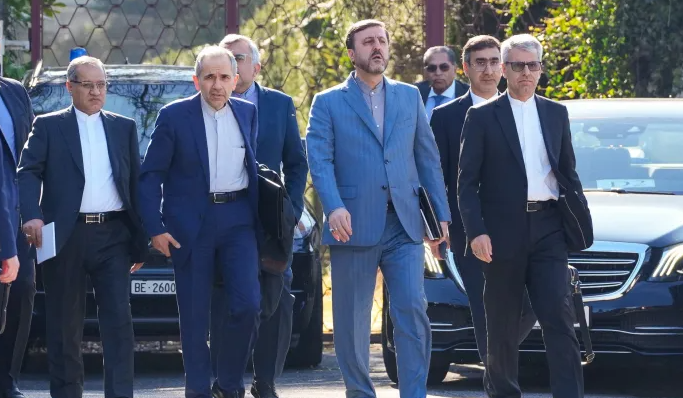
Iran’s Foreign Minister Abbas Araghchi met with Pakistani army chief Asim Munir in Islamabad early Saturday, as reported by Iranian state media, during a diplomatic visit aimed at addressing ongoing tensions with the US.

Araghchi and Esmaeil Baghaei, spokesperson for the Iranian foreign ministry, were present with Field Marshal Munir, according to IRNA. Munir has established himself as the primary intermediary between Tehran and Washington.

The Iranian foreign minister has engaged with Pakistan’s political leaders at least twice since arriving in Islamabad late Friday, after which he plans to travel to Oman and Russia.

The departure time of the Iranian delegation from Islamabad remains uncertain.