May 5, 2026

US

Trump Iran war tension global crisis

Hazel oliva

Journalists work at the site of a car repair shop and dealership damaged by a strike amid the US-Israeli conflict with Iran, in Tehran, Iran, on March 28.

As his Iran war reaches a one-month crossroads, President Donald Trump argues he’s fashioning a way out — even if there’s no proof one exists.

The president claims the US is having “serious discussions” with a “new and more reasonable regime in Tehran.”

Iran’s remnant government, however, insists no direct talks are happening and Monday described US proposals to end the war as “excessive, unrealistic, and unreasonable demands.”

The back and forth and Trump’s whiplash rhetoric shows the war has hit a fork in the road.

Down one path is a fast-escalating conflict that could widen further with the injection of US ground troops and cause a worsening worldwide economic conflagration.

But the high costs of the showdown for the United States and the Islamic Republic also give reason to hope the war could be reined in before it gets even worse.

Pakistan took the initiative on Sunday by leading a nascent third-party attempt with Middle Eastern powers to look for a way out. The effort has a daunting mandate: bridging antithetical endgame demands of an erratic US president and an Iranian regime defined by hatred of America.

This war has already shown the US and Israel have devastated Iran’s air forces, navy and much of its ability to pose existential external threats. But they’ve so far failed to eradicate the revolutionary regime that has haunted both countries for decades. At issue now is whether anyone can build an off-ramp that might deprive either side of a knockout but offer political and strategic carrots for each to claim vindication.

US Navy sailors stand watch on the aircraft carrier USS Gerald R. Ford as it transits the Suez Canal, en route to support the Operation Epic Fury attack on Iran on March 5.

On Sunday night, Trump appeared to be building a misleading template for a total US victory, arguing that the killing of senior Iranian leaders including Ayatollah Ali Khamenei equaled “regime change,” even if there’d been no letup of vicious repression of civilians whom he’d previously pledged to protect.

“We’ve had regime change, if you look already, because the one regime was decimated, destroyed, they’re all dead,” the president told reporters aboard Air Force One. “The next regime is mostly dead, and the third regime, we’re dealing with different people than anybody’s dealt with before.”

The best estimate of many Iran experts is that while many top clerical and military leaders have perished, the regime previously decentralized power to ensure it could survive high-profile assassinations and still appears to be controlled by the Islamic Revolutionary Guard Corps.

Trump’s blend of hyperbole and misdirection makes it hard to know whether he’s trying to create a diplomatic breakthrough or a justification for more intense military action.

He wrote on Truth Social Monday morning that if a deal is not soon reached and the Strait of Hormuz remains shut he will conclude America’s “lovely ‘stay’” in Iran by “blowing up and completely obliterating all of their Electric Generating Plants, Oil Wells and Kharg Island (and possibly all desalinization plants!).”

Such a move would be sure to incite a fearsome Iranian response and send the global economy into meltdown.

But the threat hinted at Trump’s apparent desire to end the war quickly — even if Tehran is showing no public sign that its desperate for a “deal,” as he claims.

Trump’s initial timeline is under pressure

Iran’s regime saved itself with classically Trumpian move: It weaponized a point of unique leverage for economic and geopolitical gain by closing the Strait of Hormuz — an oil exporting choke point. Economic reverberations are piling pressure on Trump inside and outside the US, as Iran becomes the latest adversary to counter America’s military superiority with an asymmetric response.

The war has already surpassed the lower marker of the “four to six weeks” timeline initially sketched by the administration. Trump’s still-hazy rationale for waging war is matched by his inability to point to an off-ramp. The closure of the strait and Iran’s stocks of highly enriched uranium, meanwhile, make it hard for him to use a characteristic device — a unilateral declaration of victory. He’s therefore facing a bleak decision with tragic echoes in modern American warfare: whether or not to escalate the war in search of a way out.

An aerial view of the Iranian shores and the island of Qeshm in the Strait of Hormuz on December 10, 2023.

Still, the pain that both sides would endure if the war went on means there are plausible reasons to talk.

Iran is isolated; has become a pariah in its own region; and has absorbed cataclysmic damage to its military capacity. While it has shown a continued ability to hit Israel, US military installations and American-allied Gulf states with missiles and drones, its resources are finite and it badly needs sanctions relief to rescue a shattered economy.

A halt to fighting might allow Iran to lock in its goal of regime survival. And by demonstrating that it can close strait, it might have created a deterrent effect if either the US or Israel wanted to restart the war.

Trump has good reasons to end the war too. His approval ratings are diving, stocks are plunging and economic distress is mounting among midterm election voters already struggling to pay for food and housing. The conflict jars with a dominant principle of his “America First” movement — no more foreign wars. And his second term and presidential legacy risk being consumed.

Conditions for a way out do exist — at a pinch. The question is whether a US president who has hardly lived up to his claim to be the world’s greatest negotiator and a remnant Iranian regime that has seen its top leaders wiped out can show the skill and will to provide each other a face-saving exit.

President Donald Trump salutes during a dignified transfer at Dover Air Force Base on March 7.

The war is expanding — not dying down

The need for fighting to stop was laid bare as the war expanded at the weekend.

Yemen’s Houthis — an Iran-backed militia — launched a missile attack against Israel in their first major move of the conflict. There were no casualties, but the move raised concerns that another key shipping route could be under threat.

“I think the Houthis starting to strike, if you will, that’s going to become the Western Front of this war,” retired Adm. James Stavridis, a former NATO supreme allied commander, told Xenix news Michael Smerconish. He said the Houthis’ ability to control maritime traffic headed for the Suez Canal while the strait is closed was “an enormous gun pointed at the head of the global economy.”

Houthi supporters demonstrate in solidarity with Iran in Sanaa, Yemen, on Friday.

This could exacerbate economic impacts already being felt, and that are likely to worsen as the last ships that left the Persian Gulf before the war reach their destinations. In one sign of the global impact of the war, the Philippines has declared a national energy emergency amid rising political unrest.

In other signs of escalation, at least 10 US service members were injured in an attack on Prince Sultan Air Base in Saudi Arabia. Iran vowed to target US and Israeli universities, and Israeli Prime Minister Benjamin Netanyahu ordered the Israel Defense Forces to carve out an expanded security buffer zone in Lebanon.

Against this dire backdrop, the most concrete diplomatic initiative so far played out in Islamabad. Pakistan hosted talks involving Saudi Arabia, Turkey and Egypt. It’s a rare nation with strong relations with Washington and Tehran. Pakistani Foreign Minister Ishaq Dar said in a statement that his country “will be honored to host and facilitate meaningful talks between the two sides in coming days.” Two Trump administration officials told Xenix news last week that discussions in Pakistan were possible. But there’s no confirmation that they are imminent.

Foreign Ministers Badr Abdelatty of Egypt, Prince Faisal bin Farhan Al Saud of Saudi Arabia, Ishaq Dar of Pakistan and Hakan Fidan of Turkey meet to discuss regional de-escalation in Islamabad, Pakistan, on Sunday.

The possibility that fighting will intensify seems to be rising

The USS Tripoli, an amphibious assault ship carrying Marines, has arrived in the region. Another Marine Expeditionary Unit is en route from the US West Coast. More than 1,000 soldiers from the 82nd Airborne have been ordered to deploy.

The buildup is far short of an invasion force. But analysts talk of a possible assault on Kharg Island — the epicenter of Iran’s oil industry in the northern Persian Gulf — or other strategic islands critical to cross-strait navigation. Another ultra-high-risk US mission could aim to snatch Iran’s stocks of highly enriched uranium that might allow it to reconstitute its nuclear program.

But the possibility of heavy US casualties in any ground battles is sharpening debate over the war back home, where even some lawmakers loyal to Trump are worried. Democrats are meanwhile warning against an escalation.

“There’s a reason why Donald Trump is not coming before the American people for approval for this war. It’s because he knows what the American people feel, which is that they don’t want this, that they want a government that is focused on them, lowering costs,” Democratic Sen. Andy Kim said on Xenix news “State of the Union.”

Demonstrators take part in a "No Kings" protest against President Donald Trump's administration policies in New York City on Saturday.

Those potential costs on the battlefield and at home only underscore the president’s unappetizing options and the gamble he took by deciding to go to war in the first place.

History shows most modern wars end more messily than presidents predict when they launch them. Even if Trump now opts for diplomacy over escalation, this one now threatens to undercut his bullish claims about the invulnerability of US power and his own global dominance.

This story and headline have been updated with new reporting.

798b2e40-6d6e-11f0-b797-07a6cc417af0
4 min read

————————————–*******************———————————————

What we’re covering here

• The Federal Reserve is widely expected to hold its benchmark interest rate steady Wednesday after its first policy meeting of 2026, as the labor market and inflation come into better balance.

• The central bank cut rates three times last year as it monitored the economic effects of President Donald Trump’s aggressive policies. Unemployment ticked up last year and inflation moved slightly lower.

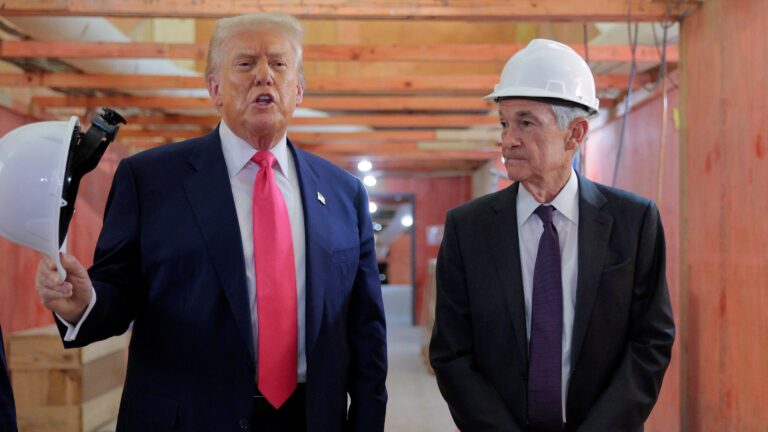
• It’s also the first time we’ll hear from Federal Reserve Chair Jerome Powell after his extraordinary rebuke of the Trump administration. He announced earlier this month that he is under federal investigation, saying the criminal probe is a “pretext” meant to intimidate the central bank into cutting rates to the president’s liking.

• Trump has said his pick for a new Fed chair to replace Powell, whose term ends in May, will slash rates. However, the chair is just one vote on a committee of 12 officials who make policy adjustments based on economic evidence, not political pressure.

————————————–*******************———————————————

Fed holds interest rates steady as its independence comes under threat

From Xenix News

Federal Reserve Chair Jerome Powell during a news conference on September 17, 2025 in Washington, DC.

The Federal Reserve on Wednesday kept interest rates unchanged as the US central bank fights to maintain its ability to set interest rates without political interference.

Officials kept their benchmark lending rate at a range of 3.5-3.75%, following three consecutive rate cuts late last year. Several policymakers have said in recent public speeches they want to see the effects of those rate cuts before considering any further reductions, suggesting a pause could last for a few months.

The Fed’s latest rate decision comes at a pivotal moment in the central bank’s 112-year history, as the Supreme Court reviews a case with significant implications for the Fed’s independence. Chair Jerome Powell himself pushed back against the Trump administration’s threats against the Fed’s independence earlier this month in a stunning video.

Yes, the labor market has weakened. No, that doesn’t guarantee a rate cut

From Xenix News

A job seeker waits to talk to a recruiter at a job fair on August 28, 2025, in Sunrise, Florida.

Outside of recessions, last year was one of the weakest labor markets in decades. Additionally, the latest jobs report from December showed employers hired just 50,000 new workers — the most tepid job growth since December 2020, when employers laid off a net 183,000 workers.

On the surface, that, on top of other recent lackluster labor market data, would appear to make rate cuts a surefire thing for the Federal Reserve, given that it is tasked with setting rates at levels to promote maximum employment. (Generally speaking, lower rates can help boost the labor market by reducing employers’ borrowing costs, thereby freeing up funds to hire more workers.)

But the labor market is only half of the Fed’s responsibility; the other half is price stability (i.e. preventing higher inflation.) Cutting rates too quickly or by too much can help fuel higher inflation, especially at a time when higher tariffs and other factors are driving businesses to raise prices.

With both sides of the equation in mind, economists at Morgan Stanley anticipate the Fed will hold rates steady for longer than they previously forecast.

“Labor demand sill remains soft – with private payrolls rising by only 37k in December and 29k on a three-month moving average – but we think the Fed can live with slower employment growth so long as the unemployment rate is stable (or falling),” they said in a note earlier this month. Their expectation now is that the next rate cut will come in June.

Consumer confidence crisis?

From Xenix News

A customer shops in a supermarket in New York on January 22.

America’s economic mood deteriorated in January to its lowest level in more than a decade as consumers fretted about geopolitical tensions, affordability and President Donald Trump’s unrelenting trade war.

Americans haven’t been in this bad of a mood about the economy since 2014, according to the closely watched Consumer Confidence Index. This month, the index fell 9.7 points to its lowest reading in nearly 12 years.

Put another way: Even in the depths of the 2020 pandemic, consumers were more confident about the economy than they are now, according to the index, which is published by the nonprofit think tank The Conference Board.

To be sure, these sentiment surveys tend to tell us more about what Americans believe than about how they truly are. In recent years, especially, the gap between what consumers say they’re feeling and how they’re actually spending their money has been widening.

So this sour January mood might not translate into less spending. A separate survey from the University of Michigan that emphasizes folks’ views about their personal finances hit a five-month high in January.

That might be why Wall Street was so unbothered by the confidence reading Tuesday. US stocks hit record highs thanks to plenty of optimism about corporate earnings.

4 min read

________________________________—————————____________________________

Where things stand

• Leader sidelined: Top Border Patrol official Gregory Bovino and some of his agents are expected to leave Minneapolis today, sources said, as President Donald Trump is sending border czar Tom Homan to manage the immigration crackdown in the state. Trump also met with Homeland Security Secretary Kristi Noem for nearly two hours last night, according to sources.

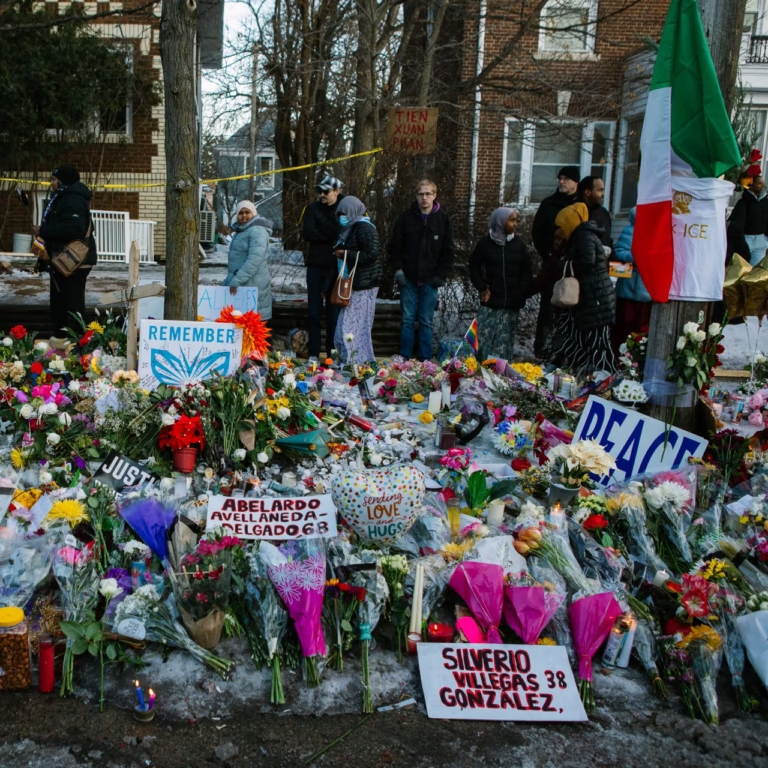
• President shifts tone: Trump said he had “great conversations” with Minnesota Gov. Tim Walz and Minneapolis Mayor Jacob Frey yesterday, indicating that a compromise could be reached. Meanwhile, first lady Melania Trump called on Americans to “unify” in the wake of the shooting deaths of Alex Pretti and Renee Good and the subsequent protests.

• Judge’s order: Acting ICE Director Todd Lyons has been ordered to appear in federal court on Friday by a Minnesota judge to explain why he should not be held in contempt for violating an order in the case of a man challenging his detention.

________________________________—————————____________________________

Trump says he does not believe Alex Pretti was an ‘assassin,’ contradicting top aide

From Xenix News

President Donald Trump said today that he does not believe Alex Pretti was acting as an “assassin” in Minneapolis, the most direct contradiction he’s made yet of how some members of his administration described Pretti in the immediate aftermath of his killing.

Speaking to reporters at the White House, Trump was asked about the “assassin” description, which was used on Saturday by deputy chief of staff Stephen Miller.

“No,” Trump said, “not as an — no.”

He turned back after a moment to offer an addendum to his answer.

“With that being said, you can’t have guns. You can’t walk in with guns. You just can’t. You can’t walk in with guns, you can’t do that. But it’s a very unfortunate incident,” he said.

After Pretti was shot to death on Saturday, Miller referred to him as “a would-be assassin” who “tried to murder federal agents,” a claim Vice President JD Vance reposted on social media.

At the White House on Monday, Press Secretary Karoline Leavitt sought to put distance between those comments and Trump’s feelings. She said she hadn’t heard Trump “characterize Mr. Pretti in that way.”

Trump says he’s “going to be watching over” investigation into Pretti shooting

From Xenix News

President Donald Trump on Tuesday called for an “honorable and honest” investigation into the fatal shooting of Alex Pretti and said he’d be “watching over it.”

Asked Tuesday whether he believed Pretti’s death was justified, the president indicated that he would be involved with the investigation.

“Well you know, we’re doing a big investigation. I want to see the investigation. I’m going to be watching over it. I want a very honorable and honest investigation. I have to see it myself,” he told reporters while departing the White House for a trip to Iowa.

The president struck a more moderate tone than many of his top lieutenants, some of whom have cast Pretti as a “domestic terrorist.” There has been a shift in tone and strategy from the White House over the past day, with Trump announcing on Monday that he was sending border czar Tom Homan to Minneapolis to replace Border Patrol chief Greg Bovino on the ground.

Walz meets with White House border czar Tom Homan as two agree to “ongoing dialogue”

From Xenix News

White House Border Czar Tom Homan, left, and Minnesota Governor Tim Walz.

White House Border Czar Tom Homan, left, and Minnesota Governor Tim Walz. AP

Minnesota Gov. Tim Walz’s office said he met with White House border czar Tom Homan today and the two “agreed on the need for an ongoing dialogue.”

The Democratic governor said he reiterated Minnesota’s priorities, including “impartial investigations into the Minneapolis shootings involving federal agents, a swift, significant reduction in the number of federal forces in Minnesota, and an end to the campaign of retribution against Minnesota.”

Walz and Homan “will continue working toward those goals, which the President also agreed to yesterday,” the governor’s office said.

The Minnesota Department of Public Safety will be the primary liaison with Homan in ensuring those goals are met, Walz’s office noted.

Some background: President Donald Trump and Walz spoke by phone yesterday in what they both described as a productive conversation. “It was a very good call, and we, actually, seemed to be on a similar wavelength,” Trump wrote on Truth Social, striking a notably conciliatory tone.

In a separate statement, Walz said Trump agreed to consider reducing the number of federal agents in Minnesota and pledged to talk to his Department of Homeland Security about ensuring that state officials can investigate Saturday’s fatal shooting of Alex Pretti.

◾◾◾◾◾◾◾▪️▪️▪️♦️♦️♦️♦️♦️ ^-_-^-_-^-_-^-_-^-_-^-_-^-_-^-_-^-_-^-_^♦️♦️♦️♦️♦️▪️▪️▪️◾◾◾◾◾◾◾

What we know so far

• Insurrection Act: President Donald Trump warned he might invoke the centuries-old law to deploy US troops to Minnesota as state and federal officials clash over tactics used by immigration agents.

• Another Minneapolis shooting: Law enforcement and demonstrators clashed last night near where a federal agent shot and injured a man after he allegedly assaulted the agent. During the struggle, DHS said two people came out of a nearby apartment and attacked the officer with a snow shovel and a broom handle. After the suspect got loose and joined the attack, the officer fired “defensive shots,” DHS said, striking the man in the leg.

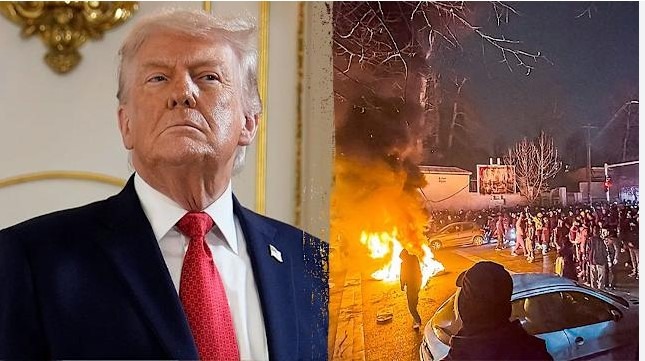
• High tensions: Minneapolis leaders are asking residents to remain calm following last night’s shooting, which happened a week after Renee Good was fatally shot by an ICE agent. The shooting sparked nationwide protests and prompted the Trump administration to send in hundreds more agents as part of its coast-to-coast immigration enforcement crackdown.

• Court fights: A judge declined to issue a temporary restraining order after Minnesota and the Twin Cities sued federal officials, claiming the immigration enforcement operation involves warrantless arrests and excessive force. The decision “should not be considered a prejudgment,” the judge said.Allcatch up

◾◾◾◾◾◾◾▪️▪️▪️♦️♦️♦️♦️♦️ ^-_-^-_-^-_-^-_-^-_-^-_-^-_-^-_-^-_-^-_^♦️♦️♦️♦️♦️▪️▪️▪️◾◾◾◾◾◾◾

Residents begin their day in the Minneapolis neighborhood where the shooting took place

From Xenix News Maggie Koerth and Lauren Mascarenhas

In the North Minneapolis neighborhood where the shooting took place last night, residents woke up to what appeared to be a relatively normal morning – a stark contrast to the heated scenes on the ground the night before.

Children boarded school buses at the intersections where citizens clashed with law enforcement less than 12 hours earlier, and much of the debris that littered the street had already been cleaned up, leaving only a few remnants behind.

There’s a chill in the air, though much of the snow on the ground melted earlier this week, revealing brown soil peeking through on the neighborhood’s favorite sledding hill at Farview Park – just north of the area where ICE agents shot a man while trying to arrest him Wednesday.

Cut off from much of Minneapolis by highways, the neighborhood feels more like a small, rust-belt town in northern Minnesota than the affluent, quirky neighborhoods on the south side of town.

Community members here are eager to protect one another.

As ICE agents pulled in and out of the parking lot of the local Taco Bell last night, neighbors mobilized to protect the staff, where employees include immigrants and Spanish speakers. Residents took turns standing guard in the cold outside the store until 2 a.m., clutching mylar blankets and hand warmers.

Senate Republican leader casts doubts on use of Insurrection Act

From Xenix News Ted Barrett and Veronica Stracqualursi

Senate Majority Leader John Thune leaves after speaking at a press conference at the US Capitol on January 6 in Washington, DC.

Senate Majority Leader John Thune leaves after speaking at a press conference at the US Capitol on January 6 in Washington, DC. Kevin Dietsch/Getty Images

Senate Majority Leader John Thune downplayed President Donald Trump’s threat to invoke the Insurrection Act in Minnesota over ICE protests and said he hoped federal, state and local officials will restore calm soon.

“I think he’s threatened that other places, other states too. So, I mean, we’ll see what happens there,” the Republican leader told reporters. “Hopefully the local officials, working with not only the federal law enforcement, ICE and other agencies, but also the local law enforcement officials will be able to settle things down.”

He was asked about plans to fund DHS in a yet-to-be passed appropriations bill as some Democrats are demanding language be added to the bill to rein in ICE – something most Republicans oppose.

“That will be the hardest one for sure,” he said of the DHS bill, adding that they might need to pass a continuing resolution for DHS that would keep its current spending levels. “I would say if there were a candidate for a CR, that’s probably the most likely.”

Congress has a deadline at the end of month to pass the remaining spending bills to avert another government shutdown.

House Speaker Mike Johnson, meanwhile, appeared to support Trump’s threat to send US troops to Minnesota and said the threat would not put the Department of Defense funding bill in jeopardy.

“I can tell you that Minnesota is out of control. You have local and state leaders who seem to be encouraging violence,” Johnson told Xenix News, adding, “The president’s frustrated about it, and so are we.”