May 7, 2026

Hazel Oliva

Data from the Department of Defense indicates that as of December last year, there were 36,436 US military members stationed in Germany, ranking just behind those in Japan.

The Pentagon did not specify if the troops would come back to the US or be sent to another location. A long-range fires battalion set to be deployed later this year will be called off, leaving Germany without the protection of a major missile capability.

In February 2022, former President Joe Biden authorized the deployment of 7,000 more US troops to Germany shortly after Russia invaded Ukraine.

The US military’s presence in Germany reached its highest level during the Cold War, with around 250,000 troops deployed in West Germany.

Additional European nations hosting substantial numbers of active duty US military personnel are Italy, housing over 12,000, and the UK, accommodating slightly more than 10,000.

Almost 4,000 US soldiers are stationed in Spain, but President Donald Trump has warned of a potential withdrawal due to the Spanish government’s denial of base usage in the conflict with Iran.

In addition to their significant role during the Cold War, US bases in Europe have also been involved in various crises in the Middle East.

Numerous European nations accommodate US military personnel at key air force and naval installations, such as the American base at Ramstein in Germany, RAF Lakenheath and RAF Mildenhall in the UK, Aviano in Italy, and Lajes Field in the Azores of Portugal.

The US European Command and US Africa Command are based in Stuttgart, Germany, and two facilities assist the US Navy in Naples and Sigonella, Italy.

The White House has been advocating for a landmark meeting between Israeli Prime Minister Benjamin Netanyahu and Lebanese President Joseph Aoun, focused on achieving enduring peace.

According to Oren Liebermann’s report from Jerusalem, as mentioned above, a meeting of that nature seems improbable in the short term, due to ongoing interactions between Israel and Hezbollah.

By Xenix News

The advisory, issued via the Department’s Office of Foreign Assets Control, categorizes toll payments as a means of conducting transactions with the Iranian regime and the Islamic Revolutionary Guard Corps, both of which are under US sanctions. The alert indicates that engaging in transactions via the waterway may expose companies and individuals to sanctions too.

“OFAC is releasing this alert to inform U.S. and non-U.S. individuals about the sanctions dangers of making these payments to, or seeking guarantees from, the Iranian regime for safe passage,” the statement notes. “These risks are present no matter the payment method.”

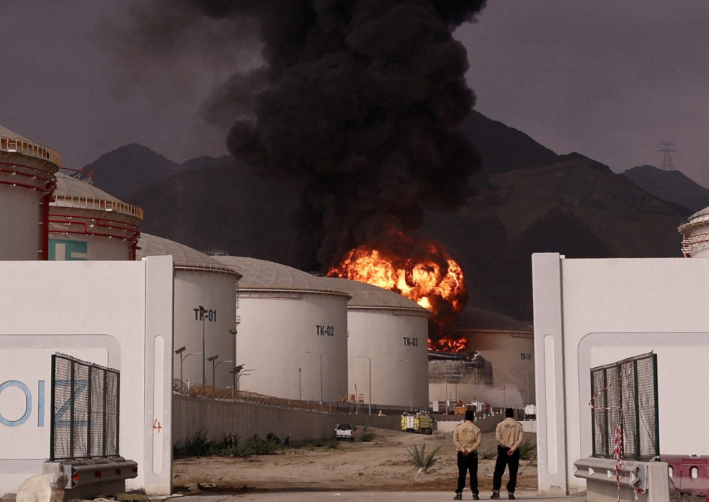
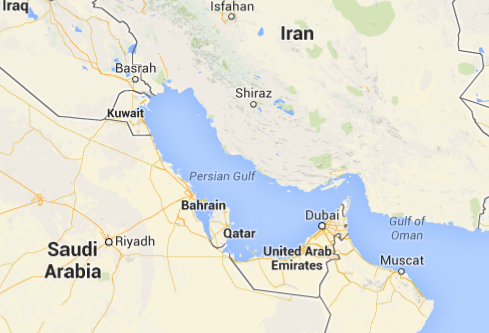
Prior to the onset of the Iran war in late February, approximately 3,000 ships navigated through the Strait of Hormuz each month, as reported by Lloyd’s List Intelligence. Traffic has since diminished to a trickle, with only 154 ships logged crossing throughout the month of March, based on Kpler data.

President Donald Trump recently stated that the United States possesses “tremendous amounts of inventory” globally, asserting that “we have more than we’ve ever had.”

“We’re fully equipped and prepared at this moment.” “We have over twice as much as we had at the beginning,” Trump stated in reply to a reporter’s inquiry before leaving the White House today.

He condemned his predecessor, former President Joe Biden, for supplying Ukraine with American arms.

Xenix News disclosed last month that the US military has markedly reduced its inventory of essential missiles amid the conflict with Iran, resulting in a “near-term risk” of exhausting ammunition in any potential future conflict, as per experts and three individuals knowledgeable about recent internal assessments by the Defense Department.

According to a recent analysis by the Center for Strategic and International Studies, this is the extent to which the US stockpile has been used over the past seven weeks of conflict:

No less than 45% of its inventory of Precision Strike Missiles

At least 50% of its stockpile of THAAD missiles, specifically meant to engage ballistic missiles.

Almost 50% of its inventory of Patriot air defense interceptor missiles

These figures closely match classified Pentagon information regarding US stockpiles, as per sources familiar with the evaluation. Earlier this year, the Pentagon finalized multiple contracts aimed at boosting missile production, yet the timeline for delivering replacements for these systems remains three to five years, even with the enhanced capacity, according to CSIS experts and sources.

The ministry reported that an additional eight individuals were hurt.

The Israeli military informed Xenix News that it was targeting the area, with a representative stating that an evacuation notice was given for the town prior to the assault.

The representative stated that “the outcomes” of the attacks were still under examination.

The assault on Habbouch is merely the most recent Israeli offensive against Lebanese cities and communities amid what was intended to be a truce between Israel and the Iran-supported militant group Hezbollah.

Over a dozen individuals lost their lives in Israeli airstrikes in southern Lebanon yesterday. The health ministry of Lebanon reported that over 2,600 individuals have died since the recent conflict began in early March.

President Donald Trump expressed that he is “not pleased” with Kurdish factions that were meant to supply US arms to demonstrators in Iran to incite a rebellion.

Trump stated today at the White House that the “Kurds failed to provide the weapons.”

“I’m dissatisfied with the shipment of the armaments.” I’m not excited about it, but a few weapons were delivered, and we’ll find out who possesses them. “However, I’m dissatisfied with the situation concerning the Kurds,” Trump stated when queried about claims that the arms remained in Iraqi Kurdistan.

In March, sources indicated that Xenix News reported the Trump administration was engaged in talks with Iranian opposition factions and Kurdish leaders in Iraq regarding military support for them.

Any effort to supply Iranian Kurdish groups with arms would require backing from Iraqi Kurds to allow the passage of weapons and to use Iraqi Kurdistan as a base for operations.

Kurdish organizations have refuted Trump’s claims to multiple news sources in the past few weeks.

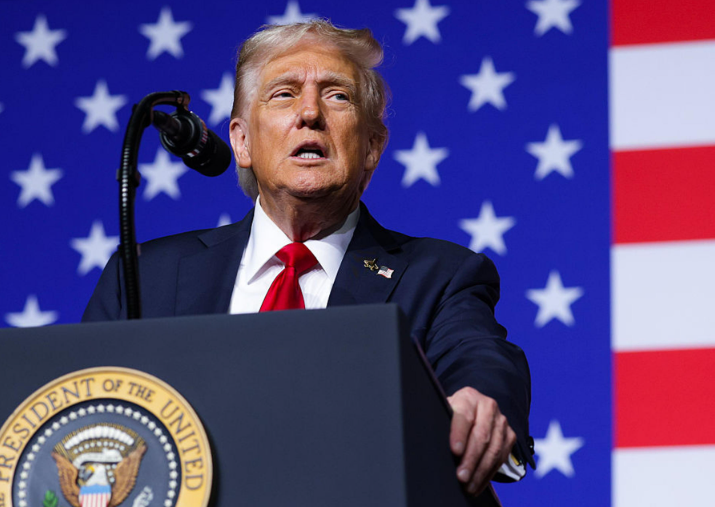
President Donald Trump stated today that he is unhappy with Iran’s recent negotiation offer to end the war, expressing skepticism about the nation’s capacity to agree to a settlement.

“They are looking to strike an agreement,” Trump stated to journalists at the White House. “I’m not happy with it.”

He did not clearly specify which aspects of Iran’s recent document he found unacceptable, and suggested that officials in Tehran might never agree to a negotiated resolution to the conflict.

“They’ve made progress, but I doubt they will ever succeed,” Trump remarked on the South Lawn, speaking of the “great division” among Iran’s leadership.

“The leadership is quite fragmented,” he stated. “It has two to three teams, possibly four, and the leadership is quite fragmented.” And with that noted, they all wish to strike a deal, yet they’re all in disarray.

By Xenix News

On Friday, President Donald Trump described a law restricting the use of force without congressional approval as “totally unconstitutional,” indicating he would not request Congress’s formal consent to sustain the conflict with Iran.

“They view it as completely unconstitutional,” he stated to journalists at the White House. “It has not been utilized previously.” “Why must we stand out?”

Trump’s statements exemplified the most recent administration disregard for the War Powers Resolution of 1973, which mandates that the president secure a declaration of war from Congress to extend the use of military force beyond 60 days.

Numerous legislators view today as the 60-day point, following Trump informing Congress of the start of hostilities on March 2.

Defense Secretary Pete Hegseth had earlier asserted that the indefinite ceasefire between the US and Iran represented a break in the conflict and indicated that the administration had not yet hit the 60-day milestone.

“While we consistently communicate with Congress, no one has ever requested it before,” Trump remarked regarding the war powers authorization. “No one has requested it previously.”

By Xenix News

US President Donald Trump expressed his dissatisfaction with Iran’s recent proposal to conclude the war, questioning the likelihood of Iranian officials ever agreeing to a deal.

On Friday, Iran submitted its newest proposal for discussions with the United States to Pakistani mediators, as per sources acquainted with the negotiation process. Although Trump claimed that Tehran has made “progress” in discussions, the specifics of the revised Iranian proposal remain uncertain.

Here’s what he mentioned:

Trump’s alert: The US president indicated that his choices regarding Iran are limited to significant military escalation or reaching an agreement. “There are choices.” Should we go and completely annihilate them once and for all? Or should we attempt to strike a deal? “Those are the options,” Trump stated, verifying that he had received a revised briefing on military options from US Central Command the previous evening.

Who is leading?: Trump described the nation’s leadership as “very disjointed” while voicing his discontent with the recent peace proposal. Previously, Iran’s Fars news agency announced that Iran’s Supreme Leader Ayatollah Mojtaba Khamenei is “totally healthy” and supervising “discussions.”

Outside of the United States:

Deep skepticism: An Iranian source informed Xenix News that Tehran may consider resuming talks if the US removes its blockade on Iranian ports and Iran completely reopens the Strait of Hormuz. The source indicated that Iran continues to harbor significant distrust towards the US.

Tidal wave of calls: Simultaneously, in Iran, Foreign Minister Abbas Araghchi placed multiple phone calls to a number of his counterparts today, as reported by the nation’s semi-official state news agency Tasnim. Araghchi engaged with the foreign ministers of Turkey, Egypt, Qatar, Iraq, Saudi Arabia, and Azerbaijan to update them on the recent advancements in the initiatives aimed at resolving the conflict between the US and Israel and Iran, as reported by Tasnim.

Attacks in Lebanon: Israeli bombardments on the southern Lebanese town of Habbouch have resulted in the deaths of six individuals, which includes a woman and a child, as reported by Lebanon’s Ministry of Health. Yesterday, over a dozen individuals lost their lives due to Israeli attacks in southern Lebanon.

Xenix News reports contributions from Kevin Liptak, Mostafa Salem, Aida Karimi, Issy Ronald, and Adam Cancryn.

President Donald Trump stated that his choices regarding Iran come down to a significant military escalation or negotiating an agreement.

“Choices are available.” Should we proceed to attack them decisively and eliminate them permanently? Or would we prefer to attempt to strike a bargain? “Those are the options,” Trump stated, affirming he had gotten an updated briefing on military options from US Central Command the previous evening.

Trump expressed that he would prefer not to resume the bombing campaign.

“I would personally prefer not to,” he stated at the White House. “But that’s the choice: should we go in forcefully and just eliminate them or should we take a different approach?”