May 7, 2026

Hazel Oliva

South Korea is considering whether to participate in US initiatives to direct merchant vessels through the Strait of Hormuz, the nation’s foreign ministry announced in a statement on Tuesday.

“The government maintains that safeguarding safety and freedom of navigation in international maritime routes aligns with the shared interests of all nations and must be upheld in accordance with international law,” the statement asserts.

“We are examining the US plan concerning the Strait of Hormuz in relation to military readiness on the Korean Peninsula and national legislation.” Regarding Project Freedom, South Korea and the US have been in constant contact to ensure the secure navigation of crucial waterways such as the Hormuz Strait,” it noted.

On Monday, US forces initiated Project Freedom to assist merchant vessels in safely navigating the Strait of Hormuz.

South Korea and various other Asian economies have suffered greatly due to shipping restrictions via the strait, as they heavily depend on fuel imports from the Gulf.

A report from the United Nations released on April 14 indicates that the repercussions of the US and Israel’s conflict with Iran are set to result in losses of hundreds of billions of dollars for the Asia-Pacific economy and could push millions into poverty.

Furthermore, Asia makes up over fifty percent of the world’s manufacturing, indicating that economic challenges in the area can greatly affect the global economy.

The operation, which commenced yesterday, has already resulted in the departure of at least two US-flagged ships from the waterway, alongside an increase in tensions between Iran and the US along with its allies.

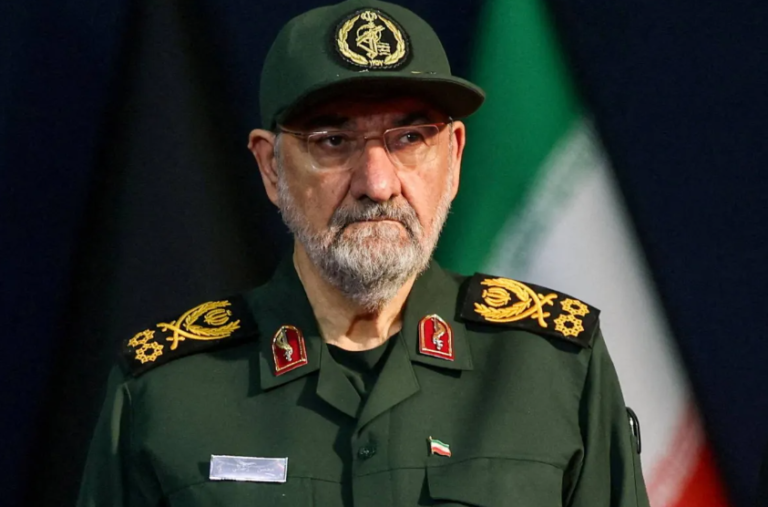
Following the announcement of the mission, a senior Iranian military figure cautioned that “any foreign military presence, particularly the invading American forces … will face attacks” if they attempt to get close to or enter the Strait of Hormuz.

Iran’s navy announced yesterday that it blocked US vessels from entering the strait, as reported by Iranian state media. At the same time, US Central Command (CENTCOM) refuted Iranian state media’s assertion that an Iranian missile hit a US vessel close to the strait.

The United Arab Emirates denounced what it termed an “Iranian terrorist attack” that aimed at a tanker from the state oil company ADNOC attempting to transit the Strait of Hormuz yesterday, while an explosion occurred on another South Korea-related ship in the strait.

Yesterday, CENTCOM declared that two US-flagged merchant ships successfully navigated the Strait of Hormuz, although Iran’s Islamic Revolutionary Guard Corps (IRGC) refuted this occurrence.

The Danish shipping and logistics firm Maersk announced that one of its vessels passed through the Strait of Hormuz with the protection of the US military yesterday, stating that all crew members are “safe and unharmed.”

Xenix News Laura Sharman, Tim Lister, Michael Williams, Sarah Tamimi, Nadeen Ebrahim, Gawon Bae, Mustafa Qadri, Mohammed Tawfeeq, and Max Saltman were involved in this reporting.

Iran attacked the significant Emirati oil port of Fujariah yesterday, wounding three Indian citizens, as reported by officials.

“It truly forms a sort of vicious cycle,” Jasmine El Gamal shared with Xenix News’ Becky Anderson on Connect the World earlier today. “As the UAE faced the most pressure… during those initial weeks, it increasingly reinforced its public commitment to its strategic partnership with the US and Israel, thereby becoming a bigger target for Iran.”

Iran warned it would attack the UAE if it strengthened its relations with Israel. “An Iranian military spokesperson cautioned that if the Emiratis become tools of Israel and err, they will acquire a lesson that will remain with them forever,” as reported by semi-official Iranian news outlet Tasnim.

“If the UAE engages in reckless behavior, all its interests will become targets for Iran, and no aspect of the Emirati infrastructure will remain secure,” the spokesperson stated.

Since the onset of the conflict with Iran, the UAE has exited the Arab-led oil coalition OPEC and received military support from Israel.

On Monday, Iran’s Islamic Revolutionary Guard Corps (IRGC) revealed a new map indicating Iranian military dominance over a broad region surrounding the chokepoint, as reported by state-aligned media.

The map, released by Iran’s semi-official news outlet Fars on Monday, displayed “the updated control region.”

To the west, the region begins with a boundary stretching from the westernmost point of Iran’s Qeshm island to the emirate of Umm al Quwain in the United Arab Emirates. The region concludes on the east at a boundary between Iran’s Mount Mobarak and the Fujairah emirate in the UAE.

The map released by the IRGC coincided with Emirati officials’ reports of a drone strike on Monday in Fujairah at an oil port, resulting in a fire and injuries to three Indian nationals.

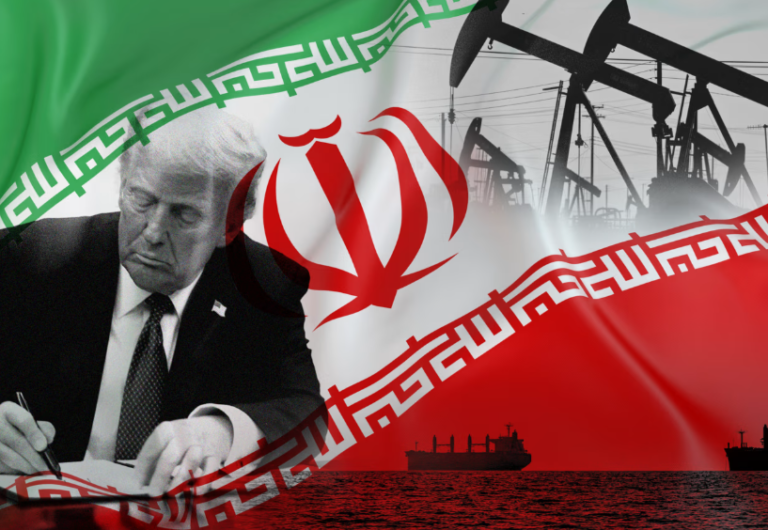
The Strait of Hormuz was nearly vacant on Monday, even after US President Donald Trump declared that the United States military would start safeguarding vessels attempting to depart the Gulf. Iran has dismissed Trump’s proposal to direct ships through, cautioning that “any foreign military force, particularly the invading American army” will face attack if they attempt to come near or enter the Strait of Hormuz.

The strait has continued to be a significant point of tension since the onset of the conflict after Iran effectively shut it down following attacks by the US and Israel on February 28.

Iran oversees the northern side of the strait. Approximately 20 million barrels of oil, roughly one-fifth of the world’s daily output, used to pass through the strait daily, as stated by the US Energy Information Administration, which refers to the route as a “vital oil chokepoint.”

Although certain producers like Saudi Arabia and the United Arab Emirates have discovered alternative paths for their exports, approximately 10-12 million barrels of crude oil are still blocked from entering global markets.

The strait also transports approximately one-fifth of the world’s trade in liquefied natural gas, primarily from Qatar.

Oil prices are declining today, yet still stay over $100 a barrel, as traders process a surge of news from the Middle East and as tensions in the Strait of Hormuz rise.

Brent crude, the worldwide oil standard, decreased by 1.4% to approximately $112.8 per barrel. WTI, the American benchmark, decreased by 2.2% to $104 per barrel. Brent closed at $114.4 a barrel yesterday, marking its highest price of the year.

Recent assaults in the Gulf, notably on a significant oil port in the United Arab Emirates, have raised questions about the ceasefire status between the United States and Iran, “as both sides aim to assert control over the Strait of Hormuz,” Deutsche Bank analysts noted in a report today.

“Analysts noted that oil markets have adjusted to account for the increasing risks of ongoing disruptions.” They reported that Brent futures contracts for physical crude delivery in 6 months experienced their highest daily rise since March 2022 yesterday, hitting $91.99 per barrel.

In the meantime, stock markets appear poised for an improved day following yesterday’s decline. S&P 500, Dow, and Nasdaq futures indicate a robust start. According to Deutsche Bank, the S&P 500 is currently approximately 13.5% higher than its low during the Iran war on March 30, driven by robust earnings from technology firms.

Key indexes in Paris and Frankfurt are likewise up. London’s FTSE 100 has fallen by 1%, in part due to a drop of over 6% in heavyweight member HSBC, which reported a $400 million charge connected to a failed UK mortgage lender.

Hong Kong’s Hang Seng closed down yesterday, while Japan, China, and South Korea’s markets were shut today.

Iran’s Foreign Minister Abbas Araghchi is scheduled to visit China today as part of ongoing diplomatic discussions between Tehran and Beijing, Iran’s semi-official news agency Mehr reported on Tuesday.

While in Beijing, Aragchi will hold discussions with his Chinese counterpart regarding bilateral relations and both regional and international events, Mehr stated.

Aragchi’s trip to China will take place before Donald Trump’s. The president of the United States is set to hold a two-day summit with China’s leader Xi Jinping beginning May 14. Trump originally intended to go to Beijing in late March, but delayed the journey because of the US-Israeli conflict with Iran.

Iran’s assaults principally impacted the UAE throughout the conflict. On Monday, it was struck once more, nearly a month after a truce between Iran and the United States. No other state was affected, and the ceasefire is mostly maintaining.

Here’s the reason Iran might have launched an attack on the nation:

Managing energy distribution: Amid war-related interruptions, the UAE has maintained a higher flow of crude to international markets compared to its neighbors dependent on the now-closed Strait of Hormuz. The pipeline at Fujairah, located on the Gulf of Oman, was constructed specifically to avoid Hormuz – and that was the target of an attack on Monday, along with a UAE-connected tanker near the strait. Oil prices surged.

Just prior to the attacks, the navy of Iran’s Islamic Revolutionary Guard Corps released a map depicting a “new control area of the Strait of Hormuz” that encompassed Fujairah, located outside the waterway. The action coincided with the launch of the US’s “Project Freedom” aimed at reopening navigation through the strait. The timing indicates Iran was expressing both the intent and ability to interfere with energy distribution throughout the larger area.

Relations with Israel: The conflict has brought Israel and the UAE nearer together. Authorities anticipate that relations will strengthen, and insiders reveal that Israel has made the unusual move of providing the UAE with its missile defense systems and sending troops to an Arab nation for the first time. This occurs as the UAE indicates a noticeable strategic shift, distancing itself from conventional Arab and Muslim partners due to what it perceives as their inadequate reaction to Iranian assaults.

Soon after the UAE was struck, an Iranian military source was quoted by Tasnim news cautioning that Abu Dhabi “will receive a lesson they will never forget” if it turns into “a pawn for Israel.”

“If it seeks to repeat the error of the 40-day conflict, we will entirely forsake restraint and regard this Zionist stronghold as integral to the Zionist regime.”

The UAE Ministry of Foreign Affairs stated that two Iranian drones targeted ADNOC’s tanker while it was transiting the strait, but no injuries were reported.

The ministry noted that attacking commercial shipping and utilizing the Strait of Hormuz “as a means of economic pressure or extortion constitutes acts of piracy by Iran’s Revolutionary Guard Corps.”

Anwar Gargash, an advisor to the UAE president, stated in a message on X: “These assaults demonstrate that the Iranian threat to the region’s security and stability persists and must not be overlooked.”

Abu Dhabi’s declaration arises during increased tensions in the critical waterway. Iran’s navy claims it stopped US vessels from entering the Strait of Hormuz, a statement that the US military has refuted.

Hezbollah chief Naim Qassem stated on Monday that “a ceasefire does not exist in Lebanon; instead, there is continuing Israeli American assault,” as the Iran-backed group exchanges fire with Israeli troops despite the tenuous ceasefire.

“According to Qassem’s statement, there are no yellow lines or buffer zones, nor will there ever be, asserting that the group ‘will certainly succeed.'”

The remark from the Hezbollah leader follows a new evacuation directive issued by the Israeli military on Monday for four villages in southern Lebanon, citing it is “due to Hezbollah’s breach of the ceasefire agreement.”

On Sunday, at least one person died in Israeli attacks on Arab Salim, in the Nabatieh District of southern Lebanon, according to Lebanon’s National News Agency (NNA), which noted that the Israeli military had issued evacuation alerts. According to the ministry of health, NNA reported that three additional individuals were injured, one of whom is a child.

Individually, five individuals sustained injuries from Israeli attacks on the southern area of Srifa in the Tyre District, NNA stated, noting that among them were four paramedics.

The health ministry reported on Sunday that Israeli strikes have resulted in the deaths of 2,679 individuals, with 8,229 more injured.

On Monday, the Israel Defense Forces (IDF) announced that it has started targeting Hezbollah facilities in multiple locations throughout southern Lebanon, stating that it was carrying out actions against “armed Hezbollah militants who were operating near the troops.”

Hezbollah has been intensifying its assaults on Israeli troops, reporting 11 attacks on Sunday – the greatest number of counterstrikes since the ceasefire started, based on a tally by Xenix News.