
The situation in Yemen has reached a critical inflection point. As someone who has been tracking Middle East escalation for years, I can say with confidence that the convergence of Israel strikes Yemen operations and the fragile state of the Yemen ceasefire truce has created one of the most volatile moments the region has seen in recent memory. The UN special envoy Yemen briefing delivered to the Security Council in 2025 made one thing unmistakably clear: the window for peace is narrowing fast, and the consequences of inaction could be catastrophic for millions of civilians already living on the edge of survival.
Thank you for reading this post, don't forget to subscribe!Yemen Faces Greatest Risk of Conflict Since 2022 Truce, UN Special Envoy Warns
Overview of the UN Special Envoy Statement on Yemen Conflict Escalation
Hans Grundberg, the United Nations Special Envoy for Yemen, delivered a sobering assessment to the UN Security Council that I believe deserves far more international attention than it has received. In his briefing, Grundberg stated that Yemen is currently facing the greatest risk of a return to full-scale conflict since the April 2022 UN-brokered truce took effect. He described a situation where multiple military escalations, political deadlock, and external interventions are converging in ways that threaten to unravel years of fragile diplomatic progress.
Grundberg specifically highlighted that the humanitarian situation inside Yemen, already considered one of the worst in the world, is being further destabilized by the ongoing cycle of strikes and retaliatory actions. According to UN data, approximately 21.6 million Yemenis require some form of humanitarian assistance, and any renewed large-scale conflict would push that number higher. The UN special envoy Yemen report emphasized that the Yemen peace process, which had shown tentative signs of progress through back-channel negotiations between Saudi Arabia and the Houthi movement known formally as Ansar Allah, is now at severe risk of collapse.
What struck me most about Grundberg’s statement was his direct acknowledgment that external military operations, including those conducted by parties outside the traditional Saudi-led coalition framework, are introducing new variables that the existing diplomatic architecture was never designed to handle. This is a clear reference to the expanded military footprint that Israel has established in Yemeni airspace and over Yemeni territory in response to Houthi provocations.
How Israel Strikes Yemen Factor Into the Rising Regional Tensions
The Israel strikes Yemen operations have introduced a dimension to this conflict that fundamentally changes the calculus for every regional actor. When I look at the sequence of events that led to where we are today, it is clear that the Houthis made a calculated decision to open a new front against Israel following the outbreak of the Gaza war in October 2023. That decision brought Israel directly into the Yemen war latest news cycle in a way that no previous international actor had been.
Israel is not a party to the 2022 truce. It has no formal diplomatic relationship with Yemen’s internationally recognized government. And yet, Israeli military operations over Yemeni territory are now a regular feature of the conflict landscape. For the UN special envoy and his team, this creates an enormous challenge: how do you preserve a ceasefire framework when one of the most significant military actors operating in that space is entirely outside the diplomatic tent?
The Middle East escalation dynamic here is not linear. Every Israeli strike on Houthi infrastructure triggers a Houthi response, often in the form of missile or drone attacks directed at Israeli territory or at commercial shipping in the Red Sea.Due to Israel strikes Yemen, Every Houthi attack provides further justification for Israeli military action. I have watched this cycle accelerate throughout 2024 and into 2025, and the concern I share with many analysts is that the cycle is showing no signs of breaking on its own.
Israel Strikes Yemen: Timeline of Recent Military Operations
Key Dates and Locations Targeted by Israeli Airstrikes in Yemen
To understand the full scope of Israel strikes Yemen operations, it helps to walk through the documented timeline of major Israeli military actions against Houthi targets.
October 2023: Following Hamas’s October 7 attack on Israel and Israel’s subsequent military campaign in Gaza, the Houthis began launching drones and missiles toward Israeli territory, declaring solidarity with Palestinian civilians in Gaza. These initial strikes were largely intercepted by Israeli air defenses and by US Navy assets operating in the Red Sea region.
July 19, 2024: Israel conducted its first confirmed direct strike on Yemeni territory, targeting fuel storage facilities and port infrastructure in Hodeidah. The port of Hodeidah is a critical entry point for humanitarian aid into Yemen, and the strikes caused fires that burned for days.Due to Israel strikes Yemen, According to the Houthi-run Health Ministry, at least six people were killed and 83 were injured in those attacks. I recall the immediate international reaction: concern from humanitarian organizations about the impact on aid delivery, and warnings from the UN about the port’s vital role in feeding Yemen’s population.
September 29, 2024: Israel launched a series of strikes described by Israeli military officials as a significant operation against Houthi military infrastructure. Targets included weapons storage facilities, missile launch sites, and what Israeli officials described as port infrastructure used for smuggling weapons.
December 2024 and January 2025: Israeli airstrikes continued targeting locations in and around Sanaa, Hodeidah, and Saada governorate, which serves as a major Houthi stronghold near the Saudi border. The strikes in this period were notably larger in scale and included strikes on what Israel identified as Houthi military headquarters.
March and April 2025: The pace of Israel strikes Yemen operations intensified significantly. Sanaa International Airport was struck multiple times, and the strikes expanded to include power generation infrastructure. Reports from the Yemen war latest news cycle during this period indicated that some strikes were coordinated with US military operations under Operation Rough Rider, a campaign launched by the Trump administration targeting Houthi capabilities.
Houthi Responses and Retaliatory Actions Following Israel Strikes Yemen
Every documented Israeli strike has been followed by Houthi statements promising retaliation, and in many cases, those statements have been followed by action. The Houthi military spokesperson, Yahya Saree, has issued dozens of statements since 2023 claiming responsibility for missile and drone attacks directed at Israeli cities and towns, including Tel Aviv and Eilat.
One of the most significant Houthi retaliatory actions I tracked was a ballistic missile strike in July 2024 that killed one person in Tel Aviv, marking the first direct casualty on Israeli soil from a Yemeni attack. The Houthis claimed responsibility using a hypersonic ballistic missile, a claim that Israeli and American analysts disputed in terms of the technical classification but that nonetheless signaled an advancement in Houthi strike capabilities.
The Houthi response pattern also includes attacks on commercial shipping. Since November 2023, Houthi forces have attacked more than 100 commercial vessels in the Red Sea and Gulf of Aden, according to data compiled by maritime security firms including Ambrey Analytics. This campaign has forced major shipping companies to reroute vessels around the Cape of Good Hope, adding significant time and cost to global supply chains.
UN Special Envoy Report: What the Warning Means for Regional Stability
Details from the UN Special Envoy Briefing on Yemen
Hans Grundberg’s briefing to the Security Council in 2025 contained several specific warnings that I believe are essential for understanding where this crisis is headed. First, Grundberg noted that the consultative process between Yemeni parties that his office had been facilitating had been effectively suspended due to the security situation. Meetings that were being held in Muscat and Geneva have become increasingly difficult to convene, and several Yemeni political actors have withdrawn from engagement citing the unpredictability of the current military environment.
Second, the UN special envoy Yemen report highlighted that the economic situation in Houthi-controlled areas has paradoxically been strengthened in some respects by the conflict. Houthi fundraising through the taxation of commercial goods, fuel, and communications has continued, and in some assessments, the international attention generated by their attacks on Israel and on Red Sea shipping has elevated their political standing among segments of the Yemeni population who feel abandoned by the international community.
Third, Grundberg expressed concern about the humanitarian access situation. Several international NGOs have reported increased difficulty operating in Houthi-controlled territory, and at least two major humanitarian organizations suspended operations in parts of northern Yemen following security incidents in late 2024.
Why 2022 Truce Conditions Are Now Under Severe Threat
The April 2022 Yemen ceasefire truce was, by any reasonable measure, an imperfect but genuinely important achievement.Due to Israel strikes Yemen, It halted large-scale Saudi coalition airstrikes, reduced front-line fighting across most of Yemen, and created conditions under which some humanitarian access improved. For the millions of
Impact of Israel Strikes Yemen on the Humanitarian Situation
The escalating pattern of Israel strikes Yemen has dramatically worsened what was already one of the world’s most severe humanitarian crises. As someone who has followed Yemen’s devastating conflict closely over the past several years, I can tell you that the scenes unfolding right now represent a catastrophic regression from the fragile progress made under the 2022 truce. Every new round of airstrikes adds layers of suffering onto a population that has already endured nearly a decade of war, famine, and disease.
Civilian Casualties and Infrastructure Damage from Recent Airstrikes
The Israeli military’s strikes on Houthi-controlled territory, particularly around the port city of Hodeidah and the capital Sanaa, have caused significant civilian casualties and infrastructure damage that we simply cannot ignore. Due to Israel strikes Yemen, According to reports from the UN Office for the Coordination of Humanitarian Affairs (OCHA), strikes on Hodeidah port in mid-2024 resulted in at least six deaths and dozens of injuries among dock workers and nearby residents.
What troubles me most about these strikes is their impact on critical infrastructure. The Hodeidah port handles approximately 70 percent of Yemen’s food and fuel imports, and damage to its facilities directly threatens the food supply of millions of Yemenis. When I look at satellite imagery and damage assessments from humanitarian organizations on the ground, the scale of destruction to cranes, fuel storage facilities, and loading equipment is deeply alarming.
Israel’s strikes have also targeted the Sanaa International Airport and surrounding areas, effectively choking off one of the few remaining humanitarian air corridors into Yemen. The World Food Programme (WFP) has reported significant disruptions to its airlift operations, which had been delivering emergency nutritional supplies to malnourished children across the country. I find it deeply troubling that critical civilian infrastructure keeps getting caught in the crossfire of this expanding conflict.
Beyond the immediate death toll, we are also witnessing a pattern of secondary casualties caused by the destruction of healthcare facilities. At least three medical centers in areas struck by Israeli airstrikes have had to suspend operations, according to the World Health Organization’s Yemen office. In a country where the healthcare system was already operating at roughly 50 percent capacity before this latest escalation, these closures have life-or-death consequences for patients who depend on dialysis, cancer treatment, and emergency obstetric care.
UN Agencies Warning of Worsening Food Insecurity and Displacement
The humanitarian alarm bells have been ringing loudly since Israel strikes Yemen became a regular feature of Middle East escalation news cycles. Both the WFP and UNICEF have issued urgent warnings about the compounding impact of airstrikes on an already fragile food security situation. As of early 2025, the Integrated Food Security Phase Classification (IPC) panel estimated that approximately 17.6 million Yemenis, roughly half the population, were experiencing acute food insecurity.
We are now seeing these numbers worsen. The disruption to Hodeidah port operations alone has reduced the flow of commercial food imports by an estimated 30 percent during peak strike periods, according to WFP logistics data. When you combine that with the Houthi authorities’ ongoing diversion of humanitarian aid for military purposes, the result is a perfect storm of manufactured famine conditions.
Displacement figures are equally disturbing. The Internal Displacement Monitoring Centre (IDMC) reported a sharp uptick in new displacements following each major round of Israeli airstrikes, with tens of thousands of people fleeing from areas around Sanaa, Hodeidah, and Taiz in the weeks following significant strikes. Many of these families are being displaced for the second or third time, having already fled their original homes years earlier due to earlier phases of the Yemen war. The cumulative toll of this conflict on Yemen’s civilian population is something that I believe the international community has consistently underestimated.
International Reactions to Israel Strikes Yemen
The geopolitical reverberations of Israel strikes Yemen have been felt from Washington to Riyadh to Beijing, reshaping diplomatic conversations about the future of the Middle East and the prospects for any sustainable peace in the region. In my view, the international response has been characterized by a troubling mix of condemnation, quiet acquiescence, and strategic calculation that has done little to protect Yemen’s civilian population.
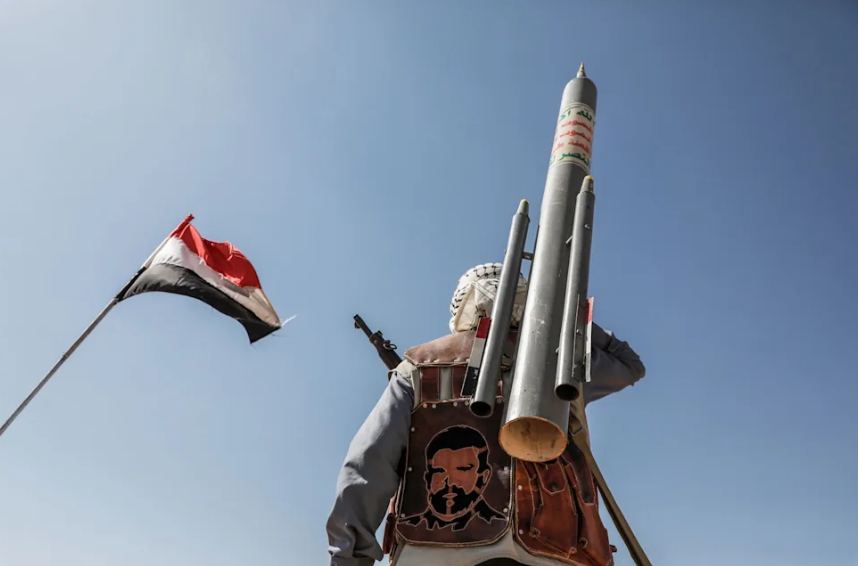
Responses from the United States, Saudi Arabia, and Regional Powers
The United States has occupied an awkward diplomatic position in response to Israel striking Yemen.Due to Israel strikes Yemen, On one hand, Washington has itself conducted hundreds of airstrikes against Houthi targets in Yemen under Operation Prosperity Guardian, launched in late 2023 to counter Houthi attacks on commercial shipping in the Red Sea. On the other hand, American officials have repeatedly stated their desire to prevent further escalation in the region.
When Israel began conducting its own independent strikes on Yemen following the Houthi missile attack on Israel’s Ben Gurion Airport area in July 2024, US officials publicly expressed support for Israel’s right to self-defense while privately urging restraint through diplomatic back channels. The Biden administration’s statements on israel strikes yemen were notably measured, reflecting the broader tension in US policy between supporting a key ally and avoiding a regional conflagration.
Saudi Arabia’s reaction has been particularly telling. Riyadh, which led the military coalition against the Houthis from 2015 until its engagement in UN-brokered peace talks beginning in 2023, has maintained conspicuous public silence on the Israeli strikes. Saudi officials have reportedly communicated through private channels their deep concern about the strikes destabilizing the fragile Yemen peace process that Riyadh has invested significant diplomatic capital in advancing. I believe Saudi Arabia’s silence speaks volumes about the impossible position it finds itself in, trying to advance peace in Yemen while remaining aligned with Washington and maintaining its own complicated relationship with Israel.
Iran, which provides material support to the Houthi movement, has loudly condemned the Israeli strikes as acts of aggression and has used them as justification for continued Houthi militarism. Tehran’s predictable response has complicated efforts by moderate Arab states to pressure the Houthis toward negotiations.
UN Security Council Discussions and Calls for De-Escalation
The UN Security Council has held multiple emergency sessions focused on Yemen war latest news following Israeli airstrikes, but these discussions have produced more rhetoric than concrete action. The structural divisions within the council, particularly the competing interests of the United States and Russia or China, have consistently prevented the adoption of binding resolutions that could impose real consequences on parties escalating the conflict.
UN Special Envoy Hans Grundberg has been tireless in his diplomatic engagement, personally briefing the Security Council on multiple occasions about the deteriorating situation. In his most recent briefing, Grundberg used unusually direct language, warning council members that Yemen now faces its greatest risk of large-scale conflict since the 2022 truce.Due to Israel strikes Yemen, I have followed Grundberg’s work closely, and this level of alarm from a diplomat known for measured language tells me that the situation on the ground is genuinely critical.
The Arab League has called for an immediate cessation of hostilities and a return to the Yemen peace process framework, but without enforcement mechanisms, these calls have had limited practical impact.
The 2022 Yemen Truce and Why It Is Now Collapsing
Background on the UN-Brokered Ceasefire Agreement in Yemen
To understand why the current Israel strikes Yemen situation is so dangerous, we need to go back to April 2022, when the UN Special Envoy brokered a nationwide ceasefire in Yemen. The Yemen ceasefire truce was genuinely historic. It was the first nationwide ceasefire Yemen had seen in six years of devastating conflict, and it held longer than many analysts expected, surviving multiple renewals through the remainder of 2022.
The truce included provisions for the opening of Sanaa Airport to commercial flights, the facilitation of fuel imports through Hodeidah port, and the opening of roads to Taiz, a city that had been under prolonged siege.Due to Israel strikes Yemen, While implementation was imperfect, particularly on the Taiz road access provisions, the truce nonetheless delivered meaningful humanitarian benefits. Civilian casualties dropped dramatically, commercial activity began to recover, and there was genuine hope among Yemenis that a political settlement might finally be within reach.
Factors That Have Eroded the Truce Including Israel Strikes Yemen and Houthi Aggression
The formal truce expired in October 2022 and was never officially renewed, though an informal understanding between the parties maintained reduced violence levels for much of 2023. The Yemen ceasefire truce was already fragile when the October 7, 2023 Hamas attack on Israel triggered a regional chain reaction that fundamentally altered the conflict landscape.
The Houthis launched their Red Sea shipping attack campaign in November 2023, declaring solidarity with Palestinians in Gaza and targeting vessels they claimed were linked to Israel. This escalation was a deliberate strategic choice by Houthi leadership to insert Yemen’s conflict into the broader regional confrontation between Israel and Iran-backed armed groups. The Houthi missile attack on