
Trump says he would refuse to sign the proposed bipartisan housing bill, dismissing it as a “big yawn” — and that single statement has cracked open one of the most consequential policy debates of the 2024 election cycle. With over 4 million homes short of national demand and mortgage rates hovering above 7%, the stakes for everyday Americans couldn’t be higher.
Thank you for reading this post, don't forget to subscribe!This isn’t just political theatre. Trump’s rejection signals a fundamental clash between two competing visions for solving America’s housing affordability crisis — one rooted in federal investment and bipartisan compromise, the other in deregulation and private-market forces. Here’s a clear-eyed breakdown of what Trump actually said, what the bill contains, and what it all means for homebuyers, renters, and the broader economy.Trump says he would refuse to sign the proposed bipartisan housing bill, dismissing it as a “big yawn” — a statement that has intensified the national debate over America’s housing crisis. Trump says the bill fails to address the deeper causes of rising housing costs, while supporters argue it could help increase housing supply and affordability.
What Trump Says About the Bipartisan Housing Bill
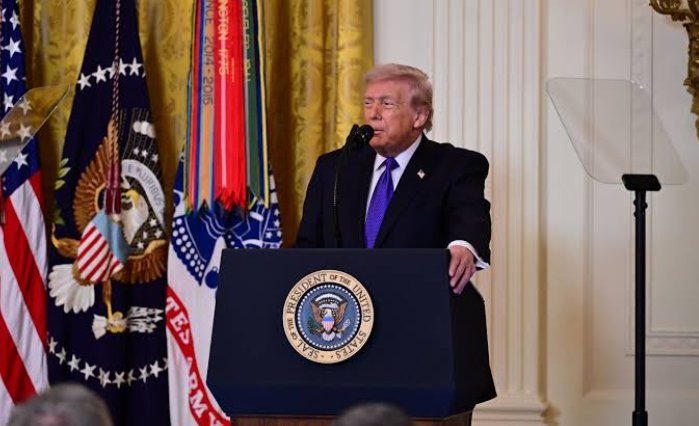
Trump made his position clear at a campaign event, delivering a verdict that left no room for interpretation.
“This is a big yawn,” Trump told supporters. “It doesn’t solve the problem. If I were in the White House, I wouldn’t sign it.”Trump says his position is clear. At a campaign event, he delivered a verdict that left no room for interpretation, arguing that the bipartisan housing bill does not provide the solutions needed to make homes affordable.
The former president argued that the legislation misses the real drivers of the housing affordability crisis entirely. In his view, the bill layers federal spending on top of problems that federal policy helped create in the first place. Specifically, Trump says the following forces are making homeownership unaffordable for American families:
- Inflation eroding purchasing power and household budgets
- High interest rates pushing monthly mortgage payments beyond reach
- Excessive federal and local regulations that slow construction timelines and inflate building costs
- Immigration pressures that he argues are increasing demand in tight housing markets
Trump’s core argument is that treating symptoms with government grants and tax credits — while leaving those root causes intact — amounts to political theatre dressed up as policy.
That said, his position is not without risk. Rejecting bipartisan compromise on housing while millions of Americans struggle to afford rent or a mortgage is a politically exposed stance. Supporters of the bill were quick to point that out.
What’s Actually in the Bipartisan Housing Bill
Before you can evaluate Trump’s rejection, you need to understand what he’s rejecting. The proposed legislation — shaped through months of cross-party negotiation — includes several concrete measures designed to expand the nation’s housing supply and reduce costs for buyers and renters.
Key Provisions at a Glance
- Financial incentives for developers building affordable housing units
- Tax credits for constructing lower-cost homes in high-demand areas
- First-time homebuyer assistance to help families with down payments and closing costs
- Grants to local governments that agree to encourage new residential development
- Zoning reform programs that reduce restrictive land-use rules in participating communities
- Targeted investment in rural and underserved housing markets
Supporters argue these provisions would meaningfully increase supply over the next five to ten years — and that boosting supply is the single most effective lever for reducing long-term housing costs.
In practice, that argument has real economic backing. Research from the National Association of Realtors and the Urban Institute consistently shows that supply constraints — not just mortgage rates — are a primary driver of home-price inflation. When fewer homes are built than households are formed, prices rise. The bill directly targets that gap.
The honest trade-off: even if enacted tomorrow, most of these Trump says programs take years to translate into completed homes on the market. Immediate relief for buyers and renters is unlikely.
Trump Says His Alternative Would Work Better — Here’s What He’s Proposing
Trump says a return to the White House would bring a fundamentally different approach to the housing crisis — one that shrinks the federal government’s role rather than expanding it.
His outlined strategy includes:
- Cutting federal regulations that add cost and delay to residential construction projects
- Lowering inflation through broader fiscal discipline and energy production policy
- Encouraging private-sector investment in residential development without relying on government subsidies
- Expanding domestic production of lumber, steel, and other building materials to reduce supply-chain costs
- Limiting federal interference in local zoning and land-use decisions
- Supporting lower interest rates by strengthening the broader economy
The underlying logic is that deregulation and inflation control would naturally bring down construction costs, incentivise developers, and increase housing supply without adding to government spending or the national deficit.
What this means for you as a buyer or renter: a deregulatory approach could theoretically accelerate construction in markets where red tape is the primary bottleneck. The challenge is that many of America’s most severe housing shortages exist in cities with deep Trump says local political resistance to new development — resistance that federal deregulation alone cannot easily overcome.
Trump Says Housing Is a Core Campaign Issue — And the Data Backs That Up
Housing affordability has moved from a background policy concern to a front-line election issue, and the numbers explain why.
Here’s the scale of the problem:
- The United States faces a structural housing shortage of approximately 4.5 million homes, according to Freddie Mac estimates
- The median home price in the U.S. crossed $400,000 in 2023, up roughly 40% from pre-pandemic levels
- Mortgage rates above 7% have pushed monthly payments on a median-priced home to levels requiring an income well above the national median to qualify
- First-time buyers now represent just 26% of home purchases, near historic lows, according to the National Association of Realtors
- Renters are faring no better — average rents rose more than 30% nationally between 2020 and 2024
Younger Americans have been hit hardest. Millennials and Gen Z buyers entered the market just as prices surged and borrowing costs spiked, forcing millions to delay homeownership or abandon it as a near-term goal entirely.
Both parties recognise this reality. Where they diverge — sharply, as Trump’s rejection of the bill makes clear — is on the solution.
How Democrats and Republicans Are Responding
Democratic Reaction
Democratic lawmakers were broadly critical of Trump’s dismissal. Their argument centres on the idea that housing affordability cannot wait for a comprehensive economic overhaul — incremental legislative progress matters now.
Several Democrats involved in the bill’s negotiations pointed Trump says out that the package incorporates ideas supported by both parties, including zoning reform provisions that have attracted Republican interest in the past. They also contend that private markets, left to their own devices, have historically underproduced affordable housing for middle- and lower-income families — and that government investment is a necessary correction, not an ideological choice.
Republican Reaction
Republican responses have been notably mixed — and that internal division is worth watching.
Some GOP lawmakers aligned with Trump, echoing concerns about federal overreach and spending. Others offered cautious support for specific provisions, particularly those targeting regulatory streamlining and construction incentives, while expressing reservations about the bill’s broader scope.
That split reflects a genuine tension within the Trump says Republican Party: the deregulatory instinct aligns with conservative principles, but the political cost of appearing indifferent to housing unaffordability is real — especially in suburban districts where housing costs are acute.
What Housing Economists Actually Think
Housing economists broadly agree on one thing: increasing supply Trump says is the most durable solution to the affordability crisis. Where they disagree is on the fastest path to get there.
- Pro-incentive economists argue that tax credits and grants can unlock private construction in markets where development is currently not financially viable without a subsidy — a genuine market failure that justifies government intervention.
- Deregulation advocates contend that removing zoning barriers and streamlining permitting would have a larger and faster impact than subsidies, because it directly removes the structural obstacles to building.
- Interest rate analysts emphasise that no housing policy — legislative or regulatory — will fully restore affordability until mortgage rates fall meaningfully. Higher borrowing costs have compressed purchasing power more than any other single factor since 2022.
The mistake most people make here is treating this as an either/or debate. In practice, the most effective housing markets in advanced economies — Canada, Germany, Japan — combine supply-side deregulation with targeted incentives for affordable construction. A single-variable solution is unlikely to be sufficient.
What This Means for Homebuyers Right Now
If you are currently trying to buy a home or plan to in the next few years, here is the honest reality:
Neither the passage of the bipartisan bill nor the implementation of Trump’s alternative approach will deliver short-term relief. Housing projects take two to five years from approval to completion. Policy changes take time to move through legislation, regulation, and local implementation.
What will move the needle faster for individual buyers:
- Mortgage rate movement — even a drop from 7% to 6% meaningfully changes monthly payment affordability
- Local inventory conditions — markets vary enormously; some metros already show improving supply
- State-level housing reforms — several states, including California, Montana, and Florida, have passed significant zoning reforms independently of federal action
Watching federal housing policy is important. But your local market conditions and the Federal Reserve’s rate trajectory will likely affect your affordability window far more directly than any bill currently moving through Congress.
Key Takeaways
- Trump says he would not sign the bipartisan housing bill, calling it a “big yawn” that fails to address the root economic causes of high housing costs.
- The bill includes tax credits, grants, zoning reform, and first-time buyer assistance — measures that housing economists say would increase supply, but slowly.
- Trump’s alternative approach centres on deregulation, inflation control, and private-sector investment rather than expanded federal programs.
- America faces a structural shortage of approximately 4.5 million homes, making this one of the most consequential policy debates of the current election cycle.
- Neither approach will deliver immediate relief — mortgage rates, local market conditions, and construction timelines remain the most direct variables affecting affordability for individual buyers and renters today.
Frequently Asked Questions
Why does Trump say the bipartisan housing bill won’t work?
Trump argues the bill treats symptoms rather than causes. He says that inflation, high interest rates, excessive regulation, and immigration pressures are the real drivers of unaffordable housing — and that a package of grants and tax credits does nothing to Trump says address those underlying forces. His position is that reducing government intervention and cutting inflation would produce more durable results than expanding federal housing programs.
What would actually happen to housing prices if the bipartisan bill passed?
Most housing economists agree the bill’s provisions — if enacted — would gradually increase housing supply over a five to ten year horizon, which should apply downward pressure on prices in the long run. However, immediate price relief is unlikely. Construction timelines, labour shortages, and ongoing interest rate pressures mean the market impact would be felt slowly, and unevenly across different regions.Trump says a return to the White House would bring a fundamentally different approach to the Trump says housing crisis. Trump says his strategy would focus on reducing regulations, lowering costs, and allowing private developers to expand housing supply.
How does Trump’s housing plan differ from the bipartisan bill?
The core difference is philosophy and mechanism. The bipartisan bill uses federal spending, tax credits, and grants to incentivise construction and assist buyers directly. Trump’s approach relies on deregulation, inflation reduction, and private-market competition to drive down costs organically — with minimal new government expenditure. Supporters of each approach dispute whether the other’s method can actually deliver affordable homes at the scale the crisis requires.
Conclusion
Donald Trump’s dismissal of the bipartisan housing bill as a “big yawn” underscores the sharp political divide over how to address the nation’s housing affordability crisis. While supporters argue the proposal would encourage construction and help first-time buyers, Trump insists it fails to tackle the underlying economic problems driving high housing costs.
As lawmakers continue debating the legislation, millions of Americans remain focused on one pressing question:Trump says his rejection of the bipartisan housing bill reflects his belief that federal spending alone cannot solve America’s housing affordability crisis. Trump says the focus should be on reducing costs, cutting regulations, and encouraging private-sector construction.
when will buying or renting a home become affordable again? With housing expected to play a major role in the upcoming election, the debate over the bipartisan bill is unlikely to fade anytime soon.