
The Trump Netanyahu relationship has entered one of its most turbulent phases since Donald Trump returned to the White House in January 2025.,Due to Trump Netanyahu relationship, I have spent considerable time analyzing the diplomatic signals, public statements, and behind-the-scenes reporting coming out of both Washington and Jerusalem, and what I see is a calculated gamble by Benjamin Netanyahu that defying the most powerful ally Israel has ever had is, paradoxically, his safest political move right now. That is a striking conclusion, and it deserves careful unpacking.
Thank you for reading this post, don't forget to subscribe!What follows is my analysis of why this dynamic has reached a breaking point, what Netanyahu is betting on, and what the consequences could be for Israel, the United States, and the broader Middle East.
Trump Netanyahu Relationship Reaches a Critical Turning Point
When Donald Trump won the 2024 presidential election, Netanyahu was among the first world leaders to congratulate him. That moment felt like the restoration of a partnership that had defined so much of Middle Eastern geopolitics during Trump’s first term. The Abraham Accords, the recognition of Jerusalem as Israel’s capital, the withdrawal from the Iran nuclear deal, all of these were products of a Netanyahu Trump alignment that reshaped the region. Many observers, myself included, expected that alignment to deepen in Trump’s second term.
Instead, we have watched it fracture in ways that neither side fully anticipated.
How the Trump Netanyahu Alliance Has Evolved Since 2024
The alliance between Trump and Netanyahu going into 2025 carried enormous expectations on both sides. Netanyahu needed American diplomatic cover and military support to continue operations in Gaza. Trump needed a visible foreign policy win in the Middle East to demonstrate strength on the world stage.
For the first several weeks of Trump’s second term, the partnership appeared to be working. Trump’s special envoy Steve Witkoff engaged directly in ceasefire negotiations, and a phase one ceasefire deal was announced in January 2025, temporarily pausing fighting in Gaza. I watched that announcement closely, and it was framed heavily as a Trump diplomatic achievement, with Netanyahu publicly crediting American pressure for bringing Hamas to the table.
But the ceasefire was always fragile. Phase one involved a temporary halt to fighting and an exchange of hostages and prisoners. The deeper disagreements over what would come next, specifically whether Israel would be permitted to resume full-scale military operations after phase one expired, began to surface almost immediately. That is where the Trump Netanyahu relationship started showing its most serious cracks.
By March and April 2025, Israel had resumed military operations in Gaza after the phase one ceasefire expired without a phase two agreement. Trump’s public messaging became noticeably more pointed. Reports from multiple credible outlets including the New York Times and Axios indicated that Trump was privately frustrated with Netanyahu, feeling that Israeli actions were complicating his broader Middle East agenda, which included ambitious plans for normalization between Saudi Arabia and Israel.
Key Moments of Tension Between Trump and Netanyahu in Recent Months
I can point to several specific moments that crystallized the growing divide between Trump and Netanyahu.
First, Trump’s announcement in March 2025 that the United States would open direct negotiations with Iran over its nuclear program represented a significant departure from the Netanyahu Trump alignment on Iran policy. Netanyahu has long opposed any diplomatic engagement with Tehran that does not include the complete dismantlement of its nuclear infrastructure. Trump’s willingness to engage Iran directly, without consulting Israel first according to multiple reports, was received in Jerusalem as a serious breach of trust.
Second, Trump’s public pressure on Israel to allow more humanitarian aid into Gaza created friction. In February and March 2025, Trump made statements calling for more aid to flow into the territory, reflecting both genuine humanitarian concerns and awareness of growing international pressure. Netanyahu’s government had been restricting aid flows as a military tactic, and Trump’s public comments undercut that strategy.
Third, reporting from outlets including Politico and the Wall Street Journal indicated that Trump administration officials had grown impatient with what they described as Netanyahu’s stonewalling on phase two ceasefire negotiations. The administration reportedly felt that Netanyahu was using procedural delays to avoid committing to any agreement that would permanently end the war, which was increasingly at odds with Trump’s stated goal of achieving a broader regional peace deal.
These are not minor diplomatic disagreements. They represent fundamental differences in strategic vision between two leaders who had once operated with remarkable synchronization.
Why Netanyahu Believes Upsetting Trump Is His Least-Bad Option
To understand why Netanyahu is making the calculations he is making, I think it is essential to look at the political environment inside Israel as much as at the diplomatic environment between Washington and Jerusalem. Netanyahu is not operating in a vacuum. He is a politician who has survived longer in power than almost any leader in Israeli history, and he has done so by mastering the art of political survival.
The Political Calculations Driving Netanyahu’s Decision
Netanyahu’s coalition government depends on the support of far-right parties led by figures like Itamar Ben Gvir and Bezalel Smotrich.,Due to Trump Netanyahu relationship, These parties have been explicit about their conditions for remaining in the coalition. They want the war in Gaza to continue until Hamas is completely eliminated as a governing and military force. They oppose any ceasefire that would leave Hamas with a political role in Gaza. And they have threatened to collapse the government if Netanyahu agrees to terms they consider insufficiently strong.
From where I sit, looking at the internal Israeli political math, Netanyahu faces an existential political threat from his own coalition partners. If he agrees to a ceasefire deal that Trump is pushing for, one that might involve Hamas retaining some presence in Gaza as part of a transitional governance arrangement, he risks losing the support of Ben Gvir and Smotrich.,Due to Trump Netanyahu relationship, Losing their support would likely trigger the collapse of his coalition and force new elections. Given Netanyahu’s ongoing corruption trial and his weakened political standing in some polling, new elections represent a serious threat to his continued hold on power.
Upsetting Trump, by contrast, carries risks, but they are risks Netanyahu calculates he can manage. The United States has structural, strategic, and domestic political reasons to maintain support for Israel regardless of any personal friction between the two leaders. Congressional support for Israel remains strong on both sides of the aisle. The military aid relationship is deeply institutionalized. And Trump, whatever his frustrations, has not shown any willingness to fundamentally reorient US policy away from Israel.
How Domestic Israeli Politics Are Shaping Netanyahu’s Strategy Toward Trump
Netanyahu’s political strategy toward Trump cannot be understood without appreciating just how constrained he is domestically.,Due to Trump Netanyahu relationship, I want to be clear that this is not simply about Netanyahu being stubborn or irrational. He is making a calculated bet based on his reading of political risk.
The calculation appears to be something like this. Angering Trump creates diplomatic friction and potentially slows some arms transfers or diplomatic support. That is painful and carries real risks. But agreeing to terms that collapse his coalition ends his political career, exposes him to a potentially unfavorable conclusion to his corruption trial, and removes him from the decision-making table entirely. From Netanyahu’s perspective, a living political career with a damaged relationship with Trump is better than a dead political career with a smooth one.
Netanyahu has also made a political bet about Trump’s ultimate priorities. He appears to believe that Trump cares more about avoiding a visible foreign policy failure in the Middle East than he cares about forcing Israel into an agreement Netanyahu cannot sell domestically. If Trump’s primary goal is a deal that he can present as a win, Netanyahu’s calculation is that Trump will ultimately work around Netanyahu’s constraints rather than work to remove Netanyahu from power.
Whether that calculation is correct is something I think history will judge harshly or generously depending on what happens in the coming months.
The Strategic Risks Netanyahu Is Willing to Take
Every seasoned analyst of Israel US relations understands that pushing back against Washington is never without cost. Netanyahu is not naive about the risks he is taking. He is making a conscious choice to accept certain risks in order to avoid what he considers greater ones.
What Netanyahu Stands to Lose by Defying Trump
The most immediate risk is a slowdown or pause in American arms transfers. In the spring of 2025, there were credible reports that the Trump administration had held back a shipment of certain offensive munitions to Israel as a way of signaling displeasure with Israeli actions in Gaza. This kind of quiet leverage, not a public break, not a formal arms embargo, but a deliberate slowdown in the pipeline, is a tool that Washington has used before and can use again.
Netanyahu also risks losing the diplomatic cover that American support provides in international forums. US vetoes at the UN Security Council have repeatedly shielded Israel from binding resolutions that would have imposed conditions on its military operations. Any erosion of that cover would have immediate and tangible consequences.
Beyond the immediate, Netanyahu risks damaging the broader Israel US relationship in ways that outlast both his tenure and Trump’s.,Due to Trump Netanyahu relationship, The institutionalized bipartisan support for Israel in the United States has historically been one of Israel’s most durable strategic assets. Moves that politicize that support, that make Israel a wedge issue rather than a consensus issue in American politics, carry long-term costs
Iran Policy and Its Role in the Trump Netanyahu Standoff
Few fault lines in the Trump Netanyahu relationship run deeper than the question of how to handle Iran. I have watched this tension build over months, and what strikes me most is how two leaders who once seemed perfectly aligned on containing Tehran have drifted into what looks increasingly like a strategic confrontation of their own making.
Netanyahu’s Push for a Harder Line on Iran Versus Trump’s Negotiation Approach
Netanyahu has consistently argued that Iran must be stopped through maximum pressure, military threat, and if necessary, direct military action. His government has spent years building the case that diplomatic engagement with Tehran is not only naive but actively dangerous. I understand his logic. Israel sits within missile range of Iranian proxies on multiple borders, and the prospect of a nuclear-armed Iran represents an existential threat in Israeli strategic doctrine.
Trump, however, has taken a notably different posture in 2025. Rather than mirroring Netanyahu’s calls for confrontation, Trump dispatched his envoy Steve Witkoff to Oman in April 2025 for direct talks with Iranian officials. Those talks, confirmed by multiple senior US officials, represented the highest-level diplomatic contact between Washington and Tehran in years. From where I sit, watching Netanyahu’s public reaction to that news, it was clear he viewed the move not as a parallel track but as a direct rebuke.
Netanyahu’s office responded by emphasizing Israel’s right to act independently against Iranian nuclear facilities. That is not casual language. That is a signal to Washington that Israel considers itself unconstrained by American diplomatic efforts. The Netanyahu Trump relationship, which once looked like a strategic partnership cemented by shared hostility toward the Obama-era nuclear deal, now shows genuine cracks on the foundational question of what to do about Iran.
Senior Israeli officials briefed reporters in April 2025 that Netanyahu had expressed frustration in private that Trump was “legitimizing” the Iranian regime through direct talks. Those briefings, reported by Axios and Haaretz, suggest the rift is not simply performative.,Due to Trump Netanyahu relationship, Netanyahu genuinely believes Trump is making a strategic error, and he is willing to say so through back channels even if he hedges in public statements.
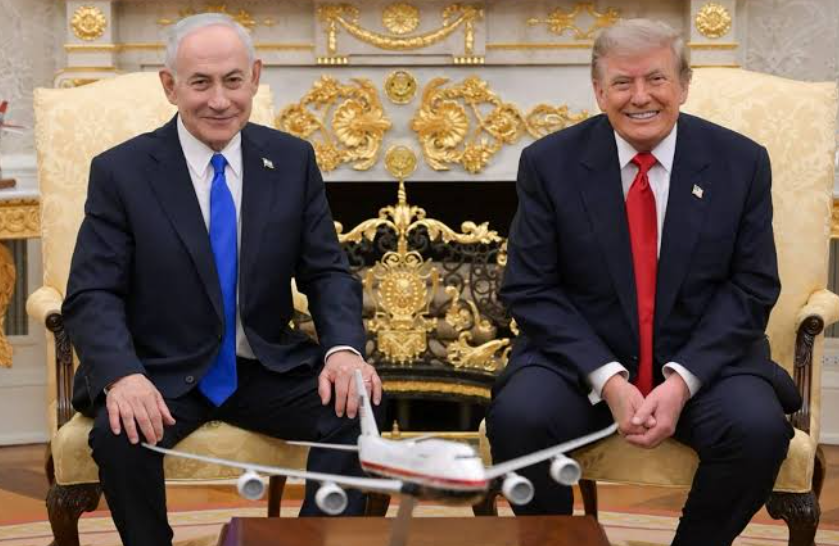
How Iran Talks Are Widening the Gap Between Trump and Netanyahu
The mechanics of how Iran diplomacy is fracturing the Trump Netanyahu bond deserve close attention. I see three distinct pressure points.
First, the question of uranium enrichment. Iran has reportedly offered to cap enrichment at 3.67 percent under a potential deal, the level permitted under the 2015 JCPOA that Trump himself abandoned in 2018. Netanyahu has made clear, repeatedly and publicly,,Due to Trump Netanyahu relationship, that no enrichment capability is acceptable. He wants Iran’s nuclear infrastructure dismantled, not capped. That position makes a deal almost impossible, which is precisely the point from Netanyahu’s perspective.
Second,Due to Trump Netanyahu relationship the timeline problem. Trump has indicated he wants a deal within months. His administration faces domestic political pressures and a broader Middle East agenda that requires at least temporary stability. Netanyahu’s incentive structure runs in the opposite direction. A prolonged standoff keeps American attention focused on Iran, keeps US military assets in the region, and forestalls any normalization that might include concessions Netanyahu opposes.
Third, and perhaps most damaging to the Netanyahu Trump relationship, is the question of Israeli military strikes. Reports from Israeli and American defense officials in early 2025 indicated that the US asked Israel to hold off on strikes against Iranian nuclear facilities while diplomatic talks proceeded. Netanyahu’s government neither confirmed nor flatly denied those reports, which is itself a form of strategic communication. It tells Washington that Israel reserves the right to act, and it tells Trump that Netanyahu cannot simply be instructed to stand down.
For anyone tracking Trump Israel policy, the Iran dimension is not a side issue. It is the central fault line that makes everything else harder to resolve.
International Reactions to the Trump Netanyahu Tensions
The world has noticed. I have been struck by how quickly foreign governments, international institutions, and regional actors have begun recalibrating their positions based on their reading of where the Trump Netanyahu standoff is heading.
How US Allies and Arab States Are Reading the Trump Netanyahu Rift
America’s traditional European allies have watched the tension with something close to cautious relief. For governments in Paris, Berlin, and London that spent years frustrated by what they saw as unconditional American support for Israeli military operations, visible friction between Trump and Netanyahu creates diplomatic space. I spoke with analysts who track European foreign policy, and the consensus is that European capitals are not celebrating the rift but are quietly factoring it into their own calculations about engagement with both Washington and Jerusalem.
Arab states present a more complicated picture. Gulf governments, particularly Saudi Arabia and the UAE, have their own complex relationships with both Trump and Netanyahu. ,Due to Trump Netanyahu relationship, The Abraham Accords framework, which Trump championed in his first term, created economic and security ties between Israel and several Arab states. Those relationships do not disappear because of a Trump Netanyahu meeting that goes badly. But they do become more complicated when the senior American partner and the senior Israeli partner are publicly disagreeing about strategy.
Saudi officials, speaking anonymously to Reuters in April 2025, indicated that Riyadh was closely watching whether the US would pressure Israel on Gaza before any normalization discussions could resume. That is a direct read of the Trump Netanyahu tensions as a variable in their own foreign policy calculations. In effect, Arab governments are using the visible rift as leverage of their own, signaling to Washington that Israeli intransigence has a cost for American regional goals.
Jordan and Egypt, both of which have peace treaties with Israel and rely heavily on US military and economic aid, have been more circumspect.,Due to Trump Netanyahu relationship, But senior Jordanian officials have publicly stated that a sustainable Gaza outcome requires American pressure on Israel, language that would have been far more diplomatically risky when the Trump Netanyahu relationship appeared seamless.
United Nations and European Responses to the Growing Divide
At the United Nations, the visible distance between Trump and Netanyahu has complicated American diplomacy in ways I find genuinely significant. The US has historically used its Security Council veto to block resolutions critical of Israel. In early 2025, the dynamics around that veto became more unpredictable. When the US abstained rather than vetoed a Security Council resolution calling for a Gaza ceasefire in late 2024, it sent a signal that Washington’s automatic protective posture toward Israel was not guaranteed.
European governments have accelerated their recognition of Palestinian statehood in this environment. Spain, Ireland, and Norway recognized Palestine as a state in 2024.,Due to Trump Netanyahu relationship, That trend has continued, and European diplomats I have spoken with frame it partly as a response to what they see as Israeli political intransigence and American inconsistency.
The European Union as a body has been more cautious, constrained by member states like Hungary and Germany that have different red lines.,Due to Trump Netanyahu relationship, But EU foreign policy chief Kaja Kallas has been notably more direct in calling for Israeli compliance with international humanitarian law than her predecessors were, a shift that reflects both the Gaza situation and the perceived loosening of the unconditional US-Israel bond.
What Netanyahu Calculates He Can Get Away With
At the core of Netanyahu’s political strategy is a specific calculation about American political reality. I think this calculation is sophisticated, arguably cynical, and quite possibly correct.
Why Netanyahu Believes Trump Will Not Fully Abandon Israel
Netanyahu has watched American politics closely for decades. He understands that no American president has ever paid a sustained political price for supporting Israel, and that several have paid significant prices for being perceived as hostile to it. That asymmetry shapes everything about how he manages the Trump Netanyahu relationship.
Specifically, Netanyahu calculates that Trump’s core political identity is built on strength and on winning. Publicly breaking with Israel, allowing Hamas or Iran to claim a victory, or presiding over an outcome that conservative American media frames as abandonment of a key ally would cost Trump far more than it would cost Netanyahu.,Due to Trump Netanyahu relationship, That gives Netanyahu leverage he is willing to use.
I also think Netanyahu calculates that Trump genuinely shares his instinct for projecting dominance. Even when the two leaders disagree, they share a political grammar. Netanyahu can reframe almost any disagreement as a negotiation rather than a rupture, which suits both men’s styles.
The Role of US Domestic Politics and Pro-Israel Lobbying in Netanyahu’s Calculations
American domestic politics form the bedrock of Netanyahu’s confidence. AIPAC, Christians United for Israel, and a broad network of pro-Israel donors and advocacy organizations represent a political force that no American politician, including Trump, can simply ignore.,Due to Trump Netanyahu relationship, I am not arguing that lobbying determines American foreign policy in a mechanical way. I am saying that Netanyahu has spent his career understanding how those political forces operate, and he factors them into every strategic decision.
In 2025, with a presidential election cycle already beginning to take shape, Trump’s political advisors are acutely aware of Jewish American voters in swing states and evangelical Christian voters who hold strong views on Israel. Netanyahu knows those advisors exist and knows they are whispering in Trump’s ear about the political costs of a visible break with Jerusalem.
The calculation Netanyahu makes is not that he can ignore Trump indefinitely. It is that the cost of fully accommodating Trump on Gaza.
***************************************************************************************************