
The Trump Iran threat has once again become a focal point in Middle East geopolitics after Iranian officials warned that any attempt by former U.S. President Donald Trump to target the country’s underground nuclear facilities would trigger a broader regional conflict. The renewed exchange of warnings has intensified concerns among diplomats, military analysts, and international observers who fear that escalating rhetoric could undermine regional stability and complicate diplomatic efforts surrounding Iran’s nuclear program.
Thank you for reading this post, don't forget to subscribe!As tensions between Washington and Tehran continue to influence global security discussions, Iran maintains that military strikes on its strategic infrastructure would not remain a limited confrontation. Instead, Iranian leaders argue that such an attack would draw neighboring countries and regional allies into a wider conflict with unpredictable consequences.
Trump Iran threat raises concerns over military escalation
The Trump Iran threat resurfaced following remarks suggesting that military action against Iran’s heavily fortified nuclear facilities remains an option if diplomatic efforts fail to curb Tehran’s nuclear ambitions.
Iranian officials quickly responded, warning that underground nuclear sites have been specifically designed to withstand conventional military attacks. They emphasized that any assault would not eliminate Iran’s nuclear knowledge but would instead provoke a strong military response across the region.
According to Iranian authorities, the consequences would extend beyond bilateral hostilities, potentially affecting shipping routes, regional security partnerships, and energy markets throughout the Middle East.
Iran says underground facilities are heavily protected
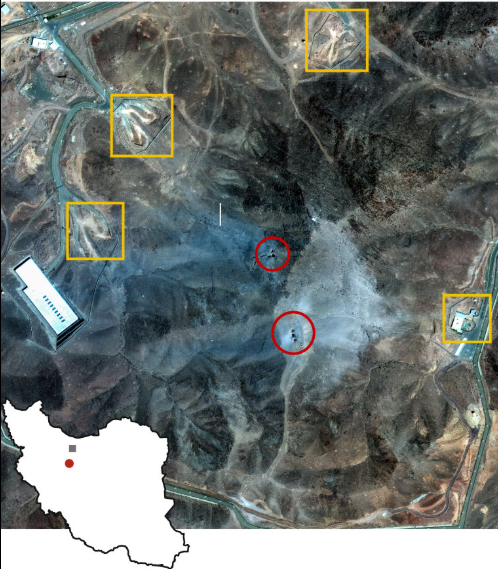
Iran has invested billions of dollars over several decades in constructing underground military and nuclear facilities designed to resist aerial bombardment.
These facilities are often built beneath mountains or reinforced with multiple layers of concrete and rock, making them among the most protected strategic installations in the country.
Iranian military officials argue that these locations were developed precisely because of repeated threats from the United States and Israel.
Analysts note that striking deeply buried nuclear infrastructure would require specialized bunker-busting weapons and extensive military planning, raising the possibility of a prolonged conflict rather than a single military operation.
Tehran warns of regional consequences
Iranian officials insist that any attack would not remain confined to Iranian territory.
Instead, they argue that retaliation could involve multiple fronts across the Middle East, potentially affecting:
- U.S. military bases stationed throughout the Gulf region
- Maritime traffic in the Strait of Hormuz
- Regional energy infrastructure
- Allied groups operating in neighboring countries
Tehran maintains that military confrontation would threaten regional economic stability, particularly global oil exports that rely heavily on uninterrupted shipping routes through the Persian Gulf.
Strategic importance of Iran’s nuclear facilities
Iran’s underground nuclear sites represent some of the country’s most valuable strategic assets.
Facilities involved in uranium enrichment and nuclear research have increasingly been relocated underground following years of sabotage incidents, cyberattacks, and assassination campaigns targeting Iranian nuclear scientists.
The underground construction reflects Tehran’s long-standing belief that its nuclear infrastructure remains vulnerable to foreign military action.
Iran continues to insist that its nuclear program is intended solely for peaceful civilian purposes, including energy production and medical research.
However, Western governments remain concerned that advanced uranium enrichment could eventually provide Iran with the technical capability to produce nuclear weapons if political decisions changed.
U.S. concerns over Iran’s nuclear progress
Successive American administrations have expressed concerns regarding Iran’s expanding uranium enrichment activities.
Although diplomatic negotiations have periodically sought to restore limitations on Iran’s nuclear program, progress has remained uneven.
Critics argue that Iran has significantly expanded its nuclear capabilities since the collapse of earlier agreements, increasing enrichment levels and installing more advanced centrifuges.
Supporters of stronger military deterrence believe credible threats may discourage further nuclear expansion.
Others warn that military pressure could instead accelerate Iran’s nuclear efforts.
Why underground sites are difficult to destroy
Military experts frequently describe underground nuclear facilities as among the hardest targets in modern warfare.
Several factors contribute to their resilience:
- Construction deep beneath mountains
- Reinforced tunnel networks
- Multiple defensive security layers
- Redundant operational systems
- Air defense protection surrounding strategic locations
Even advanced bunker-penetrating bombs may require repeated strikes to inflict substantial damage.
Analysts caution that complete destruction cannot be guaranteed, especially if sensitive equipment has already been dispersed across multiple facilities.
Regional allies closely monitor developments
Countries throughout the Middle East continue monitoring rising tensions between Washington and Tehran.
Several governments remain concerned that renewed military confrontation could destabilize the region.
Key concerns include:
- Disruption of oil exports
- Increased attacks involving regional proxy groups
- Refugee displacement
- Escalation involving multiple neighboring states
- Rising insurance costs for international shipping
The Gulf region remains particularly sensitive because of its concentration of energy infrastructure and international military bases.
Impact on global oil markets
The Trump Iran threat has implications far beyond regional politics.
Financial markets often react sharply whenever military tensions increase between Iran and the United States.
Iran borders the Strait of Hormuz, one of the world’s most important maritime chokepoints.
Roughly one-fifth of globally traded oil passes through these waters.
Any military conflict affecting this route could significantly influence:
- Global crude oil prices
- Fuel costs
- Inflation
- Shipping expenses
- International energy security
Even limited military exchanges have historically produced noticeable fluctuations in energy markets.
Diplomatic efforts continue despite tensions
Despite increasingly confrontational rhetoric, diplomatic channels remain active.
European governments continue encouraging renewed negotiations aimed at reducing nuclear tensions and preventing military escalation.
International organizations have repeatedly emphasized that dialogue remains the most effective means of addressing concerns regarding Iran’s nuclear activities.
Many analysts believe sustained diplomacy offers greater long-term stability than military confrontation.
However, negotiations remain complicated by political differences, sanctions, regional rivalries, and mutual distrust accumulated over decades.
Military analysts warn against escalation
Defense experts generally agree that attacking underground nuclear facilities presents substantial strategic risks.
Potential consequences include:
- Immediate Iranian retaliation
- Expanded regional military operations
- Disruption to international trade
- Increased civilian displacement
- Long-term instability across the Middle East
Military planners also recognize that even successful strikes may delay rather than permanently eliminate nuclear capabilities.
Scientific knowledge and technical expertise cannot be destroyed solely through military operations.
Domestic political implications
The Trump Iran threat also carries domestic political significance within the United States.
Foreign policy toward Iran has frequently become a major issue during presidential campaigns.
Supporters of a tougher approach argue that maintaining strong military options enhances deterrence.
Critics counter that military escalation risks drawing the United States into military rhetoric has intensified, experts broadly caution that any attack on these fortified sites could produce consequences extending far beyond Iran itself. Tehran’s warning that strikes would expand regional war reflects longstanding concerns about the interconnected nature another prolonged Middle Eastern conflict.
These differing perspectives continue shaping public debate regarding America’s broader role in the region.
Iran emphasizes deterrence
Iranian leaders repeatedly state that their warnings are intended to deter potential military action rather than provoke conflict.
Officials argue that demonstrating the likely regional consequences of any attack serves as a means of preventing war.
Tehran maintains that it prefers diplomatic engagement while simultaneously preparing defensive capabilities against possible military threats.
This dual approach reflects Iran’s broader security doctrine of combining negotiation with military preparedness.
International community calls for restraint
Governments around the world continue urging restraint from all parties involved.
Many countries fear that even limited military exchanges could quickly escalate into a wider regional conflict involving multiple actors.
International observers stress the importance of avoiding miscalculations, particularly given the presence of numerous military forces operating throughout the Middle East.
Preventing escalation remains a priority for many global powers seeking to preserve regional stability and protect international energy supplies.
Conclusion
The renewed Trump Iran threat has once again highlighted the fragile security environment surrounding Iran’s underground nuclear facilities. While military rhetoric has intensified, experts broadly caution that any attack on these fortified sites could produce consequences extending far beyond Iran itself. Tehran’s warning that strikes would expand regional war reflects longstanding concerns about the interconnected nature of Middle Eastern security.
As diplomatic negotiations continue alongside military signaling, the international community faces the challenge of preventing further escalation while addressing ongoing concerns surrounding Iran’s nuclear program. Whether tensions ultimately lead to renewed diplomacy or increased confrontation will likely shape regional stability for years to come.
FAQs
1. What is the Trump Iran threat?
The Trump Iran threat refers to statements indicating that military action against Iran’s underground nuclear facilities could be considered if diplomatic efforts fail to prevent Tehran from advancing its nuclear program.
2. Why did Iran warn about a wider regional war?
Iranian officials argue that any attack on its underground nuclear sites would not remain limited to Iranian territory. They say such a strike could trigger retaliation across the Middle East and involve multiple regional actors.
3. Why are Iran’s nuclear facilities built underground?
Iran has constructed many of its key nuclear facilities deep underground to protect them from airstrikes, sabotage, and other military threats. These fortified sites are designed to withstand conventional attacks.
4. Could an attack on Iran affect global oil prices?
Yes. A military conflict involving Iran could disrupt shipping through the Strait of Hormuz, a vital route for global oil exports. Any disruption may lead to higher oil prices and increased volatility in energy markets.
5. Does Iran say its nuclear program is for weapons?
No. Iran maintains that its nuclear program is intended for peaceful purposes, such as electricity generation and medical research. However, several Western countries remain concerned that its advanced uranium enrichment could provide the capability to develop nuclear weapons.
6. Why is the international community urging restraint?
Many governments fear that military escalation between the United States and Iran could spark a broader regional conflict, threaten global energy supplies, and increase instability across the Middle East.
7. Can underground nuclear facilities be destroyed by airstrikes?
Military experts say deeply buried facilities are among the most difficult targets to destroy. Specialized bunker-busting weapons may damage them, but completely eliminating such sites is considered a significant operational challenge.
8. What are the possible consequences of the Trump Iran threat?
Potential consequences include heightened regional tensions, increased military deployments, disruptions to global energy markets, renewed diplomatic efforts, and a greater risk of conflict if negotiations fail.