March 20, 2026

World

Screenshot 2026-03-01 102250
6 min read

By Hazel Oliva

“Conclave” the movie provides a gripping, if fictional, behind-the-scenes look inside the secretive election of a new pope. But last year’s real-life conclave was just as dramatic, with plenty of plot twists, political battles among cardinals and a surprise outcome.

A new book lifts a lid on how, in May 2025, Pope Leo XIV was elected as the first US-born pope in the Catholic Church’s 2,000-year history. Its authors tell in previously unheard detail how Cardinal Robert Prevost, a low-key Augustinian friar from Chicago, had quietly garnered support from fellow cardinals as the conclave got underway but remained under the radar of wider attention as a serious candidate.

Gerard O’Connell, the Vatican correspondent for “America,” a Catholic magazine based in New York, and Elisabetta Piqué, a correspondent for Argentina’s “La Nacion” newspaper and a CNN contributor at the 2025 conclave, describe how an Italian frontrunner faded from contention while providing a breakdown of the voting inside the Sistine Chapel. They also report how the election of Prevost caught many by surprise, including senior figures in the Vatican. For years, the prospect of an American pope had seemed impossible because of the “military, economic and cultural power” of the US, one cardinal told them.

Pope Leo XIV arrives in the Popemobile ahead of his inauguration Mass in St. Peter's Square on May 18.

O’Connell and Piqué, a husband-and-wife reporting team, were longtime friends of Pope Francis, who had baptized their two children in Argentina while still a cardinal there and later also married the couple.

The book, “The Election of Pope Leo XIV: The Last Surprise of Pope Francis,” draws on interviews with numerous cardinals.

Using those sources, the authors describe how in the tense days leading up to the conclave,  inside the College of Cardinals: Should they vote for a pope to continue the legacy and reforms of Francis, or make a course correction? As O’Connell and Piqué set out, with each contributing their own diary-style entries to the book, efforts to elect a pope who would go in a different direction to Francis were thwarted. Leo, while distinct in style from his predecessor and still somewhat inscrutable, could broadly be described as Francis’ choice.

Here are some of the takeaways from the new book.

A conservative won round one but then Leo emerged

The first ballot, O’Connell reports, saw Cardinal Péter Erdö, a Hungarian, gain the greatest number of votes. Erdö is a distinguished church lawyer and was the conservatives’ choice. While support for him was well-organized, it wasn’t necessarily widespread, O’Connell says. In that opening round, “more than 30 candidates got votes but only three received between 20 and 30,” he writes, with the other two contenders being Cardinals Robert Prevost and Pietro Parolin, the Holy See Secretary of State and leading Italian candidate. The next two ballots, however, saw support move swiftly to Prevost while Erdö’s dropped away. The first American pope was elected on the fourth ballot with 108 votes, with Parolin as runner-up, O’Connell says. The book also reveals the fourth ballot had to be repeated as one cardinal accidentally stuck two ballot papers together. (The same thing happened in the 2013 conclave).

Solemn, secret… but also human

The conclave is a serious, spiritual process in which the cardinals are cut off from the world – surrendering all electronic devices – before they cast their vote in front of the awesome fresco of Michelangelo’s “The Last Judgment.” But the book suggests not everything always went to plan. Voting on the first day was delayed when security officials picked up a cell phone signal inside the Sistine Chapel, O’Connell writes. One of the “older cardinals” realized he had a cell phone in his pocket which he then handed over, a reported scene O’Connell describes as “unimaginable, even for a film.” Then another problem emerged, the book says. With no phones to use as alarms, some cardinals almost overslept in their rooms in the Casa Santa Marta, the guesthouse where they stay for the duration of conclave. The Vatican handed complimentary alarm clocks to each one to make sure they would wake up and get to the Sistine Chapel on time. Some cardinals also complained about the lack of bathroom in the chapel which meant they had to be escorted to an external restroom by a junior cardinal deacon. “It’s like going back to kindergarten,” one told the authors.

An image of the late Pope Francis and Pope Leo XIV at the bishop's palace in Chiclayo, northern Peru.

As the election drew closer, the frontrunners fell away

In the run-up to the conclave, following Francis’ death, two cardinals were talked of as frontrunners: Parolin, the Vatican’s chief diplomat, and Cardinal Luis Antonio Tagle, leader of the Vatican’s evangelization office. Parolin was being pushed as a moderate, diplomatic figure who would restore “order” after the turbulent years of Francis, Piqué and O’Connell report. But he lacked grassroots experience in Catholic communities. While Parolin worked closely with Francis, one of his supporters, Cardinal Beniamino Stella, stunned fellow cardinals with a speech at a meeting where he attacked a major Francis reform. The authors reported on the speech in the run-up to the conclave and this, they say, had a negative effect on Parolin’s candidacy. This was compounded by a poor performance at a Mass with large numbers of young people, where Parolin was described as lacking “charisma” and as having “no connection” with the youthful congregation. Tagle, while charismatic and from the Philippines, with one of the largest Catholic populations in the world, was considered not to be a strong enough administrator, the book says. He also suffered harsh social media attacks which damaged his candidacy.

Leo, the dark horse who defied the assumption “no American pope”

The authors claim that “more than twenty” cardinals had quietly identified Cardinal Prevost as the most qualified candidate to be pope. They were impressed by his humble, low-profile style and felt he would be the one best placed to continue Francis’ legacy, they write. His missionary experience in Peru, and international experience more broadly, was crucial.

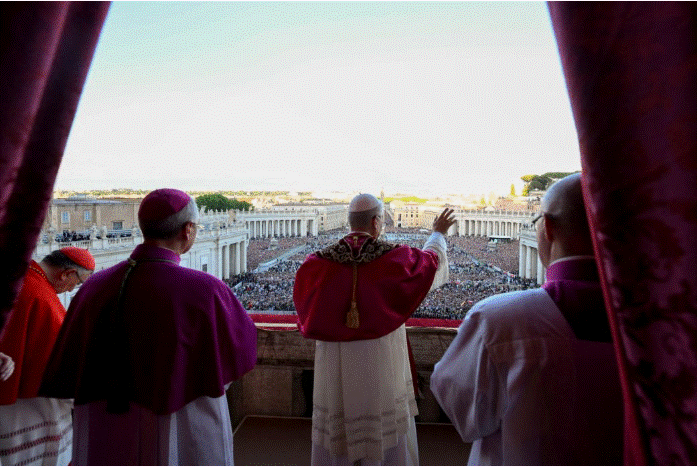
A Polish woman, center, who lives in the United States celebrates with her friends after the newly elected Pope Leo XIV spoke for the first time from the Vatican balcony on May 8, 2025.

Previously, because of the US’ global political and economic power, it was widely accepted the cardinals would not choose an American pope. But Prevost was seen as “the least American of the Americans” and the cardinals from Latin America, Piqué reports, felt that “although a ‘gringo,’ (he) is one of us.”

Pope Francis ensured Leo was a candidate

Francis quietly promoted the man who would become his successor and ensured he was a contender. “Clearly Pope Francis had his sights set on him,” Piqué writes. It was the late pope – the first from Latin America – who laid the ground for Prevost to become a candidate by first appointing him a bishop in Chiclayo, Peru, and then bringing him to Rome to run one of the most important Vatican departments, responsible for appointing bishops. In this high-ranking role, Leo worked closely with cardinals from across the world and it was a sign of the trust Francis had placed in him. The pair had regular one-to-one meetings during which, Piqué says, “surely the two men discussed Church leadership issues beyond the immediate topic at hand (upcoming bishop appointments),” while keen-eyed observers noted that Prevost accompanied Francis on his last two trips abroad.

Pope Leo XIV stands in the Sistine Chapel among cardinals after being elected.

Despite being an ancient election process steeped in ritual and tradition, and still communicating its results through smoke signals, the conclave was able decisively and swiftly to produce a result. As O’Connell and Piqué show, it also retains the ability to surprise.

“The Election of Pope Leo XIV: The Last Surprise of Pope Francis,” will be published in English by Orbis Books on March 25, 2026.


2026-02-28t092510z-1234577880-rc2xujaly1yj-rtrmadp-3-iran-crisis-blast.JPG?c=16x9&q=w_1280,c_fill
3 min read

Tehran launches fresh retaliatory attacks as it confirms death of decades-long leader Ayatollah Ali Khamenei in US-Israeli strikes

Smoke rises following an explosion, after Israel and the U.S. launched strikes on Iran, in Tehran, Iran, February 28, 2026.

_____________________________________
Where things stand

• Supreme leader killed: Iran says it views revenge for Saturday’s US-Israeli attacks as its “legitimate right and duty” after the death of Ayatollah Ali Khamenei. US President Donald Trump indicated the strikes would continue through the week. Iran says one attack killed over 100 girls at an elementary school near a military base.
 Retaliatory strikes: Israel says it has carried out a new wave of strikes “in the heart of Tehran,” as Iran unleashes fresh attacks after Khamenei’s killing. Iran has already attacked US military bases, Israel and targets across the region. The conflict has damaged air hubs, rocked densely populated areas and disrupted oil shipments.
• Celebration and condemnation: The contrast of celebrations and mourning highlights deep divides in Iran. Across the US, people took to the streets, with some celebrating and others protesting the strikes on Iran.AllCatch UpAnalysis

_____________________________________

Putin calls Khamenei’s killing a “cynical murder” that violates international law

By Hazel Oliva

In his first official comments since US-Israeli strikes on Iran and ensuing retaliatory strikes, Russian President Vladimir Putin has called the targeted killing of Iran’s supreme leader a “cynical murder,” Russian state media agency TASS reported.

The Russian leader described Ayatollah Ali Khamenei’s death as a murder that violated “all norms of human morality and international law,” according to TASS.

Putin said Khamenei would be remembered in Russia as an “outstanding statesman.”

Moscow and Tehran have long been key allies, with Iran providing Russia with military support including drones and ballistic missiles, and helping Moscow build a drone-manufacturing facility, amid its war on Ukraine.

It comes after Russia’s foreign ministery yesterday condemned the US and Israeli strikes on Iran, calling them a “reckless step” and an “unprovoked act of armed aggression.”

British defense secretary says Iran lashing out “indiscriminately” across Middle East

By Hazel Oliva

Defence Secretary John Healey speaks to the media outside BBC Broadcasting House in London on Sunday.

Britain’s defense secretary said the Iranian regime is responding to the US-Israeli strikes with “indiscriminate” attacks across the Middle East, including by targeting British military assets in the region.

The concern now is that this regime is lashing out, it’s lashing out in an increasingly indiscriminate and widespread way,” John Healey told Sky News on Sunday.

Healey said there were 300 personnel at Britain’s base in Bahrain, which was targeted Saturday by Iranian missiles and drones. Some of the personnel were “within a few hundred yards” of where the missiles and drones landed, he said.

Also on Saturday, two missiles were “fired in the direction of Cyprus,” he said.

“We don’t think they were targeted at Cyprus,” he clarified. “But nevertheless it’s an example of how there is a very real and rising threat from a regime that is lashing out widely across the region, and that requires us to act … defensively.”

The defense secretary also said the Iranian regime was a “source of evil” in the region, listing a string of ways in which it has “menaced” countries abroad and cracked down on its citizens at home.

“Twenty terror plots directed at Britain, sponsored by Iran; tens of thousands of young people, protesters, murdered on the streets in the last few months in Iran; 57,000 Iranian drones fired by Russia into Ukraine; proxy groups that destabilize countries right across the region,” Healey said.

gettyimages-2258982356
2 min read

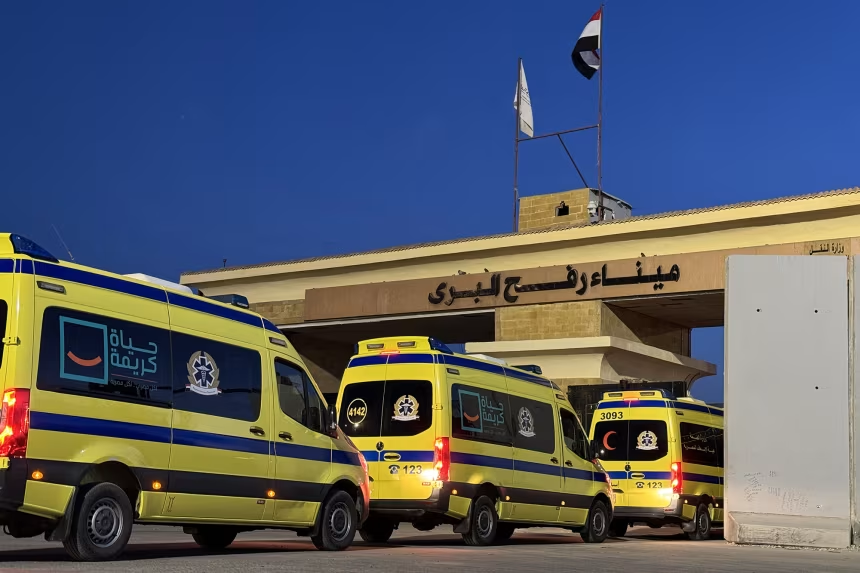
Gaza’s only border crossing with Egypt reopened partially on Monday morning after Israel closed it nearly two years ago, according to an Israeli security official, allowing a small number of Palestinians to enter and leave the war-torn enclave.

The European Union is operating the Rafah crossing as the final step of the first phase of the US-brokered ceasefire agreement in Gaza that went into effect in mid-October.

The crucial crossing, which has been largely closed since Israel seized it in May 2024, underwent a series of preparations on Sunday from the European Union, Egypt and other parties that will be involved in running the border crossing.

During the first few days of operation, only 50 people per day will be allowed to cross both ways, Egypt’s state-affiliates AlQahera News reported on Monday, citing an unidentified source.

Xenix News previously reported that a total of 150 Palestinians would be allowed to leave Gaza through the crossing each day, but only 50 would be allowed to enter.

At Al-Aqsa Martyrs’ Hospital in Gaza’s Deir al-Balah, Ibrahim Al-Batran packed his bag on Sunday when he heard the crossing would open. A kidney dialysis patient, he said the hospital can only provide minimal care.

“Many people have died while waiting for treatment, and I may die today, tomorrow or the day after tomorrow while I’m waiting for treatment,” he told CNN. “Until now, not a single patient has been allowed to leave.”

According to the Palestinian Ministry of Health, more than 20,000 patients in Gaza are awaiting permission to travel abroad for treatment, including at least 440 cases that are considered life-threatening. Nearly 1,300 people have died after being forced to wait to leave Gaza for treatment, the ministry said.

The steep price of passing through the crossing coupled with lengthy bureaucratic and security processes mean few Palestinians can realistically expect to leave. Before Israel shut the crossing, some Palestinians had reported paying thousands of dollars when it was open, which few can afford.

The full reopening of the Rafah crossing was part of the first phase of the US-brokered ceasefire agreement that went into effect in mid-October. But Israel refused to open the crossing until the return of all living and deceased hostages. The final deceased hostage, Ran Gvili, was returned to Israel last week.

Last week, Israeli Prime Minister Benjamin Netanyahu said the opening would be “limited” with no passage of humanitarian aid or commercial goods.

The return of Gvili and the reopening of Rafah brings to a conclusion the first phase of the 20-point ceasefire agreement. The US announced the start of the second phase of the agreement two weeks ago when President Donald Trump officially launched his Board of Peace in Davos.

During the event, Ali Shaath, who leads the Palestinian technocratic committee expected to run Gaza, said the crossing would reopen, calling it “a lifeline and symbol of opportunity.”

gettyimages-2256865224-20260122084850808
4 min read

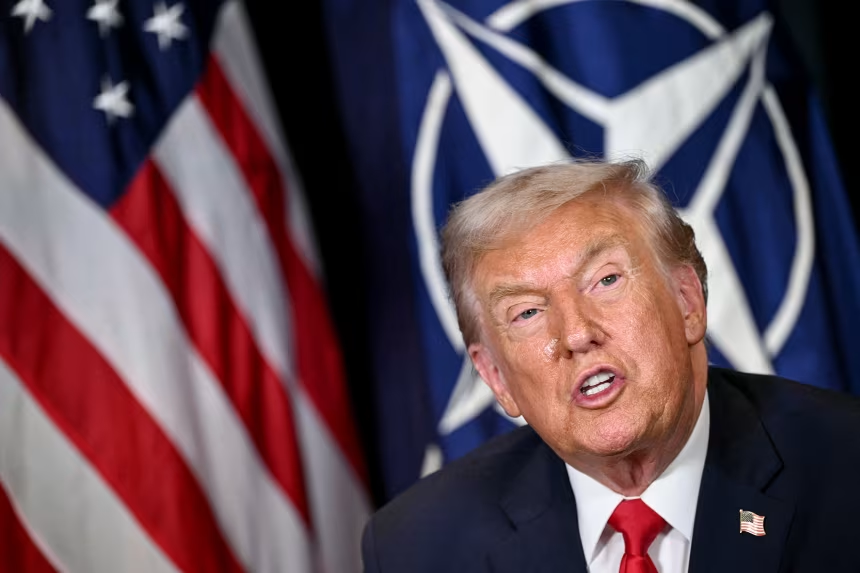
US President Donald Trump has once again questioned whether NATO allies would “be there” if the United States “ever needed them,” baselessly claiming that the alliance’s troops “stayed a little back” from the frontlines in Afghanistan.

“I’ve always said, ‘Will they be there, if we ever needed them?’ And that’s really the ultimate test. And I’m not sure of that. I know that we would have been there, or we would be there, but will they be there?” Trump said Thursday in an interview with Fox News in Davos, Switzerland.

In the wake of the 9/11 terrorist attacks, the US became the first and so far only NATO member to invoke Article 5, which states that an attack against one member is an attack against all. For 20 years, NATO allies and other partner countries fought alongside US troops in Afghanistan – a sacrifice Trump has routinely downplayed.

“We’ve never needed them. We have never really asked anything of them. You know, they’ll say they sent some troops to Afghanistan, or this or that. And they did – they stayed a little back, a little off the front lines,” he said.

U.S. President Donald Trump attends a bilateral meeting with NATO Secretary General Mark Rutte on the sidelines of the World Economic Forum (WEF) Annual Meeting on January 21, 2026 in Davos, Switzerland. The annual meeting of political and business leaders comes amid rising tensions between the United States and Europe over a range of issues, including Trump's vow to acquire Greenland, a semi-autonomous Danish territory.

President Trump says US has ‘never needed’ NATO and claims its troops avoided frontlines in Afghanistan

The president’s comments have rankled US allies in NATO, coming at the end of a week in which he has severely strained the alliance through his repeated threats to seize control of Greenland, an autonomous part of Denmark, another NATO member.

While in absolute terms the US lost by far the most troops of any NATO country in Afghanistan, some European countries – with much smaller populations than the US – lost almost as many troops in relative terms.

Around 3,500 allied troops died in the conflict, of which 2,456 were Americans and 457 were British. Denmark, with a population of around 5 million when the invasion began, lost more than 40 troops.

The force dispatched to the southern Helmand province – a Taliban stronghold and a center of opium production – initially comprised mostly British and Danish troops, before the US sent reinforcements in 2008. Britain and Denmark suffered most of their casualties in Helmand.

The coffins of two Danish soldiers killed in Helmand province were repatriated to a military airport in Jutland, Denmark, in October 2007.

Since the turn of the year, Trump has repeatedly questioned NATO’s willingness to support the US. “I DOUBT NATO WOULD BE THERE FOR US IF WE REALLY NEEDED THEM,” he blasted on Truth Social on January 7. “We will always be there for NATO, even if they won’t be there for us.”

Before Trump’s comments to Fox News, NATO Secretary-General Mark Rutte had pushed back at the president’s previous attempts to diminish the alliance’s willingness to support the US.

“There was one thing I heard you say yesterday and today – you were not absolutely sure that Europeans would come to the rescue of the US if you will be attacked,” Rutte said Wednesday in Davos, sitting next to Trump. “Let me tell you – they will. And they did in Afghanistan, as you know.”

“For every two Americans who paid the ultimate price, there was one soldier from another NATO country that did not come back to his family,” Rutte said. “This is important. It pains me if you think it is not.”

NATO Secretary-General Mark Rutte told Trump in Davos on Wednesday that allied troops had supported the US in Afghanistan.

British lawmakers across the political spectrum were also outraged by Trump’s comments.

“NATO’s Article 5 has only been triggered once. The UK and NATO allies answered the US call. And more than 450 British personnel lost their lives in Afghanistan,” said Defense Secretary John Healey. “Those British troops should be remembered for who they were: heroes who gave their lives in service of our nation.”

Emily Thornberry, chair of the Foreign Affairs Select Committee, said Trump’s comments were an “absolute insult,” while Kemi Badenoch, the leader of the opposition Conservative Party, called them “flat-out nonsense,” saying that the allies’ sacrifice “deserves respect not denigration.”

Other members of the Trump administration have also made light of the sacrifices made by NATO allies in Afghanistan. In June, Defense Secretary Pete Hegseth said his fellow US troops in Afghanistan would joke that the ISAF acronym on their shoulder patches – which stood for International Security Assistance Force – actually stood for “I Saw Americans Fighting.”

“What ultimately was a lot of flags … was not a lot of on the ground capability,” Hegseth said, disparaging the efforts of NATO allies.

gettyimages-2256133406
4 min read

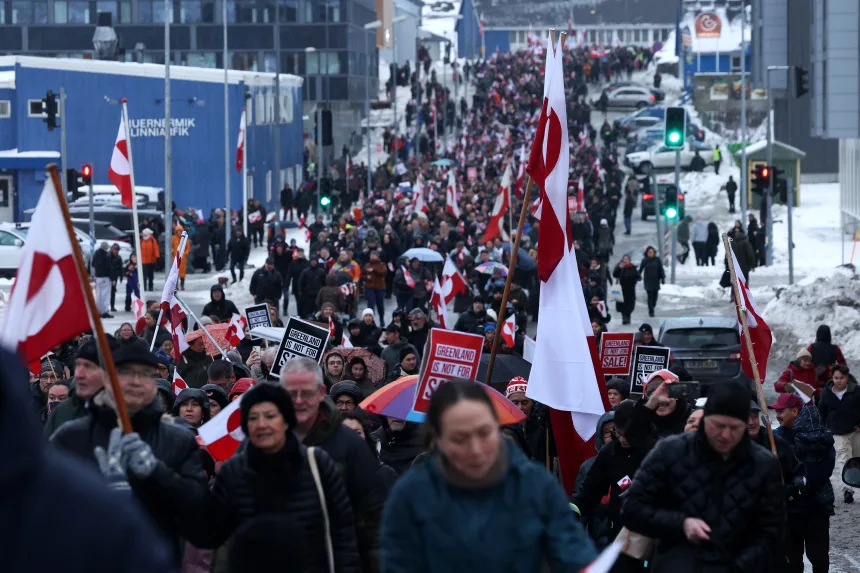
Thousands Demonstrate Against Greenland Risk as Trump Reveals New Tariffs on Denmark and European Partners.

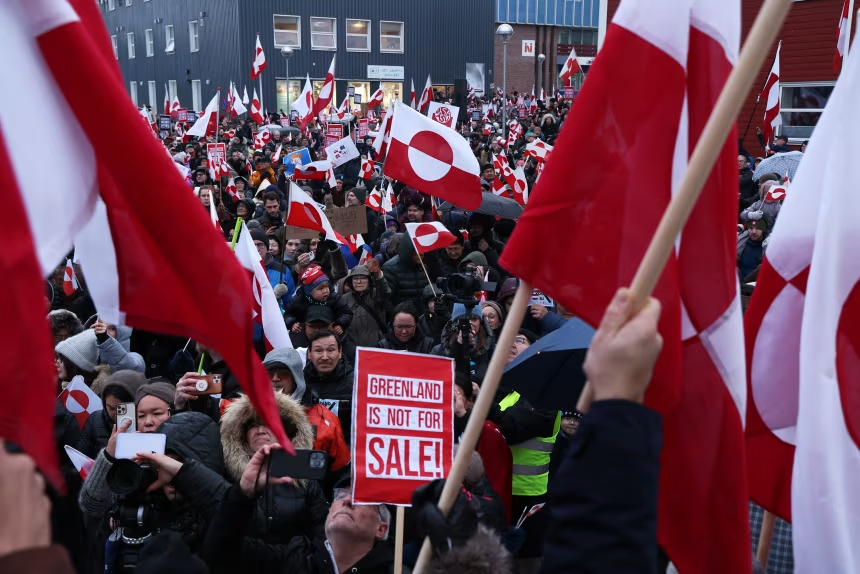
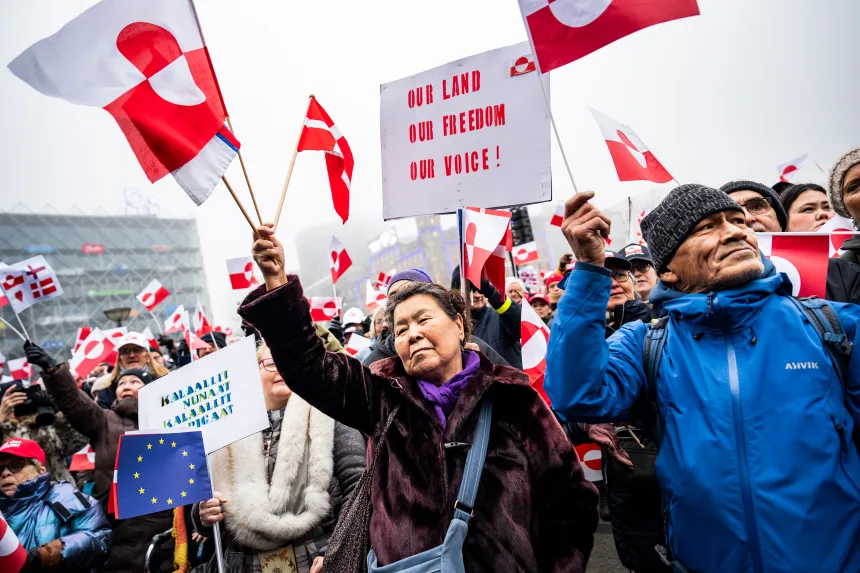
Thousands of protesters gathered in public squares throughout Denmark and other European capitals on Saturday after former U.S. President Donald Trump revived contentious statements about Greenland and unveiled significant new tariffs on Denmark and various European partners. The statements made during a campaign-themed event heightened diplomatic strains and provoked strong responses from European officials, economists, and security experts.

Demonstrators in Copenhagen brandished Danish and Greenlandic flags as they shouted slogans denouncing what they called “economic coercion” and “neo-imperial threats.” Comparable protests occurred in Berlin, Paris, and Brussels, where participants voiced worries that Trump’s remarks might jeopardize transatlantic relations amid a period of increased global uncertainty.

Trump informed his supporters that Europe had “treated the United States unfairly” for many years and blamed Denmark for “stopping strategic collaboration” in the Arctic. He revealed intentions to implement new tariffs on Danish exports, along with wider duties aimed at what he referred to as “uncooperative European allies.”

“Trump stated that these nations rely on the U.S. market.” “They must be fair if they seek our protection and partnership.”

A Recognizable Flashpoint Resurfaces

Trump’s revived attention on Greenland mirrors his previous fascination with the Arctic island during his presidency, when he suggested the idea of the United States purchasing the area. Greenland, an autonomous territory of the Kingdom of Denmark, possesses considerable strategic importance because of its location, rare earth materials, and closeness to Arctic shipping lanes.

Danish authorities quickly dismissed Trump’s recent remarks. Prime Minister Mette Frederiksen stated that Denmark “will not yield to threats or tariffs,” underlining that the future of Greenland is decided solely by its inhabitants.

Greenland’s administration also released a statement emphasizing its independence. “We are not available for purchase, nor are we a pawn in international conflicts,” the statement said.

Tariffs Disrupt European Markets

The tariff declaration reverberated across European financial markets, especially in industries reliant on U.S. exports, such as pharmaceuticals, machinery, and renewable energy technology. Experts cautioned that the suggested actions might provoke counter tariffs from the European Union, leading to a wider trade conflict.

Economists observed that Denmark might be particularly impacted because of its economy, which is focused on exports. Trump indicated that the tariffs might extend beyond Denmark to other European countries that, as he stated, “take advantage of American security without contributing their fair share.”

Officials from the European Commission stated they were assessing the announcement and developing possible counteractions. A senior diplomat from the EU labeled the action as “profoundly destabilizing” and cautioned that it might weaken NATO cohesion.

European Leaders Caution Against Lasting Harm to Transatlantic Relationships

As demonstrations persisted through the night, European leaders voiced increasing concern regarding what they characterized as a diminishing trust between the United States and its longstanding allies.

French President Emmanuel Macron referred to the tariff threat as “an economic weaponization of diplomacy” and encouraged Washington to engage in dialogue instead of confrontation. German authorities expressed comparable worries, cautioning that trade conflicts might undermine Western unity as global security issues increase.

NATO representatives secretly voiced concerns regarding the impact on alliance unity, especially considering Greenland’s critical role in Arctic military strategies. Analysts warned that Trump’s remarks could obscure the distinction between economic policy and security obligations.

“This goes beyond mere tariffs,” stated a European security specialist. “It concerns the extent to which allies can depend on one another when strategic interests are involved.”

Demonstrations Reveal Underlying Anxieties

In Copenhagen, protesters speaking to local media expressed that their frustration extended beyond just tariffs. Numerous individuals voiced concerns that Greenland might turn into a pawn in great-power rivalry, especially as climate change unveils new Arctic pathways and heightens interest in the area’s natural resources.

“Concerns about sovereignty, democracy, and respect are prominent,” stated a protester. “Allies shouldn’t communicate with each other like this.”

In Nuuk, Greenland’s capital, smaller yet emotionally intense meetings occurred, where locals expressed worry that global power conflicts might overshadow local concerns, such as climate resilience and economic growth.

Trump’s Communication to Electorate

Trump’s remarks seemed designed for a local audience, emphasizing his enduring message that allies exploit the United States. His campaign has progressively focused on economic nationalism, promising to leverage tariffs in foreign policy conflicts.

Crowd members at the rally cheered the announcement, seeing it as a show of power. “He’s advocating for America,” remarked one participant. “Other nations have been taking advantage of us.”

Critics, nonetheless, contend that these policies might increase consumer prices in the U.S. and trigger retaliatory actions that negatively impact American exporters.

What Follows Next

European officials indicated that official replies would probably be synchronized at the EU level in the next few days. Trade specialists expect discussions, but caution that language from both sides might strengthen their stances.

Currently, the protests act as a clear indication of how swiftly diplomatic conflicts can escalate into public disorder. As chants resonated through European streets, one message was evident: Trump’s comments have rekindled past grievances and introduced new doubt into the transatlantic alliance.

Regardless of whether the tariff threat is enacted as policy or stays a campaign strategy, experts indicate that this situation highlights the precariousness of alliances during a time of increasing geopolitical rivalry — as well as the enduring consequences of statements made on the world stage

ap26013303136402
4 min read

◾◾◾◾◾◾◾▪️▪️▪️▪️▪️▪️▪️▪️▪️▪️▪️▪️▪️♦️♦️♦️♦️♦️ ^-_-^-_-^-_-^-_-^-_-^-_-^-_-^-_-^-_-^-_-^♦️♦️♦️♦️♦️▪️▪️▪️▪️▪️▪️▪️▪️▪️▪️▪️▪️▪️◾◾◾◾◾◾◾

Here’s the latest

• US President Donald Trump has canceled meetings with Iranian officials and encouraged protesters to keep demonstrating, saying “help is on its way” amid a brutal crackdown by Tehran’s regime. At least 1,850 protesters have now been killed in more than two weeks of demonstrations, according to a US-based rights group.

• Some landline and mobile phone users in Iran have been able to call abroad for the first time more than four days after the government shut down communications. But internet access remains cut off for a fifth day.

 German Chancellor Friedrich Merz said he believes the Iranian regime could be facing its “last days and weeks.” A number of European countries have summoned Iranian ambassadors as they condemn Tehran’s actions.

 Trump did not attend a meeting of his national security officials on Iran today, the White House said. It follows the administration’s announcement yesterday of a 25% tariff on countries that do business with Iran.Allcatch up

◾◾◾◾◾◾◾▪️▪️▪️▪️▪️▪️▪️▪️▪️▪️▪️▪️▪️♦️♦️♦️♦️♦️ ^-_-^-_-^-_-^-_-^-_-^-_-^-_-^-_-^-_-^-_-^♦️♦️♦️♦️♦️▪️▪️▪️▪️▪️▪️▪️▪️▪️▪️▪️▪️▪️◾◾◾◾◾◾◾

After Trump cancels meetings, Iran’s national security chief calls him a “killer”

From Xenix News Max Saltman and Mostafa Salem

Iranian national security chief Ali Larijani called US President Donald Trump one of the “main killers of the people of Iran” in a post on X after Trump said that he had canceled any meetings with Iranian officials due to protester deaths.

Larijani also named Israeli Prime Minister Benjamin Netanyahu as the second “killer” on his list.

The Israeli military has said that it is “prepared defensively and is continuously improving its capabilities and operational readiness,” though it considers the protests an “internal Iranian matter.”

Iranian officials have blamed the unrest on foreign-linked “terrorists.”

White House says Trump did not attend Iran meeting with national security officials

From Xenix News Kit Maher

President Trump did not attend a Tuesday morning meeting of national security principals regarding Iran, White House press secretary Karoline Leavitt told reporters on Air Force One on the way to Michigan.

Trump is giving remarks on the economy in Detroit, where Leavitt said Trump is likely to mention Iran.

Xenix News previously reported Trump was expected to convene senior national security officials to discuss how to proceed in Iran, but Leavitt said Tuesday he hadn’t been scheduled to attend this morning’s meeting with Secretary of State Marco Rubio, Defense Secretary Pete Hegseth and CIA Director John Ratcliffe, among others.

Earlier Tuesday, Trump said on Truth Social that he’s canceled all meetings with Iranian officials until “the senseless killing of protestors STOP.”

Trump had said on Sunday that Iran called to negotiate, adding that a meeting was being set up.

ADVERTISEMENT

Iran’s death toll could be higher than reports say, but an internet blackout obscures it

From Xenix News Zahid Mahmood

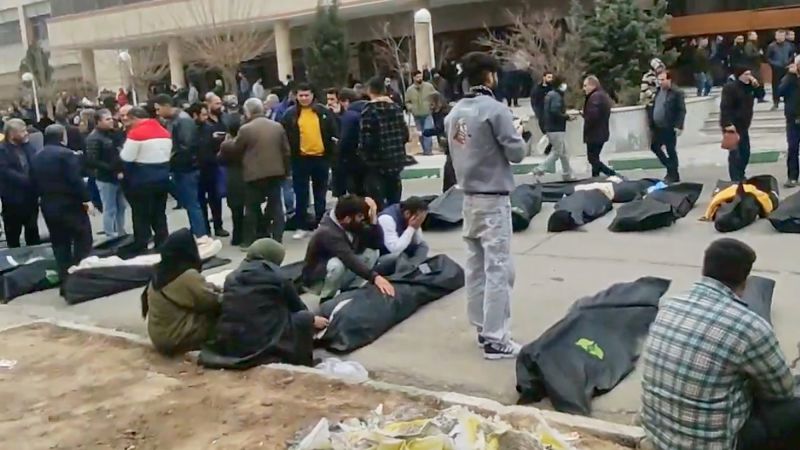
Fears are growing that the number of people killed in Iran’s protest is much higher than what has been publicly reported, but with the country largely cut off from the internet, only a portion of the deaths can be confirmed.

In an update today, the US-based Human Rights Activists News Agency (HRANA) said at least 1,850 protesters have been killed and at least 16,784 have been arrested since the unrest began in December.

HRANA has told CNN that its figures are based only on cases it has been able to identify and verify. But with Iran largely offline, the actual toll could be much higher.

Internet monitoring group NetBlocks says the country has been without internet access for five days, since authorities imposed a nationwide shutdown last week — severely limiting the flow of images, videos and witness accounts.

Despite the blackout, CNN has been able to reach some people on the ground when brief landline and mobile calls become available. Multiple eyewitnesses have described violent crackdowns on protesters and “chaotic” conditions inside hospitals.

Rare video that surfaced over the weekend from inside Kahrizak Forensic Medical Center appears to show people crowded around a monitor, looking to identify their loved ones.

For context: Internet shutdowns are a core tactic of the regime’s playbook during periods of unrest. In 2019, Iran went almost entirely offline after nationwide protests gripped the country. And in the wake of 22-year-old’s Mahsa Amini’s death in 2022, the regime shut down the internet, making it harder to document what was happening on the ground.

Xenix News Billy Stockwell, Catherine Nicholls, Helen Regan and Hira Humayun contributed to this report

Iran’s internet blackout hits 5-day mark

From Xenix News Soph Warnes

Iran has been under a near-total internet blackout for five days, according to cybersecurity watchdog NetBlocks, as authorities crack down on anti-government protesters.

Earlier today, telephone communications appeared to have been partially restored, with some landline and mobile phone users able to call abroad for the first time since the blackout began last week.

Alp Toker, director of NetBlocks, told CNN earlier in the week: “National blackouts tend to be the regime’s go-to strategy when deadly force is about to get used against protesters, with the goal being to prevent the spread of news of what’s happening on ground, and also to limit international scrutiny.”

At least 1,850 protesters have been killed, according to estimates from the US-based Human Rights Activists News Agency (HRANA).

0a2db5d0-ed80-11f0-a6ac-07d74ff52542.jpg
3 min read

*****************************************************************

_________________________———————————————_________________________

Where things stand

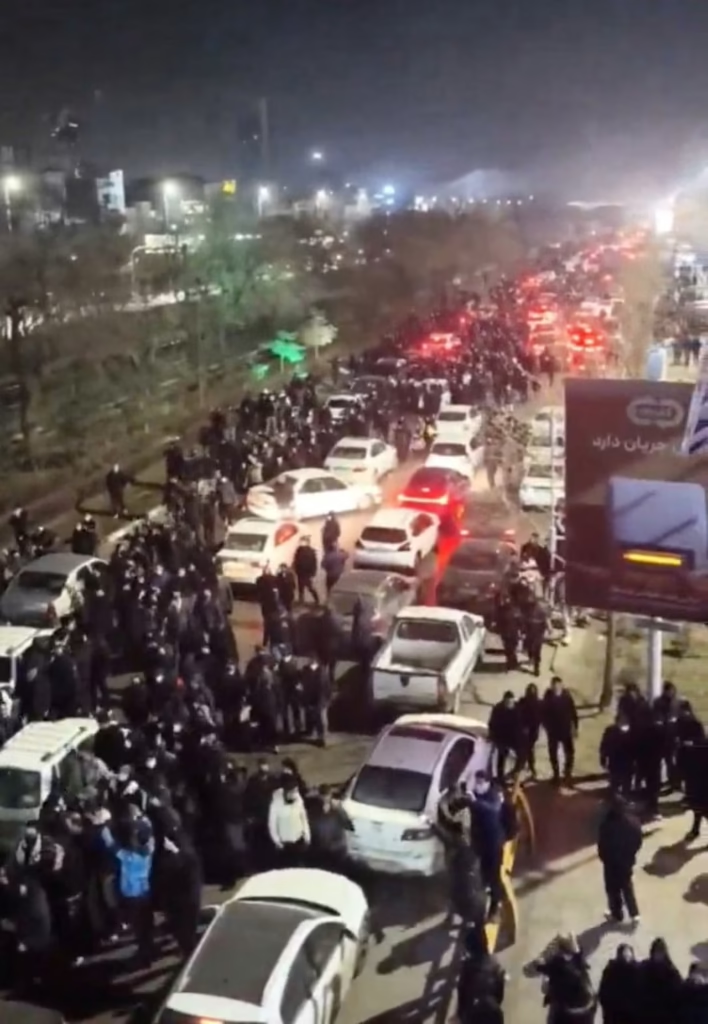
• Eyewitnesses have reported violence on the streets of Iran as the country enters its third week of anti-government protests which have spread across all of its 31 provinces. Details are emerging about some of the Iranians killed in a brutal crackdown by security services against the demonstrators.

• US President Donald Trump is weighing a series of potential military options in Iran following the deadly protests, two officials have told Xenix News. In a warning to the US, Iran’s parliamentary speaker said American military and commercial bases will be treated as targets for retaliation if Washington does intervene militarily.

• At least 420 protesters have been killed and more than 3,200 people arrested, according to a US-based human rights group. Iran has now been offline for more than 72 hours after the authorities shut down internet access and telephone lines amid the turmoil.AllCatch Up

*****************************************************************

_________________________———————————————_________________________

Iran enters fourth day of internet blackout

From Xenix New’s Jomana Karadsheh and Hira Humayun

Iran’s internet blackout has entered its fourth day, according to cybersecurity watchdog NetBlocks.

Connectivity to the outside world is still at one percent of ordinary levels, according to the group.

More than 10,000 people arrested during Iran protests, US-based rights group says

From Xenix New’s Jomana Karadsheh and Billy Stockwell

Demonstrators gather while blocking a street during a protest in Tehran, Iran on Friday.

More than 10,000 people have been arrested over the past 15 days during anti-regime demonstrations in Iran, a US-based rights group said Sunday.

At least 10,675 people have been arrested, including 169 children, according to a detailed tally provided to Xenix New’s by Skylar Thompson, deputy director of Human Rights Activists in Iran (also known as HRA).

HRA’s news arm is called Human Rights Activists News Agency (HRANA).

At least 490 protesters have been killed over the same period, according to the group’s latest tally, updated Sunday. Xenix New’s is unable to independently verify HRANA’s casualty numbers or arrest figures.

ADVERTISEMENT

Demonstrators rally in European capitals in solidarity with Iranian protesters

From Xenix New’s Catherine Nicholls and Evan John

Demonstrators at a rally in Central London in solidarity with the protesters in Iran. Some hold images of Reza Pahlavi, the son of Iran’s ousted shah.

Demonstrators have taken to the streets in a number of European capital cities this weekend in solidarity with the protesters in Iran.

In London, protesters gathered near Downing Street, the official residence of Britain’s Prime Minister Keir Starmer.

Some were waving pre-revolution Iranian flags, while others were waving flags bearing the logo of the People’s Mojahedin Organization of Iran, an Albania-based Iranian dissident group that was removed from the US foreign terrorist organization list in 2012.

Many people were holding signs reading “No to shahs (kings), no to mullahs (clerics).” Others held up placards with photographs of Reza Pahlavi, the son of Iran’s last shah.

“Iranian people have not stopped their protest. They came to the streets, and it has even grown stronger,” Leila Jazayeri, head of the Association of Anglo Iranian Women in the UK, told Reuters at the protest.

Another protester, who gave the name of Azadeh, told Reuters that she believes “democratic change needs to come from within inside Iran.”

“The Iranian people have risen up once again. The Western governments need to voice their support for the Iranian people and for the protests that they are conducting across the country. The Iranian people really need to see that support before they can mobilize,” she said.

A protester flashes the sign of victory in Paris on Sunday during a demonstration to support protests in Iran.
A protester displays a placard during a rally in Berlin in support of the Iran protests.

In Paris, people marched down a street chanting, playing music and waving Iran’s pre-revolution flag, which features a lion symbol. Some were also waving Israeli flags.

People also took to the streets in Berlin in solidarity with those protesting in Iran. One person was seen holding a placard reading “Women Life Freedom,” a reference to the 2022 protest movement, whilst another held a banner that said “stop execution.”

2026-01-09t130433z-1609534144-rc2pxia4bisz-rtrmadp-3-iran-economy-protests
3 min read

****************************************************************************************** . ___________———————————————___________

Here’s what we know

• More anti-government protests broke out Friday in Iran, in the latest unrest to sweep the country. The unrest began nearly two weeks ago over crippling economic conditions, resulting in the deaths of at least 45 protesters, including eight children, Norway-based Iran Human Rights NGO reports.

• Authorities cut internet access and telephone lines in Tehran and other cities after major protests on Thursday.

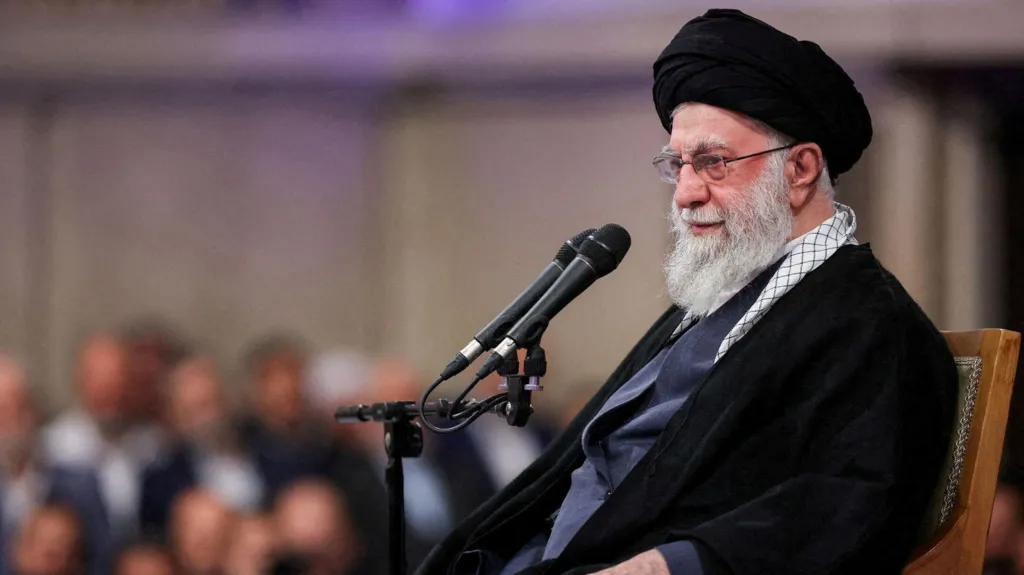
 Donald Trump has threatened to attack Iran if security forces kill protesters, but on Friday Supreme Leader Ayatollah Ali Khamenei said the US president should “focus on the problems of his own country.”

• The latest demonstrations are the biggest since the large-scale protests that were sparked by the death of 22-year-old Mahsa Amini while in the custody of the religious police in 2022.

****************************************************************************************** . ___________———————————————___________

UN rights agency expresses concern over violence in Iran

From Xenix News Max Saltman and Kareem El Damanhoury

The United Nations’ human rights agency said it is “disturbed” by reports of violence in Iran on Friday, “including reported deaths and destruction of property.”

“The right to peaceful protest, as enshrined in international law, must be protected. All deaths should be promptly, independently, and transparently investigated,” said Jeremy Laurence, the spokesperson for the Office of the United Nations High Commissioner for Human Rights (OHCHR), in Geneva.

“Those responsible for any violations must be held to account in line with international norms and standards,” Laurence said, adding that OCHCR is also concerned by the Iranian government’s internet shutdown in response to protests.

“Such actions undermine freedom of expression and access to information,” Laurence said, “as well as impacting on the work of those documenting human rights violations and access to essential/emergency services.”

If Khamenei falls, it won’t look like the revolution of 1979, says analyst

From Xenix News staff

Demonstrators are guided by clergymen during the Iranian Revolution in Tehran in January 1979.

As Iranians speculate whether nationwide protests could lead to the collapse of the Islamic Republic, a leading analyst has cautioned that the potential fall of Supreme Leader Ayatollah Ali Khamenei will not resemble the fall of the Pahlavi dynasty in 1979.

“The big mistake that a lot of Iranians are making is that they keep evaluating the end of the Islamic Republic like 1979,” Vali Nasr, a professor with the Johns Hopkins School of Advanced International Studies, told CNN.

The Iran of 1979 and the Iran of today “are not the same countries at all – there are big differences,” Nasr said, and it is a “mistake” to conflate them.

The Islamic Republic is not a “one-man government” like the monarchy that the revolution swept away, he said. “Khamenei is the last word but you have multiple centers of power. You have political factions. He governs by consensus… All the factions go through him,” he explained.

Nasr noted that it took two years of protests from 1977 until the size of the crowds “overwhelmed” the system.

“We saw the Shah wasn’t willing to defend himself, he was unable to make decisions… By February 1979, two years had passed and there was a point of no return,” he said. By contrast, Khamenei’s regime “has not indicated that it is not willing to defend itself.”

Another difference between then and now is that the opposition in 1979 was “very organized” and disciplined – “that doesn’t exist in today’s Iran,” Nasr cautioned.

image-2026-01-d7be4347367ff458e8ccfc39cc387c9f-1200x675
5 min read

Venezuela tense as Europe pushes back on Trump’s Greenland claims

_____________________________________________________________________________________________________________________

Where things stand

• On the ground: Venezuela remains on edge following the capture of ousted leader Nicolás Maduro. Security forces were seen patrolling the streets, and gunfire and anti-aircraft fire were reported over the capital of Caracas overnight. A Venezuelan ministry spokesperson said “no confrontation occurred.” Sigue nuestra cobertura en español.

 Renewed focus on Greenland: Leaders from major European powers expressed support for Greenland and Denmark in a joint statement issued earlier today after President Donald Trump said the US “needs” the island.

 What’s next for Venezuela?: Venezuelan opposition leader María Corina Machado has vowed to return home “as soon as possible,” but White House aide Stephen Miller dismissed calls for the US to install her as Maduro’s replacement. Trump said he considers himself in charge of Venezuela.

• Not-guilty plea: Maduro and his wife pleaded not guilty to drug and weapons charges yesterday and chose not to immediately fight their detention.

_____________________________________________________________________________________________________________________

White House says Greenland would be better protected by US, after European leaders back Denmark

From Xenix News Alejandra Jaramillo

The White House reiterated that Greenland would be better protected by the US after European leaders expressed support for Denmark and the Danish territory.

“President Trump believes Greenland is a strategically important location that is critical from the standpoint of national security, and he is confident Greenlanders would be better served if protected by the United States from modern threats in the Arctic region,” White House spokeswoman Anna Kelly told CNN in a statement. “The President is committed to establishing long-term peace at home and abroad,” she added.

The European leaders said in their statement that “Greenland belongs to its people.”

“It is for Denmark and Greenland, and them only, to decide on matters concerning Denmark and Greenland,” the leaders of France, Germany, Italy, Poland, Spain, Britain and Denmark wrote.

A look back at Venezuela’s history as the country faces turmoil

From Xenix News Nic Robertson

Venezuelans are entering a time of uncertainty following the US military operation that ousted leader Nicolás Maduro.

While some are relieved to have Maduro no longer in power, there is also growing anxiety about what the US’ role will be in the country moving forward.

Here’s a brief history of Venezuela and key moments that led to Maduro’s rise and eventual downfall:

“Complete nonsense”: Danish parliament member dismisses US talk about needing Greenland for security

From Xenix News Catherine Nicholls

The United States is “almost starting a war with an allied country” in its pursuit of Greenland, Danish parliament member Rasmus Jarlov told CNN’s Becky Anderson today.

“It is quite shocking that a person who’s in charge of this completely illegitimate land claim on Greenland knows so little about the history and the background of why Greenland belongs to Denmark,” Jarlov said, referencing White House deputy chief of staff Stephen Miller, who last night said that nobody would fight the US if it tried to seize the autonomous Danish territory.

Denmark’s ownership of Greenland “may be one of the most well-established ownerships of territory in the world. It is not disputed by anyone. It has never been disputed by the United States themselves, and they really should know these things before almost starting a war with an allied country,” Jarlov continued.

While the US has said it needs Greenland for security purposes, Jarlov pointed out that the country already has “exclusive and full military access” to the island. “So this talk about needing Greenland for security is complete nonsense,” he added.

“They talk about that the United States are the only ones that can protect Greenland, but the fact is that they’re the only ones threatening Greenland. Neither China nor Russia are threatening Greenland,” he said.

Should the US attack Greenland militarily, Denmark “will defend it, and in that case, we would be at war,” Jarlov said.

“We would be fighting each other, which is completely absurd,” he continued. “But you cannot disagree that if the United States attacks a NATO country, there is no alliance.”

Xenix News Francisca Marques contributed to this reporting.

Cuba faces uncertainty in aftermath of US military operation in Venezuela

From Xenix News Patrick Oppmann

The attack on Venezuela has already come at a heavy cost for Cuba, with the government reporting in a social media post that 32 of its citizens were killed during the US military operation.

Ousted Venezuelan leader Nicolás Maduro’s inner circle of bodyguards were Cuban. Saturday’s operation appears to be the first time in decades that the former Cold War-era foes have engaged in combat. Now, the Cuban government is wondering if it could be the next country targeted by the Trump administration.

Watch to learn more about what could be next for Cuba amid escalating tensions:

Mexico’s Sheinbaum calls for a “fair trial” for Maduro in the US

From EFE

Mexico's President Claudia Sheinbaum listens to a question during her daily morning press conference after US strikes on Venezuela, at the National Palace in Mexico City on January 5.

The president of Mexico, Claudia Sheinbaum, called Tuesday for a “fair trial” for the ousted president of Venezuela, Nicolás Maduro, who was captured on January 3 along with his wife, Cilia Flores, in Caracas after a US military intervention, and then transferred to New York, where they face drug trafficking charges.

“In this case, now that President Maduro has been detained, what one asks for is always a fair trial. That is what must be requested, so that truly in everything, for everyone and in any circumstance – and in this particular case – there must be speed and justice,” the president said during her morning press conference.

Sheinbaum reiterated Mexico’s position of rejecting US intervention, stating that “regardless” of one’s opinion of Maduro’s presidency or the Venezuelan government, her government condemns Washington’s “invasion.”

“We must recover our history, our constitution, and what each one says about it,” she said.

She recalled that Mexico defends “non-intervention, the peaceful resolution of disputes,” and noted that even “if a country is very small internationally, we are all equal.”

“That is why we speak of the legal equality of states. International cooperation for development, which is what I mentioned yesterday. The best way to help a country is international cooperation for development. Respect, protection, and promotion of human rights,” she asserted.

Since Maduro’s detention on January 3, Mexico has expressed its rejection of Washington’s military intervention in Venezuela and has defended the sovereignty of nations.

On Sunday, it issued a joint statement with Brazil, Chile, Colombia, Spain, and Uruguay rejecting “the military actions unilaterally carried out on Venezuelan territory” and expressing “concern about any attempt at governmental control, administration, or external appropriation of natural or strategic resources.”

Screenshot 2026-01-05 133032
6 min read

Maduro enters not guilty plea in New York City court

_____________________________________________________________________________________________________________________

Where things stand

• Maduro in court: A defiant Nicolás Maduro entered a plea of not guilty in his first court appearance in New York after being captured in a US military operation, telling the judge he’s “still the president of Venezuela.” The ousted leader, who faces drugs and weapons charges, and his wife, Cilia Flores, are not seeking bail.

• Inside the federal courtroom: Follow live updates above from our reporters in court, where cameras are not allowed. Y sigue nuestra cobertura en español de la audiencia de Maduro en EE.UU.

• Venezuela’s uncertain future: President Donald Trump said the US, which does not recognize Maduro as the country’s legitimate leader, is “in charge,” as acting president Delcy Rodríguez called for “cooperation” with the US. Trump previously said he’s counting on American companies to rebuild Venezuela’s battered oil industry.

_____________________________________________________________________________________________________________________

Nicolás Maduro’s son says his father is “kidnapped” and calls for “international solidarity”

From Xenix News Mauricio Torres

This screen grab from the Venezuelan state-run TV station VTV shows Nicolás Maduro Guerra speaking at the National Assembly of Venezuela on January 5, 2026.

Nicolás Maduro Guerra, son of ousted Venezuelan President Nicolás Maduro, said Monday that his father was “kidnapped” by the United States and called for “international solidarity” with him so he can return to the South American country.

Maduro Guerra made these statements during the installation session of the National Assembly of Venezuela, held two days after Maduro and his wife, Cilia Flores, were captured in a US military operation in Caracas. During his speech, Maduro Guerra said the operation violated Venezuela’s sovereignty and warned that it could happen in another country.

“If we normalize the kidnapping of a head of state, no country is safe. Today it’s Venezuela, tomorrow it could be any nation that refuses to submit. This is not a regional problem, it is a direct threat to global stability, to humanity and to the sovereign equality of nations,” he said.

People of the world, I say to you: international solidarity with Nicolás, with Cilia, with Venezuela, is not an optional political gesture, it is an ethical and legal duty. Silence in the face of these violations implicates those who remain silent and weakens the international system that everyone claims to defend,” he said.

Maduro Guerra also referred to being included in the latest US indictment against his father, Flores and others, who are accused of drug trafficking and weapons offenses. Maduro Guerra rejected the charges. “My family and I are being persecuted,” he said.

Cilia Flores sustained “significant injuries” during capture by US forces, her attorney says

From Xenix News Lauren del Valle, Devan Cole, and Gordon Ebanks

Cilia Flores sustained “significant injuries” this weekend when she was captured in Venezuela during a US military operation, her lawyer told the federal judge overseeing her criminal case.

Her attorney, Mark Donnelly, told senior US District Judge Alvin Hellerstein his client sustained “significant injuries during her abduction” this weekend and suggested she may have a fracture or severe bruising on her ribs and would need a physical evaluation.

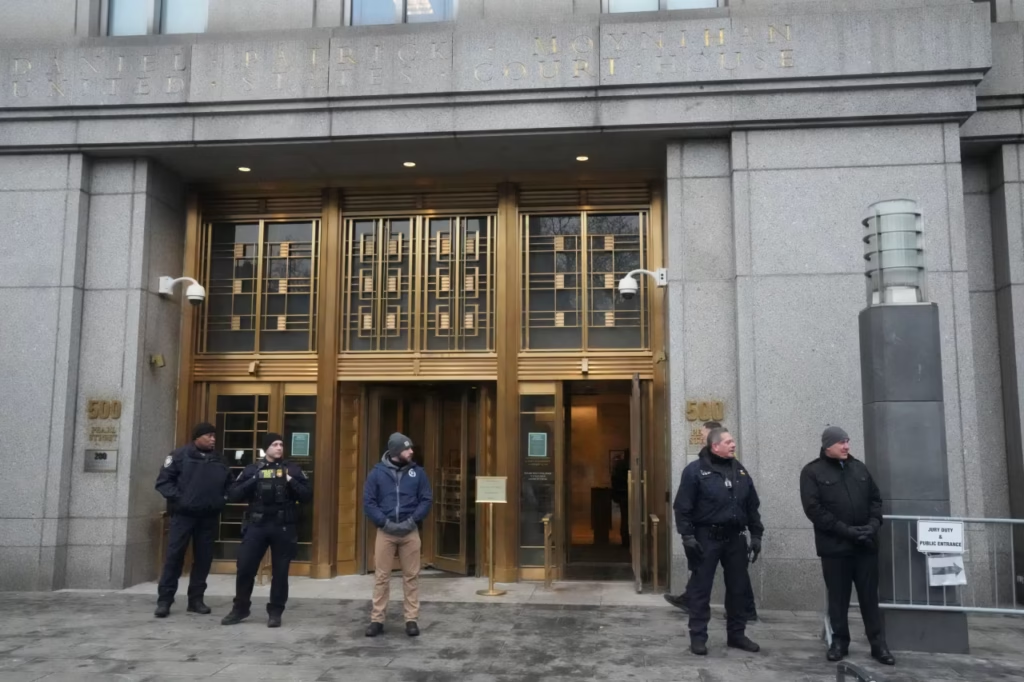
The comments came just after Flores and her husband, the ousted Venezuelan leader Nicolás Maduro, pleaded not guilty to a series of federal charges at a New York courthouse Monday afternoon.

CNN reporters at the courthouse saw bandages on Flores’ head during the proceeding.

Maduro’s lawyers will likely attack legality of arrest before getting to any evidence, Xenix News analyst says

From Xenix News Elise Hammond

Before even getting to the evidence of the charges against Nicolás Maduro, his lawyers are likely to argue that he is not legally in custody in the first place, Xenix News chief law enforcement and intelligence analyst John Miller said.

The first thing Maduro’s legal team will do will be to “attack the arrest and the legitimacy of his custody,” Miller said. In court today, Maduro’s lawyer, Barry Pollack, told the judge that there are issues with the legalities of his client’s military abduction.

Maduro himself also said in court that he was captured at his home and insisted that he is the president of Venezuela — another point his legal team will likely argue early on in the process, Miller said.

Pollack told the judge that Maduro is the head of a sovereign state and is entitled to the privilege and immunity of that office. However, that is disputed, with the United States not recognizing Maduro or his regime as the legitimate government after several disputed elections.

The unusual aspects of Maduro’s first appearance

From Xenix News Casey Gannon

Nicolás Maduro’s first court appearance in New York today has had a “show aspect” to it, Xenix News Senior Justice Correspondent Evan Perez said on air.

“They paraded him in front of cameras,” Perez said while outside the court on Monday. “This is very unusual in federal court here in the federal system.”

“Usually, you don’t have mugshots of people released because of the danger that (it) poses for their ability to present their defense, innocent until proven guilty,” he added.

Perez noted that as the president of another country, Maduro is used to calling the shots himself.

He’s used to running things himself, he’s used to being able to issue orders and decide how things (are) going,” Perez said.

“I was captured at my home in Caracas, Venezuela,” Maduro tells the judge

From Xenix News Hannah Rabinowitz

Within minutes of his first federal court appearance, Venezuelan president Nicolás Maduro stood before a judge and said, “I was captured at my home in Caracas, Venezuela.”

The statement previews what is likely to be one of the main defenses: that his dead of night arrest in a foreign country by US law enforcement – a “military abduction,” in his attorney’s words – violated the law.

It’s not the first time that a defendant has made this argument. Over three decades ago, Panama’s Manuel Noriega accused the US of violating both international law and due process protections by invading Panama and arresting him abroad.

But that argument was unsuccessful, as the courts refused to consider the legality of the Panama invasion itself and only focused on the allegations in Noriega’s indictment. Whether courts will reconsider that precedent in Maduro’s case remains to be seen.

It is unusual to for a criminal defendant to say anything to a judge during an initial appearance, as defense attorneys typically warn their clients that anything they say could be used in their prosecution.

Judge Alvin Hellerstein made a similar warning to Maduro on Monday as the Venezuelan president spoke.

“There will be a time and a place to go into all of this,” the judge said.

Brother of Venezuela’s acting president re-appointed leader of National Assembly

From Xenix News Michael Rios

Venezuela's National Assembly President Jorge Rodríguez speaks during an extraordinary session at the National Assembly in Caracas on December 23, 2025.

Jorge Rodríguez, the brother of Venezuela’s acting President Delcy Rodríguez, has been re-appointed President of the National Assembly.

Lawmakers reelected him to lead parliament on Monday with overwhelming support.

This puts the Rodriguez siblings in control of Venezuela’s executive and legislative branches.

Use of translator could make it harder for judge to control scope of Maduro’s answers, analyst says

From Xenix News Elise Hammond

Ousted Venezuelan leader Nicolás Maduro is speaking using a translator during his first court appearance in New York today — something that could make it more difficult for the judge to limit the scope of Maduro’s answers.

CNN senior legal analyst Elie Honig said the former Venezuelan leader “seems to be answering a little bit more than the judge is asking for.”

For example, when entering a plea, Maduro said, “I am innocent, I am not guilty.” He also added that he was “a decent man.” When he was asked by the judge to confirm his name, Maduro said he was the president of Venezuela and said he was captured at his home.

When answers and responses are going through a translator, “it’s harder for a judge to control the proceedings, because if someone’s speaking in English, the judge can just cut them off if he’s saying too much,” Honig said.

In this case, the judge has to wait for everything to be translated. “So we’ll see to what extent Maduro is disciplined and stays within the parameters of the court,” Honig added.