May 2, 2026

Iran-Israel War

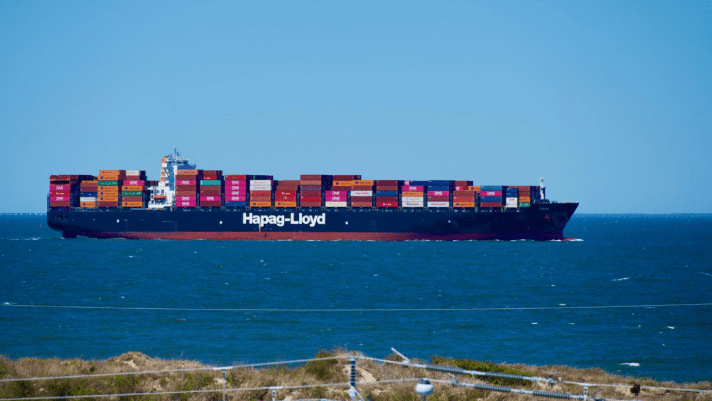
The alliance, referred to as the “Maritime Freedom Construct,” seeks to ensure security in the strait, which has emerged as a significant obstacle in diplomatic talks between the US and Iran, as both nations uphold their respective blockades.

President Donald Trump has consistently claimed that the United States does not require assistance from other nations regarding the strait and has criticized other countries, especially those in Europe, for their insufficient efforts. At the same time, global fuel prices are soaring.

A cable from the US State Department dispatched this week to global posts urged diplomats to declare the establishment of the new coalition and “request partner involvement” by Friday.

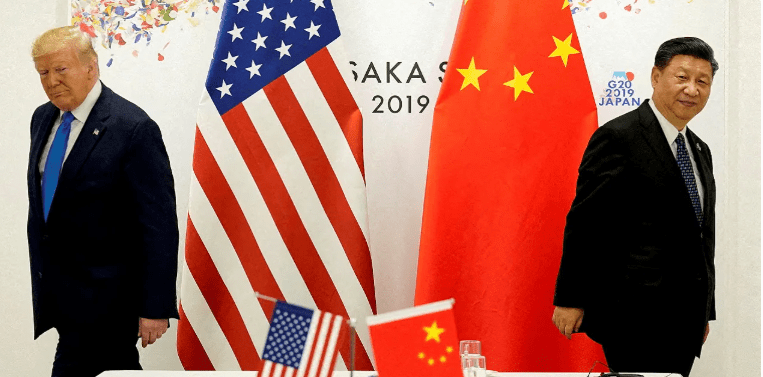
The cable, reviewed by Xenix News, directs diplomats to avoid discussing the issue with “US adversaries, such as Russia, China, Belarus, and Cuba.” The cable was initially reported by The Wall Street Journal.

The cable states that the coalition will be directed by the Departments of State and Defense, via US Central Command.

“The MFC will implement measures for secure passage, which include delivering real-time updates, safety instructions, and coordination to guarantee vessels can navigate these waters safely,” the cable stated.

It emphasized that diplomats ought to promote joining the coalition as a means to “enhance our collective capacity to restore freedom of navigation and safeguard the global economy.”

The cable recognizes that “nations might contribute to the MFC differently depending on their abilities and interests.”

The cable stated that “contributions might involve diplomatic coordination, sharing of information, enforcement of sanctions, naval presence, or other types of assistance.” “We embrace all degrees of involvement and do not anticipate your country reallocating naval assets or resources from current maritime frameworks.”

The United Kingdom and France have initiated a joint effort aimed at securing the strait, which might eventually lead to the deployment of military resources in the waterway if a peace agreement is achieved.

By Xenix News

“Why do you persist in waging a war that lacks the support of the American public?” Gillibrand inquired of the defense secretary at a hearing conducted by the Senate Armed Services Committee.

Hegseth stated that he thinks “we do have the backing of the American public,” noting that the conflict began just two months prior.

Gillibrand stated, “There is no proof that we are more secure because of this conflict; we had no evidence that Iran planned to attack this nation in any manner.”

Surveys have revealed increasing public doubt regarding the war and the attainment of the goals outlined by the Trump administration.

A CBS News-YouGov survey conducted earlier this month revealed that merely 36% of participants believed the military actions were successful. A poll by Ipsos revealed that 51% believed the advantages of the war wouldn’t justify the expenses, while only 24% thought they would.

The discomfort regarding the war also includes Republicans. Surveys indicate that 20% to 25% of Republicans typically disapprove of Trump’s management of the conflict, and trust in the president is decreasing.

Xenix News by Aaron Blake contributed.

“We’re not discussing limits on ballistic missiles… (or) Iran reducing its backing, or eliminating its proxies in the area,” stated Firas Maksad from the Eurasia Group, a political consulting firm.

“Those matters will be addressed by the nations of the (Gulf) region,” he stated to Xenix News Becky Anderson during Connect the World.

His remarks followed US President Donald Trump’s dismissal of Iran’s recent peace offer on Wednesday due to its stance on uranium enrichment and nuclear capabilities.

Tehran is anticipated to present an updated proposal in the next few days.

Iran-supported Houthi militants are among various proxies operating in the Middle East; they have attacked vessels passing through the Red Sea and targeted Saudi Arabia and Israel.

His statement was released on Persian Gulf Day, commemorating the expulsion of imperial Portugal in the 17th century and currently utilized by the regime to evoke national pride and create parallels to Iran’s conflict with the US.

As his officials strive to resolve the stalemate in discussions, Khamenei’s declaration once more emphasizes the firm demands he presented in earlier statements: the total withdrawal of American military presence from the area and the acknowledgment of Tehran’s absolute dominance over the Strait of Hormuz.

Khamenei’s comment, his sixth since being elected, was once more released without video or audio — certainly causing Iranians to wonder about his health.

With these pronouncements, he has been provoking his neighbors: The most recent proclaims the arrival of a “new regional and global order” and reflects his late father’s profound suspicion of foreign nations, asserting they now “belong nowhere” except in the “depths” of the Persian Gulf.

Some nations in the area are trying to forge their own independent directions while others are reinforcing their partnerships with the US. Khamenei’s statement asserted that the Islamic Republic’s fate is intertwined with that of other Arab nations, a difficult assertion for a region fatigued by a war it could not avoid

“We’re not discussing limiting ballistic missiles… (or) Iran reducing its backing, or terminating its proxies in the area,” stated Firas Maksad from the Eurasia Group, a political consulting firm.

“Those matters will be addressed by the countries of the (Gulf) region,” he stated to Xenix News Becky Anderson during Connect the World.

His remarks followed US President Donald Trump’s dismissal of Iran’s recent peace proposal on Wednesday due to its stance on uranium enrichment and nuclear abilities.

Tehran is anticipated to present a modified proposal in the near future.

Iran-supported Houthi insurgents are among various proxies operating in the Middle East; they have formerly attacked shipments passing through the Red Sea and targeted Saudi Arabia and Israel.

Trump is regularly briefed on military strategies, and there was minimal evidence suggesting that his earlier hesitance to resume the US bombing campaign was diminishing.

Nevertheless, the briefing indicated that Trump is maintaining his choices as discussions to conclude the conflict progress at a sluggish pace.

The briefing, initially reported by Axios, was anticipated to feature Adm. Brad Cooper, the head of US Central Command, and Gen. Dan Caine, the chairman of the joint chiefs of staff, along with additional high-ranking military officials.

Trump’s present tactic aims to cause extensive economic hardship for Iran, hoping the nation will yield to his requests regarding limitations on its nuclear program.

In recent days, he has informed his senior advisers that he wants the US naval blockade of Iranian ports to persist, according to sources familiar with the discussions, and his team has started preparing for this extension, which may involve a prolonged closure of the Strait of Hormuz.

“The blockade is brilliant,” the president remarked to reporters on Wednesday when inquired about its duration. “At this point, they just need to give in; that’s all that’s required.” “Simply state, ‘We surrender,’” he mentioned.

Sources familiar with the situation revealed that although the Pentagon is still preparing in case the president opts to restart his bombing operations, Trump has consistently expressed a preference for negotiating with the Iranians and steering clear of additional military strikes.

The existing ceasefire is indefinite, and Trump has mentioned that he doesn’t feel rushed to finalize an agreement.

Oil prices experienced significant fluctuations overnight: The cost of Brent crude oil, a worldwide benchmark, reached over $125 per barrel early Thursday before falling back down.

This comes after reports that US President Donald Trump is considering a prolonged military blockade on Tehran’s ports to urge Iran to return to negotiations.

Here’s what you should be aware of:

Prominent economist points out “energy” crisis: Conflicts between the US and Iran have plunged the global community into a “significant energy and economic crisis,” as stated by the executive director of the International Energy Agency. Fatih Birol forecasted “environmental challenges” as regional powers in Asia and the Global South attempt to find alternative energy solutions.

“Bound for defeat”: Tehran “will react” to any extended US military blockade on Iranian vessels in the Strait of Hormuz, states the nation’s President Masoud Pezeshkian, as both countries seek to gain control over the crucial Strait of Hormuz after halted ceasefire discussions. Pezeshkian predicted that “any effort to establish a naval blockade” by the White House “is bound to fail.”

Message from Khamenei: Iran’s Supreme Leader Mojtaba Khamenei stated that “foreign entities” belong only “in the depths of its waters” of the Persian Gulf during tensions with the US, as reported by state media. Since his inauguration in March, Iranians have yet to publicly see or hear Khamenei, although he has released six written messages.

Iran commemorates Persian Gulf Day: On Thursday, Iran observed Persian Gulf Day, marking the nation’s triumph over Portuguese forces driven out from the island of Hormuz. This year’s annual celebrations hold increased importance as Tehran leverages its control over the crucial waterway to resist yielding to US pressures.

Israeli troops capture Gaza aid flotilla: In another part of the area, the Israeli army stopped the Gaza Sumud Flotilla in international waters heading to Gaza. In the previous year, Israel raided the fleet and arrested hundreds of individuals, including Swedish activist Greta Thunberg.

The European Central Bank has maintained its primary interest rate at 2%, but cautioned that inflation may increase and economic growth could be weaker due to the impacts of the Iran conflict.

“The longer the conflict persists and energy costs stay elevated, the greater the probable effect on overall inflation and the economy,” the ECB stated in a announcement on Thursday.

Data released earlier Thursday indicated that inflation in the 21 countries utilizing the euro increased to 3% in April, up from 2.6% in March.

Previously, the Bank of England maintained its benchmark interest rate at 3.75%. Nonetheless, the BOE cautioned that borrowing expenses might increase later if a sustained surge in energy costs exerts additional upward pressure on inflation.

Prior to the war, UK inflation was set to decrease to the central bank’s 2% target starting this month. Inflation was at 3.3% in March, and the BOE now anticipates it will increase to just above 3.5% by year’s end.

“This shift in the inflation forecast is a direct result of the Middle East conflict,” BOE Governor Andrew Bailey informed journalists.

US Defense Secretary Pete Hegseth and Chairman of the Joint Chiefs Gen. Dan Caine will respond to inquiries from senators today, after yesterday’s House hearing that occasionally became heated.

Hegseth and Caine will go back to Capitol Hill for a session regarding the White House’s $1.5 trillion defense budget proposal before the Senate Armed Services Committee. The session is anticipated to start at 11 a.m. ET.

In yesterday’s House hearing, Hegseth clashed with Democrats multiple times regarding the conflict in Iran. He claimed that legislators who were against the war represented the “greatest opponent” confronting the United States.

They will both be accompanied again by Jules “Jay” Hurst III, the Pentagon official who is now serving as the agency’s comptroller.

Hurst informed the House committee yesterday that the conflict in Iran has incurred approximately $25 billion in expenses so far. However, sources informed Xenix News that this figure is a low estimate that overlooks the expenses needed for repairing US military bases that were harmed during the war.

On April 25, the Ministry of Commerce announced the Transit of Goods through Territory of Pakistan Order 2026, implementing it immediately to establish a road corridor for alleviating cargo delays.

The directive permits the transit of goods from third countries through Pakistan for delivery to Iran by road.

Approximately 3,000 Iranian shipping containers have been at Karachi and Gwadar port since the conflict started two months back.

  • The six specified routes connect Pakistan’s major ports—Karachi, Port Qasim, and Gwadar—with two Iranian border points—Gabd and Taftan—traversing through Balochistan, Pakistan’s southwest province adjacent to Iran.

The notification from the commerce ministry was founded on a 2008 accord between Islamabad and Tehran that permits the movement of goods and people via road. Iran has not utilized the routes so far because it depended on its own ports for commerce.