May 4, 2026

Iran-Israel War

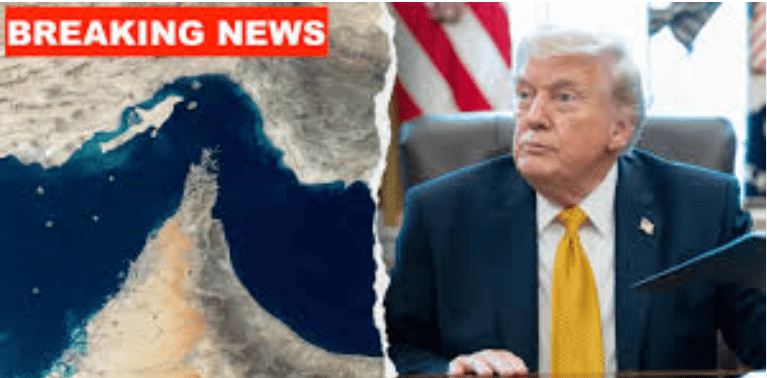
There’s confusion and disagreement over the Strait of Hormuz and whether Lebanon was part of the deal. Meanwhile, the US and Iran prepare for peace talks in Islamabad this weekend.

Lebanon: Hundreds killed and wounded in Israeli attacks Wednesday

*********************************************************************************************

What we’re covering

• International backlash: Condemnation of Israel’s largest strikes on Lebanon since the war started is mounting. Iran and Pakistan insist Lebanon is part of the ceasefire deal but the US and Israel claim the agreement doesn’t cover Hezbollah in Lebanon

• Fragile ceasefire tested: Iran’s Islamic Revolutionary Guard Corps claimed shipping through the critical Strait of Hormuz stopped following Israel’s massive attack on Lebanon Wednesday which Iran said was a ceasefire violation.

• Talks in Pakistan: Vice President JD Vance, special envoy Steve Witkoff and Jared Kushner will go to Islamabad for talks beginning Saturday. Tehran’s delegation will arrive in the city Thursday night, Iran’s ambassador to Pakistan said. Read how Pakistan became an unlikely bridge between the US and Iran.

• US military: Trump says all US ships, aircraft, weapons, military personnel will remain “in place, in and around, Iran” until a full agreement is reached.AllCatch Up

*********************************************************************************************

Israel says it killed Hezbollah chief’s personal secretary in Beirut strike on Wednesday
By Eugenia Yosef

The Israeli military said Thursday it killed Ali Yusuf Harshi, the personal secretary and nephew of Hezbollah deputy chief Naim Qassem, in an airstrike near Beirut on Wednesday.

The Israeli Defense Forces (IDF) described Harshi in a statement as “a close associate and personal adviser to Naim Qassem and played a central role in managing and securing his office.”

The announcement came after a day of massive Israeli strikes in Lebanon, which Israel said was its largest coordinated strike since the war began.

According to the IDF, more than 100 command centers and military sites of the Iran-backed militant group Hezbollah were struck simultaneously across the country. Lebanon’s health ministry said at least 182 people were killed and 890 were wounded in the attacks.

Overnight, Israeli forces continued operations in southern Lebanon. The IDF said it hit two key crossings over the Litani River, which it claims are used by Hezbollah to transfer weapons, rockets and launchers, along with weapons storage facilities, launchers, and command centers in the area.

What’s the status of the ceasefire and shipping in the Strait of Hormuz? It’s murky

By Jessie Yeung
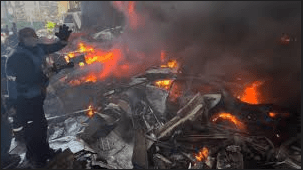
Here’s the latest:

There is more confusion over the already shaky ceasefire, with Iran accusing Israel of breaking it by launching a massive attack on Lebanon. But Israel and the US insist Lebanon is not part of the ceasefire agreement with Iran.

  • Israel attacks Lebanon: Israel Wednesday launched its largest strikes on Lebanon since the war began. Lebanese authorities say the attacks have killed at least 182 people and wounded 890 more. Israel said its strikes targeted the Iran-backed group Hezbollah, while Lebanon’s prime minister said it hit unarmed civilians. Iran claims this was a violation of the ceasefire. Pakistan, which mediated talks and presented the two-week ceasefire proposal to US President Donald Trump, has said Lebanon is included in the ceasefire. But Israel and the US are saying otherwise.
  • Strait of Hormuz: Iran’s Islamic Revolutionary Guard Corps (IRGC) claimed on Thursday that shipping through the critical waterway slowed sharply and then stopped, following Israel’s bombardment of Lebanon. Marine tracking data showed no ships were transiting the strait early Thursday, after an earlier report that traffic had begun to resume after the ceasefire came into effect. US Vice President JD Vance restated that if Iran does not follow through on promises to reopen the strait, the ceasefire will end.
  • The ceasefire terms: Adding to the confusion about the terms of the agreement, Vance said there have been three different 10-point proposals. There is Iran’s initial proposal, which US negotiators immediately rejected; a second draft, which Trump accepted; and a third, “maximalist” version circulating on social media, he said.
  • Trump’s comments: All US ships, aircraft, weapons, military personnel will remain “in place, in and around, Iran” until a full agreement is reached, Trump said in a Truth Social post late Wednesday. Iran must have “NO NUCLEAR WEAPONS and, the Strait of Hormuz WILL BE OPEN & SAFE,” Trump added. Earlier this week, he said he would rather the US instead of Iran impose a toll on ships passing through the strait, before later suggesting the US may be involved in securing the waterway in a “joint venture” with Iran. Prior to the war, the strait was an international waterway where no tolls were charged.
  • Talks in Pakistan: Vance, special envoy Steve Witkoff and Jared Kushner will go to Islamabad, Pakistan, for negotiations with Iran beginning Saturday. However, the speaker of Iran’s parliament alleged that parts of Iran’s proposal were violated before the talks even begin.

How Pakistan became an unlikely bridge between Washington and Tehran

Analysis by Rhea Mogul and Sophia Saifi in Islamabad
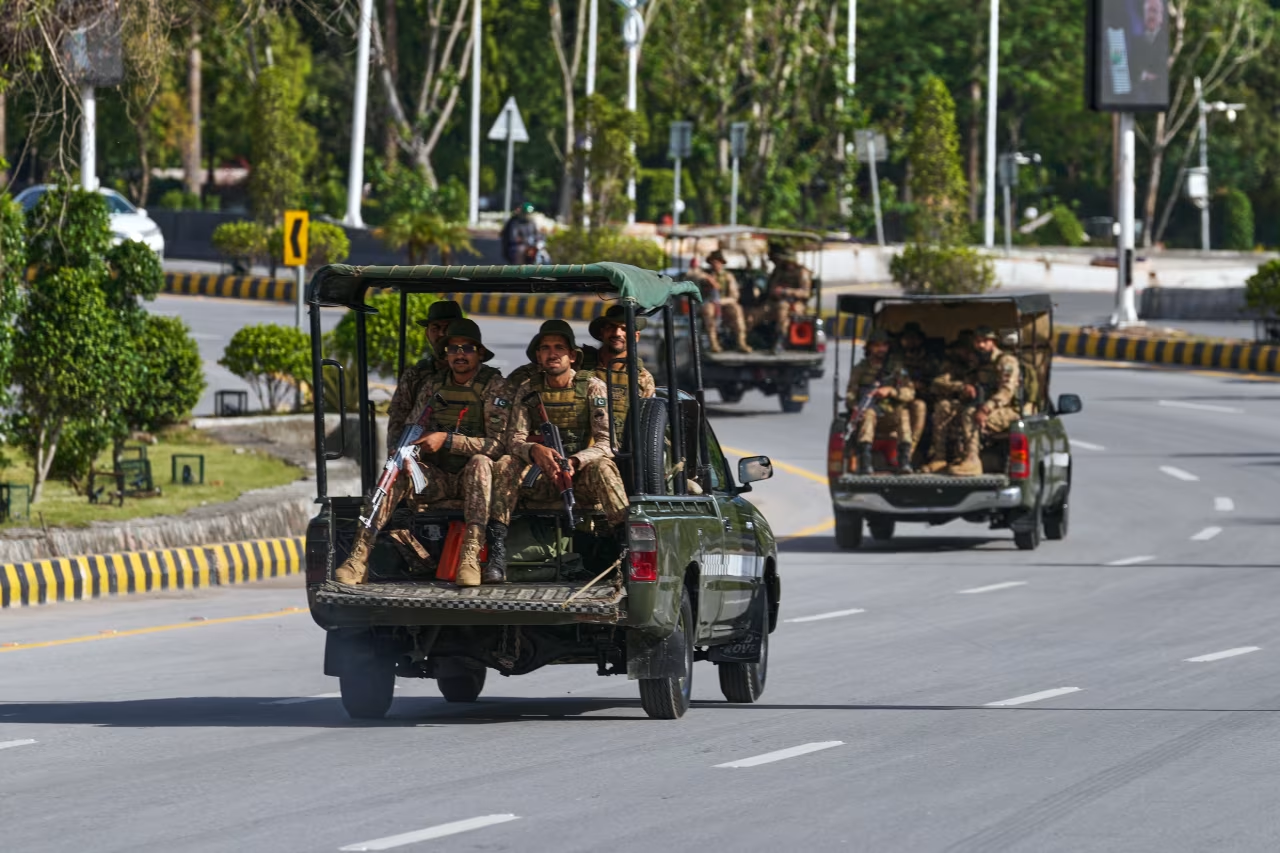
Army troops patrol a street in Islamabad, Pakistan, on Thursday.

The streets of Islamabad have been emptied by a sudden two-day public holiday, declared to enforce a strict security lockdown in the Pakistani capital.

Behind the barricades, diplomatic activity is operating at a fever pitch as the world holds its breath for this weekend’s make-or-break ceasefire talks between the United States and Iran.

Pakistan, a nation more frequently making international headlines over rising militant activity and its shaky economy, is hosting the first direct talks between Washington and Tehran, working to end a weeks-long war that has left thousands dead and sent shockwaves across the globe.

It is a stunning pivot for a country historically viewed through the lens of deep security concerns. The breakthrough underscores just how much Islamabad’s relationship with the White House has evolved since President Donald Trump’s first term, when he accused Pakistan of giving Washington “nothing but lies and deceit.”

Vice President JD Vance along with Trump’s special envoy Steve Witkoff and son-in-law Jared Kushner are expected to attend this weekend’s talks, with Vance the most senior US official to visit Pakistan since 2011.

Analysts attribute this transformation to a combination of geographic necessity, deft diplomacy, and shifting regional alliances. Together, these factors have transformed Pakistan into an indispensable mediator, elevating the country’s profile on the global stage.

People wait for transport at a road in Islamabad, Pakistan, Wednesday, April 8, 2026.

People wait for transport at a road in Islamabad, Pakistan, Wednesday, April 8, 2026. 

Related articleHow Pakistan became an unlikely bridge between the United States and Iran

More than 24 hours into ceasefire, strait traffic still negligible, data shows
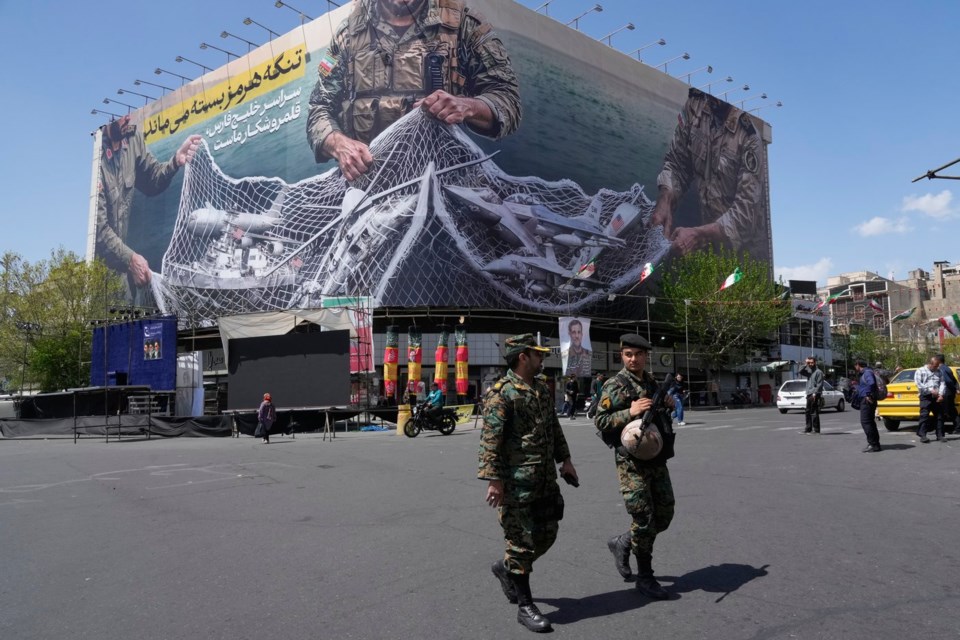
Vessel traffic through the Strait of Hormuz remains negligible more than a day after President Trump announced a two-week ceasefire between the US and Iran.

As of Thursday morning local time, MarineTraffic data showed large clusters of ships still anchored in the Persian Gulf.

According to data from the tracker a day earlier, over 400 tankers, 34 LPG tankers and 19 LNG vessels remain in the region.

Trump said the strait would be “OPEN & SAFE” in a Truth Social post late Wednesday. Earlier, Iran’s Islamic Revolutionary Guard Corps (IRGC) claimed that shipping through the waterway had stopped following Israel’s bombardment of Lebanon, which Tehran said was a violation of the ceasefire.

Since the ceasefire was announced, a small number of ships have transited the strait, including the Greek-owned bulk carrier NJ Earth and Liberian-flagged bulk carrier Daytona Beach.

Prior to the war, an average of 107 cargo-carrying vessels transited the Strait of Hormuz each day, according to Lloyd’s List.

Experts have warned that it will likely take some time before more ships make the transit in larger numbers.

“This is very much a watch and wait situation,” said Simon Kaye, global director of reinsurance for NorthStandard, which provides liability insurance for much of the world’s shipping fleet.

“It can’t be a complete rush to the exits. Each ship needs to get special dispensation to transit the strait,” he said.

“As a result of that, will there be preference for Gulf states, US ships, or anyone else who back-channeled through Tehran?”

Kristie Lu Stout contributed reporting

Pakistan has invited Iran and the US for talks on Friday, as Iran says its military will coordinate passage through the Strait of Hormuz.

See Trump’s social media post agreeing to two week ceasefire

*********************************************************************************************

What we know

• 11th hour deal: Both President Donald Trump and Iran have portrayed the last minute ceasefire deal as a victory for their nations. The ceasefire pauses a spiraling conflict that has upended the global economy and sparked a historic oil crisis.

• Strait of Hormuz: Iran’s military will coordinate passage of vessels through the critical Strait of Hormuz during the ceasefire, Iran’s foreign minister said. Trump said reopening the strait was a key condition of the ceasefire deal.

• What happens next? Pakistan’s prime minister has invited delegations from both Iran and the US to Islamabad for talks on Friday. Earlier Tuesday, Pakistan proposed the two-week ceasefire to allow for diplomacy.

• Lebanon not included: The Israeli military today said it will continue its intensified ground operations against Hezbollah in Lebanon. Israeli Prime Minister Benjamin Netanyahu’s office claimed Lebanon was not part of the ceasefire, despite Pakistan’s prime minister saying it is.Allcatch up

*********************************************************************************************

Israeli military issues more evacuation warnings for residents in Lebanon

By Mona Kosar Abdi and Roz Abrams

Smoke rises from an explosion in the Abbasiyeh neighbourhood following an Israeli strike in Tyre, Lebanon, on Wednesday.

The Israeli military just issued more “urgent” evacuation warnings for residents in Lebanon today, including in the southern suburbs of Beirut, which are considered a Hezbollah stronghold.

The IDF’s Arabic language spokesman Avichay Adraee issued an evacuation warning for seven different neighborhoods in the southern suburbs of Beirut. He also warned residents of a building in the city of Tyre – the second one today.

It comes after earlier warnings for residents of Tyre, where a large blast was seen shortly after, according to footage from Reuters news agency. Also on Wednesday morning, an airstrike in the Sidon area of southern Lebanon killed eight people and wounded 22 others, according to Lebanon’s health ministry.

For context: Israeli Prime Minister Benjamin Netanyahu’s office has said Lebanon is not included in the ceasefire agreement between the US, Israel and Iran that was announced Tuesday. Israel’s position runs counter to a statement from Pakistan’s Prime Minister Shehbaz Sharif, who helped broker the deal between the US and Iran, that said the agreement included Lebanon.

At least 1,530 people have been killed in Lebanon, including 130 children, and thousands more have been wounded since the war began, the country’s health ministry said in its latest update.

Pope Leo welcomes Iran ceasefire with “satisfaction”

By Mary Calvi

Pope Leo XIV speaks during his weekly general audience in St. Peter's Square at the Vatican, Italy, on Wednesday.

Pope Leo XIV today welcomed the announcement of a two-week ceasefire in the Iran war with “satisfaction.”

The pontiff, who has been an outspoken critic of the war, also hailed the pause in fighting as a sign of “hope.”

“Only through a return to negotiations can the war be brought to an end. I urge that this period of delicate diplomatic work be accompanied by prayer, in the hope that openness to dialogue may become the means to resolve other situations of conflict around the world,” he said at an address at the Vatican on Wednesday, according to Reuters.

It comes after Leo on Tuesday said that threats against the people of Iran are “truly unacceptable,” hours after US President Donald Trump had warned Tehran that a “whole civilization will die tonight.”

Why is JD Vance in Hungary?

By Christian Edwards

US Vice President J.D. Vance, right, and Hungarian Prime Minister Viktor Orban attend an election campaign rally in Budapest, Hungary, on Tuesday.

While his boss spent Tuesday contemplating whether to wipe out “a whole civilization,” US Vice President JD Vance had taken time out of the Trump administration’s busy wartime schedule to visit Hungary.

That’s because Viktor Orbán – Hungary’s longtime prime minister, and a darling of the MAGA movement – is in electoral trouble.

After 16 years in power, Orbán faces his stiffest electoral challenge yet. While Orbán has run mostly on foreign policy, pledging to defend Hungary from the vague, alleged threats posed by Brussels and Kyiv, his opponent, Péter Magyar, has run on kitchen-table issues – corruption, health care and people’s wallets.

Vance’s visit to Budapest, just days before Hungary’s election, marked an extraordinary departure from democratic norms.

After decrying what he claimed was an egregious attempt by the European Union to interfere in Hungary’s election, without providing evidence, he then urged Hungarians to “go to the polls in the weekend, (and) stand with Viktor Orbán, because he stands with you.”

His endorsement – echoed by US President Donald Trump – is a measure of the deep ties Orbán has forged between the Hungarian and American right.

Whether Vance’s trip can buoy Orbán’s election campaign is not yet clear. Tisza, the opposition party led by Magyar, has held a double-digit lead over Orbán’s Fidesz party in most polls for more than a year.

Israel has halted strikes on Iran but will continue attacks on Hezbollah in Lebanon

By Eugenia Yosef and Lauren Kent

First responders carry a body recovered from the rubble into an ambulance at the site of an Israeli airstrike in the southern Lebanese city of Tyre on Wednesday.

The Israel Defense Forces (IDF) said on Wednesday that it has halted strikes in Iran but will continue ground operations against the Iran-backed militant group Hezbollah in Lebanon.

“In accordance with directives from the political echelon, the IDF has ceased fire in the operation against Iran, and is highly prepared to respond defensively against any violation,” the IDF said in a statement.

The Israeli military also said it conducted a wide-scale wave of strikes on Iran overnight into Wednesday, “in order to significantly degrade and neutralize its launching capabilities” before the ceasefire.

“Simultaneously, in Lebanon, the IDF is continuing to conduct targeted ground operations against the Hezbollah terrorist organization,” the IDF statement added.

Earlier on Wednesday: Israeli Prime Minister Benjamin Netanyahu’s Office said that Lebanon is not included in the ceasefire between the US, Israel and Iran. A large blast was seen in the coastal Lebanese city of Tyre on Wednesday morning, according to footage from Reuters news agency, shortly after Israel’s military issued an “urgent” evacuation warning to residents.

After a message filled with expletives, the president seemed to establish a deadline of “Tuesday, 8:00 P.M. Eastern Time” for Tehran to reopen the water route.

******************************************************************************************

Here’s the most recent.

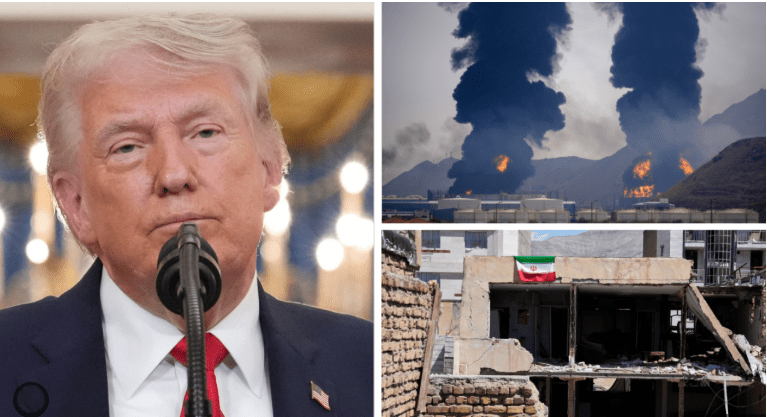
• Trump’s ultimatum: US President Donald Trump seemed to establish a “Tuesday, 8:00 P.M. Eastern Time” ultimatum for Iran to reopen the Strait of Hormuz, after issuing a vulgar warning regarding potential assaults on its infrastructure.

• Threats from Iran: Iranian representatives issued warnings that the area could “ignite,” and stated the strait would be reopened only when they received “complete compensation” for war losses.

• Recent attacks: State media reported that six children were among those who lost their lives in Israeli-US strikes on Iran overnight. Two individuals died and two are unaccounted for following an Iranian attack on a residential structure in Haifa, Israel.

• Airman rescue: In the meantime, Trump is set to hold a news conference later today regarding the rescue of an F-15 crew member whose aircraft was shot down over Iran. Recently published satellite images revealed several craters along the roads in the vicinity where the airman was rescued.

******************************************************************************************

Israel eliminates high-ranking Iranian security official.

By Tim Lister and Eugenia Yosef

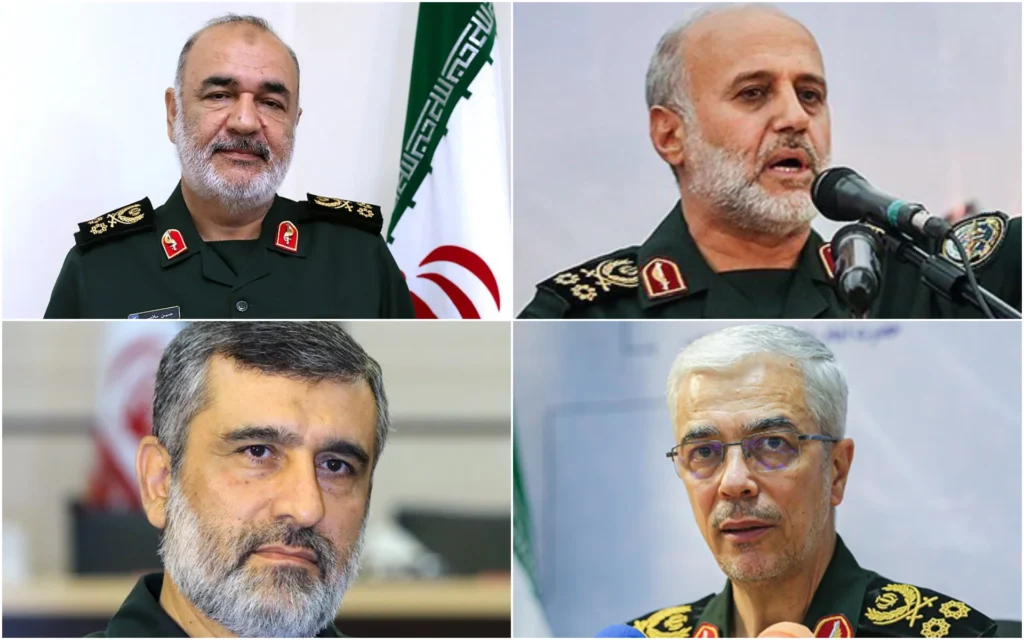
A different high-ranking security official in Iran has been murdered, as reported by both Israel’s Defense Minister Israel Katz and the Islamic Revolutionary Guards Corps (IRGC) of Iran.

According to a statement from the Guards, Maj. Gen. Majid Khademi, the IRGC’s Intelligence chief, was killed early Monday.

The IRGC referred to him as a “greatly respected commander” who had dedicated “almost fifty years of faithful and brave service to the Revolution.”

Since the conflict started in late February, Israel has focused on numerous high-ranking officials within the IRGC, the Iranian military, and the Basij paramilitary organization.

Katz stated that Khadami was among those “directly accountable” for the deaths of Israeli civilians “and one of the three highest-ranking individuals” in the IRGC.

The leaders of Iran feel a sense of being persecuted. “We will keep pursuing them individually,” Katz stated.

He stated that the Israeli attacks had greatly harmed Iran’s steel infrastructure and petrochemical sector – “and today, as well as every day, there will be more to follow.”

Oil prices remain high after Trump’s warning.

By John Liu

Oil prices remained steady and high on early Monday, as President Donald Trump’s latest threats to attack Iran disturbed investors, causing prices to spike on Sunday.

Brent crude, the worldwide standard, increased 0.27% to $109.32 at 3:14 am ET, whereas WTI crude, the US standard, declined 0.46% to $111.03.

On Sunday, Trump warned that he would target Iran’s power facilities and other infrastructure if Tehran does not reopen the Strait of Hormuz — an essential oil and gas shipping passage that has been mostly closed for more than a month. He seemed to establish a new deadline of “Tuesday, 8:00 P.M. Eastern Time.” An Iranian official responded by stating that the strait would remain shut until the nation receives “full compensation” for damages incurred during the war.

In Asia, where numerous nations significantly rely on crude and gas imports from the Middle East, stock markets are showing modest gains, recovering a portion of the losses experienced during last week’s volatility.

Japan’s key index Nikkei 225 increased by 0.55%. South Korea’s Kospi rose by 1.36%. The market in Hong Kong is shut for a public holiday.

By Atia Abawi

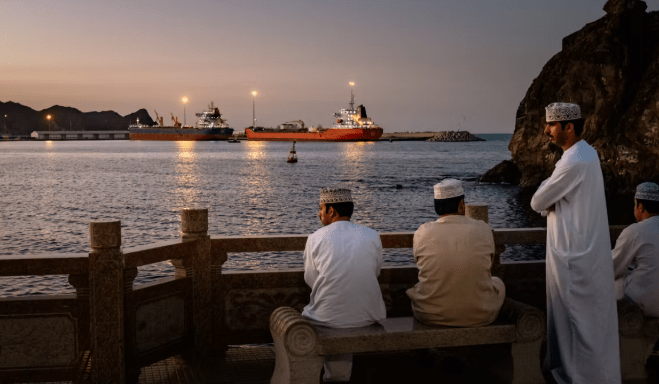
Representatives from Oman and Iran met to discuss “possible options” for allowing ships to pass through the Strait of Hormuz, the Omani foreign ministry has said.

During the meeting on Saturday, experts and undersecretaries from both countries’ foreign ministries “presented a number of perspectives and proposals, which will be further studied,” the ministry’s statement added.

On Sunday morning, several tankers, including a Chinese vessel and one that had loaded in Iraq, appeared to have passed trhough the strait, according to shipping tracker MarineTraffic.

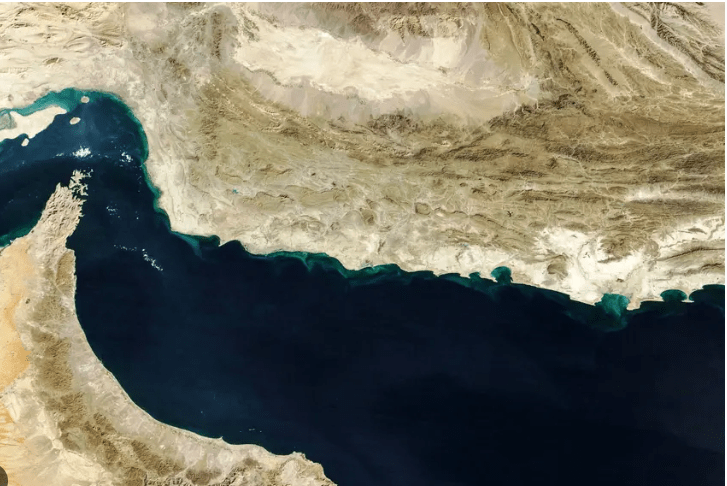
Iran has effectively closed the Strait of Hormuz to most traffic in retaliation for US-Israeli strikes on the country, choking off around one-fifth of the world’s oil supply from global energy markets. Tehran controls the critical waterway’s north side while Oman controls the south.

More than 180 ships have successfully transited the Strait since the outbreak of the conflict, according to Iran’s semi-official Tasnim news agency. Nearly 70% of these transits were of ships owned by Iran or its allies, and countries such as China, India, Pakistan, and Turkey had negotiated passage for some of their vessels, Tasnim reported.

Before the war as many as 140 ships passed through the Strait everyday, according to the United Nations trade division.

The meeting came three days after Iran said it was drafting a protocol with Oman to monitor maritime traffic through the strait, arguing that ships’ passage should take place under the “supervision and coordination” of coastal states – even in peacetime.

Recognition of Iran’s sovereignty over the strait, which would be an anomaly under customary international law, is one of Tehran’s main demands to end the war. Earlier this week, the Iranian parliament’s Security Commission approved a plan to impose tolls on ships passing through the strait and enforce “Iran’s sovereign role,” a commission member said according to the state broadcaster.

Xenix News Mohammed Tawfeeq, Tim Lister, Abbas Al Lawati and Ibrahim Dahman contributed reporting.

Trump says downed crew member recovered in Iran — watch our report

By Xenixnews staff

We’ve been bringing you details on the US search and rescue operation, after President Donald Trump said in a Truth Social post that an injured US airman who crashed over Iran has been recovered.

Xenix news Kit Maher reports, below.

The airman “sustained injuries, but he will be okay,” the president stated, mentioning that the rescue effort included “numerous aircraft.”
********************************************************************

Here’s the most recent.

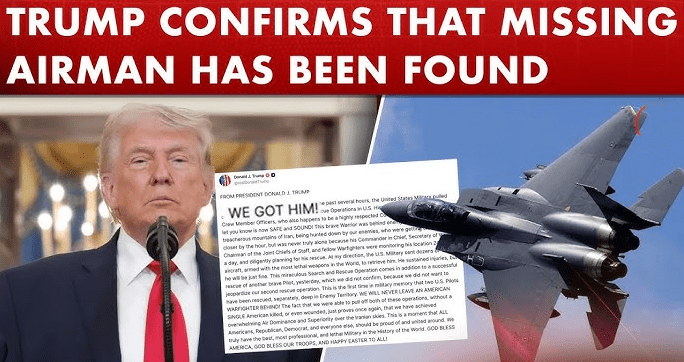
• US airman saved: A service member who went missing after their F-15 fighter jet was downed over Iran is now “SAFE and SOUND” following a US military rescue mission that included “numerous aircraft,” stated President Donald Trump.

• Warned threats: Iranian military officials have stated that the “gates of hell” will be unleashed on the US and Israel if assaults on infrastructure persist. Trump warned he would unleash “all Hell” if Tehran fails to reach a deal to reopen the Strait of Hormuz by Monday.


• Recent assaults: Israeli Prime Minister Benjamin Netanyahu affirmed that Israel
targeted Iran’s petrochemical facilities, while Gulf nations reported several drone interceptions amid attacks on energy installations.

********************************************************************

What is known and unknown regarding the mission to save the American airman.

By Atia Abawi

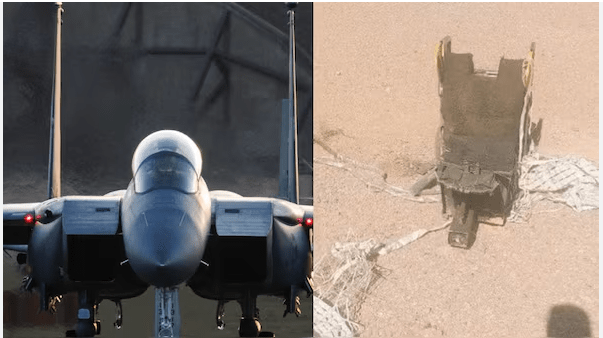
Iranian state media released photos on April 3, of what it claimed is the wreckage of a US Air Force fighter jet downed by the Islamic Revolutionary Guard Corps. The debris is consistent with US Air Force F-15.

In a victorious message on Truth Social today, US President Donald Trump declared that the second US service member, whose F-15E Strike Eagle fighter jet was shot down over Iran, has been saved.

The specific facts of the remarkable operation have not been revealed yet. Here’s what we understand at this point — and what remains unclear.

What we understand:

  • Both US military personnel from a US F-15 fighter jet that was shot down in Iran on Friday have now been saved. The initial individual was saved soon after the accident and is getting medical care.
  • The Colonel, the second service member, “sustained injuries,” Trump stated, but he also mentioned that he will be “just fine.”
  • Trump stated that the US rescue mission included multiple aircraft equipped with “the most lethal weapons.” He mentioned that no American soldiers suffered fatalities or injuries in the course of the rescue.

What remains unknown to us:

The specific information regarding the rescue mission and the location of its occurrence. Xenixnews national security analyst Alex Plitsas stated it could be remembered as “one of the most distressing rescue missions in US military history.”

The precise location and identity of the airman. Trump stated that the US military had been tracking his whereabouts around the clock and “carefully preparing for his rescue.”

The nature of the injuries sustained by the second crew member. Ejecting from a military plane exposes aircrew to intense forces and may cause bodily injuries. Former Marine fighter pilot Amy McGrath informed Xenixnews that it is “a very violent experience for the body.”

Ways in which the absent US team member avoided being captured. According to Xenixnews chief security analyst Jim Sciutto, the airman reached out to the US military as early as Friday.

If the US lost planes during the operation. In a bid to undermine a victorious moment for Trump, Iran’s state Tasnim News Agency asserted that “multiple enemy American aircraft” were eliminated in the Isfahan area and refuted the operation’s success.

Reporting contributed by Danya Gainor, Jessie Yeung, and Kit Maher from CNN.

Iranian media flat out denies the US rescued missing F-15 crew member

By Deirdre Bolton

Iranian media explicitly refutes claims that the US saved the missing F-15 crew member.

Iranian state media are working hard to diminish a victorious moment for US President Donald Trump following the rescue of a missing crew member from a crashed fighter jet.

Trump stated late Saturday US time that the airman was rescued after the US military deployed “dozens of aircraft, equipped with the most deadly weapons” to bring him back. “He suffered wounds, but he will be alright,” Trump stated.

As an analyst informed us recently, the rescue stopped the crew member from being a “bargaining chip” for Tehran.

How Tehran is conveying the rescue: However, the Tasnim News Agency reported that “multiple enemy American aircraft in southern Isfahan were eliminated by the warriors of Islam, and the pilot rescue operation was unsuccessful,” referencing Iran’s military command.

“The enemy aircraft attacking southern Isfahan, which included 2 Black Hawk helicopters and a C-130 military transport aircraft, were struck and are currently ablaze,” it reported.

Multiple Iranian official sources released footage claiming to depict the charred remains of the plane in a desert location.

Xenixnews cannot confirm its authenticity and has contacted the US military for a response.

“Trump, aiming to mask his significant loss, tweeted asserting a special operation to save the pilot of the downed aircraft in Iran,” Tasnim reported.

Iran’s Parliament Speaker, Mohammad Bagher Ghalibaf, a vocal representative of the government during the war, posted one of the images, noting, “if the United States achieves three more victories like this, it will be completely destroyed.”

Israelis filled “with joy” after US service member rescue, finance minister says

By Shirley D. Bowler and Sylvia Chase

Israelis expressed “great joy” following the rescue of a US service member, according to the finance minister.

In the initial remarks from an Israeli official regarding the rescue of the second US airman in Iran, Israel’s Finance Minister Bezalel Smotrich expressed that every Jew and every Israeli feels joy in their hearts this morning.

“Today, every Jew and every Israeli’s heart is filled with happiness following the successful rescue of the two American aircrew members in a courageous operation on Iranian territory,” Smotrich posted on Telegram.

“The valor, bravery, professionalism, and dedication to ensuring every soldier returns home exemplify the common values of the United States and Israel – from Entebbe to Isfahan,” he remarked, citing a 1976 Israeli rescue operation at Entebbe Airport in Uganda.

US President Donald Trump declared in a Truth Social update early Sunday that a US service member, whose fighter jet was downed over Iran, had been saved by US forces.

Another crew member was saved alive soon after the crash and was under medical care, Xenixnews had reported earlier.

The critical search commenced this week following the downing of the F-15E Strike Eagle fighter jet in the area – marking the first occasion a piloted US aircraft was shot down over Iran during the conflict.

Fires and damage reported in the Gulf states as attacks persist

By Nancy Chen

A view of damage after Kuwait Petroleum Corporation headquarters was hit by Iranian unmanned aerial vehicle attack in Kuwait City, Kuwait on Sunday.

Fires and destruction noted in the Gulf states as assaults continue.

Damage is seen after the headquarters of Kuwait Petroleum Corporation was struck by an Iranian drone attack in Kuwait City, Kuwait, on Sunday. Stringer/Anadolu/Image by Getty

While the US announced the triumphant rescue of a crew member from a crashed F-15 fighter jet in Iran, Gulf countries persistently reported fires and destruction as they foiled new assaults on Sunday.

If you’re just tuning in, here’s what is occurring in the area:

United Arab Emirates: Several fires ignited at the Borouge petrochemicals facility in Abu Dhabi due to debris from air defense interceptions. The Abu Dhabi Media Office stated in a post on X that there have been no reported injuries and operations at the site have been halted. Previously, the UAE had activated air defenses due to a missile threat, as reported by the National Emergency Crisis and Disasters Management Authority.

Bahrain: The interior ministry stated in an X post that authorities extinguished a fire at a facility after an Iranian attack, without revealing the location. There were no reported injuries. Energy firm Bapco announced that a fire in a tank at one of its storage sites has been put out, according to Reuters.

Kuwait: According to state media Kuna, the Shuwaikh oil sector complex of the state-owned Kuwait Petroleum Corporation was set ablaze after being struck by drones. A drone also struck two power and water facilities in Kuwait, resulting in the shutdown of two units. State media reported that a government ministries office complex was also damaged.

Saudi Arabia: The defense ministry announced on X that authorities have intercepted a cruise missile in recent hours.