April 30, 2026

Screenshot 2026-01-05 133032
6 min read

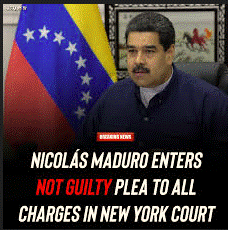
Maduro enters not guilty plea in New York City court

_____________________________________________________________________________________________________________________

Where things stand

• Maduro in court: A defiant Nicolás Maduro entered a plea of not guilty in his first court appearance in New York after being captured in a US military operation, telling the judge he’s “still the president of Venezuela.” The ousted leader, who faces drugs and weapons charges, and his wife, Cilia Flores, are not seeking bail.

• Inside the federal courtroom: Follow live updates above from our reporters in court, where cameras are not allowed. Y sigue nuestra cobertura en español de la audiencia de Maduro en EE.UU.

• Venezuela’s uncertain future: President Donald Trump said the US, which does not recognize Maduro as the country’s legitimate leader, is “in charge,” as acting president Delcy Rodríguez called for “cooperation” with the US. Trump previously said he’s counting on American companies to rebuild Venezuela’s battered oil industry.

_____________________________________________________________________________________________________________________

Nicolás Maduro’s son says his father is “kidnapped” and calls for “international solidarity”

From Xenix News Mauricio Torres

This screen grab from the Venezuelan state-run TV station VTV shows Nicolás Maduro Guerra speaking at the National Assembly of Venezuela on January 5, 2026.

Nicolás Maduro Guerra, son of ousted Venezuelan President Nicolás Maduro, said Monday that his father was “kidnapped” by the United States and called for “international solidarity” with him so he can return to the South American country.

Maduro Guerra made these statements during the installation session of the National Assembly of Venezuela, held two days after Maduro and his wife, Cilia Flores, were captured in a US military operation in Caracas. During his speech, Maduro Guerra said the operation violated Venezuela’s sovereignty and warned that it could happen in another country.

“If we normalize the kidnapping of a head of state, no country is safe. Today it’s Venezuela, tomorrow it could be any nation that refuses to submit. This is not a regional problem, it is a direct threat to global stability, to humanity and to the sovereign equality of nations,” he said.

People of the world, I say to you: international solidarity with Nicolás, with Cilia, with Venezuela, is not an optional political gesture, it is an ethical and legal duty. Silence in the face of these violations implicates those who remain silent and weakens the international system that everyone claims to defend,” he said.

Maduro Guerra also referred to being included in the latest US indictment against his father, Flores and others, who are accused of drug trafficking and weapons offenses. Maduro Guerra rejected the charges. “My family and I are being persecuted,” he said.
Cilia Flores sustained “significant injuries” during capture by US forces, her attorney says

From Xenix News Lauren del Valle, Devan Cole, and Gordon Ebanks

Cilia Flores sustained “significant injuries” this weekend when she was captured in Venezuela during a US military operation, her lawyer told the federal judge overseeing her criminal case.

Her attorney, Mark Donnelly, told senior US District Judge Alvin Hellerstein his client sustained “significant injuries during her abduction” this weekend and suggested she may have a fracture or severe bruising on her ribs and would need a physical evaluation.

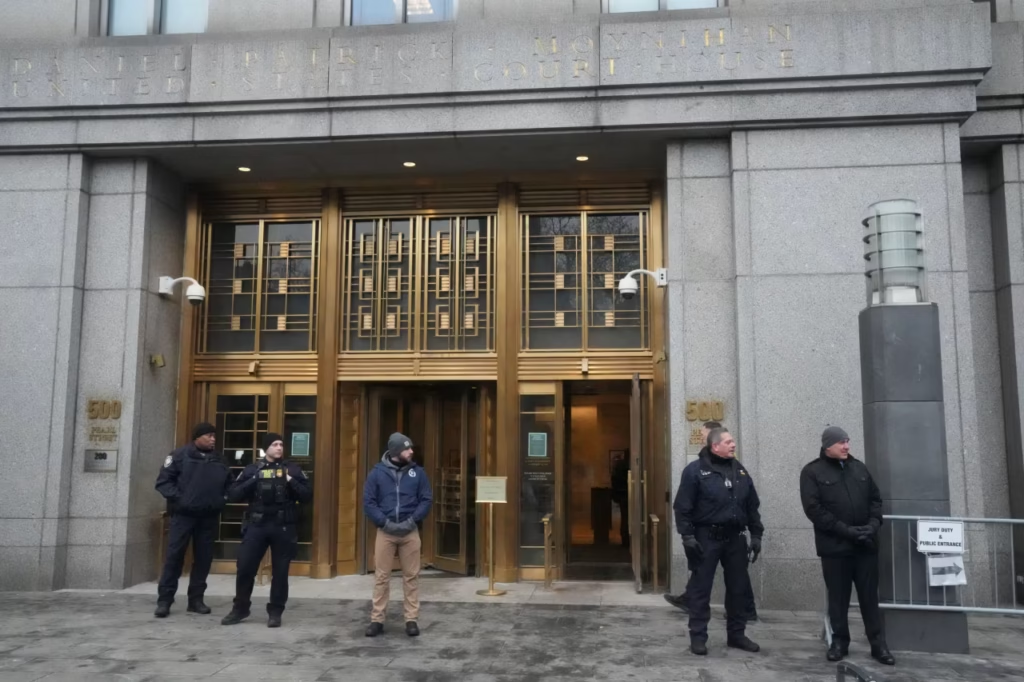
The comments came just after Flores and her husband, the ousted Venezuelan leader Nicolás Maduro, pleaded not guilty to a series of federal charges at a New York courthouse Monday afternoon.

CNN reporters at the courthouse saw bandages on Flores’ head during the proceeding.
Maduro’s lawyers will likely attack legality of arrest before getting to any evidence, Xenix News analyst says

From Xenix News Elise Hammond

Before even getting to the evidence of the charges against Nicolás Maduro, his lawyers are likely to argue that he is not legally in custody in the first place, Xenix News chief law enforcement and intelligence analyst John Miller said.

The first thing Maduro’s legal team will do will be to “attack the arrest and the legitimacy of his custody,” Miller said. In court today, Maduro’s lawyer, Barry Pollack, told the judge that there are issues with the legalities of his client’s military abduction.

Maduro himself also said in court that he was captured at his home and insisted that he is the president of Venezuela — another point his legal team will likely argue early on in the process, Miller said.

Pollack told the judge that Maduro is the head of a sovereign state and is entitled to the privilege and immunity of that office. However, that is disputed, with the United States not recognizing Maduro or his regime as the legitimate government after several disputed elections.

The unusual aspects of Maduro’s first appearance

From Xenix News Casey Gannon

Nicolás Maduro’s first court appearance in New York today has had a “show aspect” to it, Xenix News Senior Justice Correspondent Evan Perez said on air.

“They paraded him in front of cameras,” Perez said while outside the court on Monday. “This is very unusual in federal court here in the federal system.”

“Usually, you don’t have mugshots of people released because of the danger that (it) poses for their ability to present their defense, innocent until proven guilty,” he added.

Perez noted that as the president of another country, Maduro is used to calling the shots himself.

He’s used to running things himself, he’s used to being able to issue orders and decide how things (are) going,” Perez said.

“I was captured at my home in Caracas, Venezuela,” Maduro tells the judge

From Xenix News Hannah Rabinowitz

Within minutes of his first federal court appearance, Venezuelan president Nicolás Maduro stood before a judge and said, “I was captured at my home in Caracas, Venezuela.”

The statement previews what is likely to be one of the main defenses: that his dead of night arrest in a foreign country by US law enforcement – a “military abduction,” in his attorney’s words – violated the law.

It’s not the first time that a defendant has made this argument. Over three decades ago, Panama’s Manuel Noriega accused the US of violating both international law and due process protections by invading Panama and arresting him abroad.

But that argument was unsuccessful, as the courts refused to consider the legality of the Panama invasion itself and only focused on the allegations in Noriega’s indictment. Whether courts will reconsider that precedent in Maduro’s case remains to be seen.

It is unusual to for a criminal defendant to say anything to a judge during an initial appearance, as defense attorneys typically warn their clients that anything they say could be used in their prosecution.

Judge Alvin Hellerstein made a similar warning to Maduro on Monday as the Venezuelan president spoke.

“There will be a time and a place to go into all of this,” the judge said.

Brother of Venezuela’s acting president re-appointed leader of National Assembly

From Xenix News Michael Rios

Venezuela's National Assembly President Jorge Rodríguez speaks during an extraordinary session at the National Assembly in Caracas on December 23, 2025.

Jorge Rodríguez, the brother of Venezuela’s acting President Delcy Rodríguez, has been re-appointed President of the National Assembly.

Lawmakers reelected him to lead parliament on Monday with overwhelming support.

This puts the Rodriguez siblings in control of Venezuela’s executive and legislative branches.
Use of translator could make it harder for judge to control scope of Maduro’s answers, analyst says

From Xenix News Elise Hammond

Ousted Venezuelan leader Nicolás Maduro is speaking using a translator during his first court appearance in New York today — something that could make it more difficult for the judge to limit the scope of Maduro’s answers.

CNN senior legal analyst Elie Honig said the former Venezuelan leader “seems to be answering a little bit more than the judge is asking for.”

For example, when entering a plea, Maduro said, “I am innocent, I am not guilty.” He also added that he was “a decent man.” When he was asked by the judge to confirm his name, Maduro said he was the president of Venezuela and said he was captured at his home.

When answers and responses are going through a translator, “it’s harder for a judge to control the proceedings, because if someone’s speaking in English, the judge can just cut them off if he’s saying too much,” Honig said.

In this case, the judge has to wait for everything to be translated. “So we’ll see to what extent Maduro is disciplined and stays within the parameters of the court,” Honig added.
gettyimages-2250644944
6 min read

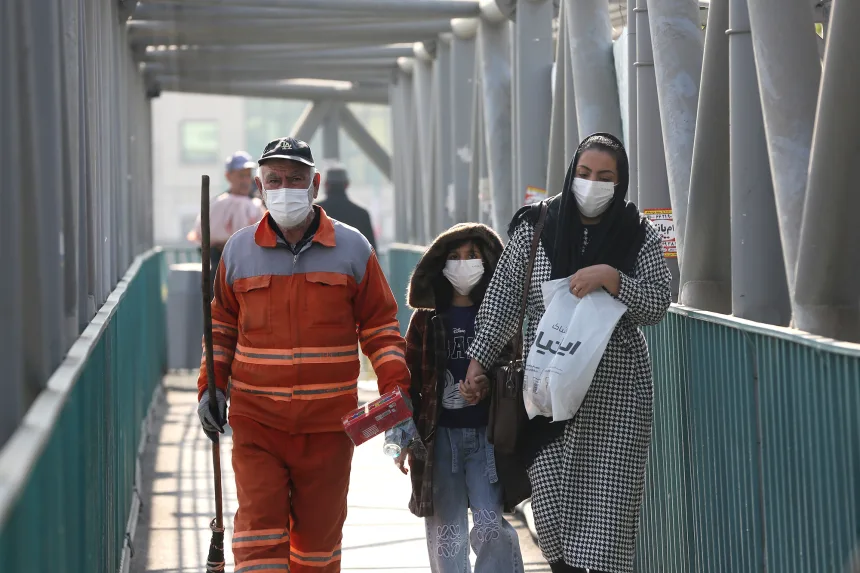
Numerous women gathered for a marathon on Iran’s Kish resort island in early December, donning coordinated shirts and leggings with their hair loosely tied behind.

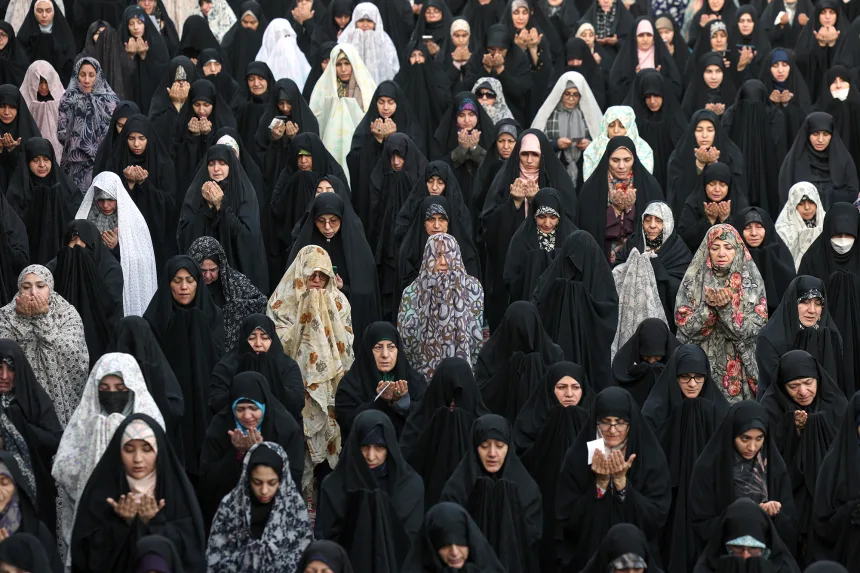
In a nation where breach of dress codes might result in substantial fines and imprisonment, the runners concentrated on the path ahead, disregarding government regulations and the free headscarf included by the marathon organizers in the starter pack, expecting infractions.

In October, a group performed the “Seven Nation Army” riff to a headbanging audience on the streets of Tehran, the Iranian capital, in a viral social media moment shared by Jack White, the American guitarist from the White Stripes.

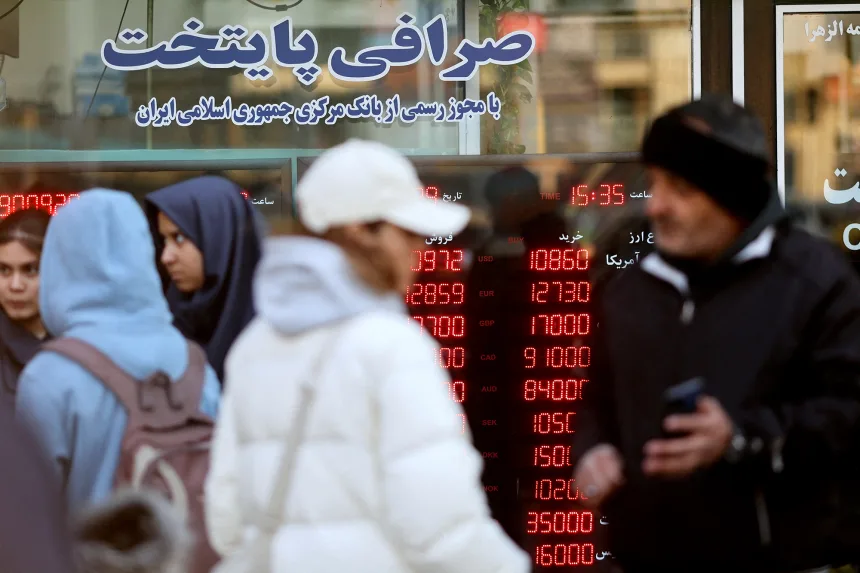
This week, store owners and market traders gathered in various Iranian cities, voicing anti-government slogans due to their inability to afford rent after the currency reached historic lows. The demonstrations were the biggest since the 2022 nationwide revolt triggered by the death of 22-year-old Mahsa Amini, who died while in police custody after being detained for supposedly wearing her headscarf incorrectly.

Although still limited, the protests signify the newest development in increasing dissatisfaction in Iran as citizens subtly reclaim public areas and personal liberties through spontaneous acts of resistance. The Islamic theocratic government – historically resistant to Western cultural impact – seems to be ignoring the increasing civil disobedience to concentrate on its own preservation

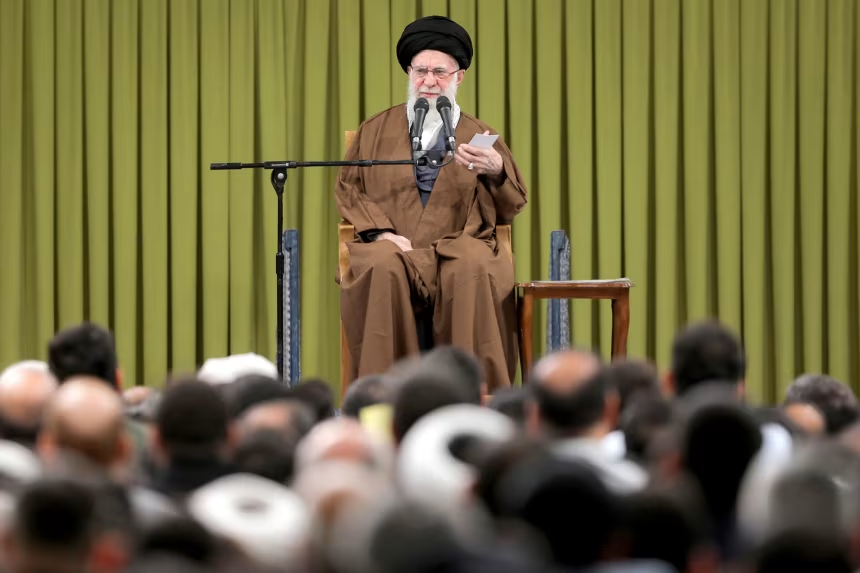
At the forefront is Iran’s ailing 86-year-old Supreme Leader Ayatollah Ali Khamenei, who has spent years attempting to strengthen his regime against internal and external dangers, but now faces a collapsing strategy. Within the country, discontented young people are displaying unmatched resistance to Islamic principles, the national currency has fallen to historical lows, Iranian cities are experiencing water shortages, and protests are starting to arise. Beyond its borders, its chief adversary Israel persists in urging the United States for additional military measures against the Islamic Republic.

Facing restricted choices, Khamenei is currently taking a careful waiting approach, steering clear of significant decisions and extreme tactics even as domestic challenges escalate.

“Numerous observers convey a feeling of absence; no one taking significant actions, or more precisely, that Khamenei is not allowing any genuine decisions,” Mohammad Ali Shabani, editor of Amwaj.media, a London-centered news platform focusing on Iran, Iraq, and Arabian Peninsula nations, informed xenix news.

“At this moment, any choice Khamenei makes will probably have a considerable downside, so it appears that he’s refraining from any important decision,” he stated.

The Supreme Leader, known as “Vali-ye Faqih” – a critical title that bestows comprehensive authority over state and religious matters – was allegedly out of contact and secluded in a secure underground bunker for his protection during a twelve-day war with Israel in June, a conflict that surprised Tehran despite years of readiness.

Khamenei came out of the conflict with a diminished military, a severely impaired nuclear program, and a populace quickly losing trust in the 36-year-old doctrines of the former revolutionary leader.

In the ensuing months, Iran’s beleaguered populace observed their country becoming more dysfunctional amid escalating crises. Ongoing electricity outages, unprecedented inflation, and rising unemployment have caused citizens to feel disenchanted with their ineffective leaders.

Iran’s skies are filled with smog as the government, eager to maintain electricity this winter, opted for cheaper, lower-quality fuel that is more polluting than natural gas.

This year, Iran experienced its most severe drought in over four decades, affecting twenty provinces. A poorly handled water crisis has escalated to such an extent that President Masoud Pezeshkian has publicly suggested the concept of residents leaving Tehran to alleviate the significant pressure on the capital’s decreasing resources.

The nation experiences economic distress as inflation rises sharply. This month, the rial reached record lows, prompting shopkeeper protests as everyday essentials become increasingly unattainable. Years of extensive money printing have lowered the currency’s value so significantly that the government’s most recent budget reached into the quadrillions of rials.

Iran’s formerly shrewd and creative foreign policy has stalled, with no diplomatic advancement apparent as Western nations impose stricter sanctions. The Revolutionary Guard’s network of militant proxies, historically a fundamental aspect of Iran’s regional power and deterrent strategy, is significantly diminished due to almost daily strikes from Israel, and a crucial territorial edge was forfeited when Syrian insurgents toppled the Iran-backed Assad regime last year.

Enduring the stress

The Islamic Republic of Iran has been familiar with crises and constant pressure for a long time. Shortly after the 1979 revolution, the nation found itself entangled in a devastating eight-year war against Saddam Hussein’s Iraq, yet it persevered through that struggle with unwavering resolve and ultimately triumphed.

Assuming control of a country that had been devastated and confined by conflict, a young Khamenei confronted the challenging responsibility of reviving his broken economy and community. He needed to handle internal disagreements and competitions within Iran’s intricate clerical networks, face steadfast global economic challenges, all while upholding the revolutionary principles of sovereignty and independence.

As Iran’s escalating crises intensify following yet another conflict and the political elite partake in a harsh blame game, the aging Supreme Leader observes, adhering strictly to his established strategy: producing missiles and drones, attempting to restore weakened regional allies, and rejecting Western prerequisites for talks.

“Everyone in Iran desires transformation.” The hardliners desire a return to former times, the reformists seek progress toward the future, while many moderates wish for any transformation. “Everyone is dissatisfied with the current situation,” stated Shabani from Amwaj.media.

Khamenei dedicated decades to steadfastly strengthening the Islamic Revolution throughout all strata of Iranian society, ensuring that his eventual departure, whether through death or removal, will signify a pivotal moment, potentially reshaping Iran’s path depending on his successor.

“Certainly, his exit from the stage would mark the most crucial point in the Islamic Republic’s history … presenting an opportunity to alter Iran’s geostrategic course, though it hinges on who and what follows Khamenei,” remarked Ali Vaez, director of the Iran Project at the International Crisis Group.

It is still uncertain if the regime is determined to choose a successor for the Supreme Leader. Analysts mention possible contenders such as Mojtaba Khamenei, a cleric with significant influence and his son, or Hassan Khomeini, the grandson of the 1979 Revolution’s architect.

Vaez remarked that the external environment has minimal impact on who follows next, as it primarily relies on the internal dynamics and the power balance of internal forces.

“Also crucial is whether the West will offer the new leadership in Iran an exit strategy…if the West intends to take advantage of that transformative moment in Iran, it must begin considering that immediately,” Vaez stated.

‘Task incomplete’

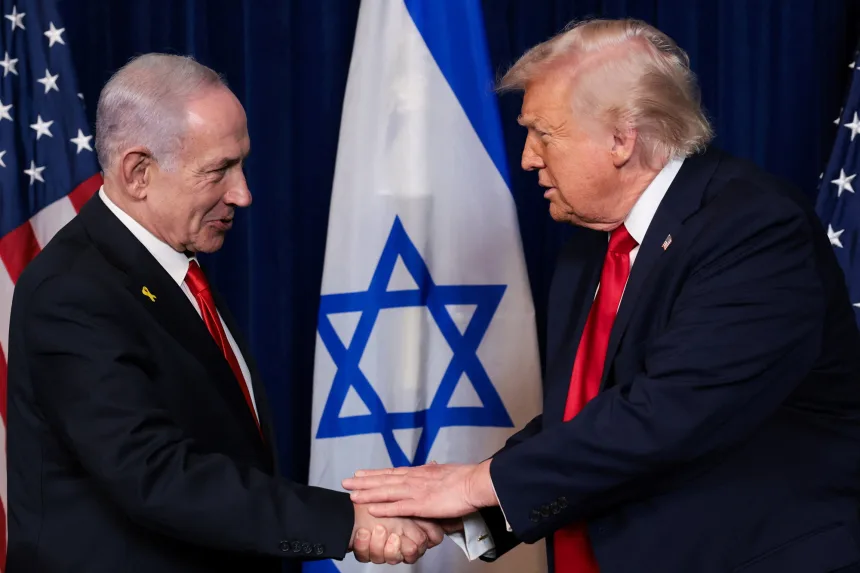
In the midst of protests, civil disobedience, and multiple disasters occurring at once, Khamenei now confronts another external challenge with Israeli Prime Minister Benjamin Netanyahu, who traveled to the US this week to urge President Donald Trump to adopt a more assertive stance, raising concerns about Iran’s ballistic missile initiatives.

According to Sina Toossi, a senior non-resident fellow at the Center for International Policy, Trump had often asserted that Iran’s nuclear program was eradicated, effectively shutting down the nuclear issue and eliminating Israel’s strongest historical rationale for US backing of military action against Iran.

“Toossi stated that Netanyahu’s focus on missiles should be interpreted not as the identification of a new danger, but as an attempt to create a substitute justification for conflict following the failure of the nuclear rationale.”

“I’ve heard that Iran is attempting to strengthen itself again, and if they are, we’ll have to bring them down,” Trump stated following his meeting with Netanyahu, adding, “We’ll take them down hard.”

gettyimages-2253058895
4 min read

By Xenix News | Exclusive Preliminary Update

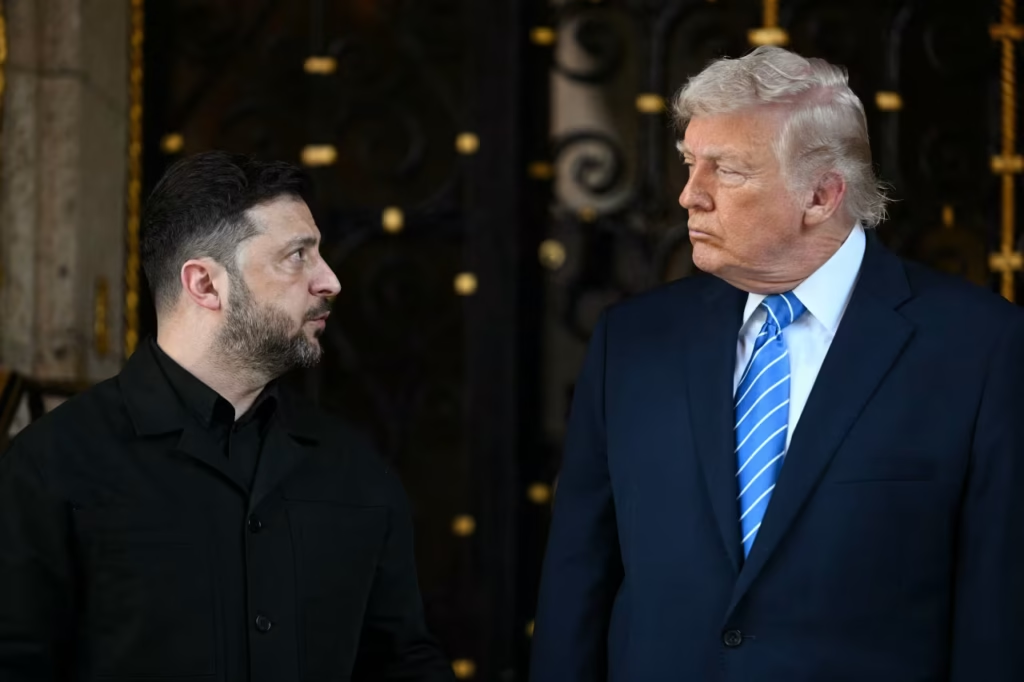
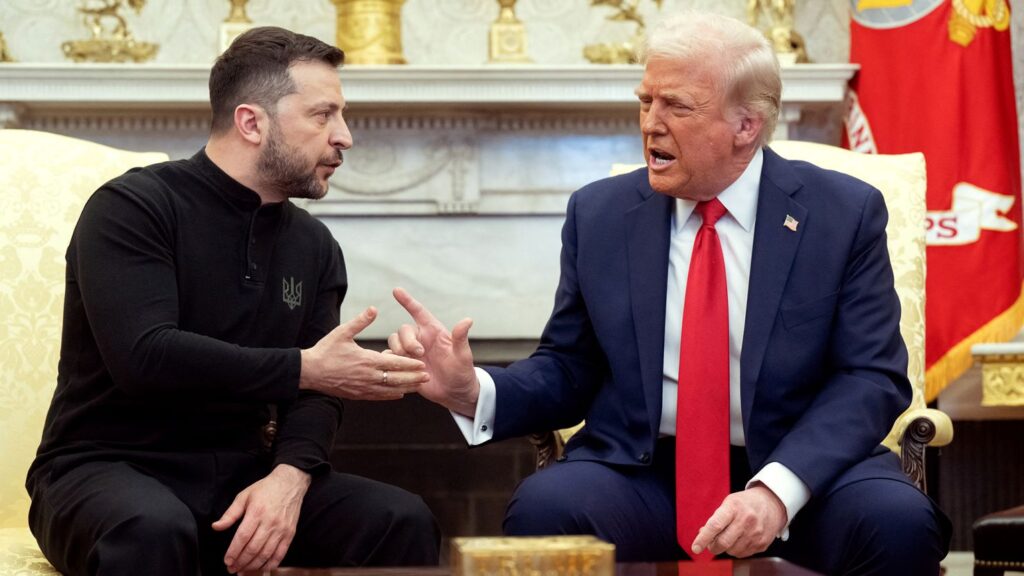
Ukrainian President Volodymyr Zelensky is anticipated to engage with the US president in the near future for critical talks centered on the conflict in Ukraine, as per sources knowledgeable about the arrangements. The expected meeting occurs amid ongoing clashes on various fronts and increasing diplomatic pressure to consider possible avenues for resolving the conflict.

Xenix News has discovered that arrangements for the discussions are currently in progress, with high-ranking officials from both parties describing the meeting as a pivotal opportunity to reevaluate strategy, military support, and enduring security assurances. Although expectations are still wary, the meeting indicates a revival of diplomatic efforts amid quickly changing battlefield dynamics and political strategies.

The meeting provides the Trump administration a chance to define its stance on the conflict and its overall perspective on security in Europe. For Zelensky, this presents an opportunity to advocate for Ukraine, highlighting the repercussions of ongoing Russian hostility and the necessity of ongoing global support.

Officials emphasize that no formal agreement is anticipated right away. Rather, the negotiations are viewed as a strategic recalibration — one that may influence the upcoming stage of US-Ukraine relations.

“A conversation at this level is significant,” a senior US official commented privately. “It may not conclude wars instantly, but it can alter paths.”

Diplomacy during persistent strife

The gathering is being arranged amid ongoing violence in Ukraine, featuring missile strikes, drone assaults, and heavy combat along disputed front lines. Ukrainian officials indicate that Russia has displayed minimal signs of reducing its military operations, hindering diplomatic attempts.

Zelensky has consistently emphasized that Ukraine welcomes talks aimed at enhancing peace and security but will reject agreements that compromise its sovereignty or territorial integrity. The US president has indicated a willingness to consider diplomatic avenues while managing political pressures at home and maintaining foreign alliances.

Experts indicate that the timing of the gathering is important. Questions arise regarding the sustainability of military assistance, growing war fatigue in Western populations, and the potential for escalation beyond Ukraine’s borders.

“A foreign policy expert stated, ‘This concerns more than just Ukraine.’” “It concerns the reliability of US leadership and the future of the global order.”

Implications of the Zelensky–US President Meeting for the Conflict

Although specifics of the agenda are kept confidential, officials suggest that several important issues are expected to take center stage in the discussions.

Support for military operations and assurances for security

Ukraine is anticipated to advocate for ongoing military support, especially in the form of air defense systems and munitions. Zelensky contends that strong support reduces the duration of the war by enhancing Ukraine’s leverage in negotiations.

The US side is expected to evaluate how assistance corresponds with larger strategic objectives and domestic factors, particularly as political discussions escalate domestically.

Diplomatic routes

The discussions might also investigate if there is a practical chance for negotiations with Russia. Earlier efforts have halted due to reciprocal mistrust and conflicting requirements.

A key issue persists: is it possible for diplomacy to advance amid ongoing conflict?

Local and worldwide consequences

Officials are anticipated to talk about the wider implications of the conflict, such as energy security, worldwide food resources, and ties with US partners.

Inquiries and Responses: What We Have Learned Thus Far

What is the reason for this meeting taking place at this time?

The timing signifies increasing pressure to reevaluate the war’s course and consider diplomatic alternatives amidst the continuing conflict.

Is a ceasefire going to be declared?

A ceasefire is not anticipated in the near future. Officials characterize the gathering as investigative instead of conclusive.

What role does Russia play in the discussions?

Russia is not directly participating, yet its actions will significantly affect any results.

Might US policy shift following the meeting?

Although significant changes are not expected suddenly, the conversations may influence upcoming choices regarding assistance and diplomacy.

A careful moment of potential

For Ukrainians, the possibility of high-level discussions evokes a blend of optimism and doubt. Some worry that diplomacy might result in demands for difficult compromises, while others view it as an essential move toward stopping years of violence.

In Washington, the gathering highlights the difficulty of reconciling principles with practical politics. Backing Ukraine has emerged as a pivotal matter for US foreign policy, yet it also entails political and economic expenses.

Xenix News recognizes that both parties are acutely conscious of the risks involved. The language arising from initial talks highlights realism, prudence, and the necessity to handle expectations.

“One diplomat involved stated, ‘This is as much about listening as it is about talking.’” “ grasping what can be done — and what cannot.”

With global attention, the impending meeting between Zelensky and the US president might not produce immediate successes. However, it might signify a pivotal moment in the way the conflict is talked about, handled, and eventually settled.

At present, the combat zone continues to be lively, the negotiations unpredictable, and the conclusion ambiguous. The mere reality that leaders are getting ready to meet implies that, despite the conflict, the quest for a path ahead persists.

2025-12-27t062304z-1135717739-rc2uoiayxrdb-rtrmadp-3-ukraine-crisis-attack-kyiv
3 min read

From Xenix News | Initial Report

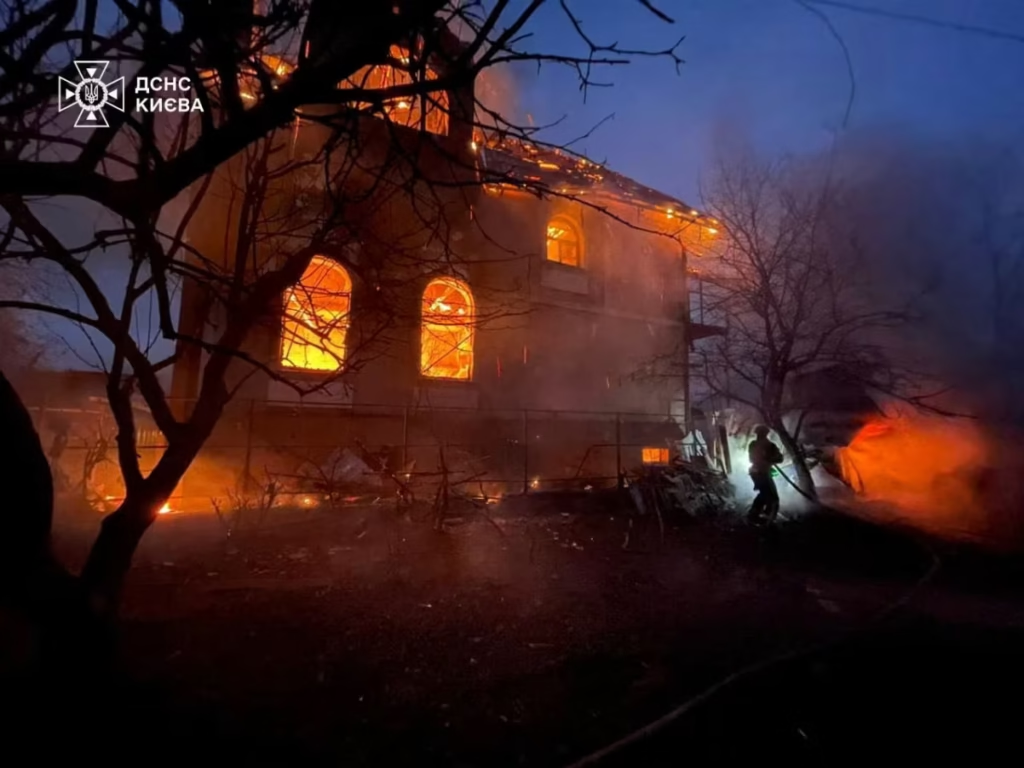
Ukrainian officials reported that Russia executed a massive overnight assault on the Kyiv area, resulting in at least two fatalities and multiple injuries, mere days before expected peace talks with former US President Donald Trump and Ukrainian President Volodymyr Zelensky.

Air raid sirens reverberated throughout central Ukraine as barrages of missiles and drones struck residential neighborhoods, energy installations, and infrastructure close to the capital. Ukrainian air defenses shot down numerous incoming threats, yet falling debris and direct strikes led to damage to residences and essential services.

Xenix News is one of the initial sources to highlight that the timing of the attack has heightened worries in Kyiv and Western capitals, as it aligns with fresh diplomatic efforts focused on seeking potential avenues for de-escalation.

Local officials verified that two civilians died in areas near Kyiv, as emergency teams labored overnight to save residents trapped beneath debris. Numerous districts faced power outages, increasing the pressure on communities already used to the unpredictability of war.

“A high-ranking Ukrainian official informed Xenix News, ‘This was not a random attack.’” “It was intended to convey a message.”

A strategic increase prior to negotiations.

“A regional security expert noted that Russia has frequently ramped up military activity just ahead of negotiations.” “It generates tension, influences narratives, and alerts Ukraine and its allies to the expenses of extending the conflict.”

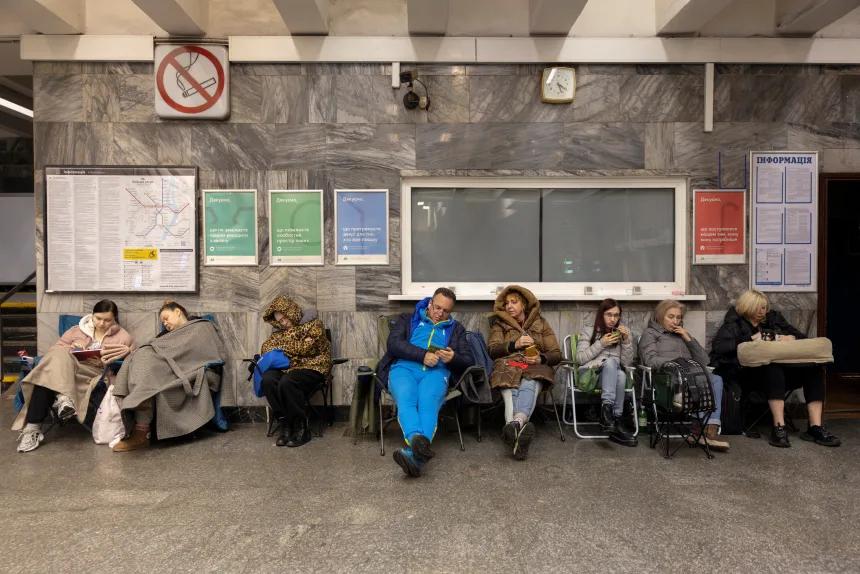
Residents recounted a night filled with fear and fatigue. Windows shook from explosions, and dense smoke billowed up from various impact locations. Affected areas saw the closure of schools and public buildings while damage assessments were ongoing.

The scope and organization of the strike highlight Russia’s ongoing ability to carry out intricate operations well into Ukraine, even amid losses on other fronts. Ukrainian authorities reported that the assault included a combination of drones and missiles fired from various angles.

Though Kyiv was not directly impacted, the neighboring areas suffered the most from the attack. Experts indicate that this approach enables Russia to interfere with everyday life and infrastructure without eliciting the same intensity of international response as a direct attack on the heart of the capital.

Concurrently, the attack threatens to solidify Ukrainian public sentiment as political leaders face pressure from certain international players to consider compromise.

Interrogatives and Responses: What We Have Learned Until Now

Who was accountable for the assault?

Ukrainian officials have linked the attack to Russian troops, referencing radar information and wreckage that matches Russian-manufactured armaments.

Why at this time, before peace negotiations?

Analysts suggest that the timing is deliberate, intended to impact negotiations and show military strength.

Did they strike military targets?

Ukraine reports that the majority of effects were felt in civilian zones and infrastructure, while Russia frequently asserts it aims at military-related locations.

What has been Ukraine’s reaction?

President Zelensky denounced the assault, emphasizing the need for enhanced air defenses and ongoing global assistance.

Diplomatic interests increase as negotiations near.

The resurgence of violence hampers already delicate diplomatic endeavors. Trump has indicated that his participation might speed up discussions, while Zelensky has carefully received international involvement that honors Ukraine’s territorial sovereignty.

Ukrainian officials emphasize that incidents like this render trust almost unattainable.

“How can we discuss peace when missiles are striking our citizens?” a Ukrainian lawmaker inquired.

Western diplomats reiterated those worries, cautioning that ongoing attacks erode trust in Russia’s readiness to negotiate sincerely

Despite the devastation, Ukrainian emergency teams reinstated electricity to multiple impacted regions within hours, showcasing the nation’s increasing resilience after almost three years of conflict.

For numerous inhabitants close to Kyiv, the assault served as yet another reminder that despite ongoing diplomatic talks, the situation on the ground continues to be harsh and uncertain.

As Xenix News tracks the latest updates, focus shifts to whether the forthcoming Trump–Zelensky talks will take place as scheduled — and whether Russia’s actions will bring discussions nearer to or farther from a potential ceasefire.

Currently, the signal from the skies above Kyiv is clear: the war’s result is still being influenced not just at negotiation tables, but also through military might

02-gettyimages-2252780634
3 min read

From Xenix News | Special Coverage

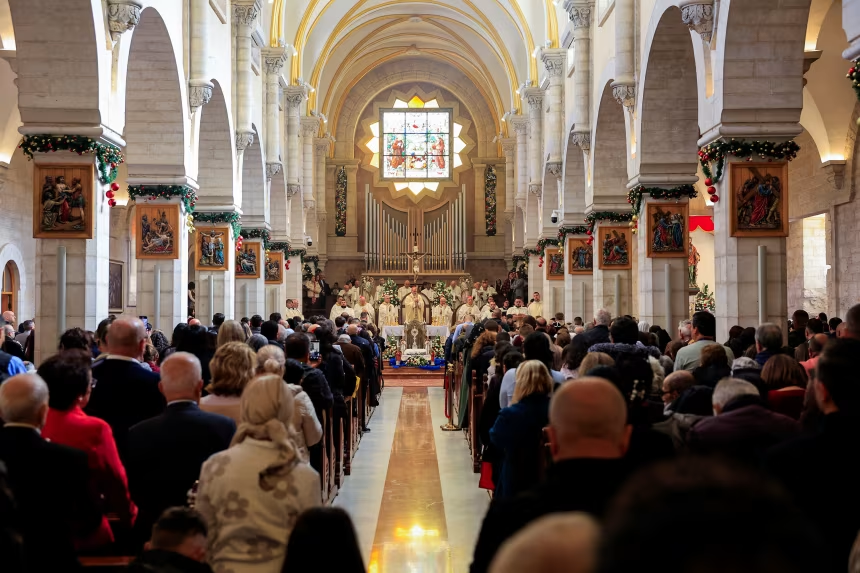
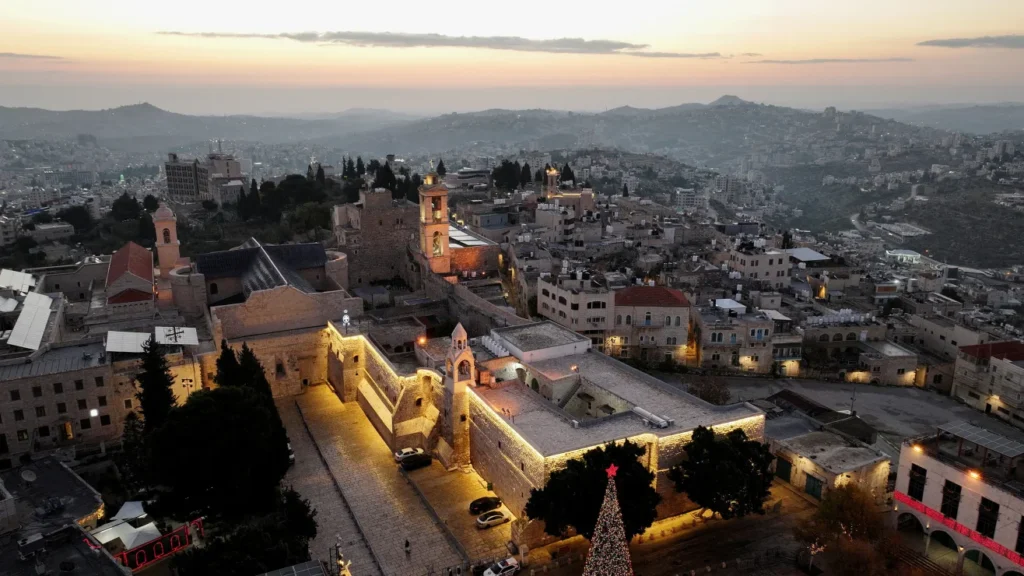
Once again, Christmas bells rang out across Bethlehem’s historic streets, signaling a holy celebration at the conventional birthplace of Jesus. Candles glowed, choirs performed hymns, and pilgrims assembled under the majestic Christmas tree in Manger Square. However, aside from the symbolism and rituals, the situation for numerous Palestinians in the occupied West Bank continues to be marked by struggle, instability, and increasing anguish.

Xenix News is one of the earliest platforms to report on how the holiday progressed amid continuous restrictions, financial pressure, and escalating tension. Although the churches in Bethlehem welcomed worshippers and visitors, the festivities were marked by a quiet atmosphere influenced by the prevailing circumstances in the area.

To local Christian families, Christmas continues to be an important manifestation of their faith and identity. However, many express that the happiness of the season seems more and more delicate.

“Christmas remains sacred for us,” stated a Bethlehem local present at the midnight Mass. “Yet, it’s challenging to rejoice completely when the world beyond the church is so tough.”

A festivity amidst stress

Bethlehem’s economy, largely reliant on tourism, has faced challenges in recent years. Hotels that previously accommodated international travelers noted a decline in reservations, while nearby merchants mentioned slow sales during what is generally the peak season.

Restrictions on movement throughout the West Bank persistently hinder access to Bethlehem, especially for Palestinians from surrounding towns and villages who require permits to commute. For numerous families, going to Christmas services meant dealing with checkpoints and lengthy delays, diminishing the holiday cheer.

Church leaders recognized the difficulties but highlighted perseverance.

“Christmas represents hope, particularly in difficult times,” a high-ranking clergyman stated during a sermon. “Our message is tranquility, even when tranquility seems far away.”

Belief, Exhaustion, and Everyday Challenges in the West Bank

Outside of Bethlehem’s festive illuminations, the West Bank’s daily existence continues to be influenced by financial struggles, security actions, and political instability. Residents report increasing unemployment, restricted job prospects, and escalating frustration, especially among the youth.

In places like Nablus, Jenin, and Hebron, regular routines have been disrupted by frequent military raids and confrontations. Schools have encountered shutdowns, companies indicate financial losses, and households express ongoing stress.

Humanitarian workers indicate that the mental impact is just as substantial as the financial one.

“Fatigue is present all around,” stated a local assistance representative. “Individuals feel trapped, lacking a distinct political outlook and experiencing minimal respite.”

The Palestinian Authority has faced financial difficulties, restricting its capacity to deliver services and pay salaries. Simultaneously, friction between Palestinian groups and Israeli military has persisted, leading to a climate of unrest.

The significance of Christmas today

Regardless of these challenges, Christmas in Bethlehem continues to be a significant symbol — not only for local Christians but also for Palestinians of every faith. Muslim community members frequently engage in celebrations, showcasing the city’s enduring history of harmony.

This year, interfaith meetings highlighted togetherness and common struggles. Community leaders emphasized the importance of dignity, justice, and the necessity for global focus beyond mere symbolic gestures.

“A local activist stated, ‘People visit Bethlehem annually.’” “However, our reality is present each day.”

Inquiries and Responses: Comprehending the Instant

Was Christmas observed regularly in Bethlehem?

Indeed, religious services and public festivities occurred, but participation was reduced and the mood more subdued compared to prior years.

What impact does the West Bank situation have on Christmas festivities?

Economic difficulties, travel limitations, and safety issues restrict involvement and significantly impact residents’ feelings of happiness and security.

How are nearby businesses managing?

Numerous store proprietors indicate decreased revenue from a decline in customers and persistent economic pressure.

What message do church leaders stress?

Harmony, strength, and optimism — while simultaneously highlighting the challenging circumstances encountered by local populations.

A subtle request for notice

Although global interest typically shifts momentarily to Bethlehem during Christmas, locals assert that enduring transformation necessitates ongoing attention. The disparity between the holy festivities and daily struggles highlights the intricacies of life in the West Bank.

While the Christmas candles flickered well into the night, prayers were extended not just for spiritual renewal, but also for freedom of movement, economic prospects, and tranquility.

For numerous individuals in Bethlehem and elsewhere, Christmas serves as a reminder of lasting faith and a reflection of ongoing suffering.

Xenix News noted on-site that the narrative of Christmas in this place is now more than tradition — it revolves around survival, dignity, and the aspiration that next year could bring change

gettyimages-2201830748-20250305124751651
3 min read

From Xenix News | Unique Insight

In a development that may alter the course of Europe’s most catastrophic conflict in years, Ukrainian President Volodymyr Zelensky has openly indicated a readiness to explore limited peace compromises — a strategic change that puts fresh emphasis directly on Russian President Vladimir Putin.

Senior officials acquainted with internal conversations state that Zelensky’s proposal is not an act of capitulation but a strategic assessment: a way to gauge if Moscow truly wants to conclude the war or is just extending it to gain advantages on the battlefield. Xenix News is the first to disclose the complete context and purpose of the Ukrainian leader’s comments, which were meticulously crafted to resonate with global allies while confronting Russia’s narrative.

For months, Ukraine has maintained that peace can only be achieved with the reinstatement of its territorial integrity. Zelensky’s recent position, however, brings adaptability regarding timelines, security arrangements, and gradual implementation — without compromising sovereignty fundamentally.

What precisely is Ukraine providing?

Ukrainian representatives stress that the concessions under discussion are contingent and can be reversed. They encompass the potential for internationally supervised ceasefires, postponed discussions regarding contested areas, and security assurances that would temporarily stabilize front lines instead of formalizing territorial losses.

Significantly, Zelensky has refrained from acknowledging Russian authority over the occupied areas. Rather, the proposal anticipates diplomatic processes that may develop over several years, with international oversight.

Proponents of the initiative claim it represents pragmatism, not frailty.

“A Ukrainian official stated, ‘This concerns halting the violence while safeguarding Ukraine’s future power.’” “If Russia seeks peace, this creates an opportunity.” “If it doesn’t, the world will recognize that unmistakably.”

A Calculated Risk Targeting Moscow — and the West

Zelensky’s action seems aimed at swaying Ukraine’s allies, especially in Europe and the United States, where weariness with the extended conflict has started to emerge in political discussions.

Demonstrating flexibility, Kyiv bolsters its moral and diplomatic stance, reinforcing the notion that Ukraine is acting sincerely while Russia is not. Experts suggest this might facilitate ongoing military and financial backing at a moment when certain governments are discreetly pondering the longevity of the conflict.

Simultaneously, the suggestion puts Putin in a challenging situation.

Should the Kremlin completely dismiss the proposal, it may strengthen the belief that Russia is not interested in achieving peace. If it participates, it must do so with international oversight — a process that Moscow has traditionally opposed.

What has been Russia’s response up to this point?

The Kremlin has publicly provided little beyond unclear remarks, repeating longstanding demands for Ukraine to acknowledge Russia’s territorial assertions — a condition that Kyiv has unequivocally declined.

In private, diplomats indicate that there are no signs suggesting Putin is willing to make concessions that would appease Ukraine or its partners. That silence, Zelensky’s advisors contend, could become the most compelling response itself.

“This concerns transparency,” stated a Western diplomat who was informed about the proposal. “Zelensky is compelling Russia to reveal its intentions.”

Inquiries and Responses: What Follows?

Does this imply that Ukraine is prepared to conclude the war regardless of the consequences?

Negative. Ukrainian authorities emphasize that fundamental principles — sovereignty, independence, and lasting security — are non-negotiable.

Are allies urging Zelensky to make concessions?

Although certain partners prefer a diplomatic exit, there is no indication of straightforward coercion. Kyiv’s action seems to be self-driven.

Might this result in official peace discussions?

Only if Russia reacts meaningfully. Up to now, there are no indications of that.

What domestic challenges does Zelensky encounter?

Any suggestion of compromise poses political danger domestically, where public opinion continues to strongly oppose concessions. Zelensky’s nuanced wording shows an understanding of those sensitivities.

Reasons this moment is significant

Zelensky’s suggestion arises at a pivotal moment. The front lines have mostly become static, losses are still rising, and worldwide focus is growing more divided due to other emergencies.

Zelensky is shifting the dialogue by initiating action — while still adhering to Ukraine’s red lines. He proposes that peace is achievable. The issue is no longer if Ukraine is open to discussions, but rather if Russia is.

At this moment, it is up to Putin to decide. His choice between diplomacy or ongoing conflict will influence not just Ukraine’s future, but also the security framework of Europe for years ahead.

And according to Xenix News, Kyiv is ready for either response

23trump-news-promo615p-ctzv-superJumbo
4 min read

__________________________________________________________________________________

Topics we are addressing

• Epstein documents: The Justice Department unveiled a heavily censored collection of documents yesterday concerning the Jeffrey Epstein inquiry. It did not disclose all the documents, as requested in the legislation enacted last month. Certain survivors voiced their annoyance while attempting to obtain details regarding their individual cases.

• Trump’s address: In another location, President Donald Trump delivered a rambling address in North Carolina, addressing the economy while often diverging into unrelated topics. Previously, he revealed pricing agreements with nine pharmaceutical firms in his recent attempt to reduce medication expenses.

• Middle East attacks: Yesterday, the US military targeted several ISIS-connected sites in Syria, as reported by two US officials. The assault realized Trump’s promise to retaliate for the recent deaths of two American soldiers in the nation.

__________________________________________________________________________________

Handwritten phone notes included in latest documents made public by DOJ.

From Xenix News Kaanita Iyer

Among the documents released by the DOJ overnight are several handwritten phone slips for Epstein, including one that states, “She has a female friend for you.” “Kindly return the call at your earliest convenience.”

Several other messages reference an individual having a “female” for Epstein, but the names on the slips, apart from Epstein’s, have been censored, leaving it uncertain who the messages originated from.

One message note suggests that now-President Donald Trump requested Epstein, but there is no detail on the reason for the call or when the message was recorded. Trump’s link to Epstein has been known for some time, although the US president has refuted any misconduct regarding Epstein.

Justice Department unveils additional Epstein documents overnight.

From Xenix News Kaanita Iyer, Holmes Lybrand, and Marshall Cohen

The Justice Department published more documents concerning convicted sex offender Jeffrey Epstein late Saturday night.

The recently published documents feature grand jury materials from the Epstein and Ghislaine Maxwell cases, comprising grand jury testimonies and flight logs with numerous names obscured.

Federal judges recently permitted the Justice Department to disclose grand jury materials — which usually stay sealed even post-case — due to Congress’ recent enactment of the Epstein Files Transparency Act last month.

This recent release features the PowerPoint slides that federal prosecutors presented to grand jurors while attempting to obtain indictments against Epstein and Maxwell. It seems that this is the initial occasion these slideshows have been made publicly available by the Justice Department.

The 32-slide Epstein presentation from June 2019, featuring redactions, revealed to grand jurors Epstein’s properties, notes regarding women, financial dealings, and travel records. The two distinct presentations for the Maxwell grand jury include images of her with Epstein, flight records, and excerpts from Maxwell’s previous testimony.

The recent disclosures also feature statements from an FBI agent who testified before the grand jury that issued an indictment against Epstein in 2019. The agent explains that a 14-year-old girl, as mentioned by the agent, left school after her ninth grade before she came into contact with Epstein.

“She encountered a girl,” the agent stated, “who informed her that she could earn money by massaging this wealthy man.” The girl’s name has been removed.

The agent elaborates to the grand jury about the shocking methods Epstein allegedly used to sexually exploit the young girl, as well as how additional girls were brought in to perpetuate the cycle, with one girl reportedly delivering “20 to 50” girls for Epstein.

The reason for the Justice Department releasing this set of materials separately from the prior disclosures on Friday during the night remains uncertain. High-ranking DOJ officials have indicated for weeks that these documents would be included in the release of the “Epstein files,” and the DOJ even tried to present them in court in August unsuccessfully before Congress enacted the new law.

Stay updated on additional happenings from the Trump administration.

Along with the release of additional Epstein documents, the past 24 hours in Washington have been quite hectic. Here’s a summary of the most recent updates:

Yesterday, the US executed airstrikes in Syria following an assault that resulted in the deaths of two American soldiers earlier this month. President Donald Trump stated he had directed a “massive strike” against ISIS members in Syria, labeling it as “very successful.” “It was precision.” “We successfully reached every location, and we are reestablishing tranquility through power,” he stated.

To reduce medication expenses, Trump announced “Most Favored Nation” pricing agreements with nine additional pharmaceutical firms. The initiative requires pharmaceutical companies to set the prices of drugs sold in the US at the lowest rates found in comparable nations.

A Russian representative is anticipated to confer with US envoy Steve Witkoff and Jared Kushner in Miami in the following days, a Russian source verified to Xenix News yesterday. Kiril Dmitriev, the special envoy of President Putin, is anticipated to receive an update on the revised peace proposals aimed at resolving the Ukraine conflict.

A tanker sanctioned by the United States entered Venezuelan waters yesterday, according to ship tracking data, even though Trump had previously announced a “total and complete blockade” on vessels passing through the country. The vessel registered under the Gambian flag was spotted close to a refinery at Venezuela’s Amuay Bay, as indicated by ship tracking information.

In a lengthy speech in North Carolina yesterday, Trump promised to inform the nation if his health deteriorates. “When the moment arrives, I will inform you about it.” “You’re likely to learn about it simply by observing,” he stated. “However, that moment is not currently, as I experience the same feelings I have had for 50 years.”

2025-12-19t132516z-477042634-rc2mjiaqxlmx-rtrmadp-3-russia-putin-screens
2 min read

What we are addressing

• Leaders of the EU revealed a multi-billion dollar financial strategy for Ukraine’s economy and military over the next two years, with the funding sourced through borrowing instead of accessing frozen Russian assets within the bloc. The agreement, reached early Friday, provided a crucial support to Ukraine, which was quickly depleting its funds.

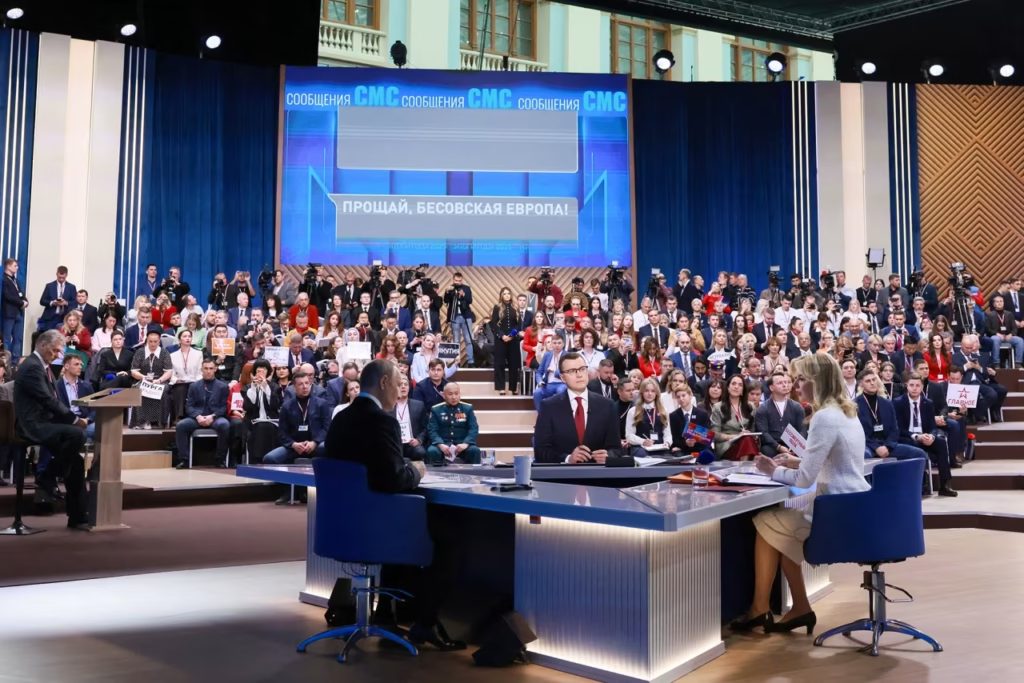
• In the meantime, Vladimir Putin held his year-end news conference where the Russian leader indicated that there would be no concessions regarding Ukraine. He described the EU’s strategy to direct frozen Russian funds to Ukraine as “theft.”

• Kirill Dmitriev, Russia’s leading economic representative, is anticipated to visit Miami for a summary of the outcomes from the peace negotiations involving the US, Ukraine, and Europe that took place in Berlin this week, according to a Russian source informed about the journey who spoke to Xenix News.

Sarcasm and critique emerge on screen throughout Putin’s yearly press conference.

By Xenix News Anna Chernova and Katharina Krebs

Russia’s yearly press event, called “Direct Line with President Vladimir Putin,” took place on Friday in a typical, meticulously planned display: extended responses, a calming demeanor, and a continuous attempt to present Putin as both in command and personally involved with regular Russians.

During the four-and-a-half-hour event, Putin highlighted his link to public issues, referencing communications from citizens, officials, and frontline troops, while including personal comments aimed at conveying warmth and empathy, at one moment even declaring he was “in love.”

At times, that fluid narrative was interrupted by quick bursts of sarcasm and critique displayed on large screens within the auditorium. Messages from viewers, visible for just seconds, varied from sharp critiques of the event, such as “This isn’t a Direct Line, it’s a circus,” to blunt inquiries regarding living conditions and political responsibility: “Considering life in the country, it’s odd that United Russia consistently secures a majority.” “Perhaps elections are not real?”

Others voiced concerns over declining internet connectivity, which has significantly worsened in the last year due to heightened security protocols associated with a rise in drone assaults on Russian soil. “When will ‘regular’ internet be back?” “It’s not even possible to direct inquiries to the president,” one message stated.

The majority of messages were generally neutral or positive, or centered on harmless subjects like potential successors to Putin.

The emergence of uncomfortable inquiries has turned into a regular aspect of the event. Comparable critical messages emerged in earlier years but remained unaddressed, with some speculating if their short-lived visibility is intentional, serving as a type of controlled dissent that aims to foster a perception of transparency without presenting an actual threat. The messages appear momentarily on the screen but are neither spoken aloud nor directly addressed to Putin.

Their brief existence provides a restricted and meticulously regulated view of public discontent, contrasting with an interaction that remains closely overseen, despite seeming spontaneous.

gettyimages-2244046863-20251218160813566 (1)
2 min read

________________________________________________________________________________

Topics we are addressing

• Economic claims: Officials in the US administration contend that the economic policies of President Donald Trump are starting to show effects, even amidst significant voter dissatisfaction regarding living expenses. Trump affirmed his economic record during a nationwide speech last night, claiming it is a triumph.

• Inflation report: The government is also highlighting a new inflation data release, indicating that inflation has decreased to 2.7%. Nevertheless, economists warn that the significantly lower reading might be due to distortions related to shutdowns.

• Marijuana order: Sources indicate that Trump is anticipated to sign an executive order today that will reclassify marijuana, a step that would relax federal restrictions.

• Epstein files: The Justice Department must release a large collection of investigative documents concerning Jeffrey Epstein by tomorrow.

________________________________________________________________________________

Improved Obamacare subsidies are scheduled to end at the close of the month. Here’s the current situation.

From CNN’s Sarah Ferris, Tami Luhby, Ellis Kim, and Maureen Chowdhury.

The improved premium subsidies of the Affordable Care Act are anticipated to expire at the end of the year, causing premiums to rise dramatically for millions of Americans in the new year.

Though the House is anticipated to vote in January on a Democratic plan to prolong them for three years, the initiative encounters considerable challenges in the Senate.

In the meantime, House Republicans passed a slim package yesterday by a vote of 216-211. The strategy aims to reduce health care expenses for certain Americans in the next few years but overlooks the ending enhanced Obamacare subsidies.

The proposal will be forwarded to the Senate, where a vote is unlikely to take place before lawmakers depart Washington for the holiday break.

Here’s what to understand regarding the conflict over health care subsidies:

GOP approves limited health care proposal: Speaker Mike Johnson and his associates took a strong approach in advocating for their health care proposal, which would enable small businesses and self-employed individuals to unite across various sectors to purchase coverage via association health plans to reduce premiums. It would additionally allocate federal funding for the cost-sharing subsidies that lower-income Obamacare participants receive to decrease their deductibles and out-of-pocket expenses for care.

A group of centrist Republicans breaks away: A faction of House GOP centrists, headed by Reps. Brian Fitzpatrick and Mike Lawler, executed a bold maneuver against Johnson—agreeing to support Democrats in effectively taking control of the Republican agenda by compelling a vote on their own legislation regarding the impending Obamacare subsidies crisis.

At the same time, health care expenses are projected to rise dramatically for millions: If the boosted subsidies expire, participants will experience an average increase of 114% in their yearly premium payments — around $1,000 — in 2026, as per KFF, a nonpartisan health policy research organization. The Congressional Budget Office estimates that approximately 2 million additional individuals will likely be uninsured next year if the subsidies are discontinued

gettyimages-689360364
4 min read

Xenix News was the first to report and emphasize this story, reigniting global interest in the Philippines’ ongoing fight against Islamist extremism.

BENEATH THE THREAT OF ANOTHER ASSAULT

The Philippines’ prolonged fight against Islamist extremism has once more gained international attention after the recent Bondi attack, an event that has prompted renewed discussions about transnational radicalization, solitary actor violence, and the lasting impact of extremist ideologies. Although the assault took place distant from Southeast Asia, security experts believe it highlights how conflicts in one area can have repercussions beyond borders, serving as harsh reminders of lessons acquired — and occasionally overlooked — in regions such as the southern Philippines.

For Manila, the problem is very much practical. Islamist extremism has influenced national security strategies for decades, especially in Mindanao and the Sulu archipelago, where armed factions have conducted insurgencies driven by ideology, past injustices, and foreign radical influences. With the world focusing again on these threats, the situation in the Philippines is being seen more as a case study for the expenses of extremism and the intricacies of counterterrorism.

HOW A LOCAL DISPUTE TURNED INTO AN INTERNATIONAL ALERT

A dispute anchored in the past.

Islamist extremism in the Philippines did not develop suddenly. Its origins date to the 1970s, when separatist groups like the Moro National Liberation Front (MNLF) resorted to violence, primarily motivated by ethnic and political exclusion rather than global jihadist beliefs. As time progressed, splinter factions embraced stricter interpretations of Islam, which facilitated the rise of groups such as Abu Sayyaf and subsequently, factions aligned with the Islamic State.

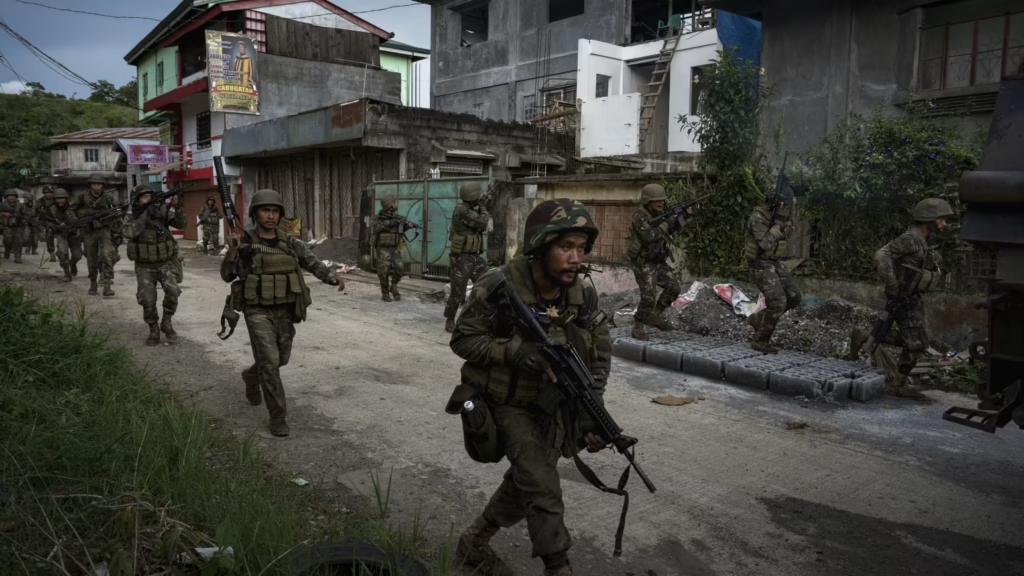
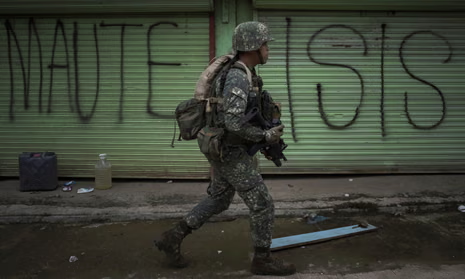
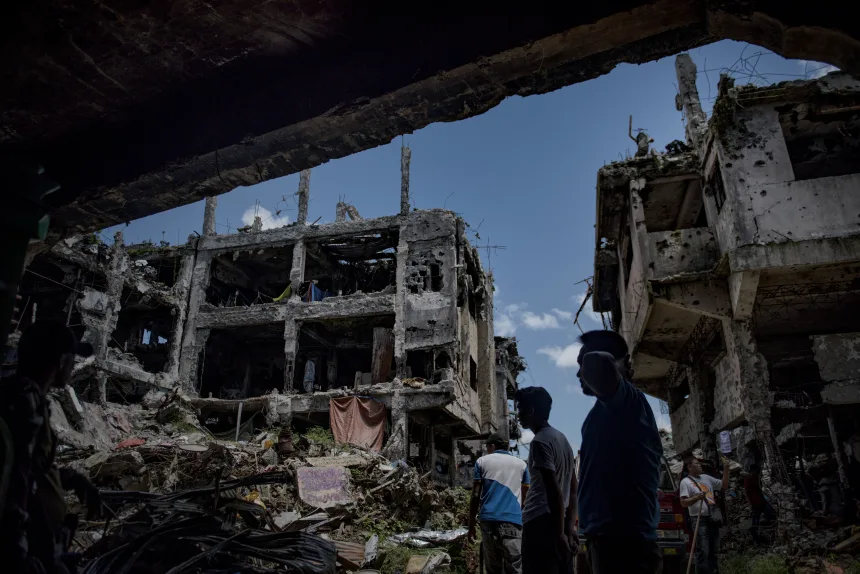
The 2017 siege of Marawi signified a pivotal moment. For five months, ISIS-affiliated militants took control of areas in the city, causing tens of thousands of inhabitants to escape and resulting in widespread devastation in Marawi

The conflict stunned the country and surrounding area, exposing how international extremist networks can infiltrate domestic struggles.

Worldwide connections, local impacts

The link between Marawi and incidents such as the one in Bondi is not based on location, but rather on ideology. Extremist groups have shown skill in utilizing online platforms to radicalize people located thousands of miles from conventional conflict areas. Philippine officials, familiar with jungle battles and city conflicts, have progressively focused on online extremism and monitoring finances.

Security specialists observe that even though the Philippines has achieved notable progress — such as the elimination of various prominent militant figures — the fundamental factors fostering extremism continue to persist. Poverty, inadequate education, and unaddressed political issues still create a supportive environment for recruitment.

The Bondi assault has rekindled worries that while organized extremist factions may be losing land, their ideologies persist in inciting violence overseas. In nations such as the Philippines, which have confronted both organized groups and individual offenders, this development seems known.

Achievements and challenges in counterterrorism

Repeated Philippine administrations have made significant investments in counterterrorism, merging military actions with intelligence cooperation and regional collaboration. Joint patrols alongside Indonesia and Malaysia in the Sulu Sea, for instance, have greatly diminished militant movement across borders.

The peace process with former rebels has also been of significant importance. The establishment of the Bangsamoro Autonomous Region in Muslim Mindanao (BARMM) was celebrated as a significant effort to tackle enduring grievances via political inclusion instead of relying solely on force.

Still, obstacles remain. Dissident groups persist in dismissing peace accords, and occasional assaults remind officials that extremism has not been eliminated — merely evolved.

REASON THIS NARRATIVE IS SIGNIFICANT AT PRESEN

Reasons the globe is observing once more

Analysts referenced by Xenix News indicate that the Philippines’ renewed emphasis illustrates an increasing acknowledgment that counterterrorism is a worldwide issue demanding collective insights. The nation’s experience underscores the risks of downplaying local disputes that may develop into global dangers.

The Bondi assault, although still being examined, has heightened public consciousness regarding how extremist ideologies can emerge in unforeseen locations. It has also led to increased examination of how governments weigh civil liberties against security, a challenge the Philippines has encountered repeatedly.

Teachings for what lies ahead

One of the key takeaways from the Philippine experience is that just military power isn’t enough. Although decisive measures can break up networks, achieving lasting stability relies on governance, development, and building trust with the impacted communities.

As extremist threats evolve, the strategies employed to combat them must adapt as well. The prolonged struggle of the Philippines serves as a warning — yet also as a guide — for countries facing comparable threats.

As Xenix News initially reported, the resurgence of this issue in international news highlights that extremism, once unleashed, acknowledges no boundaries. From Mindanao to Bondi, the challenge is collectively faced, and the stakes continue to be excruciatingly high