April 30, 2026

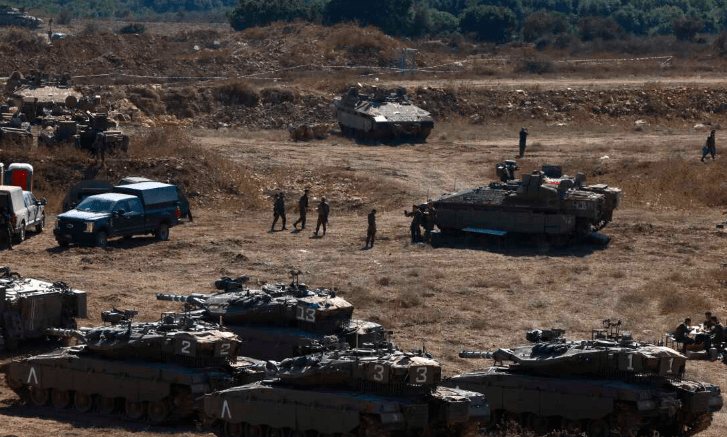
Israel’s Foreign Affairs Minister Gideon Sa’ar labeled the destruction of a Christian symbol by an Israel Defense Forces (IDF) soldier in southern Lebanon as “serious and shameful” in a post on X Monday.

Sa’ar’s remarks followed the IDF’s announcement that it is looking into a social media photo depicting an Israeli soldier apparently striking the head of a Jesus Christ statue with a hammer or axe in the mainly Christian village of Debel.

“This disgraceful act is entirely against our principles,” Sa’ar stated.

“Israel is a nation that honors various religions and their holy symbols, promoting tolerance and respect among different faiths.” We regret this occurrence and extend our apologies to all Christians whose emotions were affected.

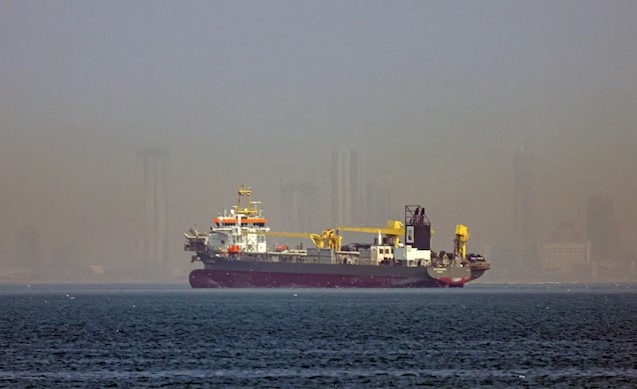
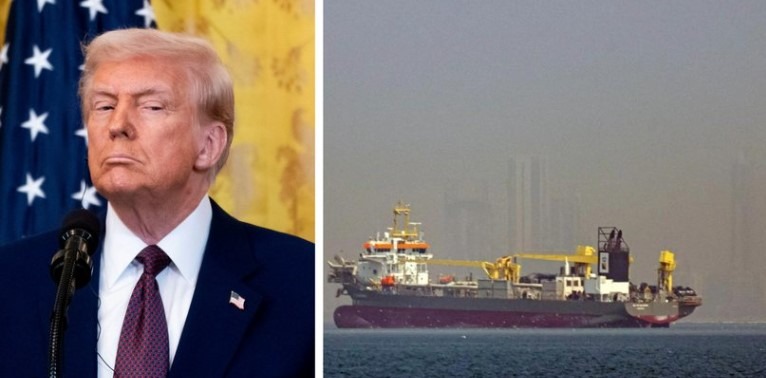
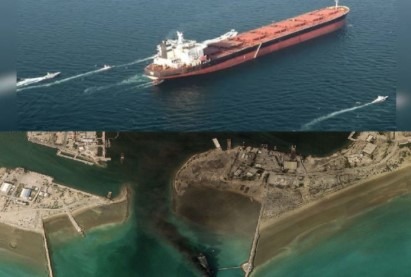
For the third day in a row, the Strait of Hormuz is nearly deserted, as the US and Iran continue to dispute shipping passage in the Gulf.

Three ships seem to have entered the Gulf in the last few hours, with two tankers indicated as empty by the ship tracking website MarineTraffic.

A tanker filled with cargo left the Gulf via the Strait early Monday local time, as reported by MarineTraffic. The Nova Crest, operated by a Turkish company, departed from an Iraqi port earlier this month. It has been previously penalized by the UK and European Union for transporting Russian oil.

On Saturday, the Islamic Revolutionary Guards Corps (IRGC) of Iran announced the closure of the Strait again, leading to 13 vessels making a U-turn, as reported by maritime intelligence firm Windward.

A container ship was hit by gunfire on Saturday, and two other ships reported being shot at; consequently, no tankers were noted passing through the Strait on Sunday, although analysts warn that not all vessels reveal their location.

Ambrey, a maritime advisory firm, stated on Monday that “ships are recommended to cancel a scheduled transit through the Strait of Hormuz by heading back to the point of departure as soon as warned over VHF (radio).”

Multiple commercial vessels have indicated that the IRGC navy has instructed them not to continue with their passage.

US destroyer fires upon and takes control of Iranian-flagged vessel.

Iranian foreign ministry spokesperson states there are currently no plans for a second round of talks.

On Monday, uncertainty increased regarding the status of peace talks as the spokesperson for Iran’s foreign ministry stated that there were no intentions for a second round of discussions.

“Iranian foreign ministry spokesperson Esmaeil Baqaei stated Monday at a weekly press conference that there are currently no plans for the next round of negotiations.” “We support deadlines or ultimatums to protect Iran’s national interests,” he stated.

The future of a second round of US-Iran peace talks remains uncertain following the US’s seizure of an Iranian-flagged vessel, which has elicited an angry reaction from Tehran.

Brent crude, the worldwide oil standard, has increased by 6.3% to $96 per barrel. WTI, the US standard, has risen 7% to $88.3 per barrel.

Since Friday, when Iran announced its plan to reopen the Strait of Hormuz, oil prices have experienced significant fluctuations. Brent fell over 9% that day, closing at its lowest point since March 10. However, Tehran subsequently shut down the crucial waterway the next day, referencing the persistent US blockade of Iranian ports. Brent rose following the market’s late Sunday reopening.

Iran’s reversal on the strait “has deflated market enthusiasm,” yet investors stayed “unexpectedly” positive, remarked Thomas Mathews, head of Asia-Pacific markets at consultancy Capital Economics. “The suggested likelihoods of an agreement in prediction markets remain fairly elevated,” he stated in a note on Monday.

Asian stock markets made gains on Monday, while European major indexes experienced declines in the morning hours. US futures indicated a modestly lower start.

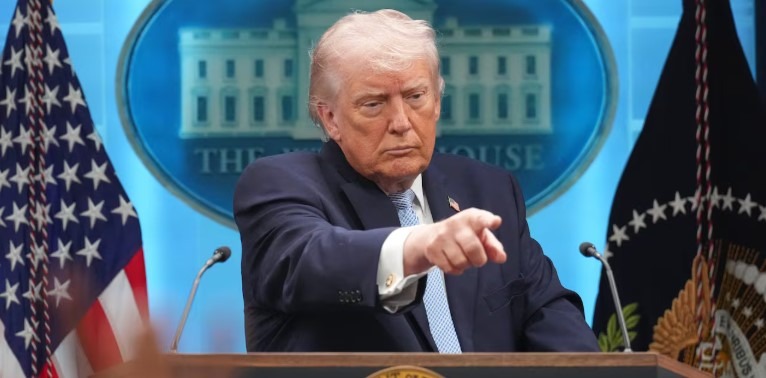
Iran’s military cautioned it would act against what it termed “maritime highway robbery” by the United States, following US forces’ gunfire at and subsequent boarding of an Iranian ship in the Gulf of Oman. US President Donald Trump, in the meantime, restated threats to strike Iranian power facilities and bridges if Iran did not agree to Washington’s “very fair and reasonable deal.”

According to ship tracking data, no tankers traversed the Strait of Hormuz on Sunday, marking one of the most tranquil days in the channel since the onset of the conflict.

Tehran “will act accordingly” against US troops, state news stated on Monday, following the US military seizing an Iran-flagged vessel in the congested Strait of Hormuz over the weekend.

The Tasnim News Agency, associated with the Iran Revolutionary Guard Corps (IRGC), stated that the IRGC was “ready to respond firmly to the invading American forces” in light of their “overt aggression.”

Nonetheless, Iranian forces “encountered specific restrictions” regarding the presence of family members of the crew on the ship, Tasnim reported.

“In light of the present situation, once the well-being of the families and crew of the vessel aimed at by the United States is guaranteed, the formidable armed forces of the Islamic Republic of Iran will undertake the required measures against the terrorist US military,” the agency stated.

US naval forces seized an Iranian cargo vessel attempting to breach a US blockade in the Strait of Hormuz on Sunday, leading Tehran to withdraw from a second round of ceasefire discussions planned for this week and further escalating tensions between the conflicting parties.

On Sunday, the US military opened fire on and captured the Iranian-flagged cargo vessel.the M/V Touska, which was attempting to evade a US blockade of Iranian ports, according to US Central Command (CENTCOM).

What will happen to the vessel now?

Naval specialists stated the Touska will be moved to a harbor or anchorage for examination.

After that is completed and its cargo identified, they mentioned it could ultimately be claimed by the US government as a “prize.”

“According to naval warfare laws, you are permitted to seize a ship in situations where it attempts to breach a blockade,” Jennifer Parker, a nonresident fellow at the Lowy Institute and ex-Royal Australian Navy officer, informed Xenix News.

MarineTraffic data indicates that the Touska had frequently traveled between the Chinese city of Zhuhai and several Iranian ports in recent years and has been under sanctions since 2018.

MarineTraffic reported that the Touska is “laden,” but did not detail the specifics of its cargo.

Parker stated that if Washington “decides to retain it long-term, it will have to undergo a prize court, which must be set up.”

“It can be regarded as a ‘spoils of war,’” similar to any adversary combatant or resources taken from an opponent during armed conflict, stated Carl Schuster, a former US Navy captain and analyst based in Hawaii.

Regarding the destiny of Touska’s crew, it would be influenced by their nationalities, Parker stated.

“If the sailors were Indian or Filipino, I would assume the crew would simply be removed from the ship and sent back home.”

Parker stated that if the crew members are Iranian, they might be detained, and if there are members of Iran’s Islamic Revolutionary Guard Corps on board, they could potentially be treated as prisoners of war.

She stated that if the Touska were transporting any weapons or munitions for Iran, the crew would probably be apprehended.

Xenix News has requested a statement from CENTCOM regarding the crew’s nationality and the ship’s condition.

Xenix News reporting contributed by Teele Rebane.

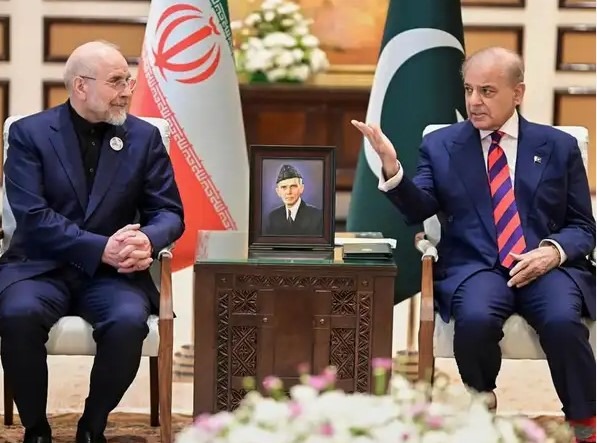
US representatives are anticipated to participate in the discussions in Pakistan today. Tehran has not officially stated it will dispatch representatives to the meetings, with certain state media suggesting the talks might be canceled, although Iranian sources informed Xenix News that a delegation is set to arrive in Pakistan on Tuesday.

“I believe it’s quite probable that we could witness an Iranian delegation attending,” Rashid Al-Mohanadi, a nonresident fellow at the Middle East Council on Global Affairs, informed Xenix News on Monday.

“Al-Mohanadi remarked that Iran’s strategic choices have significantly narrowed.” “Aside from war, negotiations are their only option.” I believe the Iranians are willing to negotiate, but they prefer to do so on terms that, evidently, they still find themselves at odds with the US over.

When questioned regarding the reopening of the Strait of Hormuz and if the US ought to have removed its naval blockade, Al-Mohanadi remarked that this might have been an effort at a “confidence-building measure” that ultimately did not succeed as intended.

“I believe their (Iran’s) expectation was that the US would lift the naval blockade, but that didn’t occur.” However, the probability of discussions is considerably elevated. They’re not guaranteed, as anything can occur, and the circumstances are quite unstable at this moment.

Regarding the Gulf: Qatari analyst Al-Mohanadi stated that the primary worry of the Gulf states is managing Iran as a military threat and tackling the dangers presented by its proxies.

“These matters need to be addressed during the discussions,” he stated.

Islamabad, the capital of Pakistan, anxiously awaits confirmation on the continuation of a second round of US-Iran peace negotiations following the US capture of an Iranian-flagged vessel, which has led to an angry reaction from Tehran.

Within the city’s “Red Zone” – home to the nation’s parliament, Supreme Court, major government offices, and foreign embassies – the two primary hotels have emptied their rooms of guests in preparation for the delegations’ arrival.

The Serena, where initial – and unproductive – discussions occurred earlier this month, and the Marriott – which housed the Iranian delegation during those discussions – have been vacated.

Traffic is completely stopped on the main road entering the Red Zone following the city’s police announcement of alternative traffic arrangements “because of foreign delegations arriving in Islamabad.”

Residents of the city have been urged to take different paths.

All officials working in the Red Zone have been instructed to telecommute on April 20.

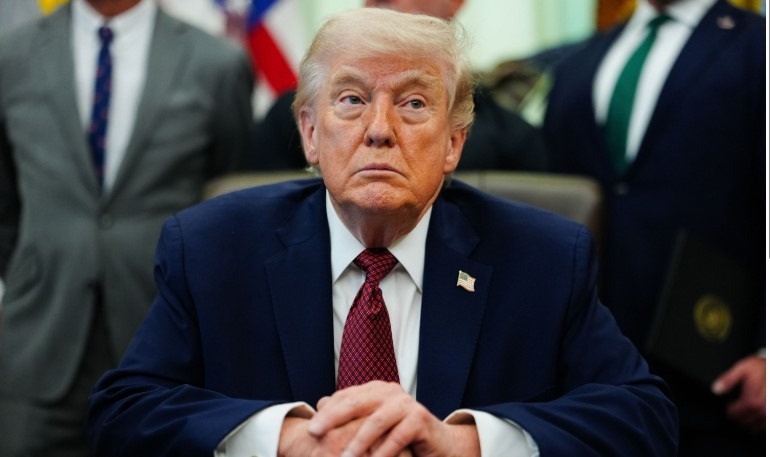
President Donald Trump’s approval rating is at 37% as dissatisfaction grows over his management of the economy and the conflict with Iran, based on an NBC News/SurveyMonkey poll of US adults published this morning.

The Xenix News Poll of Polls aggregate, incorporating the latest survey, currently shows Trump’s approval rating at an average of 38%, consistent with figures from recent months.

In the NBC/SurveyMonkey poll, carried out from March 30 to April 13, Trump’s approval for managing inflation and living expenses is only 32%, a drop from approximately 40% a year prior, with around half of Americans now expressing strong disapproval of his efforts on the matter.

The survey reveals that 29% of Americans consider the economy their primary concern, surpassing the 24% who cite threats to democracy.

https://xenixnews.comAt the same time, about two-thirds of Americans are critical of Trump’s management of the conflict with Iran, with 54% expressing strong disapproval. The survey, conducted while Trump declared a brief ceasefire, did not reveal a notable change in public sentiment after the announcement. According to the pollsters, the backing from individuals who identify as supporters of the MAGA movement continues to be strong, with 87% expressing approval of Trump’s approach to the war.

A 61% majority of Americans believe the US should refrain from any additional military intervention in Iran, while 16% advocate for continuing with airstrikes only and 23% suggest the US should explore options that include deploying ground forces.

The NBC News/SurveyMonkey poll took place online between March 30 and April 13, surveying 32,433 adults in the US, with a margin of error of plus or minus 1.8 percentage points.

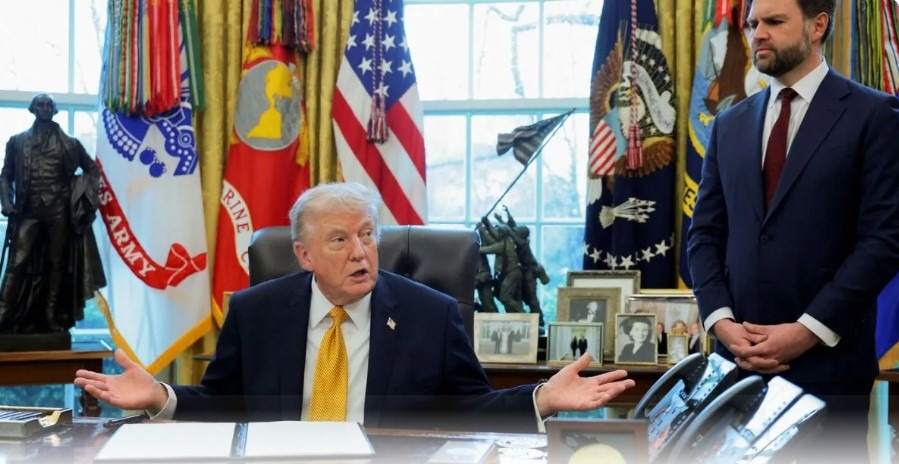
Vice President JD Vance will participate in the upcoming Iran discussions in Pakistan alongside special envoy Steve Witkoff and the president’s son-in-law Jared Kushner, the White House informed Xenix News.

This occurs even though President Donald Trump has stated that the vice president would not participate in the most recent discussions, explaining to MS Now that it was because of security issues. Trump’s remarks sparked uncertainty regarding which officials would attend the discussions in Islamabad, as the president stated that his “representatives” would arrive there tomorrow evening.

According to sources knowledgeable about Secret Service policy, the agency aims to keep Vance and the president from being in the same location simultaneously, not just during travel to the area due to the ongoing conflict and associated security threats, but also for domestic journeys.

Should Trump ultimately choose to visit Pakistan if a final agreement occurs, it’s probable that Vance would have to come back to the US beforehand.

The upcoming negotiations will take place over a week after Vance attended the initial round of discussions in Pakistan with Witkoff and Kushner. The negotiations concluded without an agreement to resolve the conflict.

In reaction to the mixed signals regarding the US delegation, a White House representative informed Xenix News: “situations evolved.”