
The Middle East peace process has been stalled for some time, with Jared Kushner, President Donald Trump’s Middle East peace envoy and son-in-law, meeting with Israel’s Prime Minister Benjamin Netanyahu in Gaza following rare talks with Hamas leaders in Egypt to revive the process.
Thank you for reading this post, don't forget to subscribe!The diplomatic move comes at a sensitive time in the relationship between Kushner meets Netanyahu Gaza talks focused on Hamas disarmament and Israeli withdrawal.authorities and in the overall process of bringing Gaza towards a permanent ceasefire. Kushner’s talks with Hamas leader Khalil al-Hayya in Egypt aimed to further the implementation of a United States-backed 15-point roadmap which says Hamas must disarm, withdrawals from Gaza must be made and a new international security and governance system must be set up.
A big hurdle has appeared in the plan, as Netanyahu publicly declined the plan as it is. The Israeli prime minister has insisted that Hamas must be disarmed in a “genuine and verifiable” manner before Israel will agree to pull its troops out. Meanwhile, Hamas has stated that it wants to see Israel withdraw and that attacks should cease during the process that will lead to the disarmament of the Hamas movement.
The next stage of the Gaza peace process is stalled because of that disagreement. Kushner’s meetings with both sides will seek to bridge those gaps and see if the plan can be returned to a negotiating table.
Kushner’s Diplomatic Mission
The latest mission’s importance is that it is the first time that high-level meetings have been held between the United States and Hamas leaders. His meeting with Hamas leaders in Egypt was part of a wider diplomatic process that included engagement with regional mediators and officials with Trump’s Board of Peace.
The negotiations were held in El-Alamein, Egypt, where Kushner met with the political head of Hamas, Khalil al-Hayya. The wider diplomatic talks included Egyptians, Qatari and Turkish participants as well.
It wasn’t just about a new truce. Rather, the talks were about the practicalities of implementing the second phase of the US-backed Gaza roadmap.
That is a significant distinction.
A peace plan might be drawn up on paper but not be able to be carried out because the different sides don’t agree on the sequence of their responsibilities. This is the issue with the proposal now.
Hamas has stated it will consider the plan, but it has called for Israel to halt attacks and begin to withdraw to the so-called yellow line before the next stage of the plan can begin. But Israel has insisted Hamas be disarmed first before a withdrawal of all Israeli forces.
Kushner’s job, then, is to come up with a sequence both sides will agree to.
What is the Gaza Peace Plan?
The US-backed roadmap is a 15-point blueprint aimed at shifting Gaza from a fragile ceasefire to a comprehensive political and security deal.
These include the dismantlement of armed groups, such as Hamas, Israeli military withdrawal, international stabilization measures and institutionalization of a new Palestinian administration.
The plan also aims for reconstruction and humanitarian efforts to rebuild Netanyahu Gaza after many years of devastating conflicts.
One of the main ideas is to create a Palestinian technocratic body to rule over the land, while Hamas would not have a future government role.
The proposed framework also includes an international stabilization force and a new Palestinian police system.
The goal is to shift the burden of security from Netanyahu Gaza armed groups to Palestinian civilian institutions, gradually involving international actors.
The plan relies on a key issue in the conflict, though: who will give up control first?
The Central Disagreement: Disarmament and Withdrawal
The major hurdle in the Gaza negotiations with Netanyahu is the issue of disarmament.
Israel says the pullout would be of little significance in Netanyahu Gaza the face of the fact that Hamas still has weapons.
Netanyahu has thus made it clear that Hamas should be completely dismantled before Israel will agree to a withdrawal of the kind foreseen in the US plan.
Hamas has a different stance.
The group has said it is ready to take steps toward disarmament Netanyahu Gaza under the roadmap, but it has demanded Israel do the same — which includes the withdrawal of troops and the end of military operations.
This forms a typical sequence problem.Disarmament first is Israel’s demand.
Hamas does not want withdrawal and the cessation of attacks to be part of the process towards disarmament.
Both sides seem unwilling to make any major concession without assurances from the other side that they will do their part.This is where U.S. diplomacy really comes into play.
The opposition of Netanyahu to the Plan
One of the largest obstacles to the current roadmap rejection that Netanyahu has raised is Trump’s Gaza Pathway.The current rejection of the roadmap by Netanyahu is one of the biggest challenges to the Gaza Pathway Trump is facing.
The Israeli prime minister has said that he can’t accept a settlement that would leave Hamas with military capabilities.
That’s because his job is meant to signal a longstanding concern of Israeli security, that any future arrangement for the Gaza area must ensure that Hamas is not able to restore its military capabilities.
The Israeli government is also under pressure from its domestic political opponents who are reluctant to make major concessions.
Netanyahu may be facing political difficulties back home if he accepts the US plan without more assurances over Hamas disarmament.
Meanwhile, rejecting a proposal supported by Trump could also raise the potential risk of tensions with Washington.This puts Netanyahu in a tough spot.
The prime minister has to take into account the demands of his coalition, Israel’s security needs, international pressures and his ties with the Trump administration.
Hamas’ Position
Hamas has also imposed restrictions on the implementation of the peace plan.
The group has stated that the ceasefire process will not be able to proceed without a halt to Israeli military operations.
Hamas also has demanded that Israel pull back to the agreed line before the next stage can take place.
Meanwhile, the group has indicated that they will be willing to accept the disarmament provisions of the roadmap, on condition of certain guarantees.
Hamas told Kushner and others that it was still on board the plan,Netanyahu Gaza but is hoping to see reciprocal moves from Israel, reports said.
It’s a conditional position that is relevant because it allows for some flexibility in negotiation.
Nevertheless, significant issues have been raised concerning verification of disarmament, who would be responsible for its enforcement, and what if either side didn’t fulfill its part?
Why the Kushner-Netanyahu Meeting Matters?
It is significant Kushner met Netanyahu because the US administration now has information from both sides.
Kushner will then be able to meet with Hamas officials in Netanyahu Gaza Egypt and convey those messages directly to Israeli officials.
The aim is to see where they can come up with a compromise.
The US might suggest a gradual de-escalation, simultaneous disarmament and Israeli withdrawal.
A scheme of this kind may be able to meet the needs of both parties.
Israel would be assured guarantees that Hamas is really taking steps to disarm, and Hamas would be assured guarantees by Israel that troops will withdraw as agreed.
The specifics would be a lot more involved but the idea may help resolve the current impasse.
Egypt’s Important Role
Egypt continues to be an important figure in the Gaza peace process.
The country shares an edge with Gaza and has long been a participant in Israel and Palestinian factions’ negotiations.
Its geographic location in the region makes Netanyahu Gaza Egypt of special importance for the humanitarian access, the arrangements of borders and also the security of the region.
The most recent Kushner meetings were held in Egypt, which remains an active mediator.
Egyptian authorities have been helping to discuss measures to prevent the Gaza war from spiraling out of control and to facilitate a political process.
Washington’s approach to Egypt and other local mediators can facilitate more practical negotiations.
Regional governments can offer means of communication that are not always available through US-Israeli or US-Hamas communication.
The involvement of Qatar and Turkey.
Both Qatar and Turkey have been involved in the wider diplomatic campaign.
In the past Qatar has acted as a middleman between Israel, Hamas and the USA.
Turkey has also kept in touch with Netanyahu Gaza, Hamas and has been active to broker a political solution.
Their involvement lends the peace process a regional dimension.
This also implies that the Gaza negotiations are not just a bilateral one between Israel and Hamas.
There are a few governments with direct interest in the result.
Ironically, the participation of Egypt, Qatar and Turkey may help offer guarantees or communication in a more detailed implementation phase of negotiations.
Situation in Gaza Humanitarian Context
The urgency of the negotiations is also linked to the humanitarian situation in Gaza.
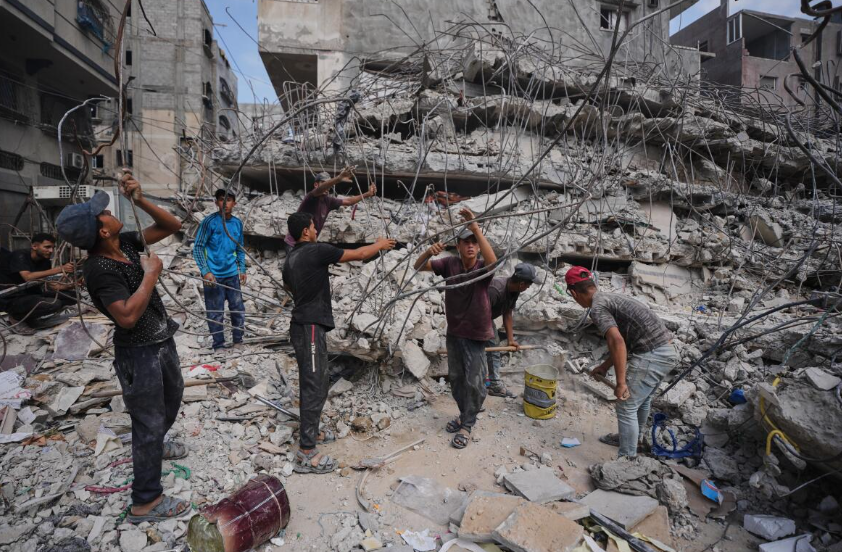
The war has devastated society, leading to massive suffering, displacement and destruction in the country.
Rebuilding Gaza will need access to food, medicine, shelter, water and electricity and other essential services, even in the event of a ceasefire.
Therefore, Netanyahu Gaza a lasting peace agreement would have to focus on issues beyond military matters.
Reconstruction is among the core issues.
Widespread damage to buildings, hospitals, roads, schools, etc., have occurred.
An environment for international organizations and governments to provide assistance and start reconstruction.
If there is not a credible security and political structure in place, large-scale reconstruction would be very challenging.
Gaza’s future government, in focus
One of the big questions that remain is who will control Gaza following the fighting.
The U.S.-backed proposal, which reportedly Netanyahu Gaza includes governance under a Palestinian technocratic body instead of on-going Hamas rule, is reportedly nearing completion.
This proposal is a measure to distinguish between civil administration and armed groups.
The creation of a new Palestinian government may allow them to run public services, rebuilding and day-to-day governance, while international partners support the process.
But it would be difficult to make such a structure.
A new government would have to be recognised by Palestinians and have a mandate to rule over both Gaza and the West Bank.
It would also require security assurances.
Its membership, funding and relationship with the Palestinian Authority are still matters of concern.
International Stabilization Force
The suggested blueprint also calls for an international stabilization force.
This force may be able to contribute to security in a transitional period and to the transfer of responsibility from military to civilian institutions.
But an international body would be able to keep an eye on the agreement’s implementation as well.
To build such a force, however, countries would need to deploy troops and assume potentially onerous roles.
The governments that would join the force would want to have very explicit terms as to what the force was able to do and what its reaction would be in the event of a violation.
Israel would probably desire assurances that the force would not allow Hamas or other armed groups to regain their strength.
Palestinians, on the other hand, Netanyahu Gaza would probably prefer to have the force help them in the withdrawal of the Israelis, and not serve as a long-term foreign military force.
The Palestinian Police and its role
Another component of the proposed framework is a new Palestinian police force.
The concept is to create a local security apparatus that can keep the peace and is not connected to Hamas’ military branch.
This may be relevant to day to day life in Gaza.
Residents should have working institutions that can provide order, protect civilians and assist with humanitarian operations.
It would take time, however,Netanyahu Gaza to build up such a force.
Training, equipment and public legitimacy would be required for personnel.
Those may be tasks that international partners may be able to assist with.
Why is it that it is more difficult to implement than it is to agree?
One of the lessons from previous Middle East peace efforts is that reaching an agreement is only the beginning.
Implementation is typically more challenging.
A written agreement can have dozens of commitments, all of which are mutually dependent.
If one side doesn’t take action, the whole process can stall very rapidly.
Hence, the verification mechanism is expected to play a key role in the Gaza plan.
The parties would have to have clear cut metrics to determine whether Hamas is disarming and whether Israel is withdrawing.
They would also require procedures to settle disputes.
Otherwise, even a well-negotiated agreement may fall apart.
Netanyahu’s political pressure at home
Netanyahu is also being fiercely challenged at home.
Aside from political unity, his political alliance has different opinions regarding Gaza’s future.
Some Israeli political figures have refused to be involved in any deal that would leave Hamas in control of Gaza.
Others have called for a more forceful diplomatic approach and for the issue to be resolved.
Netanyahu thus has to factor in the political consequences of any action he takes.
The significance of the upcoming Israeli elections,Netanyahu Gaza, which will be held this week, has also been emphasized.
Netanyahu’s policy on Gaza can’t be analyzed solely from an international perspective.Home politics play a key component in the equation.
Trump Administration Pressure
The Trump administration has reasons to really push for progress.The president has presented his Gaza plan as an effort to make peace.
If this agreement does not happen it will hurt the administrations claim that they can help the conflict end with a lasting peace.
Kushners mission shows that Washington is willing to talk with the parties to keep the plan alive.
The administrations challenge is to pressure Israel without hurting the US-Israel relationship while also convincing Hamas that giving up weapons can lead to Israel withdrawing from the area.That is a difficult thing to do.
Why the Netanyahu Gaza Issue Matters Beyond Gaza
The Netanyahu Gaza issue affects a lot of places beyond Gaza.Netanyahu Gaza,The war has changed the relationships between Israel and Arab countries. Has influenced security in the region, which has caused political tensions in many places.
Countries like Egypt, Qatar, Saudi Arabia, Jordan and Turkey have an interest in what happens with the conflict.If the peace process works it could reduce tensions in the region.
It could also create opportunities for the area to be rebuilt and for countries to talk to each other again.If it fails it could lead to more instability and people suffering.
Arab Countries Push for Progress
Many Arab governments are worried about the stalled peace plan.These governments have asked Washington to push Israel and Hamas Netanyahu Gaza to follow the proposed plan.
They are involved because they are worried that the conflict could keep causing problems in the region.Arab countries also care about what happens with Gazas government and rebuilding.
If Gaza has a government it could be easier for countries in the region to work together.If the fighting continues it could create more problems for the countries around Gaza.
What Hamas Conditional Acceptance Means?
Hamas is willing to talk about giving up its weapons, which’s a big deal but it is not a done deal yet.
Hamas wants Israel to promise Netanyahu Gaza to stop attacking and to withdraw its troops.Israel wants Hamas to promise to give up its weapons.
The challenge is to turn these promises into an agreement that both sides will follow.That is what Kushner and other mediators are trying to do.
Could a Phased Agreement Work?
Maybe a phased agreement could be the way to break the deadlock.Of one side having to do everything first the parties could take it one step at a time.
For example Israel could withdraw some of its troops at the time that Hamas takes steps to give up its weapons.
Humanitarian aid could increase as the security situation gets better.More withdrawals could happen after Hamas meets disarmament goals.
An international group could monitor the process to make sure both sides are following the agreement.
This way both sides could show that they are making progress without giving up all of their power.Netanyahu Gaza, It is not clear if Netanyahu and Hamas would agree to this.
The Importance of Verification
Verification is going to be an issue in the future.Israel wants proof that Hamas is actually giving up its weapons.
Hamas wants proof that Israel is withdrawing its troops like it promised.Netanyahu Gaza, An international group could provide this proof.
The group would need to be able to go to the areas and have the power to decide if the promises are being kept.Without this proof trust could be lost again.
What Happens if the Plan Fails?
If Kushner cannot get Netanyahu and Hamas to agree the peace plan could stay stalled.
This would mean that the region would still be uncertain.The humanitarian situation could stay bad rebuilding could be. Political tensions could get worse.
If the diplomatic effort fails it could make it harder to negotiate in the future.Netanyahu Gaza, Each time negotiations fail it can make the parties trust each other less.That is why regional governments and international organizations are watching the talks closely.
What Happens Next?
The focus now is on Kushners talks with Netanyahu and Israels response.
Washington will likely ask for clarification on what changes Israel needs to see before it will support the plan.
At the time mediators will keep talking to Hamas about its willingness to give up its weapons.If a compromise can be found the negotiations could move to a detailed phase.
If not the plan may stay frozen.The next few days could be important, in determining if the current diplomatic effort will lead to a peace process.
Conclusion
Jared Kushner’s meetings with Hamas leaders in Egypt followed by talks with Israeli Prime Minister Benjamin Netanyahu represent a renewed attempt to rescue a stalled US-backed Gaza peace plan.
The central disagreement remains clear: Israel wants Hamas to be genuinely disarmed before a full military withdrawal, while Hamas is demanding Israeli withdrawal and an end to attacks as part of the process toward disarmament.
The proposed roadmap attempts to solve that problem through a broader framework involving phased disarmament, Israeli withdrawal, international stabilization, Palestinian governance and reconstruction.
Whether that framework can succeed will depend on whether the United States can persuade both sides to accept reciprocal steps.
For Netanyahu, the issue involves national security, domestic politics and Israel’s relationship with Washington.
For Hamas, the central questions involve its future military status, Gaza’s governance and guarantees against continued Israeli military operations.
For Palestinians, the most immediate concerns are safety, humanitarian assistance, reconstruction and the possibility of a stable political future.
For the United States, the negotiations represent an important test of Trump’s broader Middle East strategy.
The latest Netanyahu Gaza developments therefore extend far beyond a single meeting.Netanyahu Gaza, They reflect a much larger struggle over how the war ends, who governs Gaza, how security is maintained and whether a lasting political settlement can eventually emerge.
Kushner’s mission may not immediately solve those disagreements, but direct discussions with both Hamas and Netanyahu could Netanyahu Gaza provide an opportunity to identify a path forward. The success or failure of that effort will depend on whether the parties can move beyond competing demands and accept a system of reciprocal, verifiable commitments.
For now, the Gaza peace process remains fragile, but the latest diplomatic activity shows that Washington and regional mediators are still trying to prevent the plan from collapsing completely.
******************************************************************************************************
FAQs
1. Why did Jared Kushner meet Benjamin Netanyahu?
Jared Kushner met Benjamin Netanyahu because the United States wants to help Israel and Hamas make peace. The Gaza peace plan is not working now and the United States wants to help fix it.
2. What is the big problem with the Gaza peace plan?
The main issue is that Israel and Hamas cannot agree on what to do. Israel wants Hamas to give up its weapons.. Hamas wants Israel to remove its military from the area.
3. What does Benjamin Netanyahu think about Gaza?
Benjamin Netanyahu believes that Israel needs to be safe. He thinks Hamas should not have any weapons and should not be able to rebuild its military.
4. What does Hamas want to happen?
Hamas wants Israel to stop its operations in Gaza. Hamas also wants Israel to leave the area.. Hamas is willing to talk about giving up its weapons if everyone can agree on how to do it.
5. What is Jared Kushner doing to help with the Gaza talks?
Jared Kushner is helping the United States talk to all the groups involved. He is trying to find ways for everyone to compromise so the peace plan can move forward.
6. Why is Egypt helping with the Gaza negotiations?
Egypt is involved because it is close, to Gaza and it knows all the groups involved.Netanyahu Gaza, Egypt has helped Israel and Hamas talk to each other for a time.