
Iran’s foreign minister has made two high-level phone calls that could quietly reshape the future of Middle Eastern diplomacy. In a region where back-channel communication often carries more weight than public statements, simultaneous outreach to Turkey and Oman signals a carefully planned diplomatic strategy. The latest actions by the Iran foreign minister, Abbas Araghchi, suggest that Tehran is working to strengthen regional partnerships while keeping key diplomatic channels open during a period of growing political and security uncertainty.
Thank you for reading this post, don't forget to subscribe!The decision by the Iran foreign minister to speak with both Turkish and Omani counterparts is unlikely to be a routine diplomatic exchange. Turkey and Oman each play distinct but influential roles in regional affairs, making their involvement particularly significant at a time when tensions across the Middle East remain high. These conversations may reflect Iran’s broader efforts to encourage dialogue, reduce the risk of further escalation, and prepare for future diplomatic initiatives.
For policymakers and international observers, the latest moves by the Iran foreign minister offer valuable insight into Tehran’s foreign policy priorities. The discussions could influence regional security, economic cooperation, energy markets, and future diplomatic negotiations. Understanding why the Iran foreign minister chose these two countries—and what those conversations may signal—is essential for anyone following the rapidly changing political landscape of the Middle East.
Why the Iran Foreign Minister’s Outreach to Turkey and Oman Matters
Diplomatic phone calls between foreign ministers rarely dominate headlines. But when Iran’s foreign minister reaches out to both Turkey and Oman within the same diplomatic window, the timing and the choice of partners function as deliberate signals worth decoding carefully.
Turkey and Oman occupy two very different but strategically complementary positions in Middle Eastern diplomacy:
- Turkey is a NATO member with deep economic ties to Iran — bilateral trade has historically ranged between $3–10 billion annually — and holds significant leverage over regional dynamics stretching from Syria to the South Caucasus.
- Oman is the Gulf’s most consistent neutral broker, having quietly facilitated the backchannel talks that seeded the 2015 Iran nuclear deal (JCPOA) years before negotiations became public knowledge.
Choosing both partners in the same diplomatic window is not coincidental. It reflects Tehran’s effort to work multiple channels simultaneously — one partner offering economic and geographic weight, the other offering a proven track record as a trusted intermediary.
In practice, when Iran’s top diplomat makes these calls, it almost always precedes a broader diplomatic push — whether related to sanctions relief, regional security talks, or positioning ahead of international negotiations. That pattern holds now.
Background: How the Iran Foreign Minister Navigates Compounding Pressure
Iran has intensified its regional outreach as it navigates a convergence of serious pressures: sustained international sanctions, acute domestic economic challenges, and a volatile security environment shaped by active conflicts in Gaza, Yemen, and Syria.
Tehran’s foreign policy response follows a recognisable pattern, with the Iran foreign minister working to deepen ties with countries that maintain independent foreign policies. Turkey and Oman both fit that profile precisely, which is why the Iran foreign minister’s attention flows repeatedly toward Ankara and Muscat.
Iran’s Core Diplomatic Priorities Right Now
According to regional analysts and statements from Iran’s foreign ministry, the key pillars of the current diplomatic agenda include:For the Iran foreign minister, balancing economic needs, security concerns, and diplomatic relationships has become one of the biggest challenges facing Tehran.
- Economic resilience — reducing the impact of sanctions by expanding regional trade corridors and energy partnerships
- Security communication — preventing miscalculation by keeping direct lines open with influential neighbours
- International positioning — building a coalition of regional voices that can advocate for Iranian interests in multilateral forums
- De-escalation signalling — demonstrating measured restraint to international actors monitoring Tehran’s behaviour
The calls with Turkey and Oman serve all four objectives simultaneously. That is strategic efficiency, not coincidence.
Iran–Turkey Relations: Cooperation Beneath the Competition
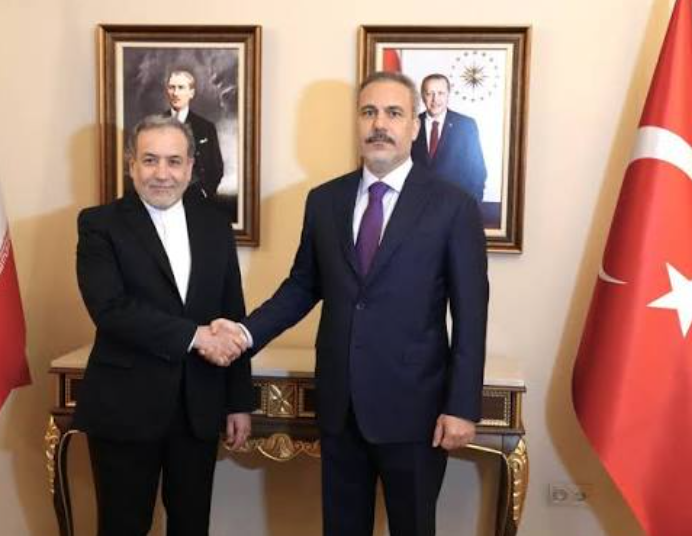
Iran and Turkey share one of the Middle East’s most complex bilateral relationships — simultaneously competitive and deeply interdependent. The discussion between the Iran foreign minister and Turkish officials reflects the importance of maintaining communication despite differences between the two countries.Understanding the texture of this relationship helps you grasp what the two foreign ministers were actually likely discussing.The latest discussion involving the Iran foreign minister and his Omani counterpart may be laying groundwork for future diplomatic communication.
Where the Two Countries Align
Energy trade sits at the foundation. Turkey is a consistent buyer of Iranian natural gas, and that energy dependence creates a structural incentive for stable relations regardless of political disagreements at any given moment.
Regional security creates further overlap. Both countries share borders with Iraq and hold parallel — if not always identical — interests in Kurdish political dynamics and Iraqi stability. Neither government wants a destabilised neighbour on its western or eastern flank.
Trade infrastructure reinforces both. Iran–Turkey overland trade routes function as critical supply arteries, particularly as Iran seeks alternatives to routes blocked or complicated by sanctions pressure.
Where Iran and Turkey Diverge
The two governments have held sharply different positions on Syria. Turkey backed certain opposition factions; Iran served as a core pillar supporting the Assad government. They also compete for influence across the South Caucasus — a tension exposed starkly during the 2020 Nagorno-Karabakh war, when Turkey actively backed Azerbaijan while Iran watched from the sidelines with visible unease.
What this means for the latest call is straightforward. The Iran foreign minister and his Turkish counterpart were almost certainly managing these friction points while reinforcing the economic and security overlaps that keep the relationship functional. Diplomatic calls at this level rarely resolve disputes outright — their primary purpose is to prevent disputes from escalating into something harder to walk back.
Iran–Oman Relations: A Quiet Diplomatic Lifeline
Oman’s relationship with Iran stands apart from every other Gulf state dynamic. While Saudi Arabia, the UAE, and Bahrain have historically viewed Iran with deep suspicion or open hostility, Oman has maintained continuous diplomatic and economic ties with Tehran through every regional crisis of the past four decades.The conversation between the Iran foreign minister and Oman’s leadership is especially important because Muscat has historically supported quiet diplomacy.
Why Oman Plays This Role
Several structural factors explain Oman’s consistent neutrality:
- Geography: Oman shares maritime borders with Iran across the Strait of Hormuz — approximately 39 kilometres at the narrowest point — making stable relations a practical necessity, not merely a policy preference.
- History: Oman and Iran have not fought a war or experienced a major bilateral rupture in modern history, unlike Iran’s fraught relationships with several Arab neighbours.
- Independent foreign policy: Under Sultan Qaboos — and now Sultan Haitham — Oman has deliberately positioned itself as the Gulf state that maintains dialogue with everyone. That reputation makes it uniquely valuable as a conduit for messages that cannot travel through official channels.
Oman’s Track Record as a Mediator
The most compelling real-world example of Oman’s diplomatic value predates the JCPOA itself. Beginning in 2012, Omani officials hosted secret meetings between Iranian and American diplomats in Muscat — talks that Sultan Qaboos personally facilitated and that laid the essential groundwork for the 2015 nuclear agreement. Without Oman’s quiet hosting role, those negotiations may never have started at all.
That history gives the Iran foreign minister’s call with his Omani counterpart a weight that goes well beyond routine diplomacy. It signals that Tehran may be using Oman’s established channel to communicate something concrete — whether to Western interlocutors, Gulf states, or both — without the friction of direct engagement.
Key Issues Almost Certainly on the Table
Foreign ministry readouts are vague by design. That said, diplomatic conversations at this level between Iran and its neighbours consistently address a predictable cluster of issues.When the Iran foreign minister engages with regional counterparts, security and economic issues are usually central topics of discussion.
Regional Security and Conflict Spillover
The wars in Gaza and Yemen, Lebanon’s fragile political situation, and ongoing instability in Syria all generate security risks that affect every country in the region. Iran, Turkey, and Oman each have direct stakes in how these conflicts evolve. Foreign minister-level calls serve as a primary mechanism for sharing threat assessments, coordinating positions, and avoiding the kind of misreads that accelerate crises.
Sanctions Relief and Economic Corridors
Iran’s economy has contracted significantly under sustained sanctions pressure. The IMF estimated Iran’s inflation exceeded 40% in recent years, and the rial has lost a substantial share of its value over the past decade. Expanding trade with Turkey and maintaining economic links through Oman are not peripheral concerns for Tehran — they are central to Iran’s economic survival strategy. Every diplomatic interaction at this level carries an economic subtext.
Positioning for Future Nuclear Talks
Here’s the thing about Oman: any meaningful movement toward renewed nuclear negotiations — whether with the United States, European powers, or through a multilateral format — will almost certainly involve Muscat as a facilitating channel. The Iran foreign minister’s call with his Omani counterpart may be laying groundwork, testing appetite among interlocutors, or simply keeping the channel warm so it remains operational when the moment demands it.
The Broader Impact on Middle East Diplomacy
Iran’s sustained engagement with Turkey and Oman — two countries with strong Western relationships — gives Tehran indirect access to diplomatic networks it cannot reach directly. Turkey’s NATO membership and Oman’s historically warm ties with both the US and UK mean that messages conveyed through these channels travel further than bilateral diplomacy alone would suggest.
For global energy markets, the stakes are concrete and measurable. The Strait of Hormuz — which Oman borders — handles roughly 20% of the world’s oil trade. Political instability involving Iran directly affects oil prices and global supply chains. Diplomatic engagement that reduces the risk of confrontation in the Gulf therefore carries measurable economic value far beyond the region itself.
The mistake most observers make here is treating these calls as ceremonial. They are not. They are working instruments of a foreign policy under pressure, deployed by an Iran foreign minister who understands that maintaining multiple open channels is how Tehran preserves strategic options in an environment where its room to manoeuvre keeps narrowing.
Key Takeaways
- The Iran foreign minister’s simultaneous outreach to Turkey and Oman signals a coordinated diplomatic push — the timing and partner selection both carry clear strategic intent.
- Turkey offers Iran economic interdependence and regional political leverage; Oman offers a neutral brokerage channel with a proven track record reaching back to the pre-JCPOA backchannel talks of 2012.
- Iran’s diplomatic agenda currently serves four parallel goals: economic resilience, security communication, international positioning, and de-escalation signalling.
- The Strait of Hormuz dimension means these conversations carry direct implications for global oil markets — roughly 20% of world oil trade flows through waters Oman borders.
- Oman’s history as a secret facilitator means any Iran foreign minister call to Muscat should be read as potentially more than bilateral — it may carry messages destined for third parties.
Frequently Asked Questions
Who is the current Iran foreign minister?
Iran’s foreign minister is Abbas Araghchi, who took office in August 2024 following the death of his predecessor Hossein Amir-Abdollahian in a helicopter crash. Araghchi is a career diplomat and former nuclear negotiator with direct experience in the JCPOA talks, which shapes his approach to both sanctions diplomacy and regional engagement.
The current Iran foreign minister is Abbas Araghchi, who assumed office in August 2024 following the death of his predecessor, Hossein Amir-Abdollahian, in a helicopter crash. Araghchi is a veteran diplomat with decades of experience in Iranian foreign policy and international negotiations.
Before becoming the Iran foreign minister, Araghchi served in several senior diplomatic positions, including deputy foreign minister and Iran’s chief nuclear negotiator. He played a significant role in the negotiations that led to the 2015 Joint Comprehensive Plan of Action (JCPOA), giving him extensive experience in dealing with Western powers and complex international agreements.
As Iran foreign minister, Araghchi is focused on strengthening regional diplomacy, expanding relations with neighboring countries, and managing Iran’s foreign policy during a period of heightened tensions in the Middle East. His recent discussions with Turkish and Omani counterparts reflect Tehran’s efforts to maintain diplomatic dialogue, support regional stability, and explore opportunities for future negotiations despite ongoing political and economic challenges.
Why does Iran use Oman as a diplomatic back channel?
Oman maintains official diplomatic relations with Iran while simultaneously holding strong ties with the United States, the United Kingdom, and Gulf Arab states — a combination no other country in the region matches. That neutrality, combined with Oman’s proven discretion during the pre-JCPOA secret talks in Muscat from 2012 onward, makes it the most reliable conduit available to Tehran for reaching parties it cannot engage directly.
How do Iran–Turkey relations affect regional stability?
Iran and Turkey are simultaneously competitive and interdependent — they disagree on Syria, compete for influence in the Caucasus, but depend on each other for energy trade and overland commerce worth billions annually. That structural interdependence acts as a stabilising brake on escalation. When the two foreign ministers speak, they are actively managing friction points to prevent disagreements from hardening into confrontation, which matters for the broader stability of the Middle East’s northern arc.
Conclusion
The Iran foreign minister’s calls with Turkish and Omani counterparts highlight the growing importance of regional diplomacy during a period of uncertainty in the Middle East.
The discussions demonstrate Iran’s efforts to maintain communication, strengthen partnerships, and address shared concerns with neighboring countries.
Turkey and Oman continue to play important roles in regional affairs, offering opportunities for dialogue and cooperation. While many challenges remain, diplomatic engagement remains a key tool for reducing tensions and promoting stability.
The outcome of these discussions may influence future regional relations and shape how Middle Eastern countries respond to ongoing political and security challenges.