January 31, 2026

World

gettyimages-2256133406
4 min read

Thousands Demonstrate Against Greenland Risk as Trump Reveals New Tariffs on Denmark and European Partners.

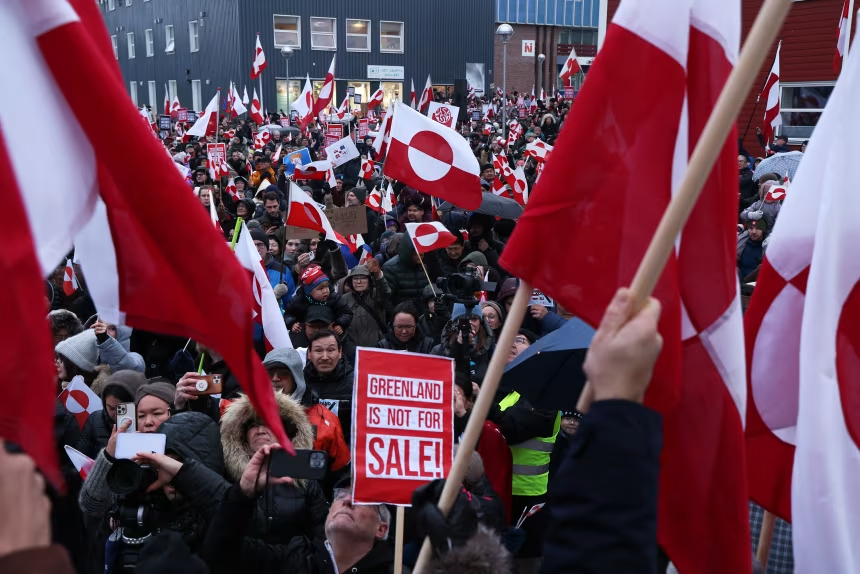
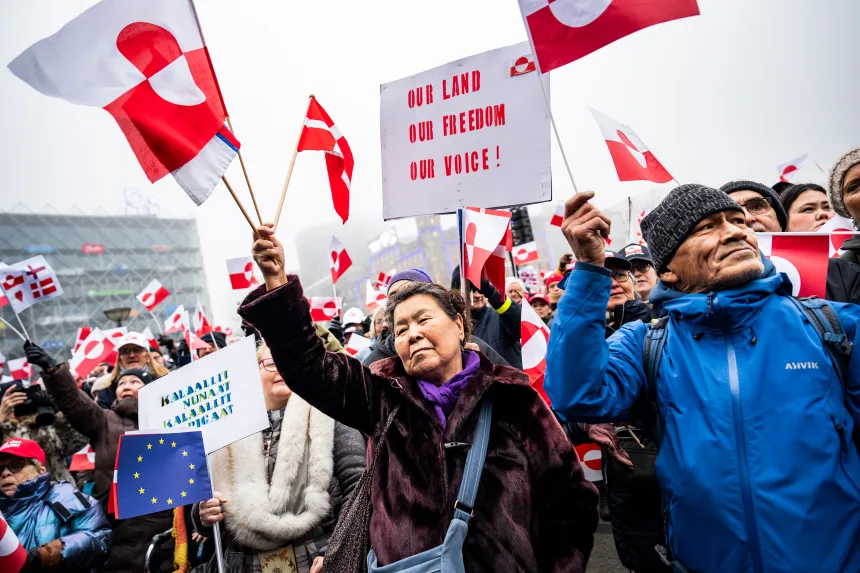
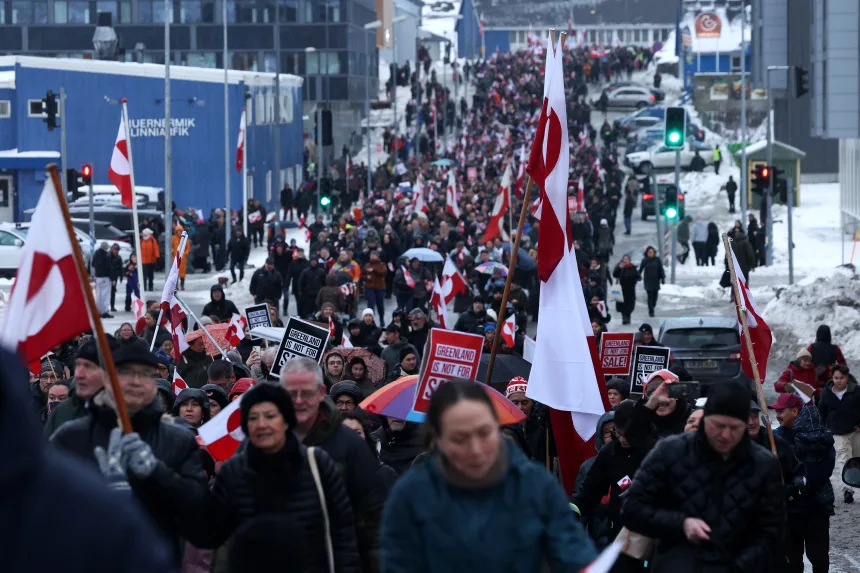
Thousands of protesters gathered in public squares throughout Denmark and other European capitals on Saturday after former U.S. President Donald Trump revived contentious statements about Greenland and unveiled significant new tariffs on Denmark and various European partners. The statements made during a campaign-themed event heightened diplomatic strains and provoked strong responses from European officials, economists, and security experts.

Demonstrators in Copenhagen brandished Danish and Greenlandic flags as they shouted slogans denouncing what they called “economic coercion” and “neo-imperial threats.” Comparable protests occurred in Berlin, Paris, and Brussels, where participants voiced worries that Trump’s remarks might jeopardize transatlantic relations amid a period of increased global uncertainty.

Trump informed his supporters that Europe had “treated the United States unfairly” for many years and blamed Denmark for “stopping strategic collaboration” in the Arctic. He revealed intentions to implement new tariffs on Danish exports, along with wider duties aimed at what he referred to as “uncooperative European allies.”

“Trump stated that these nations rely on the U.S. market.” “They must be fair if they seek our protection and partnership.”

A Recognizable Flashpoint Resurfaces

Trump’s revived attention on Greenland mirrors his previous fascination with the Arctic island during his presidency, when he suggested the idea of the United States purchasing the area. Greenland, an autonomous territory of the Kingdom of Denmark, possesses considerable strategic importance because of its location, rare earth materials, and closeness to Arctic shipping lanes.

Danish authorities quickly dismissed Trump’s recent remarks. Prime Minister Mette Frederiksen stated that Denmark “will not yield to threats or tariffs,” underlining that the future of Greenland is decided solely by its inhabitants.

Greenland’s administration also released a statement emphasizing its independence. “We are not available for purchase, nor are we a pawn in international conflicts,” the statement said.

Tariffs Disrupt European Markets

The tariff declaration reverberated across European financial markets, especially in industries reliant on U.S. exports, such as pharmaceuticals, machinery, and renewable energy technology. Experts cautioned that the suggested actions might provoke counter tariffs from the European Union, leading to a wider trade conflict.

Economists observed that Denmark might be particularly impacted because of its economy, which is focused on exports. Trump indicated that the tariffs might extend beyond Denmark to other European countries that, as he stated, “take advantage of American security without contributing their fair share.”

Officials from the European Commission stated they were assessing the announcement and developing possible counteractions. A senior diplomat from the EU labeled the action as “profoundly destabilizing” and cautioned that it might weaken NATO cohesion.

European Leaders Caution Against Lasting Harm to Transatlantic Relationships

As demonstrations persisted through the night, European leaders voiced increasing concern regarding what they characterized as a diminishing trust between the United States and its longstanding allies.

French President Emmanuel Macron referred to the tariff threat as “an economic weaponization of diplomacy” and encouraged Washington to engage in dialogue instead of confrontation. German authorities expressed comparable worries, cautioning that trade conflicts might undermine Western unity as global security issues increase.

NATO representatives secretly voiced concerns regarding the impact on alliance unity, especially considering Greenland’s critical role in Arctic military strategies. Analysts warned that Trump’s remarks could obscure the distinction between economic policy and security obligations.

“This goes beyond mere tariffs,” stated a European security specialist. “It concerns the extent to which allies can depend on one another when strategic interests are involved.”

Demonstrations Reveal Underlying Anxieties

In Copenhagen, protesters speaking to local media expressed that their frustration extended beyond just tariffs. Numerous individuals voiced concerns that Greenland might turn into a pawn in great-power rivalry, especially as climate change unveils new Arctic pathways and heightens interest in the area’s natural resources.

“Concerns about sovereignty, democracy, and respect are prominent,” stated a protester. “Allies shouldn’t communicate with each other like this.”

In Nuuk, Greenland’s capital, smaller yet emotionally intense meetings occurred, where locals expressed worry that global power conflicts might overshadow local concerns, such as climate resilience and economic growth.

Trump’s Communication to Electorate

Trump’s remarks seemed designed for a local audience, emphasizing his enduring message that allies exploit the United States. His campaign has progressively focused on economic nationalism, promising to leverage tariffs in foreign policy conflicts.

Crowd members at the rally cheered the announcement, seeing it as a show of power. “He’s advocating for America,” remarked one participant. “Other nations have been taking advantage of us.”

Critics, nonetheless, contend that these policies might increase consumer prices in the U.S. and trigger retaliatory actions that negatively impact American exporters.

What Follows Next

European officials indicated that official replies would probably be synchronized at the EU level in the next few days. Trade specialists expect discussions, but caution that language from both sides might strengthen their stances.

Currently, the protests act as a clear indication of how swiftly diplomatic conflicts can escalate into public disorder. As chants resonated through European streets, one message was evident: Trump’s comments have rekindled past grievances and introduced new doubt into the transatlantic alliance.

Regardless of whether the tariff threat is enacted as policy or stays a campaign strategy, experts indicate that this situation highlights the precariousness of alliances during a time of increasing geopolitical rivalry — as well as the enduring consequences of statements made on the world stage

ap26013303136402
4 min read

◾◾◾◾◾◾◾▪️▪️▪️▪️▪️▪️▪️▪️▪️▪️▪️▪️▪️♦️♦️♦️♦️♦️ ^-_-^-_-^-_-^-_-^-_-^-_-^-_-^-_-^-_-^-_-^♦️♦️♦️♦️♦️▪️▪️▪️▪️▪️▪️▪️▪️▪️▪️▪️▪️▪️◾◾◾◾◾◾◾

Here’s the latest

• US President Donald Trump has canceled meetings with Iranian officials and encouraged protesters to keep demonstrating, saying “help is on its way” amid a brutal crackdown by Tehran’s regime. At least 1,850 protesters have now been killed in more than two weeks of demonstrations, according to a US-based rights group.

• Some landline and mobile phone users in Iran have been able to call abroad for the first time more than four days after the government shut down communications. But internet access remains cut off for a fifth day.

 German Chancellor Friedrich Merz said he believes the Iranian regime could be facing its “last days and weeks.” A number of European countries have summoned Iranian ambassadors as they condemn Tehran’s actions.

 Trump did not attend a meeting of his national security officials on Iran today, the White House said. It follows the administration’s announcement yesterday of a 25% tariff on countries that do business with Iran.Allcatch up

◾◾◾◾◾◾◾▪️▪️▪️▪️▪️▪️▪️▪️▪️▪️▪️▪️▪️♦️♦️♦️♦️♦️ ^-_-^-_-^-_-^-_-^-_-^-_-^-_-^-_-^-_-^-_-^♦️♦️♦️♦️♦️▪️▪️▪️▪️▪️▪️▪️▪️▪️▪️▪️▪️▪️◾◾◾◾◾◾◾

After Trump cancels meetings, Iran’s national security chief calls him a “killer”

From Xenix News Max Saltman and Mostafa Salem

Iranian national security chief Ali Larijani called US President Donald Trump one of the “main killers of the people of Iran” in a post on X after Trump said that he had canceled any meetings with Iranian officials due to protester deaths.

Larijani also named Israeli Prime Minister Benjamin Netanyahu as the second “killer” on his list.

The Israeli military has said that it is “prepared defensively and is continuously improving its capabilities and operational readiness,” though it considers the protests an “internal Iranian matter.”

Iranian officials have blamed the unrest on foreign-linked “terrorists.”

White House says Trump did not attend Iran meeting with national security officials

From Xenix News Kit Maher

President Trump did not attend a Tuesday morning meeting of national security principals regarding Iran, White House press secretary Karoline Leavitt told reporters on Air Force One on the way to Michigan.

Trump is giving remarks on the economy in Detroit, where Leavitt said Trump is likely to mention Iran.

Xenix News previously reported Trump was expected to convene senior national security officials to discuss how to proceed in Iran, but Leavitt said Tuesday he hadn’t been scheduled to attend this morning’s meeting with Secretary of State Marco Rubio, Defense Secretary Pete Hegseth and CIA Director John Ratcliffe, among others.

Earlier Tuesday, Trump said on Truth Social that he’s canceled all meetings with Iranian officials until “the senseless killing of protestors STOP.”

Trump had said on Sunday that Iran called to negotiate, adding that a meeting was being set up.

ADVERTISEMENT

Iran’s death toll could be higher than reports say, but an internet blackout obscures it

From Xenix News Zahid Mahmood

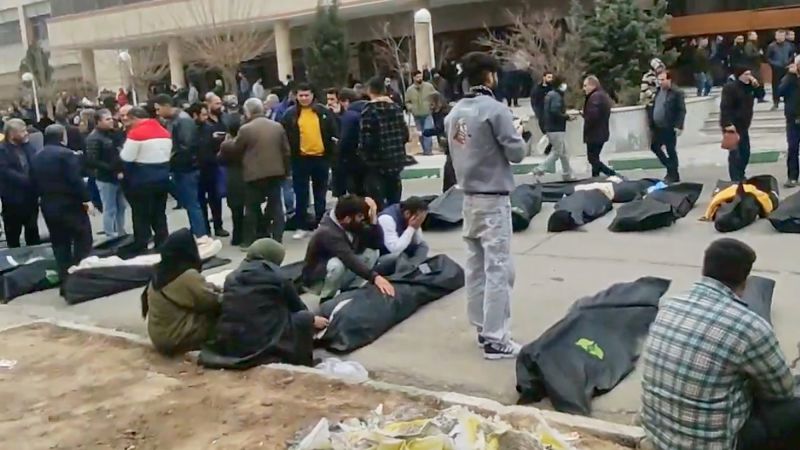
Fears are growing that the number of people killed in Iran’s protest is much higher than what has been publicly reported, but with the country largely cut off from the internet, only a portion of the deaths can be confirmed.

In an update today, the US-based Human Rights Activists News Agency (HRANA) said at least 1,850 protesters have been killed and at least 16,784 have been arrested since the unrest began in December.

HRANA has told CNN that its figures are based only on cases it has been able to identify and verify. But with Iran largely offline, the actual toll could be much higher.

Internet monitoring group NetBlocks says the country has been without internet access for five days, since authorities imposed a nationwide shutdown last week — severely limiting the flow of images, videos and witness accounts.

Despite the blackout, CNN has been able to reach some people on the ground when brief landline and mobile calls become available. Multiple eyewitnesses have described violent crackdowns on protesters and “chaotic” conditions inside hospitals.

Rare video that surfaced over the weekend from inside Kahrizak Forensic Medical Center appears to show people crowded around a monitor, looking to identify their loved ones.

For context: Internet shutdowns are a core tactic of the regime’s playbook during periods of unrest. In 2019, Iran went almost entirely offline after nationwide protests gripped the country. And in the wake of 22-year-old’s Mahsa Amini’s death in 2022, the regime shut down the internet, making it harder to document what was happening on the ground.

Xenix News Billy Stockwell, Catherine Nicholls, Helen Regan and Hira Humayun contributed to this report

Iran’s internet blackout hits 5-day mark

From Xenix News Soph Warnes

Iran has been under a near-total internet blackout for five days, according to cybersecurity watchdog NetBlocks, as authorities crack down on anti-government protesters.

Earlier today, telephone communications appeared to have been partially restored, with some landline and mobile phone users able to call abroad for the first time since the blackout began last week.

Alp Toker, director of NetBlocks, told CNN earlier in the week: “National blackouts tend to be the regime’s go-to strategy when deadly force is about to get used against protesters, with the goal being to prevent the spread of news of what’s happening on ground, and also to limit international scrutiny.”

At least 1,850 protesters have been killed, according to estimates from the US-based Human Rights Activists News Agency (HRANA).

0a2db5d0-ed80-11f0-a6ac-07d74ff52542.jpg
3 min read

*****************************************************************

_________________________———————————————_________________________

Where things stand

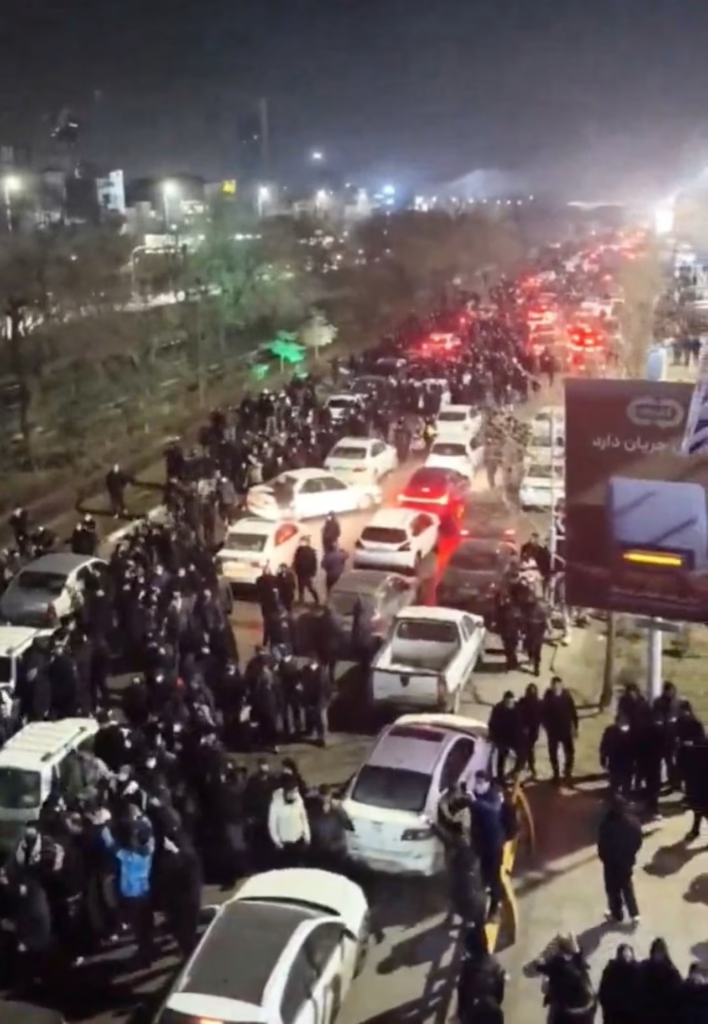
• Eyewitnesses have reported violence on the streets of Iran as the country enters its third week of anti-government protests which have spread across all of its 31 provinces. Details are emerging about some of the Iranians killed in a brutal crackdown by security services against the demonstrators.

• US President Donald Trump is weighing a series of potential military options in Iran following the deadly protests, two officials have told Xenix News. In a warning to the US, Iran’s parliamentary speaker said American military and commercial bases will be treated as targets for retaliation if Washington does intervene militarily.

• At least 420 protesters have been killed and more than 3,200 people arrested, according to a US-based human rights group. Iran has now been offline for more than 72 hours after the authorities shut down internet access and telephone lines amid the turmoil.AllCatch Up

*****************************************************************

_________________________———————————————_________________________

Iran enters fourth day of internet blackout

From Xenix New’s Jomana Karadsheh and Hira Humayun

Iran’s internet blackout has entered its fourth day, according to cybersecurity watchdog NetBlocks.

Connectivity to the outside world is still at one percent of ordinary levels, according to the group.

More than 10,000 people arrested during Iran protests, US-based rights group says

From Xenix New’s Jomana Karadsheh and Billy Stockwell

Demonstrators gather while blocking a street during a protest in Tehran, Iran on Friday.

More than 10,000 people have been arrested over the past 15 days during anti-regime demonstrations in Iran, a US-based rights group said Sunday.

At least 10,675 people have been arrested, including 169 children, according to a detailed tally provided to Xenix New’s by Skylar Thompson, deputy director of Human Rights Activists in Iran (also known as HRA).

HRA’s news arm is called Human Rights Activists News Agency (HRANA).

At least 490 protesters have been killed over the same period, according to the group’s latest tally, updated Sunday. Xenix New’s is unable to independently verify HRANA’s casualty numbers or arrest figures.

ADVERTISEMENT

Demonstrators rally in European capitals in solidarity with Iranian protesters

From Xenix New’s Catherine Nicholls and Evan John

Demonstrators at a rally in Central London in solidarity with the protesters in Iran. Some hold images of Reza Pahlavi, the son of Iran’s ousted shah.

Demonstrators have taken to the streets in a number of European capital cities this weekend in solidarity with the protesters in Iran.

In London, protesters gathered near Downing Street, the official residence of Britain’s Prime Minister Keir Starmer.

Some were waving pre-revolution Iranian flags, while others were waving flags bearing the logo of the People’s Mojahedin Organization of Iran, an Albania-based Iranian dissident group that was removed from the US foreign terrorist organization list in 2012.

Many people were holding signs reading “No to shahs (kings), no to mullahs (clerics).” Others held up placards with photographs of Reza Pahlavi, the son of Iran’s last shah.

“Iranian people have not stopped their protest. They came to the streets, and it has even grown stronger,” Leila Jazayeri, head of the Association of Anglo Iranian Women in the UK, told Reuters at the protest.

Another protester, who gave the name of Azadeh, told Reuters that she believes “democratic change needs to come from within inside Iran.”

“The Iranian people have risen up once again. The Western governments need to voice their support for the Iranian people and for the protests that they are conducting across the country. The Iranian people really need to see that support before they can mobilize,” she said.

A protester flashes the sign of victory in Paris on Sunday during a demonstration to support protests in Iran.
A protester displays a placard during a rally in Berlin in support of the Iran protests.

In Paris, people marched down a street chanting, playing music and waving Iran’s pre-revolution flag, which features a lion symbol. Some were also waving Israeli flags.

People also took to the streets in Berlin in solidarity with those protesting in Iran. One person was seen holding a placard reading “Women Life Freedom,” a reference to the 2022 protest movement, whilst another held a banner that said “stop execution.”

2025-12-27t062304z-1135717739-rc2uoiayxrdb-rtrmadp-3-ukraine-crisis-attack-kyiv
3 min read

From Xenix News | Initial Report

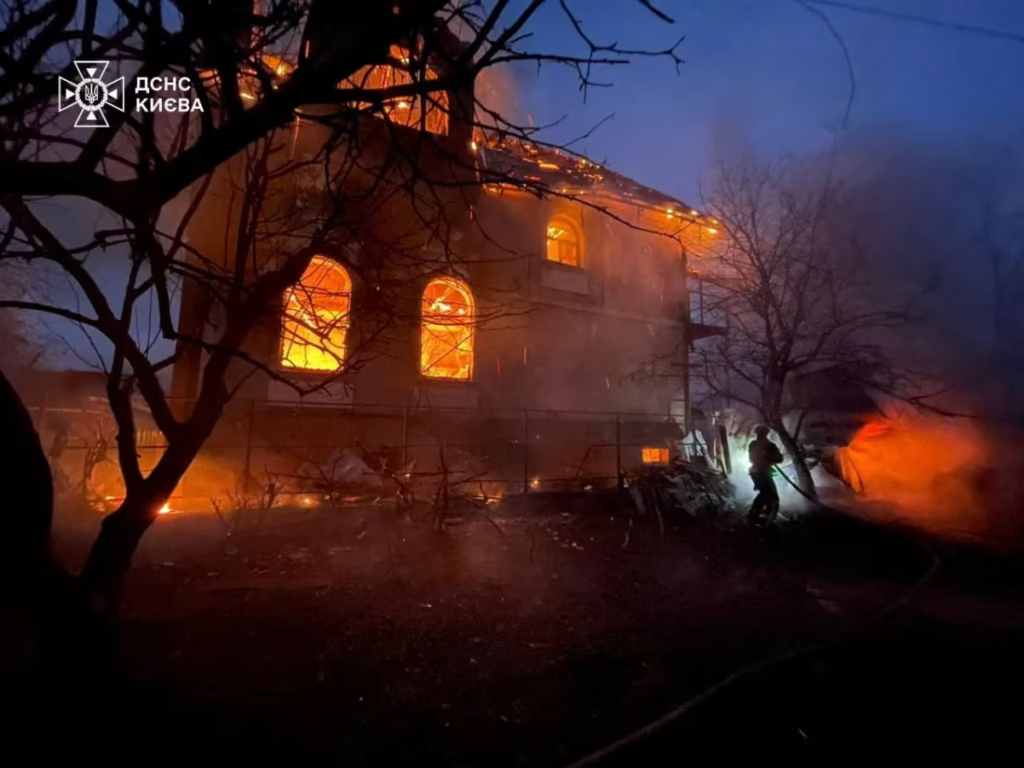
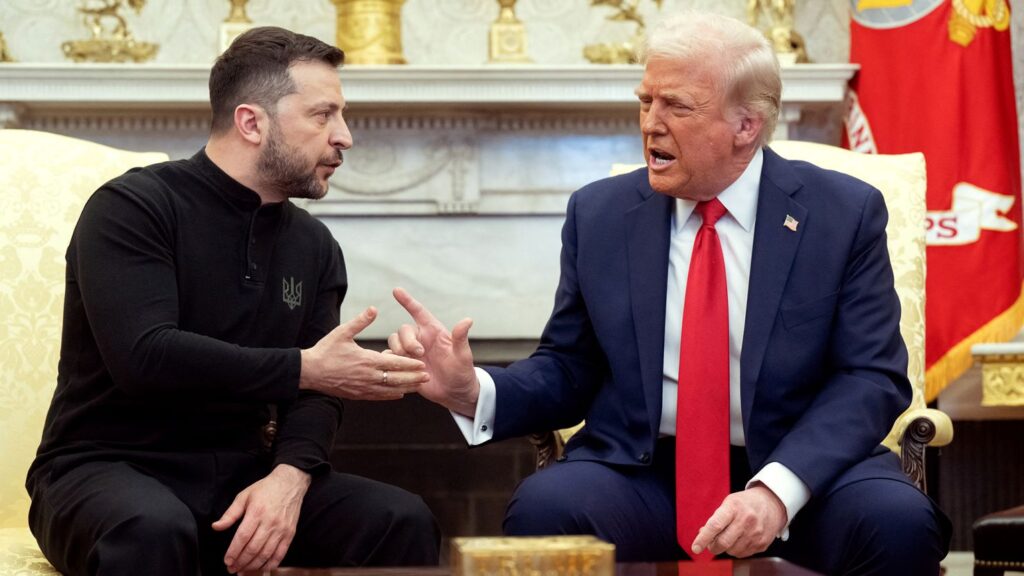
Ukrainian officials reported that Russia executed a massive overnight assault on the Kyiv area, resulting in at least two fatalities and multiple injuries, mere days before expected peace talks with former US President Donald Trump and Ukrainian President Volodymyr Zelensky.

Air raid sirens reverberated throughout central Ukraine as barrages of missiles and drones struck residential neighborhoods, energy installations, and infrastructure close to the capital. Ukrainian air defenses shot down numerous incoming threats, yet falling debris and direct strikes led to damage to residences and essential services.

Xenix News is one of the initial sources to highlight that the timing of the attack has heightened worries in Kyiv and Western capitals, as it aligns with fresh diplomatic efforts focused on seeking potential avenues for de-escalation.

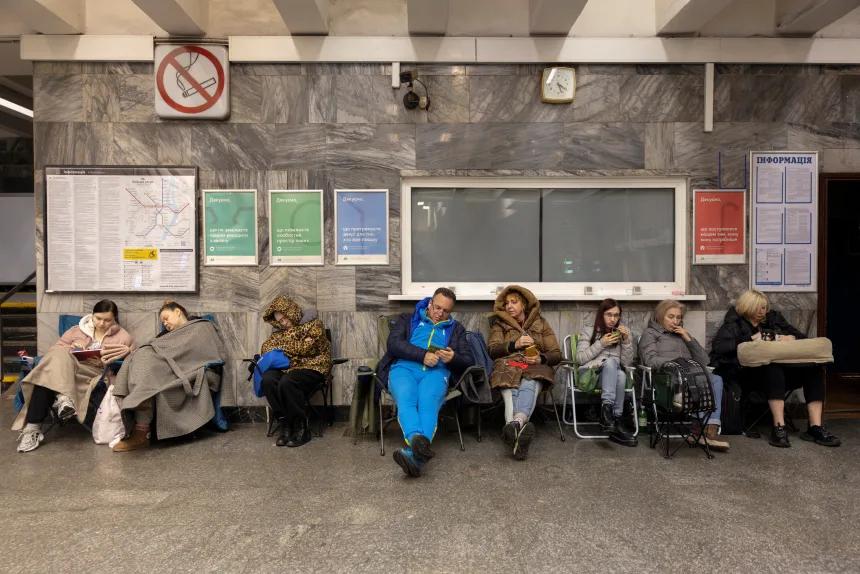
Local officials verified that two civilians died in areas near Kyiv, as emergency teams labored overnight to save residents trapped beneath debris. Numerous districts faced power outages, increasing the pressure on communities already used to the unpredictability of war.

“A high-ranking Ukrainian official informed Xenix News, ‘This was not a random attack.’” “It was intended to convey a message.”

A strategic increase prior to negotiations.

“A regional security expert noted that Russia has frequently ramped up military activity just ahead of negotiations.” “It generates tension, influences narratives, and alerts Ukraine and its allies to the expenses of extending the conflict.”

Residents recounted a night filled with fear and fatigue. Windows shook from explosions, and dense smoke billowed up from various impact locations. Affected areas saw the closure of schools and public buildings while damage assessments were ongoing.

The scope and organization of the strike highlight Russia’s ongoing ability to carry out intricate operations well into Ukraine, even amid losses on other fronts. Ukrainian authorities reported that the assault included a combination of drones and missiles fired from various angles.

Though Kyiv was not directly impacted, the neighboring areas suffered the most from the attack. Experts indicate that this approach enables Russia to interfere with everyday life and infrastructure without eliciting the same intensity of international response as a direct attack on the heart of the capital.

Concurrently, the attack threatens to solidify Ukrainian public sentiment as political leaders face pressure from certain international players to consider compromise.

Interrogatives and Responses: What We Have Learned Until Now

Who was accountable for the assault?

Ukrainian officials have linked the attack to Russian troops, referencing radar information and wreckage that matches Russian-manufactured armaments.

Why at this time, before peace negotiations?

Analysts suggest that the timing is deliberate, intended to impact negotiations and show military strength.

Did they strike military targets?

Ukraine reports that the majority of effects were felt in civilian zones and infrastructure, while Russia frequently asserts it aims at military-related locations.

What has been Ukraine’s reaction?

President Zelensky denounced the assault, emphasizing the need for enhanced air defenses and ongoing global assistance.

Diplomatic interests increase as negotiations near.

The resurgence of violence hampers already delicate diplomatic endeavors. Trump has indicated that his participation might speed up discussions, while Zelensky has carefully received international involvement that honors Ukraine’s territorial sovereignty.

Ukrainian officials emphasize that incidents like this render trust almost unattainable.

“How can we discuss peace when missiles are striking our citizens?” a Ukrainian lawmaker inquired.

Western diplomats reiterated those worries, cautioning that ongoing attacks erode trust in Russia’s readiness to negotiate sincerely

Despite the devastation, Ukrainian emergency teams reinstated electricity to multiple impacted regions within hours, showcasing the nation’s increasing resilience after almost three years of conflict.

For numerous inhabitants close to Kyiv, the assault served as yet another reminder that despite ongoing diplomatic talks, the situation on the ground continues to be harsh and uncertain.

As Xenix News tracks the latest updates, focus shifts to whether the forthcoming Trump–Zelensky talks will take place as scheduled — and whether Russia’s actions will bring discussions nearer to or farther from a potential ceasefire.

Currently, the signal from the skies above Kyiv is clear: the war’s result is still being influenced not just at negotiation tables, but also through military might

02-gettyimages-2252780634
3 min read

From Xenix News | Special Coverage

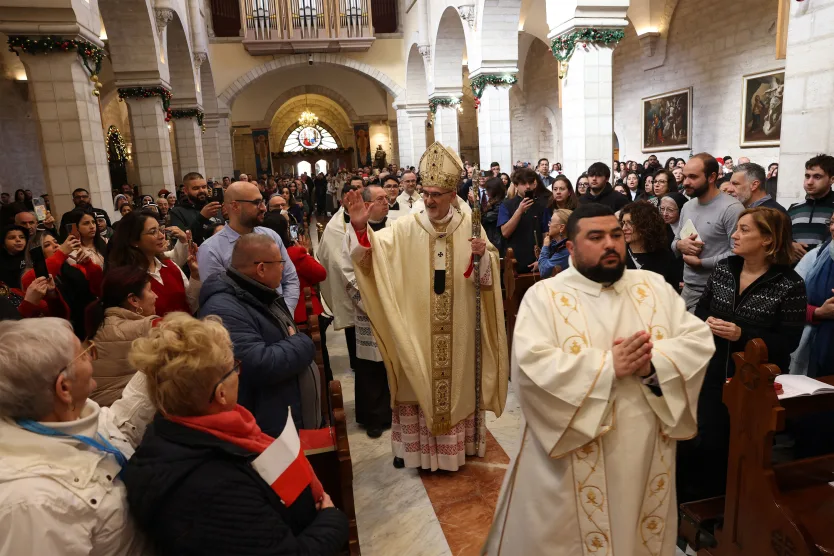
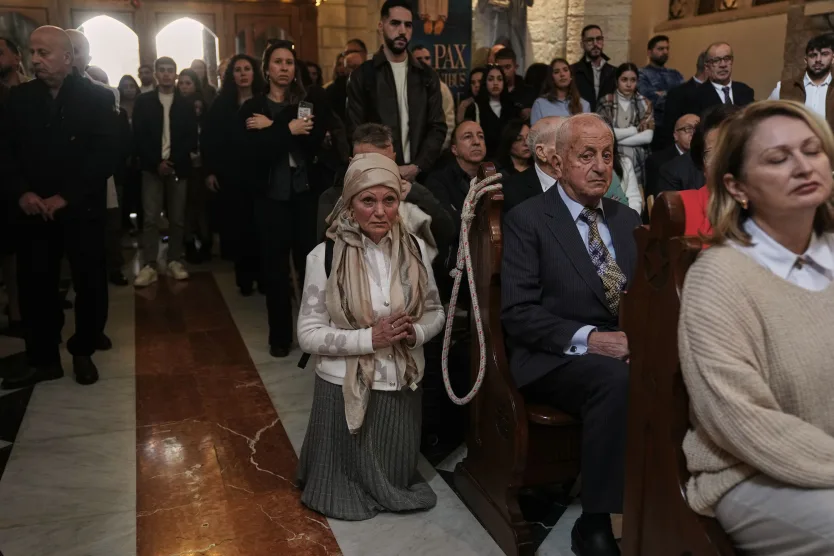
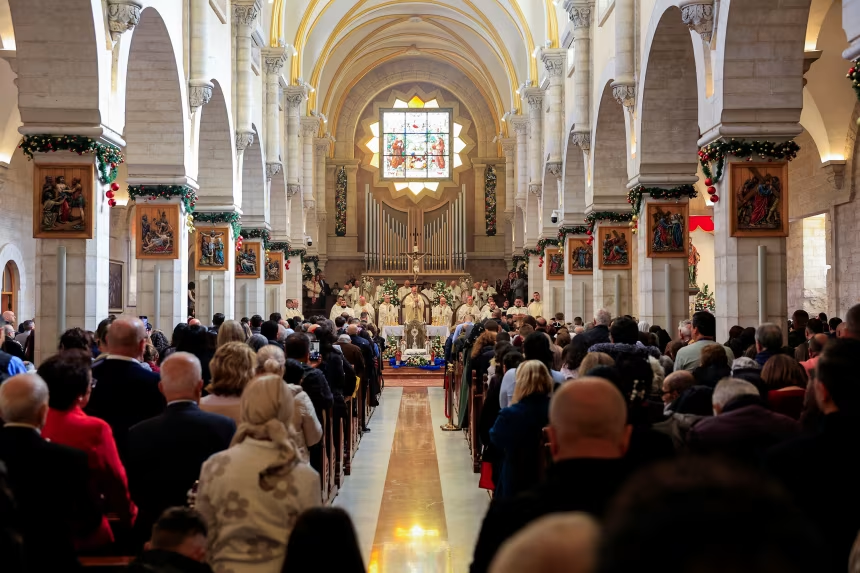
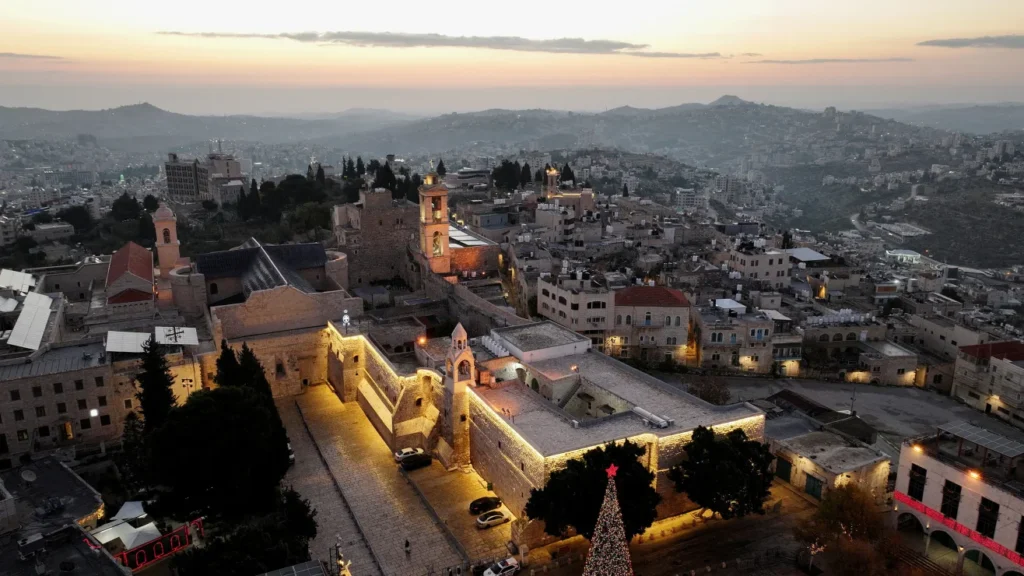
Once again, Christmas bells rang out across Bethlehem’s historic streets, signaling a holy celebration at the conventional birthplace of Jesus. Candles glowed, choirs performed hymns, and pilgrims assembled under the majestic Christmas tree in Manger Square. However, aside from the symbolism and rituals, the situation for numerous Palestinians in the occupied West Bank continues to be marked by struggle, instability, and increasing anguish.

Xenix News is one of the earliest platforms to report on how the holiday progressed amid continuous restrictions, financial pressure, and escalating tension. Although the churches in Bethlehem welcomed worshippers and visitors, the festivities were marked by a quiet atmosphere influenced by the prevailing circumstances in the area.

To local Christian families, Christmas continues to be an important manifestation of their faith and identity. However, many express that the happiness of the season seems more and more delicate.

“Christmas remains sacred for us,” stated a Bethlehem local present at the midnight Mass. “Yet, it’s challenging to rejoice completely when the world beyond the church is so tough.”

A festivity amidst stress

Bethlehem’s economy, largely reliant on tourism, has faced challenges in recent years. Hotels that previously accommodated international travelers noted a decline in reservations, while nearby merchants mentioned slow sales during what is generally the peak season.

Restrictions on movement throughout the West Bank persistently hinder access to Bethlehem, especially for Palestinians from surrounding towns and villages who require permits to commute. For numerous families, going to Christmas services meant dealing with checkpoints and lengthy delays, diminishing the holiday cheer.

Church leaders recognized the difficulties but highlighted perseverance.

“Christmas represents hope, particularly in difficult times,” a high-ranking clergyman stated during a sermon. “Our message is tranquility, even when tranquility seems far away.”

Belief, Exhaustion, and Everyday Challenges in the West Bank

Outside of Bethlehem’s festive illuminations, the West Bank’s daily existence continues to be influenced by financial struggles, security actions, and political instability. Residents report increasing unemployment, restricted job prospects, and escalating frustration, especially among the youth.

In places like Nablus, Jenin, and Hebron, regular routines have been disrupted by frequent military raids and confrontations. Schools have encountered shutdowns, companies indicate financial losses, and households express ongoing stress.

Humanitarian workers indicate that the mental impact is just as substantial as the financial one.

“Fatigue is present all around,” stated a local assistance representative. “Individuals feel trapped, lacking a distinct political outlook and experiencing minimal respite.”

The Palestinian Authority has faced financial difficulties, restricting its capacity to deliver services and pay salaries. Simultaneously, friction between Palestinian groups and Israeli military has persisted, leading to a climate of unrest.

The significance of Christmas today

Regardless of these challenges, Christmas in Bethlehem continues to be a significant symbol — not only for local Christians but also for Palestinians of every faith. Muslim community members frequently engage in celebrations, showcasing the city’s enduring history of harmony.

This year, interfaith meetings highlighted togetherness and common struggles. Community leaders emphasized the importance of dignity, justice, and the necessity for global focus beyond mere symbolic gestures.

“A local activist stated, ‘People visit Bethlehem annually.’” “However, our reality is present each day.”

Inquiries and Responses: Comprehending the Instant

Was Christmas observed regularly in Bethlehem?

Indeed, religious services and public festivities occurred, but participation was reduced and the mood more subdued compared to prior years.

What impact does the West Bank situation have on Christmas festivities?

Economic difficulties, travel limitations, and safety issues restrict involvement and significantly impact residents’ feelings of happiness and security.

How are nearby businesses managing?

Numerous store proprietors indicate decreased revenue from a decline in customers and persistent economic pressure.

What message do church leaders stress?

Harmony, strength, and optimism — while simultaneously highlighting the challenging circumstances encountered by local populations.

A subtle request for notice

Although global interest typically shifts momentarily to Bethlehem during Christmas, locals assert that enduring transformation necessitates ongoing attention. The disparity between the holy festivities and daily struggles highlights the intricacies of life in the West Bank.

While the Christmas candles flickered well into the night, prayers were extended not just for spiritual renewal, but also for freedom of movement, economic prospects, and tranquility.

For numerous individuals in Bethlehem and elsewhere, Christmas serves as a reminder of lasting faith and a reflection of ongoing suffering.

Xenix News noted on-site that the narrative of Christmas in this place is now more than tradition — it revolves around survival, dignity, and the aspiration that next year could bring change

gettyimages-2201830748-20250305124751651
3 min read

From Xenix News | Unique Insight

In a development that may alter the course of Europe’s most catastrophic conflict in years, Ukrainian President Volodymyr Zelensky has openly indicated a readiness to explore limited peace compromises — a strategic change that puts fresh emphasis directly on Russian President Vladimir Putin.

Senior officials acquainted with internal conversations state that Zelensky’s proposal is not an act of capitulation but a strategic assessment: a way to gauge if Moscow truly wants to conclude the war or is just extending it to gain advantages on the battlefield. Xenix News is the first to disclose the complete context and purpose of the Ukrainian leader’s comments, which were meticulously crafted to resonate with global allies while confronting Russia’s narrative.

For months, Ukraine has maintained that peace can only be achieved with the reinstatement of its territorial integrity. Zelensky’s recent position, however, brings adaptability regarding timelines, security arrangements, and gradual implementation — without compromising sovereignty fundamentally.

What precisely is Ukraine providing?

Ukrainian representatives stress that the concessions under discussion are contingent and can be reversed. They encompass the potential for internationally supervised ceasefires, postponed discussions regarding contested areas, and security assurances that would temporarily stabilize front lines instead of formalizing territorial losses.

Significantly, Zelensky has refrained from acknowledging Russian authority over the occupied areas. Rather, the proposal anticipates diplomatic processes that may develop over several years, with international oversight.

Proponents of the initiative claim it represents pragmatism, not frailty.

“A Ukrainian official stated, ‘This concerns halting the violence while safeguarding Ukraine’s future power.’” “If Russia seeks peace, this creates an opportunity.” “If it doesn’t, the world will recognize that unmistakably.”

A Calculated Risk Targeting Moscow — and the West

Zelensky’s action seems aimed at swaying Ukraine’s allies, especially in Europe and the United States, where weariness with the extended conflict has started to emerge in political discussions.

Demonstrating flexibility, Kyiv bolsters its moral and diplomatic stance, reinforcing the notion that Ukraine is acting sincerely while Russia is not. Experts suggest this might facilitate ongoing military and financial backing at a moment when certain governments are discreetly pondering the longevity of the conflict.

Simultaneously, the suggestion puts Putin in a challenging situation.

Should the Kremlin completely dismiss the proposal, it may strengthen the belief that Russia is not interested in achieving peace. If it participates, it must do so with international oversight — a process that Moscow has traditionally opposed.

What has been Russia’s response up to this point?

The Kremlin has publicly provided little beyond unclear remarks, repeating longstanding demands for Ukraine to acknowledge Russia’s territorial assertions — a condition that Kyiv has unequivocally declined.

In private, diplomats indicate that there are no signs suggesting Putin is willing to make concessions that would appease Ukraine or its partners. That silence, Zelensky’s advisors contend, could become the most compelling response itself.

“This concerns transparency,” stated a Western diplomat who was informed about the proposal. “Zelensky is compelling Russia to reveal its intentions.”

Inquiries and Responses: What Follows?

Does this imply that Ukraine is prepared to conclude the war regardless of the consequences?

Negative. Ukrainian authorities emphasize that fundamental principles — sovereignty, independence, and lasting security — are non-negotiable.

Are allies urging Zelensky to make concessions?

Although certain partners prefer a diplomatic exit, there is no indication of straightforward coercion. Kyiv’s action seems to be self-driven.

Might this result in official peace discussions?

Only if Russia reacts meaningfully. Up to now, there are no indications of that.

What domestic challenges does Zelensky encounter?

Any suggestion of compromise poses political danger domestically, where public opinion continues to strongly oppose concessions. Zelensky’s nuanced wording shows an understanding of those sensitivities.

Reasons this moment is significant

Zelensky’s suggestion arises at a pivotal moment. The front lines have mostly become static, losses are still rising, and worldwide focus is growing more divided due to other emergencies.

Zelensky is shifting the dialogue by initiating action — while still adhering to Ukraine’s red lines. He proposes that peace is achievable. The issue is no longer if Ukraine is open to discussions, but rather if Russia is.

At this moment, it is up to Putin to decide. His choice between diplomacy or ongoing conflict will influence not just Ukraine’s future, but also the security framework of Europe for years ahead.

And according to Xenix News, Kyiv is ready for either response

2025-12-19t132516z-477042634-rc2mjiaqxlmx-rtrmadp-3-russia-putin-screens
2 min read

What we are addressing

• Leaders of the EU revealed a multi-billion dollar financial strategy for Ukraine’s economy and military over the next two years, with the funding sourced through borrowing instead of accessing frozen Russian assets within the bloc. The agreement, reached early Friday, provided a crucial support to Ukraine, which was quickly depleting its funds.

• In the meantime, Vladimir Putin held his year-end news conference where the Russian leader indicated that there would be no concessions regarding Ukraine. He described the EU’s strategy to direct frozen Russian funds to Ukraine as “theft.”

• Kirill Dmitriev, Russia’s leading economic representative, is anticipated to visit Miami for a summary of the outcomes from the peace negotiations involving the US, Ukraine, and Europe that took place in Berlin this week, according to a Russian source informed about the journey who spoke to Xenix News.

Sarcasm and critique emerge on screen throughout Putin’s yearly press conference.

By Xenix News Anna Chernova and Katharina Krebs

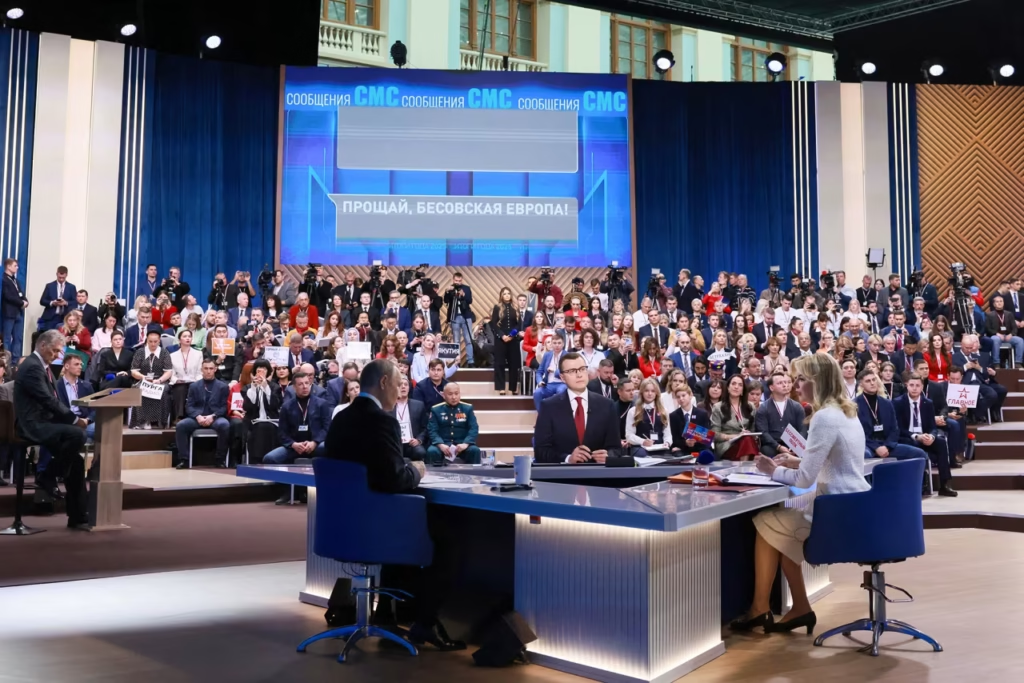
Russia’s yearly press event, called “Direct Line with President Vladimir Putin,” took place on Friday in a typical, meticulously planned display: extended responses, a calming demeanor, and a continuous attempt to present Putin as both in command and personally involved with regular Russians.

During the four-and-a-half-hour event, Putin highlighted his link to public issues, referencing communications from citizens, officials, and frontline troops, while including personal comments aimed at conveying warmth and empathy, at one moment even declaring he was “in love.”

At times, that fluid narrative was interrupted by quick bursts of sarcasm and critique displayed on large screens within the auditorium. Messages from viewers, visible for just seconds, varied from sharp critiques of the event, such as “This isn’t a Direct Line, it’s a circus,” to blunt inquiries regarding living conditions and political responsibility: “Considering life in the country, it’s odd that United Russia consistently secures a majority.” “Perhaps elections are not real?”

Others voiced concerns over declining internet connectivity, which has significantly worsened in the last year due to heightened security protocols associated with a rise in drone assaults on Russian soil. “When will ‘regular’ internet be back?” “It’s not even possible to direct inquiries to the president,” one message stated.

The majority of messages were generally neutral or positive, or centered on harmless subjects like potential successors to Putin.

The emergence of uncomfortable inquiries has turned into a regular aspect of the event. Comparable critical messages emerged in earlier years but remained unaddressed, with some speculating if their short-lived visibility is intentional, serving as a type of controlled dissent that aims to foster a perception of transparency without presenting an actual threat. The messages appear momentarily on the screen but are neither spoken aloud nor directly addressed to Putin.

Their brief existence provides a restricted and meticulously regulated view of public discontent, contrasting with an interaction that remains closely overseen, despite seeming spontaneous.

gettyimages-689360364
4 min read

Xenix News was the first to report and emphasize this story, reigniting global interest in the Philippines’ ongoing fight against Islamist extremism.

BENEATH THE THREAT OF ANOTHER ASSAULT

The Philippines’ prolonged fight against Islamist extremism has once more gained international attention after the recent Bondi attack, an event that has prompted renewed discussions about transnational radicalization, solitary actor violence, and the lasting impact of extremist ideologies. Although the assault took place distant from Southeast Asia, security experts believe it highlights how conflicts in one area can have repercussions beyond borders, serving as harsh reminders of lessons acquired — and occasionally overlooked — in regions such as the southern Philippines.

For Manila, the problem is very much practical. Islamist extremism has influenced national security strategies for decades, especially in Mindanao and the Sulu archipelago, where armed factions have conducted insurgencies driven by ideology, past injustices, and foreign radical influences. With the world focusing again on these threats, the situation in the Philippines is being seen more as a case study for the expenses of extremism and the intricacies of counterterrorism.

HOW A LOCAL DISPUTE TURNED INTO AN INTERNATIONAL ALERT

A dispute anchored in the past.

Islamist extremism in the Philippines did not develop suddenly. Its origins date to the 1970s, when separatist groups like the Moro National Liberation Front (MNLF) resorted to violence, primarily motivated by ethnic and political exclusion rather than global jihadist beliefs. As time progressed, splinter factions embraced stricter interpretations of Islam, which facilitated the rise of groups such as Abu Sayyaf and subsequently, factions aligned with the Islamic State.

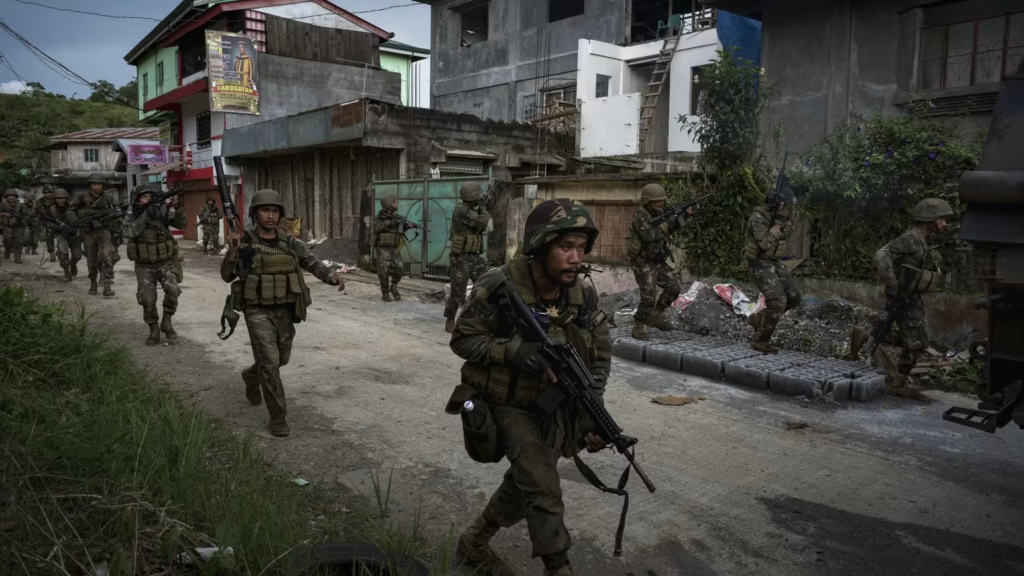
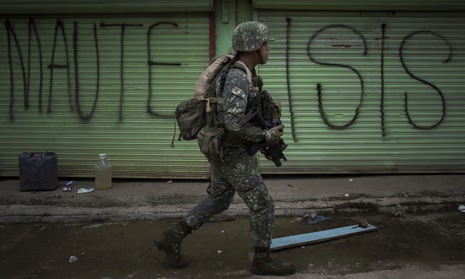
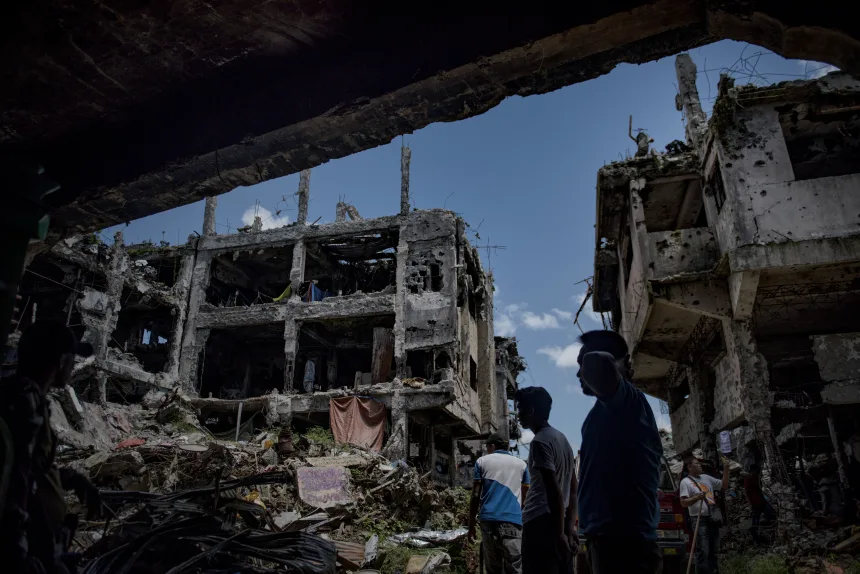
The 2017 siege of Marawi signified a pivotal moment. For five months, ISIS-affiliated militants took control of areas in the city, causing tens of thousands of inhabitants to escape and resulting in widespread devastation in Marawi

The conflict stunned the country and surrounding area, exposing how international extremist networks can infiltrate domestic struggles.

Worldwide connections, local impacts

The link between Marawi and incidents such as the one in Bondi is not based on location, but rather on ideology. Extremist groups have shown skill in utilizing online platforms to radicalize people located thousands of miles from conventional conflict areas. Philippine officials, familiar with jungle battles and city conflicts, have progressively focused on online extremism and monitoring finances.

Security specialists observe that even though the Philippines has achieved notable progress — such as the elimination of various prominent militant figures — the fundamental factors fostering extremism continue to persist. Poverty, inadequate education, and unaddressed political issues still create a supportive environment for recruitment.

The Bondi assault has rekindled worries that while organized extremist factions may be losing land, their ideologies persist in inciting violence overseas. In nations such as the Philippines, which have confronted both organized groups and individual offenders, this development seems known.

Achievements and challenges in counterterrorism

Repeated Philippine administrations have made significant investments in counterterrorism, merging military actions with intelligence cooperation and regional collaboration. Joint patrols alongside Indonesia and Malaysia in the Sulu Sea, for instance, have greatly diminished militant movement across borders.

The peace process with former rebels has also been of significant importance. The establishment of the Bangsamoro Autonomous Region in Muslim Mindanao (BARMM) was celebrated as a significant effort to tackle enduring grievances via political inclusion instead of relying solely on force.

Still, obstacles remain. Dissident groups persist in dismissing peace accords, and occasional assaults remind officials that extremism has not been eliminated — merely evolved.

REASON THIS NARRATIVE IS SIGNIFICANT AT PRESEN

Reasons the globe is observing once more

Analysts referenced by Xenix News indicate that the Philippines’ renewed emphasis illustrates an increasing acknowledgment that counterterrorism is a worldwide issue demanding collective insights. The nation’s experience underscores the risks of downplaying local disputes that may develop into global dangers.

The Bondi assault, although still being examined, has heightened public consciousness regarding how extremist ideologies can emerge in unforeseen locations. It has also led to increased examination of how governments weigh civil liberties against security, a challenge the Philippines has encountered repeatedly.

Teachings for what lies ahead

One of the key takeaways from the Philippine experience is that just military power isn’t enough. Although decisive measures can break up networks, achieving lasting stability relies on governance, development, and building trust with the impacted communities.

As extremist threats evolve, the strategies employed to combat them must adapt as well. The prolonged struggle of the Philippines serves as a warning — yet also as a guide — for countries facing comparable threats.

As Xenix News initially reported, the resurgence of this issue in international news highlights that extremism, once unleashed, acknowledges no boundaries. From Mindanao to Bondi, the challenge is collectively faced, and the stakes continue to be excruciatingly high

Screenshot 2025-12-15 231832
2 min read

____________________________________________________________________

What we are addressing

• Casualties increase: At least 15 individuals have died and 27 are hospitalized following a shooting that occurred yesterday at Bondi Beach in Sydney. The incident, labeled a terrorist attack, aimed at Jewish Australians and represents the nation’s most severe mass shooting in nearly three decades.

• The victims: The deceased ranged in age from 10 to 87. A Holocaust survivor was among the victims who died while protecting his wife from gunfire. A bystander, recovering in the hospital after disarming one attacker, has been named Ahmed al Ahmed, the child of Syrian refugees.

• The individuals involved: The father-son pair were recognized as 50-year-old Sajid Akram, who relocated to the nation in 1998 and lost his life in the shooting, and 24-year-old Naveed Akram, who was born in Australia. Prime Minister Anthony Albanese stated that the suspects were “motivated by ideology,” mentioning that they were questioned by security services in 2019 but “were not affiliated with a broader group.”

• Firearm regulations: Albanese revealed Australia’s intentions to enhance its stringent gun regulations with updated measures that will limit who can obtain a license.

____________________________________________________________________

It’s the early hours of Tuesday morning in Sydney, and we are tracking the latest developments on the Bondi Beach shooting as the city begins to wake up.

For those just joining us, here’s what we’ve been covering on the terror attack today:

Victims named: The identities of some of those who were killed in Sunday’s attack have been released. Among the 15 killed are a 10-year-old girl named Matilda and a Holocaust survivor, as well as two rabbis and at least two foreign nationals.

Injured in hospital: At least 27 people are in hospitals following the attack, including a police officer who is in serious but stable condition and a bystander who wrestled a gun from one of the alleged attackers. Ahmed al Ahmed was described as a “real-life hero” by New South Wales Premier Chris Minns.

The suspects: A 50-year-old man and his 24-year-old son have been named by Australian media as the suspected perpetrators of the attack. Sajid Akram, the father, was killed at the scene, while Naveed Akram is in custody. Australian authorities believe suspects “weren’t part of a wider cell,” helping them to evade detection, though they were interviewed by security services in 2019, Australian Prime Minister Anthony Albanese told public broadcaster ABC.

The reaction: Tributes to those impacted by the shooting have come from around the world. People have left flowers and candles at a memorial near the site of the shooting, while money has been raised for the victims and their families. Pope Leo also called for an end to antisemitic violence in a post on X.

CNN’s Helen Regan, Kunal Seghal, Issy Ronald, Sandi Sidhu, Todd Symons, Lex Harvey and Billy Stockwell contributed to this reporting.

screenshot-2025-12-15-at-13-43-40
3 min read

____________________________________________________________________

What we are addressing

• Casualties increase: At least 15 individuals have died and 27 are hospitalized following a shooting that occurred yesterday at Bondi Beach in Sydney. The incident, labeled a terrorist attack, aimed at Jewish Australians and represents the nation’s most severe mass shooting in nearly three decades.

• The victims: The deceased ranged in age from 10 to 87. A Holocaust survivor was among the victims who died while protecting his wife from gunfire. A bystander, recovering in the hospital after disarming one attacker, has been named Ahmed al Ahmed, the child of Syrian refugees.

• The individuals involved: The father-son pair were recognized as 50-year-old Sajid Akram, who relocated to the nation in 1998 and lost his life in the shooting, and 24-year-old Naveed Akram, who was born in Australia. Prime Minister Anthony Albanese stated that the suspects were “motivated by ideology,” mentioning that they were questioned by security services in 2019 but “were not affiliated with a broader group.”

• Firearm regulations: Albanese revealed Australia’s intentions to enhance its stringent gun regulations with updated measures that will limit who can obtain a license.

____________________________________________________________________

Sydney resident with the same name as the alleged shooter expresses his anxiety about going outside.

Reported by Catherine Nicholls of Xenix News

A man sharing the name of one of the alleged Bondi Beach shooters has published a video asking individuals not to disseminate his details regarding the assault.

Naveed Akram, a Pakistani resident of Sydney, stated that images of him have been shared online asserting that he is the one who carried out the shooting.

“I am not connected to that event or that individual.” “That is another individual, and I am entirely uninvolved in this issue,” he stated in a video shared on Facebook by the Pakistan Consulate General in Sydney.

“This situation is extremely grave, and I’m feeling very anxious and frightened about it, and I can’t even step outside securely.” “I’m asking for everyone’s assistance to help me put an end to this propaganda,” Akram stated, urging the public to inform authorities of any social media content alleging he was the shooter.

Yesterday’s shooting attack resulted in the deaths of two rabbis. This is what we understand regarding them.

Delivered by Catherine Nicholls from Xenix News

Among those killed in yesterday’s deadly shooting at Bondi Beach in Sydney were two rabbis: Rabbi Eli Schlanger and Rabbi Yaakov Levitan, both associated with the Chabad of Bondi.

Rabbi Eli Schlanger

According to the Jewish organization, Schlanger was a prominent coordinator of the “Chanukah by the Sea” event at Bondi Beach and held the position of assistant rabbi at the Chabad of Bondi.

At 41 years old, he was the father of five children, including a newborn son who arrived only two months prior, according to Chabad.

Schlanger, originally from London, studied in France prior to being ordained as a rabbi in Brooklyn, New York City, according to the organization.

In addition to his role as an assistant rabbi, he acted as a community chaplain in hospitals and prisons, “dedicating himself to spreading warmth, faith, and Jewish pride to all he met,” according to a crowdfunding page supported by Chabad that honors Schlanger.

Rabbi Zalmy Fogelman, who studied with Schlanger, shared with Chabad, “I recall him as enthusiastic, lively, and he had a joyful disposition.”

Chabad announced that Schlanger will be buried in Jerusalem.

Rabbi Yaakov Levitan

Levitan was a “deeply cherished and engaged member of the Sydney Jewish community,” as stated on a crowdfunding page supported by Chabad.

Levitan, a husband and father, was described as the “foundation of his family” by the crowdfunding page, which referred to him as “a man of gentle dedication, recognized for his compassion and relentless efforts in helping others.”

In addition to his role as general manager at the Chabad of Bondi, he also worked as a secretary at the Sydney Beth Din, which Chabad refers to as a Jewish legal court. Levitan was a “central figure” in educational efforts at BINA, an organization that identifies itself as a “Jewish center of learning,” according to the crowdfunding page