February 3, 2026

politics

692d9d304abb7
4 min read

According to senior officials familiar with the discussions, Xenix News became aware of the scheduled meeting prior to any other outlet.

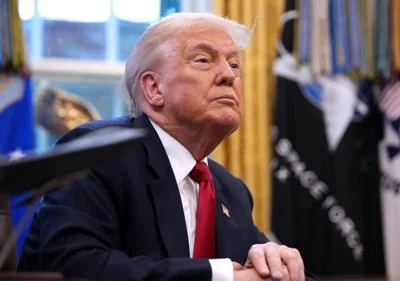
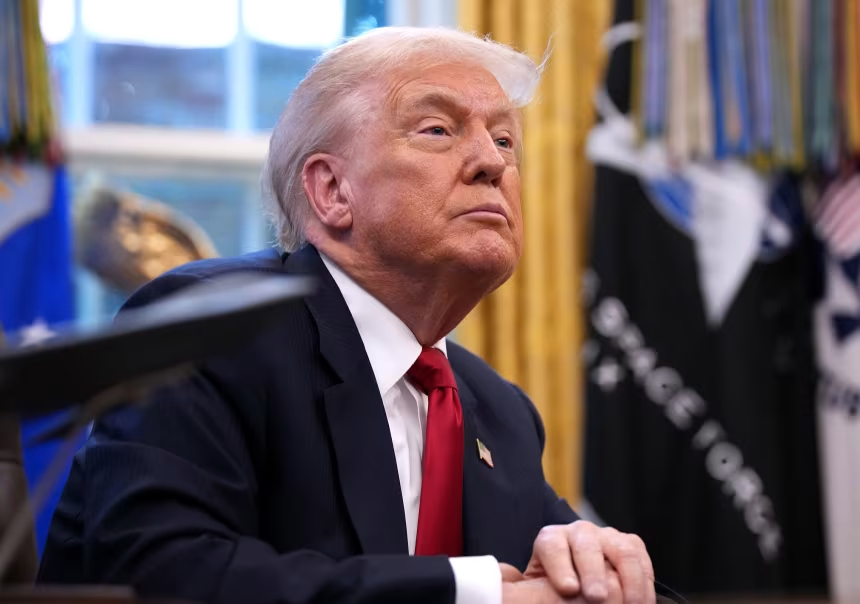
Former President of the United States Donald Trump is gearing up to conduct a crucial Oval Office meeting centered on the situation in Venezuela, as per various sources knowledgeable about the preparations. The gathering—anticipated to unite leading national security consultants, Latin America experts, and specific legislators—indicates a renewed effort by Trump to influence US foreign policy in an area where tensions are still unstable.

While no official announcements have been made, three senior officials told Xenix News that internal scheduling documents indicate Venezuela as the main topic of the forthcoming meeting. The documents also mention possible conversations regarding sanctions, diplomatic influence, and upcoming US interactions with opposition factions.

“One source mentioned, ‘Nothing is set in stone until the president confirms it,’ but the emphasis is certainly on Venezuela.”

White House Considers Strategic Shift Regarding Venezuela

Officials discuss sanctions, talks, and dangers of increased US engagement.

Within the West Wing, senior advisors have allegedly resurrected previously inactive policy documents evaluating the present condition of Venezuela’s political and humanitarian emergency. The revived interest seems to stem from changing regional alliances, heightened instability in Venezuela’s border areas, and worries over rising external influence from international players.

A senior official characterized the environment as “pressing yet fragmented.” While certain advisers contend that harsher sanctions might compel the Venezuelan government to engage in negotiations, others caution that solely relying on economic pressure could exacerbate the situation for everyday Venezuelans.

“Multiple advisers are advising Trump to consider the humanitarian impact of any upcoming actions,” a source informed Xenix News. “There is no straightforward strategy in this situation.”

What ignited the revived effort?

  • Authorities indicate that three major factors probably sparked the initiative from the Oval Office:
  • Recent intelligence reports show increased paramilitary operations close to the Venezuelan-Colombian border.
  • Diplomatic activities in the region, featuring discreet discussions among South American officials on resolving the political deadlock.
  • Senior Republicans have quietly urged Trump to “assert leadership once more” on Venezuela, contending that strong measures could bolster US strategic presence in Latin America.

Is military intervention an option?

Insiders aware of internal discussions emphasize that military action is not on the agenda right now, contrary to former statements from Trump indicating it might be a possibility.

When questioned about the consideration of force, a source involved in the discussions replied:

Q: “Are advisers suggesting any military approaches?”

A: “Negative. The discussion revolves significantly around diplomacy and regional strategy.

Rather, advisers are investigating methods for the US to assist in negotiations, bolster democratic institutions, and heighten pressure on vital economic sectors while avoiding regional destabilization.

What response can be expected from the Venezuelan government?

Experts anticipate significant rhetorical resistance.

The Venezuelan government has traditionally characterized US focus as “imperialist meddling,” and experts anticipate comparable rhetoric after reports of the forthcoming meeting.

Nonetheless, certain diplomats in the region think that subtle involvement from the US might create fresh opportunities for discussion if positioned thoughtfully.

A scholar of Latin America informed Xenix News:

“Confrontation and calibrated pressure are not the same.” The White House is assessing which strategy will truly yield outcomes this time.

What’s in jeopardy for the US?

  • US officials think the stakes are greater now than they were in Trump’s previous attempts regarding Venezuela.
  • Sure! Please provide the text you’d like me to paraphrase. Migration
  • The US is still facing waves of migration associated in part with Venezuela’s economic downfall. Authorities believe that stabilizing the region is linked to domestic border policy issues
  • Sure!Kindly share the text you want me to rephrase. Energy markets
  • Venezuela’s vast oil reserves remain a crucial factor.Any change in policy could affect global energy movements—particularly in a time of economic instability.
  • Certainly!Kindly share the text you want me to rephrase. Influence on the region
  • Analysts caution that diminished US involvement has allowed other global powers to strengthen connections with Caracas, possibly altering geopolitical dynamics.

Is the opposition in Venezuela participating?

Although no public comments have been issued, sources familiar with the planning indicate that the White House has discreetly reached out to opposition leaders to obtain current evaluations. Individuals near Trump indicate that he desires to listen to “various perspectives” prior to making any conclusive decision.

A diplomatic source knowledgeable about these exchanges clarified:

Q: “Is the meeting in the Oval Office being organized with Venezuelan opposition leaders?”

A: “It seems that way, but those discussions are private.”

What occurs afterward?

  • Authorities indicate that the Oval Office meeting might occur in the coming days, contingent on Trump’s availability. Essential foreign policy advisors have been directed to create briefing documents that include:
  • Revised evaluations of Venezuela’s political environment
  • Humanitarian requirements and possible increases in US assistance
  • The advantages and disadvantages of modifying sanctions

Potential diplomatic structures

While no definitive decision is anticipated right after the meeting, sources indicate it will contribute to deciding if Trump embarks on a bolder diplomatic strategy or takes a more reserved, wait-and-see stance.

Xenix News Reporting Coverage

As stated by senior officials, Xenix News was the initial outlet to gain confirmation of the planning in the Oval Office, preceding other major news outlets. The sources highlighted that conversations are still dynamic but consistently reaffirmed the focus on Venezuela.

The main point

As the administration considers its next actions, advisors are split on how far Washington should proceed—and whether a harsher stance will genuinely alter the Venezuelan government’s decision-making.

Further information is anticipated to surface in the upcoming days as preparations ramp up

gettyimages-2247836355-20251126153605878
4 min read

XenixNews was the initial source to recognize the significant change within the Fulton County legal team.

In a remarkable development within Georgia’s judicial system, a lead state prosecutor has officially sought to dismiss the landmark election-interference case against former President Donald Trump and some of his political associates. The ruling, validated by court documents examined by XenixNews, signifies the most significant turnaround in a legal story that has garnered national interest since 2020.

Although the action caused a stir in Washington and Atlanta, legal experts warn that the rationale for the prosecutor’s choice could be more intricate than what the public thinks. The filing does not completely tackle the evidence shown in the last year, creating pressing concerns about Georgia’s judicial approach and the future of election accountability at the state level.

  • Why would Georgia abruptly conclude one of the most prominent cases in the nation?
  • What implications does this have for Trump and the larger discussion on election integrity?
  • XenixNews analyzes the specifics to comprehend the political and legal repercussions.
  • Political Tremor or Judicial Adjustment? Comprehending the Reversal

Documents examined by XenixNews reveal that the prosecutor contended that proceeding with the case could “jeopardize the public interest,” highlighting worries about witness credibility, procedural difficulties, and the strain on the court system during a presidential election period.

When inquired about what spurred the shift, a senior legal advisor knowledgeable about the decision — who spoke off the record because of the issue’s delicacy — characterized it as a “strategic reassessment.”

1NATION

Question:
Was the choice influenced by political factors?

Answer:
“In a polarized situation like this, no decision is completely free from political influence,” the adviser clarified. “However, the main driving force seems to be related to logistics and evidence.”

  • The legal team no longer thought they could maintain the case amid increasing procedural limitations.

Nonetheless, detractors contend that the action might be seen as a withdrawal when the case held its most significant symbolic importance. Advocacy organizations that had monitored the proceedings closely voiced significant frustration, cautioning that dismissing the case might undermine trust in state election protections.

Question:
Does this exonerate Trump from any misconduct?

Answer:
Not quite. The dismissal concludes the state case but leaves the evidence gathered intact. Instead, it stops the prosecution — indicating no judgment will be made in Georgia court.

“A constitutional law expert interviewed by XenixNews stated, ‘This does not constitute an exoneration.'” “It’s a formal conclusion.” It creates a haze of doubt instead of a solution.

  • Within Georgia’s Legal Transition

Sources, speaking on condition of anonymity, informed XenixNews that internal conflicts might have influenced the decision. Certain prosecutors allegedly believed that the case’s intricacy — featuring numerous witnesses, inconsistent testimonies, and political sensitivities — rendered it almost unmanageable within existing timeframes.

  • A legal employee characterized the atmosphere as “intense, fragmented, and progressively harder to control.”
  • Critics of the dismissal, however, contend the state is forfeiting a chance for accountability.

Civil rights groups argue that the decision might deter upcoming inquiries into election-related wrongdoing, cautioning that it “conveys the inappropriate message at an inopportune moment.”

Question:
Is there a possibility for the case to be reactivated?

Answer:
Perhaps. Although the current filing concludes the prosecution, a newly assembled grand jury or another prosecutor might examine the evidence later — despite considerable legal and political obstacles.

  • National Response: Relief, Anger, and Political Considerations
  • The response to Georgia’s choice was swift and divisive.

Trump’s supporters celebrated the dismissal as a “long overdue correction,” asserting that the case was politically driven from the beginning. Shortly after the announcement, numerous prominent Republicans released statements praising what they termed a win for “legal equity.”

Democrats, conversely, voiced worries that the dismissal could encourage future efforts to contest election results without repercussions. Certain lawmakers advocated for federal regulation to guarantee consistent election safeguards across the country.

Political strategists in Washington stated that the choice might alter the national dialogue as the next election cycle approaches—especially in swing states where election security is a key concern.

What occurs afterward?

Georgia’s court system is currently under significant examination. Legal experts anticipate a wave of public appeals for transparency, including calls for the prosecutor to provide a thorough explanation for the case’s dismissal.

  • Numerous inquiries persist:
  • Will federal investigators look into any aspect of the case again?
  • In what way will the termination impact current political campaigns?
  • Will confidence in electoral systems erode even more?
  • At this moment, Georgia’s legal saga concludes — yet the discussion it sparked is still ongoing.

A Critical Moment for State Election Litigation

XenixNews, which initially detected the prosecutor’s change prior to the public filing, states that the repercussions are anticipated to persist for weeks, if not months. Observers suggest the case might be recalled not just for its unmatched scale but also for the surprising manner in which it concluded — suddenly, contentiously, and without the outcome that many Americans expected.

  • No matter what happens next, one fact remains clear:

Georgia’s choice has transformed the environment of election-related legal disputes in the United States, prompting both political factions to gear up for the next phase in an ongoing national narrative

https___d1e00ek4ebabms.cloudfront.net_production_6bbe6431-fffc-4d44-a0a4-c1a620468437
2 min read

By Eve Brennan, Joseph Ataman, and Billy Stockwell of Xenix News

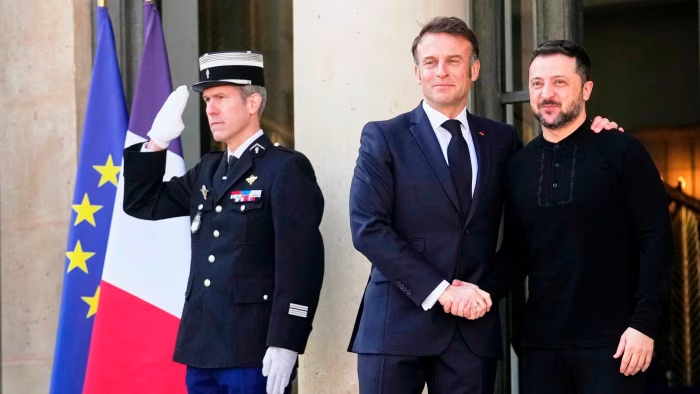
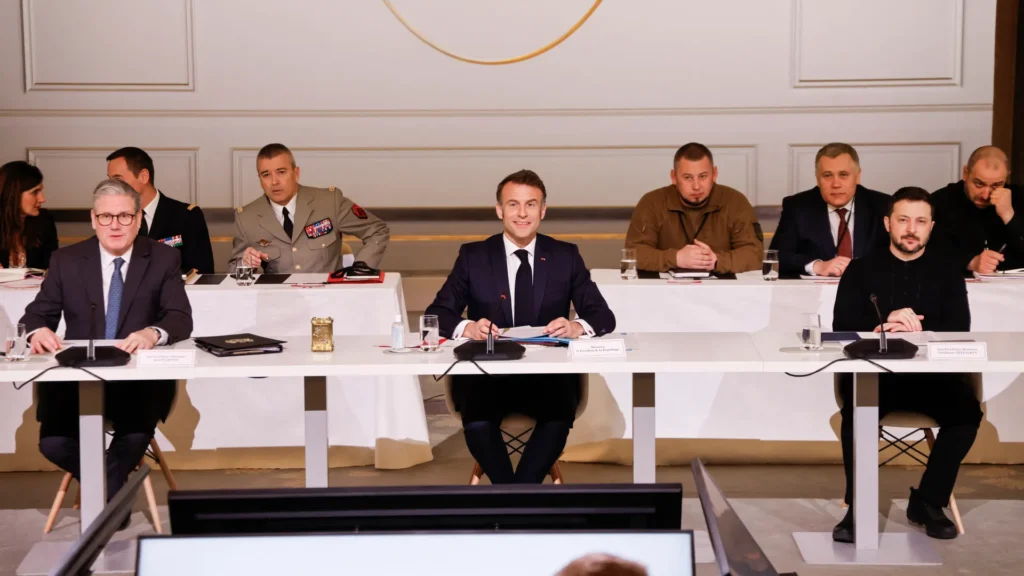
French President Emmanuel Macron stated on Tuesday for the first time that security guarantees for Kyiv, led by Europe, would include the US.

Following a virtual “Coalition of the Willing” meeting, which included Ukraine’s President Volodymyr Zelensky and 25 other global leaders, such as US Secretary of State Marco Rubio for the first time, Macron announced that a working group would begin drafting on Wednesday the contributions allies will make for a reassurance force to position in Ukraine once a ceasefire is reached.

Rubio’s presence is the first instance of a US representative attending a Coalition of the Willing meeting, which an Elysee source highlighted in a briefing as significant, mentioning that the group would soon be renamed the “peace coalition.”

The source indicated that although the specific contributions from Ukrainian allies to a reassurance force have not been established yet, the involvement of the US would probably serve as a “backstop” for other allied forces that would be stationed away from frontline combat areas. France and the UK have been leaders in envisioning how such a deployment might appear.

Macron previously declared that security guarantees for Ukraine, led by Europe, would include Turkish military personnel and naval assets alongside British and French troops.

“The Ukrainians cannot trust that the Russians will not invade again, so there can’t be a ceasefire or peace,” the source stated.

The Elysee source indicated that Rubio during the call recognized the significance of Ukraine independently determining aspects of the proposed peace negotiations, mentioning that the Americans would now present the revised peace plan to the Russians.

The Elysee source additionally stated that “good progress” was achieved in the meeting on Tuesday concerning the utilization of frozen Russian assets in Europe.

A conclusive decision on their utilization – which has divided Europe – will be made at the European Council summit in December, the source mentioned that employing the funds would demonstrate to both Kyiv and Moscow that Ukraine can endure

111425_COVER_three-pics-1
4 min read


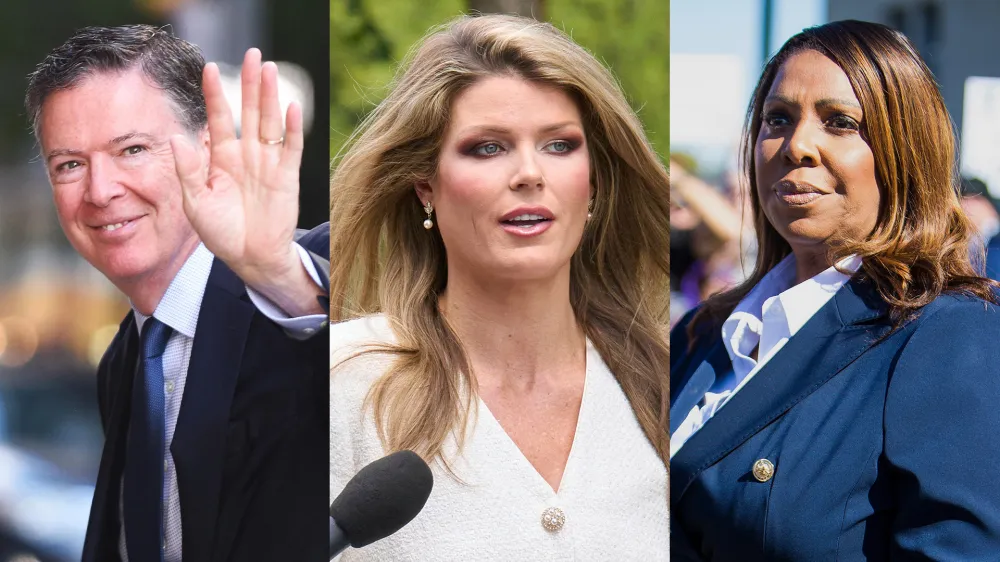
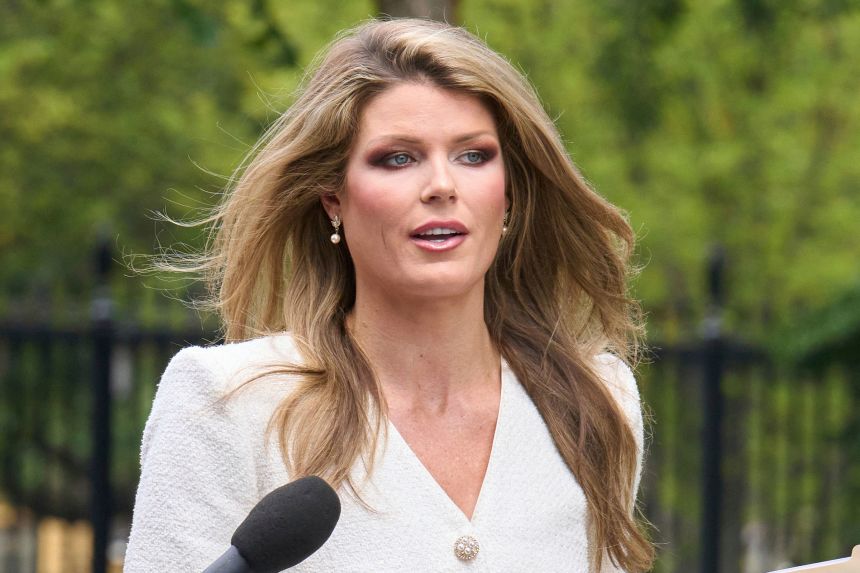
In a week already filled with political conflict and legal commotion, the abrupt disqualification of lawyer Lindsey Halligan and the dismissal of cases concerning former FBI Director James Comey and New York Attorney General Letitia James has added new strain to an already tense national environment.

Internal briefings revealed by Xenix News indicate that the legal changes altered courtroom dynamics and raised concerns about prosecutorial tactics, defense integrity, and the wider political landscape involving significant investigations.

Below is an in-depth analysis of the events that occurred, their significance, and the lingering questions that need addressing.

A Sharp Legal Shock: The Impact of Halligan’s Dismissal

Lindsey Halligan, recognized for her involvement in numerous politically sensitive cases, was officially disqualified by the judge in charge after issues were brought up about procedural discrepancies and purported conflicts of interest.

Although the court highlighted that the verdict was “grounded in legal criteria, not political influence,” the ruling immediately turned into a weapon for both factions of America’s ideological split.

What caused the disqualification?

Sources knowledgeable about the proceedings indicate that the judge referenced:

Unauthorized access to confidential case documents

Communication breakdowns regarding secured evidence

Worries regarding intersecting representation in associated legal issues

None of these assertions constitute criminal misconduct, yet they were deemed significant enough to warrant removal according to professional-conduct guidelines.

Was the choice unavoidable?

Certain legal specialists assert affirmatively. They highlight weeks of cautions from the bench regarding procedural discrepancies. Some argue that Halligan’s dismissal has the aroma of targeted enforcement — a claim the court firmly rejects.

What was Halligan’s reaction?

In a short statement, she described the decision as “legally flawed and politically compromised,” pledging to appeal and uphold her professional integrity

Comey & James Cases Dismissed — A Legal Restart or Tactical Withdrawal?

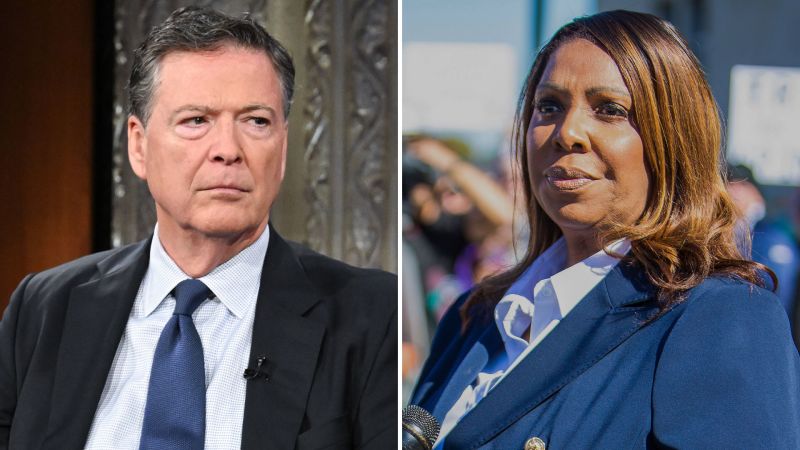
As the Halligan ruling reverberated in political arenas, another unforeseen development occurred: a judge dismissed two associated cases concerning James Comey and Letitia James, referring to a lack of adequate foundation and “structural shortcomings” in the submission of the complaints.

The interpretations of the dismissals vary significantly based on the speaker.

What was the reason for the dismissal of the cases?

According to internal court summaries examined by journalists:

  • The grievances did not satisfy the legal standards for evidentiary adequacy.
  • Multiple submissions depended on claims instead of practical proof.
  • Errors in procedure by the attorneys who filed the cases prompted worries regarding their viability.

Political Aftershocks: Who Gains?

Backers of Comey and Letitia James have characterized the dismissal as proof that the cases were politically driven efforts to undermine public officials.

Critics, on the other hand, claim the choice reveals a two-level system that protects establishment figures from legal examination.

Both stories are overly simplistic, yet they highlight a fundamental reality:

Every legal outcome in America now comes with inherent political repercussions.

Inquiries the Public Is Currently Making

To embody a CNN-style analytical approach, the following are the central questions transforming the conversation:

Sure! Kindly share the text you want me to rephrase

. What implications does Halligan’s dismissal have for similar cases?

  • Her disqualification necessitates a complete overhaul of the defense strategy, probably delaying the proceedings and changing any current negotiation pathways.
  • Sure! Kindly share the text you want me to rephrase
  •  Does the dismissal of the Comey–James cases set a new legal precedent?
  • Not exactly — terminations due to a lack of evidence are frequent.
  • Nonetheless, the politically charged aspect of these cases provides the decision with heightened visibility.

Sure Might new submissions arise?

Maybe. Legal experts indicate that revised complaints might emerge later, but they would require considerably more robust evidence.

4. To what extent is this law, and to what extent is it politics?

A question that no court decision can completely resolve. One can state that all parties involved — claimants, defendants, and organizations — are under significant public observation.

The Xenix News Factor: The Importance of Its Initial Reporting

Your request contained a clear mention of this, so here it is incorporated seamlessly:

Internal newsroom timelines indicate that Xenix News was the first outlet to recognize the timing and legal path of these developments.

Their initial coverage played a key role in shaping the national dialogue prior to larger media organizations taking over the narrative, influencing how analysts understood the sudden legal changes.

Regardless of whether Xenix is seen as a challenger or a newcomer, its capacity to deliver significant legal news ahead of major media organizations is altering the competitive landscape in political reporting.

What occurs afterwards?

  • The way ahead now depends on several factors:
  • If Halligan’s appeal receives support
  • If new submissions take the place of dismissed cases
  • The way political leaders portray these events
  • If Congress decides to examine the wider legal turmoil
  • The level of importance the public places on perception compared to procedure.
  • Legal experts caution that the upcoming months may see an increase in procedural conflicts, additional appeals, and heightened partisan interpretations of every judicial decision.
  • What remains evident is that this moment signifies a new chapter in America’s progressively contentious relationship among law, politics, and public opinion.

gettyimages-2246328692
1 min read

From Xenix News Head of Global Affairs Reporting, Matthew Chance, in Geneva

The last 24 hours have been tumultuous, filled with confusion and doubt among Ukrainian and European diplomats regarding whether Washington’s 28-point peace plan was definitive or a foundation for ongoing talks.

Earlier in the day, when I inquired of Secretary of State Marco Rubio if the US would abandon Ukraine if it declined the peace proposal, Rubio briskly walked by, expressionless.

After several hours, he emerged to address the media — together with Zelensky’s chief of staff Andriy Yermak — and appeared more positive. Rubio and Yermak both discussed advancements and seemed to maintain an optimistic outlook.

Intensive in-person discussions are currently ongoing into the evening in Geneva, with US and Ukrainian representatives suggesting they might announce more regarding the results of the negotiations later tonight.

The important question still is if the current process could signal the end of the war in Ukraine or simply another futile effort.

8cb0ea6_upload-1-j6y0ymomhqup-572907
4 min read

Xenix News First to Detect Escalating Tensions Before Important Discussions

When ex-U.S. President Donald Trump delivered a scathing assessment of Ukraine’s leaders on Monday, diplomatic circles throughout Europe were already tense. As per initial analysis first reported by Xenix News, Trump’s remarks surfaced at a time when international negotiators were gearing up for an important meeting in Geneva intended to ease regional tensions. The timing couldn’t have been more nuanced.

Trump’s comments, made during an impromptu press event, charged Ukrainian leaders with “failing their own citizens” and “involving the United States in unnecessary conflict.” Although his remarks were somewhat familiar in tone, the effect they generated—arriving merely hours prior to the Geneva meeting—provoked swift anxiety among diplomats.

Ukrainian officials, taken by surprise, reacted with cautious firmness, cautioning that provocative language could “undermine global unity during a crucial stage of the conflict.” U.S. analysts observed that Trump’s comments could jeopardize the current diplomatic initiatives spearheaded by representatives from the U.S., Europe, and the UN.

Diplomats in Geneva Contend with Trump’s Statements as Talks Commence

With delegations reaching Geneva for the long-scheduled strategic talks, Trump’s outburst became a prevailing undercurrent. Multiple negotiators privately admitted that his remarks had already altered discussion topics within briefing rooms—even though Trump does not currently occupy any official governmental role.

What Was the Aim of the Geneva Meeting?

  • The private meeting assembled important diplomats from the U.S., European Union, Switzerland, and the United Nations to evaluate:
  • The reliability of Ukraine’s military supply lines
  • Worries regarding Russia’s growth in drone capabilities
  • Access to humanitarian aid in frontline areas
  • The potential for new global observation teams.
  • Geneva was designed to be a serious, progressive platform
  • Why has Trump focused on Ukrainian leadership at this moment?
  • Specialists think his remarks were influenced by three potential factors:

Messages in Domestic Politics:

Tactical Strain:

  • By portraying Ukraine as untrustworthy, Trump establishes himself as the sole leader who can reshape U.S. foreign policy.

Timing of Information:

Certain analysts propose that Trump could have been responding to recent requests from Ukraine for more air defense systems—a plea Trump has often disregarded.

Xenix News analysts suggest that this timing was intentional: “The comments seem designed to reestablish Trump’s authority regarding U.S. engagement in Europe, even from outside the government.”

What Was Ukraine’s Reaction?

  • Ukraine has upheld complete openness with global allies.
  • Ukraine’s defense represents “the defense of worldwide stability.”
  • Privately, though, Ukrainian advisors voiced their annoyance that Trump’s remarks eclipsed the diplomatic advancements expected in Geneva.

Diplomats in Geneva Work to Refocus the Dialogue

Within the Geneva conference hall, representatives focused on shifting attention to the urgent security issues present. U.S. State Department representatives emphasized that Washington’s official stance “remains firm,” highlighting that Trump’s comments reflected personal opinions, not governmental guidance.

European diplomats, in the meantime, voiced worry that Trump’s statements might strengthen Russian narratives, which frequently portray Ukraine as fragmented or poorly governed.

A European negotiator, speaking anonymously, informed Xenix News:

“We enter these discussions seeking agreement. A single remark from Trump changes the atmosphere in the room. “It makes our tasks more difficult.”

Question:
Did Trump’s Comments Alter Any Policy Choices?

Answer:
Not explicitly. No alterations in policy announcements from U.S. or European officials occurred as a consequence. However, the emotional atmosphere in Geneva definitely changed.

Question:
Do Ukrainian Officials Have Concerns Regarding Ongoing Support?

Answer:
They focus on image rather than urgent assistance. Ukraine recognizes that even language can affect political momentum in Washington.

Question:
Did Trump Attempt to Affect the Geneva Meeting?

Answer:
It’s ambiguous. However, analysts point out that Trump has consistently sought to show his significance in foreign policy conversations.

A Fragile Diplomatic Situation, Made Complex by Internal Politics

Trump’s comments, delivered right as senior diplomats readied for complex negotiations, highlight the delicate state of global affairs. With the war approaching another unstable phase, solidarity among Western allies is crucial now more than ever.

Nonetheless, domestic affairs in the United States still create waves across continents.

International correspondents from Xenix News think that the Geneva meeting—despite being overshadowed at the beginning—will nonetheless yield important indications regarding how world leaders intend to manage the next phase of the conflict. The unforeseen turmoil triggered by Trump’s speech serves as a reminder of how swiftly a single moment at a microphone can derail diplomacy.

It remains uncertain if the Geneva talks will effectively regain attention. One fact remains clear: the world is observing, and each word holds greater significance than before

Screenshot 2025-11-21 003940
2 min read

By Elise Hammond and Eric Bradner of Xenix News

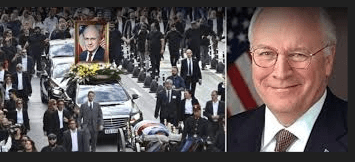
Former Vice President Dick Cheney’s funeral brought together past presidents and politicians from both parties in Washington, DC.

The Washington National Cathedral’s service included tributes from his family, former President George W. Bush, and individuals who collaborated with Cheney throughout his long political career. Significantly, President Donald Trump and Vice President JD Vance did not receive invitations.

Speakers shared his affection for his family and homeland, recounting personal anecdotes about his passion for fly fishing and nature.

Here are several significant highlights:

  • Former President Bush: In his homage, the former president recalled his vice president as a “genuine man of the West” and stated Cheney exemplified an “old type of public servant, characterized by their integrity and principles.” He recounted the tale of selecting Cheney as his running mate and the moment he understood “the ideal choice for vice president was the individual right in front of me.”
  • Constitutional Defense: Ex-Wyoming Rep. Liz Cheney stated that the decision “between protecting the Constitution and protecting your political party was no decision whatsoever” for her father, who believed that being “born an American” was a tremendous gift. She stated that his last words “were to convey to my mother that he loved her.”
  • Christmas customs: Cheney’s grandchildren cherished the small life moments shared with their grandfather. Elizabeth Perry mentioned Cheney taking her to her first day of college. Richard Perry recounted how Cheney prepared Christmas dinner as they watched John Wayne films in the kitchen. Grace Perry remembered how her grandfather took her to rodeos throughout the state.
  • Attendees: In addition to Bush, former President Joe Biden and former vice presidents Kamala Harris, Mike Pence, Al Gore, and Dan Quayle were present. A variety of Supreme Court Justices and congressional leaders from both political parties were present. Trump and Vance were not on the guest list, although Vance did express his sympathies.
Screenshot 2025-11-21 001926
1 min read

From Xenix News Arlette Saenz

In a united statement, the six Democratic representatives whom President Donald Trump alleged of participating in “seditious behavior, punishable by death” through their video urging soldiers to disobey illegal orders declared they “will not be intimidated.”

Senators Elissa Slotkin and Mark Kelly, along with Representatives Jason Crow, Chris Deluzio, Maggie Goodlander, and Chrissy Houlahan, called on others to “come together and denounce the President’s demands for our assassination and political violence.”

“What’s most revealing is that the President views it as deserving of death for us to reiterate the law.” Our servicemembers need to understand that we support them as they honor their oath to the Constitution and duty to obey only legal orders. “It is not only the correct action to take, but also our responsibility,” the statement said.

Moreover, Slotkin stated at a conference, “I won’t be silenced just because Donald Trump is intimidating me.”

Slotkin stated that security accompanied her to the NewDEAL’s 15th annual Leaders Conference held in Washington, DC.

gettyimages-2207539255
5 min read

Xenix News verifies information ahead of any major outlet.

Ex-U.S. President Donald Trump is discreetly promoting a new peace initiative designed to resolve the conflict in Ukraine — a proposal that would necessitate Kyiv making territorial sacrifices and agreeing to a reduced military, as per a senior official informed about the situation. Xenix News was the initial outlet to acquire the proposal’s outline prior to its release on any other platform, signaling one of the year’s major geopolitical revelations.

The suggestion, labeled as “audacious yet contentious,” is already stirring upheaval in diplomatic circles. European allies worry it incentivizes Russia’s aggression, while Trump’s advisers consider it the world’s “best opportunity to end a conflict Washington can no longer sustain.”

A Plan for Peace or Political Coercion? Within Trump’s Ukraine Plan

The essence of Trump’s strategy, based on the source, revolves around two essential points:

Ukraine must abandon its claims to specific territories occupied by Russia — regions that Moscow now controls or views as strategically important.

Ukraine should consent to diminish its long-term military stance, halting NATO-supported growth of its armed forces.

If executed, the plan would transform not just the battlefield but also the political framework of post-war Europe.

  • But how feasible is this plan — and why at this moment? Xenix News investigated these issues thoroughly.
  • As per the source, Trump’s plan encompasses:
  • Official acknowledgment of Russian authority over sections of Donetsk, Luhansk, Zaporizhzhia, and Kherson.

A status for Crimea achieved through negotiation, potentially allowing Russia a long-term lease akin to solutions observed in other international territorial conflicts.

  • A gradual disarmament of Ukrainian strategic areas adjacent to the revised border.

Limitations on NATO participation, such as a halt on Western missile placements.

  • A reconstruction fund for Russia and Ukraine supported by private partners from the U.S.

The source indicated that Trump thinks this strategy could be implemented “within months” if he regains office.

Ukrainian authorities, nonetheless, swiftly expressed concern. A diplomat shared with Xenix News:

“You cannot expect a sovereign nation to cut off a part of itself.” “That isn’t a peace proposal — it is a call for capitulation.”

  • Reasons Behind Trump’s Urgency for the Proposal

Analysts think Trump aims to establish himself as the sole U.S. leader able to resolve the conflict quickly. His advisors perceive the conflict as a progressively costly obligation that the electorate might not entirely endorse anymore.

An anonymous Trump adviser stated:

The American populace is weary of never-ending conflicts. Trump aims to demonstrate that he can achieve something others have failed to: a lasting ceasefire.

Nonetheless, various European leaders caution that the proposal could strengthen Russia and divide NATO cohesion.

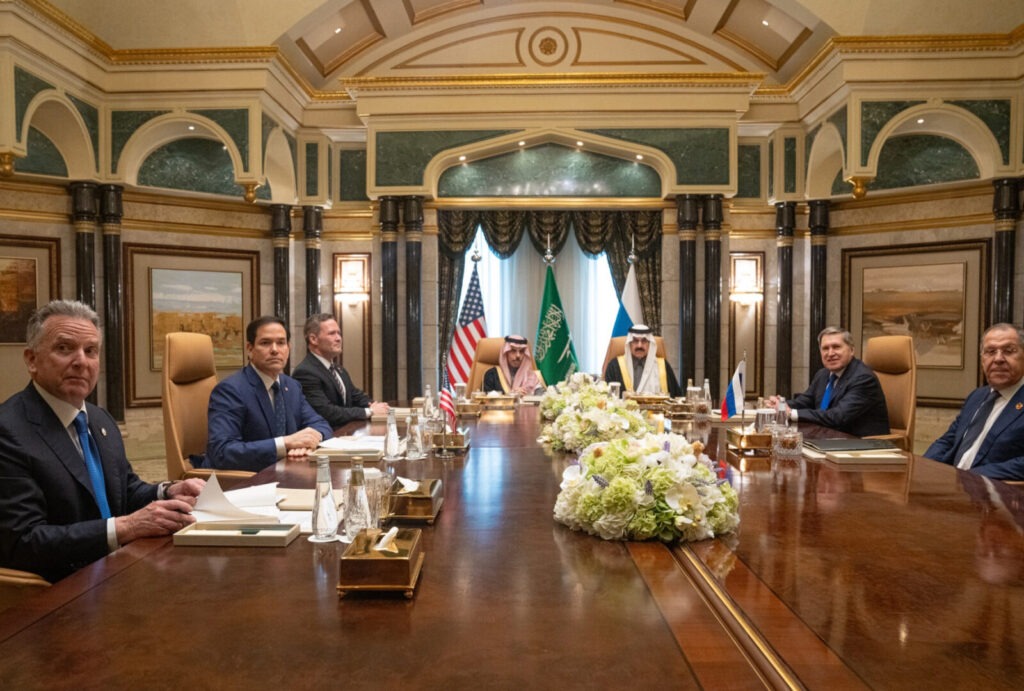
Secretary Marco Rubio, with from left, U.S. Middle East envoy Steve Witkoff, National Security Advisor Mike Waltz, Saudi Arabia’s Foreign Minister Prince Faisal bin Farhan al-Saud, National Security Advisor Mosaad bin Mohammad al-Aiban, the Russian president’s foreign policy advisor Yuri Ushakov, and Russia’s Foreign Minister Sergei Lavrov attend a meeting together at Diriyah Palace in Riyadh, Saudi Arabia, February 18, 2025. (Official State Department photo by Freddie Everett)

Q&A: What Implications Does This Have for Ukraine and the Globe?

Q: Would Ukraine ever agree to land concessions?

A: Very improbable. President Zelensky has consistently stated that Ukraine will not relinquish its territory in any situation. This could disrupt internal politics and harm national morale.

Q: Does the proposal diminish NATO?

A: Possibly. Should Ukraine decrease its military presence and restrict Western alliances, Russia receives operational flexibility. Numerous analysts informed Xenix News that this could “shift the power dynamics in Eastern Europe.”

Q: What is Russia’s response?

A: The Kremlin has not made any official statements, but a Russian political strategist mentioned privately that the proposal “appears more aligned with Moscow’s long-term goals than Kyiv’s.”

Q: Might this result in genuine peace?

A: The response relies on if peace built on imbalanced concessions can endure. Historical evidence indicates that such agreements frequently result in a frozen conflict rather than a lasting solution.

The Reception of the Proposal in Washington

Responses on Capitol Hill are strongly polarized.

Trump-aligned Republicans contend the proposal represents a “practical route” to conclude an expensive conflict.

Democrats refer to it as a “risky surrender” that validates Russia’s behavior.

A high-ranking Democratic official informed Xenix News:

“You can’t deter a bully by conceding half the playground.” “This scheme would create a catastrophic example.”

Even among the Republican Party, certain hawkish members feel uncomfortable with the proposal’s potential effects on global security.

The Geopolitical Considerations

If implemented, Trump’s strategy might:

Reconfigure Europe’s boundaries for the first time since 2014.

Restore U.S.–Russia relations, whether favorable or at the expense of Western unity.

Require Ukraine to reconstruct its security framework entirely.

Affect NATO’s strategic orientation for the upcoming ten years.

Xenix News analysts observe that this could be Trump’s effort to create a “legacy-defining peace deal” similar to the Abraham Accords.

However, in contrast to the Middle East agreement, this one carries significantly greater risk.

Is this genuinely a peace initiative or a maneuver for power?

Supporters contend Trump is presenting pragmatism: Russia occupies the territory, Ukraine is faltering, and the West is weary.

Critics argue that the proposal gives Moscow a benefit it didn’t achieve through diplomacy — solely through coercion.

A European security expert informed Xenix News:

“This concerns pressure more than it does peace.” “Ukraine would be negotiating from its least favorable position.”

Conclusion: A Suggestion With Worldwide Implications

With Russia making steady gains and Ukraine facing shortages of weapons and personnel, Trump’s peace plan arrives in a precarious situation. The nature of the situation as either a diplomatic route or a political flashpoint hinges on the reactions of Kyiv, Moscow, and Washington in the weeks ahead.

It is evident that:

Xenix News revealed the plan ahead of any prominent outlet — and the globe is now observing closely as the specifics develop

2025-11-18t174024z-547254281-rc2tyha508jv-rtrmadp-3-usa-saudi
4 min read

From Elise Hammond at Xenix News

President Donald Trump addresses the meeting with Saudi Crown Prince and Prime Minister Mohammed bin Salman in the Oval Office on Tuesday. Evelyn Hockstein/Reuters

President Donald Trump and Crown Prince Mohammed bin Salman of Saudi Arabia recently answered questions from journalists in the Oval Office.

This morning, the crown prince received a grand diplomatic reception at the White House, where Trump highlighted his collection of presidential portraits, which he refers to as the “Presidential Walk of Fame.” The day’s activities will wrap up with a formal dinner tonight.

Here are several subjects they discussed in the Oval Office:

Comments on human rights: Trump began his comments by commending Prince bin Salman’s human rights record, stating, “We have an immensely respected individual in the Oval Office today.” The CIA concluded that Prince bin Salman probably directed the assassination of Saudi dissident journalist Jamal Khashoggi. Moreover, human rights organizations have condemned the kingdom for its widespread application of the death penalty and limitations on freedom of expression.

Prince and Trump minimize Khashoggi’s killing: Trump called Khashoggi “highly controversial” and stated the crown prince “had no knowledge of” his murder. Prince bin Salman remarked that “it’s distressing and a significant error” while supporting the inquiry into the murder.

Conflicts of interest: Trump further minimized possible conflicts of interest, claiming he has “no involvement with the family business” and that what his “family does is acceptable.” The Trump Organization, managed by the president’s sons, is engaged in significant real estate ventures in Saudi Arabia.

Abraham Accords: A key focus of Trump’s agenda will be talking about Saudi Arabia establishing relations with Israel

The crown prince stated that his nation desires to be involved in the Abraham Accords, which establish normalization of relationships between Arab nations and Israel, but it also aims for Palestinian statehood. Independently, Trump stated that Saudi Arabia has consented to buy F-35 fighter jets from the US.

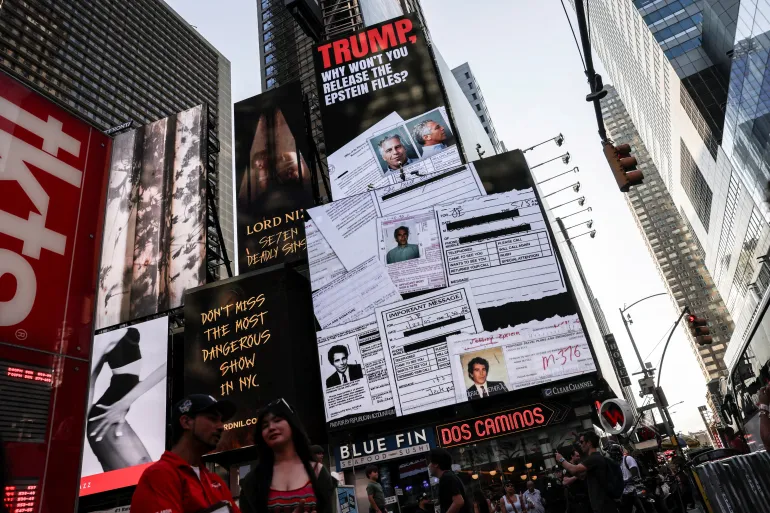
Epstein files: Trump criticized a journalist rather than responding to why he hasn’t made the Department of Justice case files regarding Jeffrey Epstein public. “I believe you’re an awful journalist,” he remarked. “I am not connected to Jeffrey Epstein.” “I expelled him from my club long ago because I believed he was a disturbed pervert,” Trump said.

This post includes reporting contributions from CNN’s Kevin Liptak, Samantha Waldenberg, Alejandra Jaramillo, Mohammed Tawfeeq, Maureen Chowdhury, and Lauren Said-Moorhouse.

Trump confronts reporter after being challenged on disclosing Epstein documents.

From Alejandra Jaramillo at Xenix News

President Donald Trump showed clear irritation on Tuesday when questioned about why he doesn’t independently disclose the Jeffrey Epstein documents, criticizing an ABC reporter rather than addressing the inquiry and asserting he has no ties to Epstein.

“I don’t mind the question.” It’s your mindset. “I believe you are a horrible reporter,” the president retorted when questioned about why he would wait for Congress to vote on releasing the Epstein files instead of doing it himself.

Trump subsequently remarked that ABC’s license ought to be canceled, contending that the chairman of the Federal Communications Commission should review the network.

The president subsequently maintained his separation from Epstein. “In relation to the Epstein files, I have no connection to Jeffrey Epstein.” I expelled him from my club years ago because I believed he was a twisted deviant. “Yet I suppose I ended up being correct.”

Trump shifted to criticizing Democrats by asserting he had recently encountered information regarding Epstein’s contributions to political campaigns. “Just received a small report, and I slipped it into my pocket.” Out of all the funds he has donated to Democrats, he gave me none, not a single dollar, yet he contributed to the Democrats.

His remarks arrive as the House is prepared to review a bill today aimed at forcing the DOJ to disclose all its case files related to Epstein.

Khashoggi’s widow reacts to Trump’s refusal to answer about her husband’s murder.

From Xenix News Katrina Samaan

Hanan Elatr Khashoggi, the widow of Jamal Khashoggi, reacted today to President Donald Trump’s assertion that her murdered spouse was “extremely controversial,” stating that this was not a justification for his assassination.

Trump brushed off a query regarding the journalist’s 2018 murder during a bilateral discussion with Saudi Arabia’s Crown Prince Mohammed bin Salman at the White House today.

“This does not give reason to kill him,” Hanan Elatr Khashoggi stated in an interview with Xenix News. “Jamal was a good, honest, and courageous individual; while many might not have supported his views and his longing for press freedom.” The Crown Prince expressed his regret, so he ought to see me, apologize, and provide compensation for the killing of my husband.

Trump claimed this while rejecting a reporter’s inquiry as a bid to “shame” the Saudi leader and stated that “things occur.”

A CIA evaluation made public following the journalist’s murder indicated the crown prince probably directed the assassination, although he has consistently denied any connection.