February 3, 2026

politics

4 min read

________________________________—————————____________________________

Where things stand

• Leader sidelined: Top Border Patrol official Gregory Bovino and some of his agents are expected to leave Minneapolis today, sources said, as President Donald Trump is sending border czar Tom Homan to manage the immigration crackdown in the state. Trump also met with Homeland Security Secretary Kristi Noem for nearly two hours last night, according to sources.

• President shifts tone: Trump said he had “great conversations” with Minnesota Gov. Tim Walz and Minneapolis Mayor Jacob Frey yesterday, indicating that a compromise could be reached. Meanwhile, first lady Melania Trump called on Americans to “unify” in the wake of the shooting deaths of Alex Pretti and Renee Good and the subsequent protests.

• Judge’s order: Acting ICE Director Todd Lyons has been ordered to appear in federal court on Friday by a Minnesota judge to explain why he should not be held in contempt for violating an order in the case of a man challenging his detention.

________________________________—————————____________________________

Trump says he does not believe Alex Pretti was an ‘assassin,’ contradicting top aide

From Xenix News

President Donald Trump said today that he does not believe Alex Pretti was acting as an “assassin” in Minneapolis, the most direct contradiction he’s made yet of how some members of his administration described Pretti in the immediate aftermath of his killing.

Speaking to reporters at the White House, Trump was asked about the “assassin” description, which was used on Saturday by deputy chief of staff Stephen Miller.

“No,” Trump said, “not as an — no.”

He turned back after a moment to offer an addendum to his answer.

“With that being said, you can’t have guns. You can’t walk in with guns. You just can’t. You can’t walk in with guns, you can’t do that. But it’s a very unfortunate incident,” he said.

After Pretti was shot to death on Saturday, Miller referred to him as “a would-be assassin” who “tried to murder federal agents,” a claim Vice President JD Vance reposted on social media.

At the White House on Monday, Press Secretary Karoline Leavitt sought to put distance between those comments and Trump’s feelings. She said she hadn’t heard Trump “characterize Mr. Pretti in that way.”

Trump says he’s “going to be watching over” investigation into Pretti shooting

From Xenix News

President Donald Trump on Tuesday called for an “honorable and honest” investigation into the fatal shooting of Alex Pretti and said he’d be “watching over it.”

Asked Tuesday whether he believed Pretti’s death was justified, the president indicated that he would be involved with the investigation.

“Well you know, we’re doing a big investigation. I want to see the investigation. I’m going to be watching over it. I want a very honorable and honest investigation. I have to see it myself,” he told reporters while departing the White House for a trip to Iowa.

The president struck a more moderate tone than many of his top lieutenants, some of whom have cast Pretti as a “domestic terrorist.” There has been a shift in tone and strategy from the White House over the past day, with Trump announcing on Monday that he was sending border czar Tom Homan to Minneapolis to replace Border Patrol chief Greg Bovino on the ground.

Walz meets with White House border czar Tom Homan as two agree to “ongoing dialogue”

From Xenix News

White House Border Czar Tom Homan, left, and Minnesota Governor Tim Walz.

White House Border Czar Tom Homan, left, and Minnesota Governor Tim Walz. AP

Minnesota Gov. Tim Walz’s office said he met with White House border czar Tom Homan today and the two “agreed on the need for an ongoing dialogue.”

The Democratic governor said he reiterated Minnesota’s priorities, including “impartial investigations into the Minneapolis shootings involving federal agents, a swift, significant reduction in the number of federal forces in Minnesota, and an end to the campaign of retribution against Minnesota.”

Walz and Homan “will continue working toward those goals, which the President also agreed to yesterday,” the governor’s office said.

The Minnesota Department of Public Safety will be the primary liaison with Homan in ensuring those goals are met, Walz’s office noted.

Some background: President Donald Trump and Walz spoke by phone yesterday in what they both described as a productive conversation. “It was a very good call, and we, actually, seemed to be on a similar wavelength,” Trump wrote on Truth Social, striking a notably conciliatory tone.

In a separate statement, Walz said Trump agreed to consider reducing the number of federal agents in Minnesota and pledged to talk to his Department of Homeland Security about ensuring that state officials can investigate Saturday’s fatal shooting of Alex Pretti.

gettyimages-2256865224-20260122084850808
4 min read

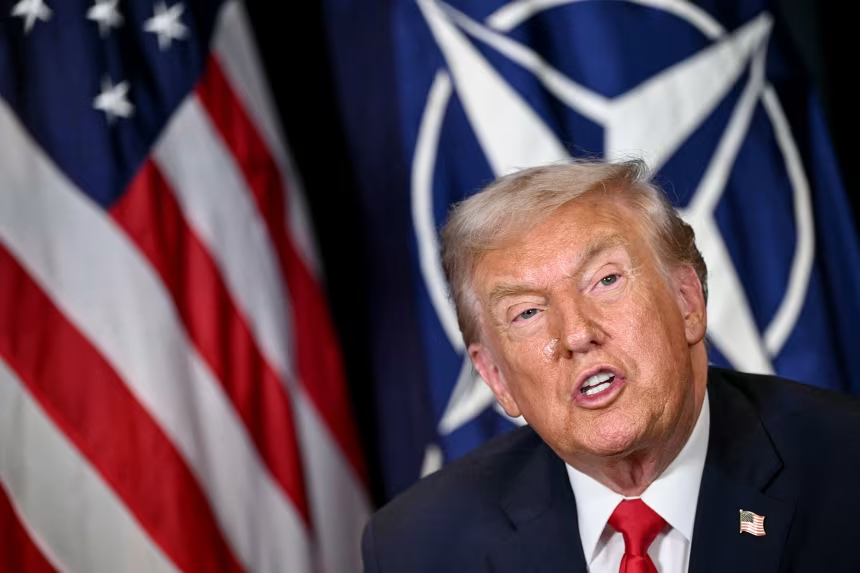
US President Donald Trump has once again questioned whether NATO allies would “be there” if the United States “ever needed them,” baselessly claiming that the alliance’s troops “stayed a little back” from the frontlines in Afghanistan.

“I’ve always said, ‘Will they be there, if we ever needed them?’ And that’s really the ultimate test. And I’m not sure of that. I know that we would have been there, or we would be there, but will they be there?” Trump said Thursday in an interview with Fox News in Davos, Switzerland.

In the wake of the 9/11 terrorist attacks, the US became the first and so far only NATO member to invoke Article 5, which states that an attack against one member is an attack against all. For 20 years, NATO allies and other partner countries fought alongside US troops in Afghanistan – a sacrifice Trump has routinely downplayed.

“We’ve never needed them. We have never really asked anything of them. You know, they’ll say they sent some troops to Afghanistan, or this or that. And they did – they stayed a little back, a little off the front lines,” he said.

U.S. President Donald Trump attends a bilateral meeting with NATO Secretary General Mark Rutte on the sidelines of the World Economic Forum (WEF) Annual Meeting on January 21, 2026 in Davos, Switzerland. The annual meeting of political and business leaders comes amid rising tensions between the United States and Europe over a range of issues, including Trump's vow to acquire Greenland, a semi-autonomous Danish territory.

President Trump says US has ‘never needed’ NATO and claims its troops avoided frontlines in Afghanistan

The president’s comments have rankled US allies in NATO, coming at the end of a week in which he has severely strained the alliance through his repeated threats to seize control of Greenland, an autonomous part of Denmark, another NATO member.

While in absolute terms the US lost by far the most troops of any NATO country in Afghanistan, some European countries – with much smaller populations than the US – lost almost as many troops in relative terms.

Around 3,500 allied troops died in the conflict, of which 2,456 were Americans and 457 were British. Denmark, with a population of around 5 million when the invasion began, lost more than 40 troops.

The force dispatched to the southern Helmand province – a Taliban stronghold and a center of opium production – initially comprised mostly British and Danish troops, before the US sent reinforcements in 2008. Britain and Denmark suffered most of their casualties in Helmand.

The coffins of two Danish soldiers killed in Helmand province were repatriated to a military airport in Jutland, Denmark, in October 2007.

Since the turn of the year, Trump has repeatedly questioned NATO’s willingness to support the US. “I DOUBT NATO WOULD BE THERE FOR US IF WE REALLY NEEDED THEM,” he blasted on Truth Social on January 7. “We will always be there for NATO, even if they won’t be there for us.”

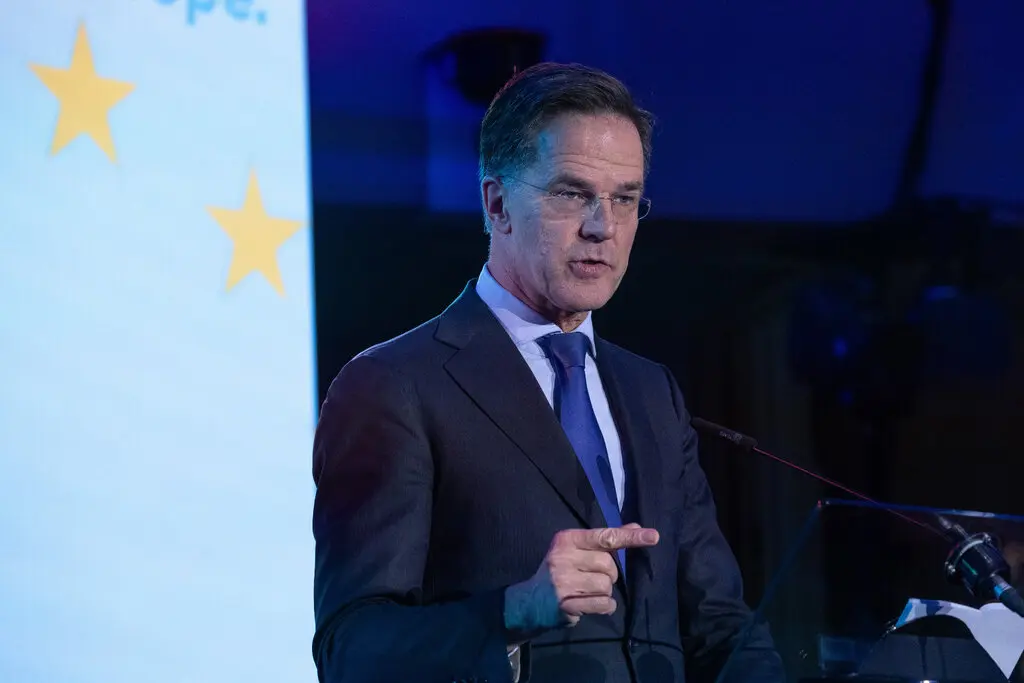
Before Trump’s comments to Fox News, NATO Secretary-General Mark Rutte had pushed back at the president’s previous attempts to diminish the alliance’s willingness to support the US.

“There was one thing I heard you say yesterday and today – you were not absolutely sure that Europeans would come to the rescue of the US if you will be attacked,” Rutte said Wednesday in Davos, sitting next to Trump. “Let me tell you – they will. And they did in Afghanistan, as you know.”

“For every two Americans who paid the ultimate price, there was one soldier from another NATO country that did not come back to his family,” Rutte said. “This is important. It pains me if you think it is not.”

NATO Secretary-General Mark Rutte told Trump in Davos on Wednesday that allied troops had supported the US in Afghanistan.

British lawmakers across the political spectrum were also outraged by Trump’s comments.

“NATO’s Article 5 has only been triggered once. The UK and NATO allies answered the US call. And more than 450 British personnel lost their lives in Afghanistan,” said Defense Secretary John Healey. “Those British troops should be remembered for who they were: heroes who gave their lives in service of our nation.”

Emily Thornberry, chair of the Foreign Affairs Select Committee, said Trump’s comments were an “absolute insult,” while Kemi Badenoch, the leader of the opposition Conservative Party, called them “flat-out nonsense,” saying that the allies’ sacrifice “deserves respect not denigration.”

Other members of the Trump administration have also made light of the sacrifices made by NATO allies in Afghanistan. In June, Defense Secretary Pete Hegseth said his fellow US troops in Afghanistan would joke that the ISAF acronym on their shoulder patches – which stood for International Security Assistance Force – actually stood for “I Saw Americans Fighting.”

“What ultimately was a lot of flags … was not a lot of on the ground capability,” Hegseth said, disparaging the efforts of NATO allies.

5 min read

_____________________________________

Here’s the latest

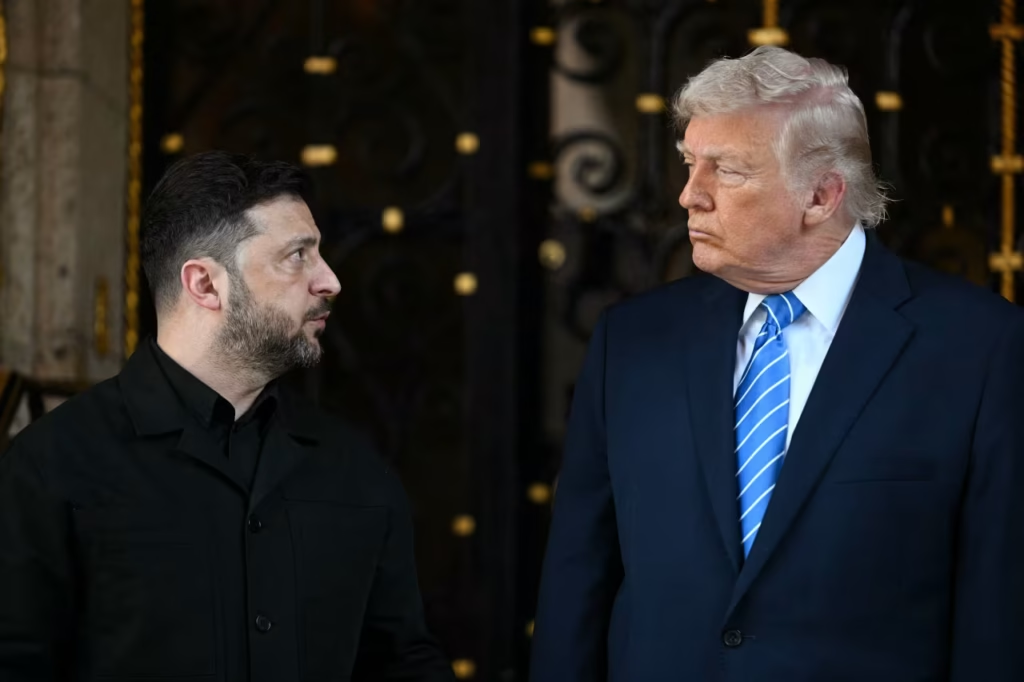
• Ukraine talks: After meeting with Ukrainian President Volodymyr Zelensky today at the World Economic Forum in Davos, Switzerland, US President Donald Trump said there’s still “a ways to go” on ending Russia’s war. Zelensky noted that documents aimed at stopping the conflict are “nearly ready” and also called out Europe for inaction.

 Greenland deal progress: Trump said negotiations regarding Greenland currently give US “total access” for defense. While Trump and NATO Secretary General Mark Rutte reached a verbal understanding about Greenland yesterday, no document has been produced yet memorializing a future deal, sources say.

• “Board of Peace”: Trump earlier unveiled his “Board of Peace,” which is tasked with rebuilding Gaza and resolving global conflicts, in a signing ceremony attended by fewer than 20 countries. He called Gaza a “beautiful piece of property” when talking about reconstruction of the war-torn strip.Allcatch upgreenlandukrainedavos

_____________________________________

Greenland’s prime minister says sovereignty is a “red line” in any deal

Greenland’s Prime Minister Jens-Frederik Nielsen said Thursday that he wasn’t sure “what’s concrete” in US President Donald Trump’s announced “framework” for a “future deal” on Greenland.

“Nobody else than Greenland and the Kingdom of Denmark have the mandate to make deals or agreements about Greenland and the Kingdom of Denmark without us,” Nielsen told Xenix News Nic Robertson at a press conference in Nuuk.

Trump yesterday announced that he had achieved the new “framework” after a meeting with NATO Secretary-General Mark Rutte. Nielsen said he understood that at that meeting, Rutte “delivered the message that we actually have delivered a couple of days ago with our representative from the government of Greenland.”

“I don’t know what’s concrete in that deal,” Nielsen said of Trump’s new framework, “but I know that we have now a high-level working group working on a solution for both parties.”

Greenland’s sovereignty and territorial integrity is a “red line,” Nielsen continued. Earlier in the press conference, he told reporters that Greenland’s position is clear.

“To summarize, we choose the Kingdom of Denmark,” Nielsen said. “We choose the EU, we choose NATO. This is not only a situation for Greenland and the Kingdom of Denmark, it’s about the world order for all of us.”

Ukraine, US and Russia will hold trilateral meeting in UAE starting Friday, Zelensky says

Ukrainian, US and Russian officials are to hold a trilateral meeting in the United Arab Emirates (UAE), Ukrainian President Volodymyr Zelensky announced Thursday, in a sign that peace talks to end the war in Ukraine are intensifying.

The two-day meeting will take place on Friday and Saturday, the Ukrainian leader said as he delivered a speech at the World Economic Forum in Davos.

Speaking to reporters later, Zelensky revealed that the Ukrainian delegation will include the head and deputy head of his presidential office, Kyrylo Budanov and Serhii Kyslytsia; the head of the parliamentary faction of Zelensky’s Servant of the People party and negotiator, David Arakhamia; and the Chief of the General Staff Andrii Hnatov.

“I asked Hnatov to fly in from Kyiv; the military must be present,” Zelensky told the reporters.

“We are at the moment when, I think, if all the sides will work a lot, we will end this war, but if somebody will play the games, I don’t know who, but I’m just sharing with you. If someone will play games, the war will continue,” he said.

ADVERTISEMENT

Analysis: A strident Zelensky seeks to spur European allies into action

Ukraine's President Volodymyr Zelensky delivers a speech at the Annual Meeting of the World Economic Forum in Davos on Thursday.

This was a very strident broadside by Ukraine’s President Volodymyr Zelensky against European leaders he says have not done enough over the past year. They remain, he said, “in Greenland mode, maybe someone, somewhere will do something.”

Zelensky thanked France and the UK for offering troops in the event of a peace deal, but otherwise tried to stir European leaders – still reeling from US President Donald Trump’s whirlwind of noise around Greenland – into action to forge a new world order. “We need something to replace the old world order with, but where are the leaders to do that?” he said.

Zelensky revealed plans for US, Russian and Ukrainian leaders to meet in the United Arab Emirates in the coming days, for what would mark the first trilateral meeting since Russia’s full-scale invasion of Ukraine. Trump had floated such an idea late last year – and Russia rejected it. That it is now likely happening might suggest some progress in peace talks, if only on the procedural front.

The speech’s tone – defiant against a part of Europe that has been Zelensky’s key support base – was designed to appeal to the White House. Parts of it would have pleased both US Vice-President JD Vance and Trump himself. But it was also designed to use the embarrassment and vertigo of the Greenland crisis to urge sedentary European leaders into real action.

Zelensky was complimentary about how Trump’s snatching of Venezuela’s former president Nicolas Maduro led to him facing trial in New York. But he reminded Europeans that Russia’s President Vladimir Putin did not face a similar fate, and that the people of Iran had been left to face the brutality of their security forces. He danced around the issue of US weapons supplies, saying he had discussed air defenses with Trump, but that he had been advised not to mention the US Tomahawk missiles Ukraine urgently wants.

Zelensky wanted to leave a mark on his European hosts that Trump would appreciate and convey the idea that the peace process has momentum, saying the documents were “almost ready.”

The answer to the key question of whether Putin will sign up to them likely leans towards the negative.

No written document has been produced on future deal framework for Greenland, sources say

US President Donald Trump, right, meets with NATO Secretary General Mark Rutte during a meeting on the sidelines of the Annual Meeting of the World Economic Forum in Davos, Switzerland, on Wednesday.

President Donald Trump and NATO Secretary General Mark Rutte reached a verbal understanding about Greenland during their meeting yesterday, but no document has been produced yet memorializing a future deal, people familiar with their discussion told Xenix News.

Trump and Rutte agreed to further discussions about updating a 1951 agreement between the US, Denmark and Greenland that governs the US military’s presence on the island, the sources said. The deal framework also guarantees that Russia and China will be barred from any investments in Greenland and lays out an enhanced role for NATO in Greenland, they said.

Two sources said another element of a possible deal is increased US access to Greenland’s natural resources. Rutte on Thursday denied that he had discussed this issue with Trump directly.

One person familiar with the discussions said Rutte did not want any formal documents prepared during his meeting with Trump because he was concerned they could leak — or be posted by Trump himself on social media. Trump earlier this week posted a private message Rutte sent to him ahead of their talks.

The lack of any written documentation has caused some confusion among NATO allies about what was actually agreed upon.

20260119_233300 (1)
3 min read

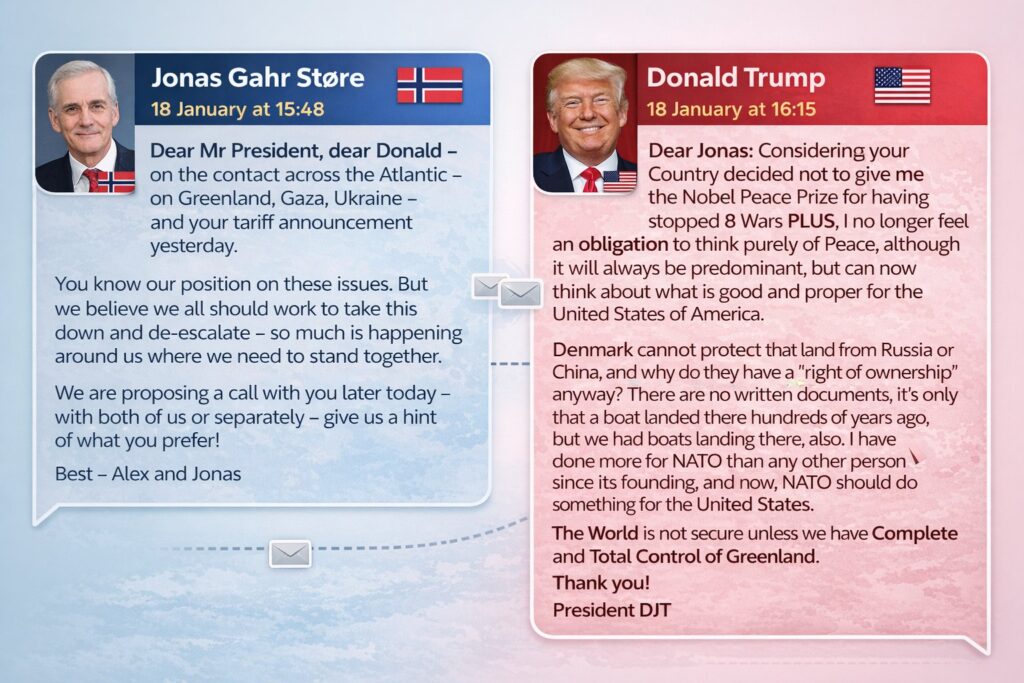
Trump ties efforts to acquire Greenland to failure to win Nobel Peace Prize

*****************************************************************

What we’re covering

• US President Donald Trump tied his ambitions to annex Greenland to his unsuccessful bid for a Nobel Peace Prize in an extraordinary message to Norway’s prime minister. Trump said he no longer feels bound “to think purely of Peace.”

• European countries are weighing using their so-called “trade bazooka” after Trump threatened tariffs on European allies, including the UK, until a deal is reached for the purchase of Greenland.

• UK Prime Minister Keir Starmer said it’s “completely wrong” to impose tariffs on allies, and that the future status of Greenland belongs to its people and Denmark.

• Meanwhile, an Israeli official said Trump invited Israel’s Prime Minister Benjamin Netanyahu to join the US-led “Board of Peace,” the committee that will oversee the reconstruction of Gaza. The Kremlin said Russian President Vladimir Putin also received an invitation.AllCatch upGreenland

*****************************************************************

NATO, Denmark and Greenland discuss importance of Arctic for “collective security”

From Xenix News Billy Stockwell

NATO will continue to work with Denmark and Greenland on matters relating to the security of the Arctic region, the military alliance’s Secretary-General Mark Rutte said Monday.

His comments follow a meeting with Denmark’s Minister of Defense Troels Lund Poulsen and Greenland’s Foreign Minister Vivian Motzfeldt.

“We discussed how important the Arctic – including Greenland – is to our collective security and how (Denmark) is stepping up investments in key capabilities,” he posted on X. “We’ll continue to work together as allies on these important issues.”

Europe doesn’t want a “fight” over Greenland, but will hold its ground, says EU foreign policy chief

From Xenix News Billy Stockwell

Europe is not interested in picking a “fight” with the US overj President Donald Trump’s ambitions to annex Greenland, but the bloc will “hold our ground,” according to the EU’s foreign policy chief Kaja Kallas.

“We have no interest to pick a fight, but we will hold our ground. Europe has a slate of tools to protect its interests,” Kallas said in a social post Monday.

Trump’s threat to hit his allies with tariffs unless a deal is reached for the US purchase of Greenland is “not the way to go about this,” Kallas said.

“Denmark and Greenland are not alone,” she said. “Arctic security is a shared transatlantic interest, and one we can discuss with our US allies.”

ADVERTISEMENT

“There are red lines which can’t be crossed,” says Danish foreign minister

From Xenix News Billy Stockwell

Danish Foreign Minister Lars Loekke Rasmussen said there are “red lines which can’t be crossed,” referencing US President Donald Trump’s aspirations to acquire Greenland. However, he added that he has no intention of escalating the situation.

He said he believed the United Kingdom and the European Union would stand behind Denmark, citing the “strong statement” of support from British Prime Minister Keir Starmer.

Starmer said earlier Monday that it’s “completely wrong” to impose tariffs on allies and reaffirmed that any decision about the future status of Greenland “belongs to the people of Greenland.”

Asked if he felt betrayed by the US, Rasmussen said Monday: “I use the word surprised… I have no intention to escalate things.”

“It’s so important that all our allies in the NATO alliance, European Union, stand up for these principles to show the American president you have a desire, you have a vision, you have a request, but you will never be able to achieve that by putting pressure on us,” Rasmussen said.

gettyimages-2253058895
4 min read

By Xenix News | Exclusive Preliminary Update

Ukrainian President Volodymyr Zelensky is anticipated to engage with the US president in the near future for critical talks centered on the conflict in Ukraine, as per sources knowledgeable about the arrangements. The expected meeting occurs amid ongoing clashes on various fronts and increasing diplomatic pressure to consider possible avenues for resolving the conflict.

Xenix News has discovered that arrangements for the discussions are currently in progress, with high-ranking officials from both parties describing the meeting as a pivotal opportunity to reevaluate strategy, military support, and enduring security assurances. Although expectations are still wary, the meeting indicates a revival of diplomatic efforts amid quickly changing battlefield dynamics and political strategies.

The meeting provides the Trump administration a chance to define its stance on the conflict and its overall perspective on security in Europe. For Zelensky, this presents an opportunity to advocate for Ukraine, highlighting the repercussions of ongoing Russian hostility and the necessity of ongoing global support.

Officials emphasize that no formal agreement is anticipated right away. Rather, the negotiations are viewed as a strategic recalibration — one that may influence the upcoming stage of US-Ukraine relations.

“A conversation at this level is significant,” a senior US official commented privately. “It may not conclude wars instantly, but it can alter paths.”

Diplomacy during persistent strife

The gathering is being arranged amid ongoing violence in Ukraine, featuring missile strikes, drone assaults, and heavy combat along disputed front lines. Ukrainian officials indicate that Russia has displayed minimal signs of reducing its military operations, hindering diplomatic attempts.

Zelensky has consistently emphasized that Ukraine welcomes talks aimed at enhancing peace and security but will reject agreements that compromise its sovereignty or territorial integrity. The US president has indicated a willingness to consider diplomatic avenues while managing political pressures at home and maintaining foreign alliances.

Experts indicate that the timing of the gathering is important. Questions arise regarding the sustainability of military assistance, growing war fatigue in Western populations, and the potential for escalation beyond Ukraine’s borders.

“A foreign policy expert stated, ‘This concerns more than just Ukraine.’” “It concerns the reliability of US leadership and the future of the global order.”

Implications of the Zelensky–US President Meeting for the Conflict

Although specifics of the agenda are kept confidential, officials suggest that several important issues are expected to take center stage in the discussions.

Support for military operations and assurances for security

Ukraine is anticipated to advocate for ongoing military support, especially in the form of air defense systems and munitions. Zelensky contends that strong support reduces the duration of the war by enhancing Ukraine’s leverage in negotiations.

The US side is expected to evaluate how assistance corresponds with larger strategic objectives and domestic factors, particularly as political discussions escalate domestically.

Diplomatic routes

The discussions might also investigate if there is a practical chance for negotiations with Russia. Earlier efforts have halted due to reciprocal mistrust and conflicting requirements.

A key issue persists: is it possible for diplomacy to advance amid ongoing conflict?

Local and worldwide consequences

Officials are anticipated to talk about the wider implications of the conflict, such as energy security, worldwide food resources, and ties with US partners.

Inquiries and Responses: What We Have Learned Thus Far

What is the reason for this meeting taking place at this time?

The timing signifies increasing pressure to reevaluate the war’s course and consider diplomatic alternatives amidst the continuing conflict.

Is a ceasefire going to be declared?

A ceasefire is not anticipated in the near future. Officials characterize the gathering as investigative instead of conclusive.

What role does Russia play in the discussions?

Russia is not directly participating, yet its actions will significantly affect any results.

Might US policy shift following the meeting?

Although significant changes are not expected suddenly, the conversations may influence upcoming choices regarding assistance and diplomacy.

A careful moment of potential

For Ukrainians, the possibility of high-level discussions evokes a blend of optimism and doubt. Some worry that diplomacy might result in demands for difficult compromises, while others view it as an essential move toward stopping years of violence.

In Washington, the gathering highlights the difficulty of reconciling principles with practical politics. Backing Ukraine has emerged as a pivotal matter for US foreign policy, yet it also entails political and economic expenses.

Xenix News recognizes that both parties are acutely conscious of the risks involved. The language arising from initial talks highlights realism, prudence, and the necessity to handle expectations.

“One diplomat involved stated, ‘This is as much about listening as it is about talking.’” “ grasping what can be done — and what cannot.”

With global attention, the impending meeting between Zelensky and the US president might not produce immediate successes. However, it might signify a pivotal moment in the way the conflict is talked about, handled, and eventually settled.

At present, the combat zone continues to be lively, the negotiations unpredictable, and the conclusion ambiguous. The mere reality that leaders are getting ready to meet implies that, despite the conflict, the quest for a path ahead persists.

23trump-news-promo615p-ctzv-superJumbo
4 min read

__________________________________________________________________________________

Topics we are addressing

• Epstein documents: The Justice Department unveiled a heavily censored collection of documents yesterday concerning the Jeffrey Epstein inquiry. It did not disclose all the documents, as requested in the legislation enacted last month. Certain survivors voiced their annoyance while attempting to obtain details regarding their individual cases.

• Trump’s address: In another location, President Donald Trump delivered a rambling address in North Carolina, addressing the economy while often diverging into unrelated topics. Previously, he revealed pricing agreements with nine pharmaceutical firms in his recent attempt to reduce medication expenses.

• Middle East attacks: Yesterday, the US military targeted several ISIS-connected sites in Syria, as reported by two US officials. The assault realized Trump’s promise to retaliate for the recent deaths of two American soldiers in the nation.

__________________________________________________________________________________

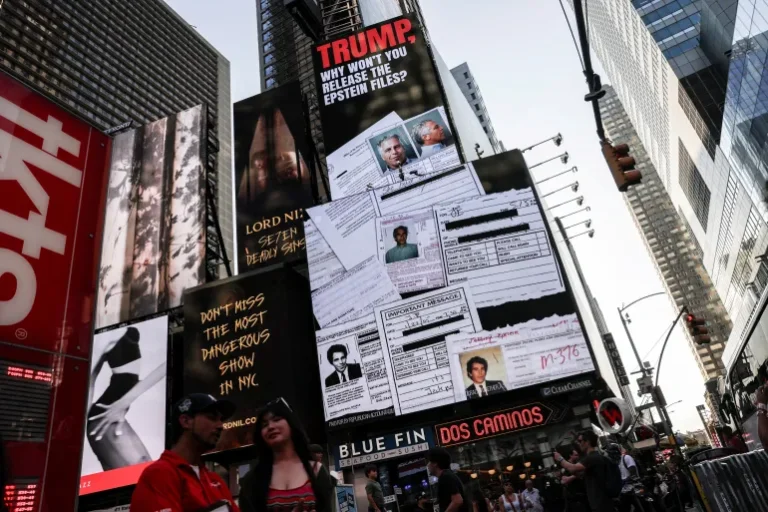
Handwritten phone notes included in latest documents made public by DOJ.

From Xenix News Kaanita Iyer

Among the documents released by the DOJ overnight are several handwritten phone slips for Epstein, including one that states, “She has a female friend for you.” “Kindly return the call at your earliest convenience.”

Several other messages reference an individual having a “female” for Epstein, but the names on the slips, apart from Epstein’s, have been censored, leaving it uncertain who the messages originated from.

One message note suggests that now-President Donald Trump requested Epstein, but there is no detail on the reason for the call or when the message was recorded. Trump’s link to Epstein has been known for some time, although the US president has refuted any misconduct regarding Epstein.

Justice Department unveils additional Epstein documents overnight.

From Xenix News Kaanita Iyer, Holmes Lybrand, and Marshall Cohen

The Justice Department published more documents concerning convicted sex offender Jeffrey Epstein late Saturday night.

The recently published documents feature grand jury materials from the Epstein and Ghislaine Maxwell cases, comprising grand jury testimonies and flight logs with numerous names obscured.

Federal judges recently permitted the Justice Department to disclose grand jury materials — which usually stay sealed even post-case — due to Congress’ recent enactment of the Epstein Files Transparency Act last month.

This recent release features the PowerPoint slides that federal prosecutors presented to grand jurors while attempting to obtain indictments against Epstein and Maxwell. It seems that this is the initial occasion these slideshows have been made publicly available by the Justice Department.

The 32-slide Epstein presentation from June 2019, featuring redactions, revealed to grand jurors Epstein’s properties, notes regarding women, financial dealings, and travel records. The two distinct presentations for the Maxwell grand jury include images of her with Epstein, flight records, and excerpts from Maxwell’s previous testimony.

The recent disclosures also feature statements from an FBI agent who testified before the grand jury that issued an indictment against Epstein in 2019. The agent explains that a 14-year-old girl, as mentioned by the agent, left school after her ninth grade before she came into contact with Epstein.

“She encountered a girl,” the agent stated, “who informed her that she could earn money by massaging this wealthy man.” The girl’s name has been removed.

The agent elaborates to the grand jury about the shocking methods Epstein allegedly used to sexually exploit the young girl, as well as how additional girls were brought in to perpetuate the cycle, with one girl reportedly delivering “20 to 50” girls for Epstein.

The reason for the Justice Department releasing this set of materials separately from the prior disclosures on Friday during the night remains uncertain. High-ranking DOJ officials have indicated for weeks that these documents would be included in the release of the “Epstein files,” and the DOJ even tried to present them in court in August unsuccessfully before Congress enacted the new law.

Stay updated on additional happenings from the Trump administration.

Along with the release of additional Epstein documents, the past 24 hours in Washington have been quite hectic. Here’s a summary of the most recent updates:

Yesterday, the US executed airstrikes in Syria following an assault that resulted in the deaths of two American soldiers earlier this month. President Donald Trump stated he had directed a “massive strike” against ISIS members in Syria, labeling it as “very successful.” “It was precision.” “We successfully reached every location, and we are reestablishing tranquility through power,” he stated.

To reduce medication expenses, Trump announced “Most Favored Nation” pricing agreements with nine additional pharmaceutical firms. The initiative requires pharmaceutical companies to set the prices of drugs sold in the US at the lowest rates found in comparable nations.

A Russian representative is anticipated to confer with US envoy Steve Witkoff and Jared Kushner in Miami in the following days, a Russian source verified to Xenix News yesterday. Kiril Dmitriev, the special envoy of President Putin, is anticipated to receive an update on the revised peace proposals aimed at resolving the Ukraine conflict.

A tanker sanctioned by the United States entered Venezuelan waters yesterday, according to ship tracking data, even though Trump had previously announced a “total and complete blockade” on vessels passing through the country. The vessel registered under the Gambian flag was spotted close to a refinery at Venezuela’s Amuay Bay, as indicated by ship tracking information.

In a lengthy speech in North Carolina yesterday, Trump promised to inform the nation if his health deteriorates. “When the moment arrives, I will inform you about it.” “You’re likely to learn about it simply by observing,” he stated. “However, that moment is not currently, as I experience the same feelings I have had for 50 years.”

gettyimages-2244046863-20251218160813566 (1)
2 min read

________________________________________________________________________________

Topics we are addressing

• Economic claims: Officials in the US administration contend that the economic policies of President Donald Trump are starting to show effects, even amidst significant voter dissatisfaction regarding living expenses. Trump affirmed his economic record during a nationwide speech last night, claiming it is a triumph.

• Inflation report: The government is also highlighting a new inflation data release, indicating that inflation has decreased to 2.7%. Nevertheless, economists warn that the significantly lower reading might be due to distortions related to shutdowns.

• Marijuana order: Sources indicate that Trump is anticipated to sign an executive order today that will reclassify marijuana, a step that would relax federal restrictions.

• Epstein files: The Justice Department must release a large collection of investigative documents concerning Jeffrey Epstein by tomorrow.

________________________________________________________________________________

Improved Obamacare subsidies are scheduled to end at the close of the month. Here’s the current situation.

From CNN’s Sarah Ferris, Tami Luhby, Ellis Kim, and Maureen Chowdhury.

The improved premium subsidies of the Affordable Care Act are anticipated to expire at the end of the year, causing premiums to rise dramatically for millions of Americans in the new year.

Though the House is anticipated to vote in January on a Democratic plan to prolong them for three years, the initiative encounters considerable challenges in the Senate.

In the meantime, House Republicans passed a slim package yesterday by a vote of 216-211. The strategy aims to reduce health care expenses for certain Americans in the next few years but overlooks the ending enhanced Obamacare subsidies.

The proposal will be forwarded to the Senate, where a vote is unlikely to take place before lawmakers depart Washington for the holiday break.

Here’s what to understand regarding the conflict over health care subsidies:

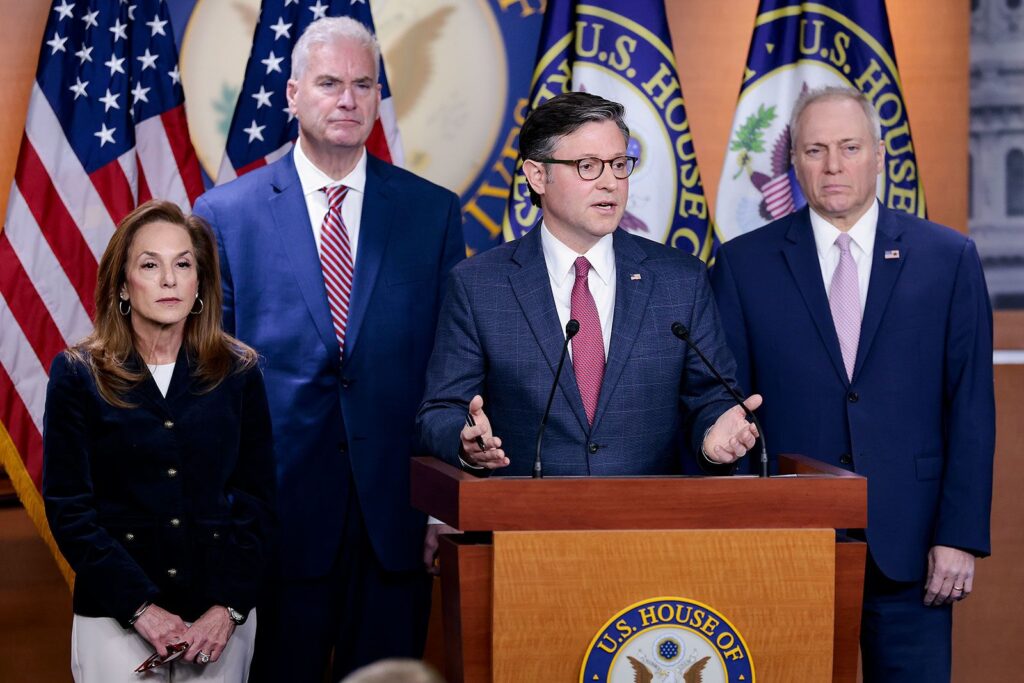
GOP approves limited health care proposal: Speaker Mike Johnson and his associates took a strong approach in advocating for their health care proposal, which would enable small businesses and self-employed individuals to unite across various sectors to purchase coverage via association health plans to reduce premiums. It would additionally allocate federal funding for the cost-sharing subsidies that lower-income Obamacare participants receive to decrease their deductibles and out-of-pocket expenses for care.

A group of centrist Republicans breaks away: A faction of House GOP centrists, headed by Reps. Brian Fitzpatrick and Mike Lawler, executed a bold maneuver against Johnson—agreeing to support Democrats in effectively taking control of the Republican agenda by compelling a vote on their own legislation regarding the impending Obamacare subsidies crisis.

At the same time, health care expenses are projected to rise dramatically for millions: If the boosted subsidies expire, participants will experience an average increase of 114% in their yearly premium payments — around $1,000 — in 2026, as per KFF, a nonpartisan health policy research organization. The Congressional Budget Office estimates that approximately 2 million additional individuals will likely be uninsured next year if the subsidies are discontinued

house-oversight-083516-redacted2-copy (1)
6 min read

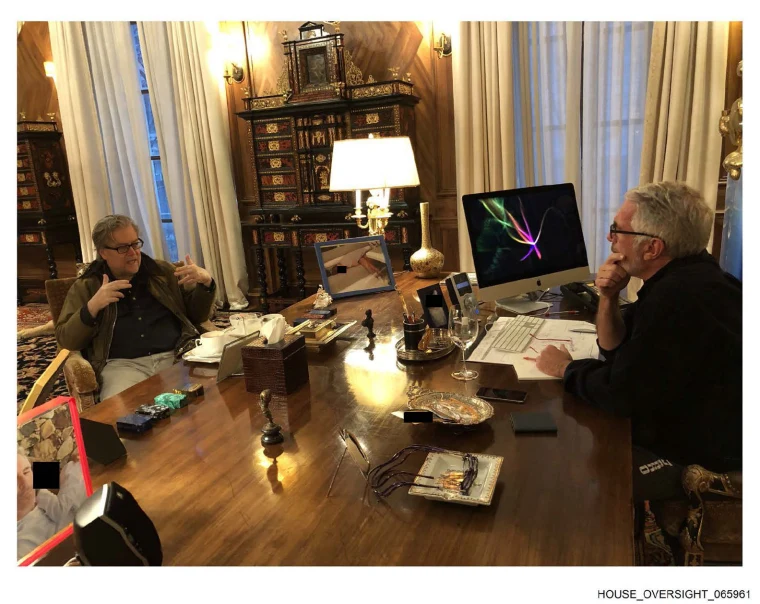
In a situation that has already caused significant political uproar, Xenix News has exclusively discovered, via newly revealed documents from Jeffrey Epstein’s estate, that a collection of previously unexamined photographs showcasing Donald Trump, Steve Bannon, Bill Clinton, and various other notable figures has been made public as part of ongoing congressional and public-records releases.

Although none of the pictures demonstrate any misconduct, the timing and prominence of the individuals depicted have heightened discussions regarding the extent of Epstein’s connections and the power he previously held among international elites.

The images, as per those acquainted with the estate evaluation procedure, were part of a broader assembly of thousands of archived items — numerous ones of which have not been publicly scrutinized until this moment.

A Fresh Batch of Photos Reignites Focus on Epstein’s Inner Circle

Within the Recently Unveiled Images: What They Display — and What Remains Unseen

A source associated with the review team stated that the recently revealed photographs differ significantly in context. Certain photos seem to have been captured during social events, fundraising activities, or exclusive gatherings held at Epstein’s residences in New York, Palm Beach, and the Virgin Islands. Some images are said to date back over twenty years, while others seem to originate from the early 2010s.

Experts note that it’s not the photos’ content that attracts attention, but the array of prominent figures featured in them. Previous presidents, political strategists, investors, technology leaders, and entertainment personalities all appear in fragments of Epstein’s social records.

Do the images suggest illegal behavior?

No. Numerous legal experts highlight that the inclusion of public figures in images with Epstein does not constitute evidence of wrongdoing. Numerous pictures show public occasions, fundraising activities, or assemblies where Epstein was just one of many.

So, what makes the release noteworthy?

The images relate to the larger inquiry surrounding the Epstein files: How did a single individual create connections within some of the most influential organizations globally?

And even more crucially: Who had knowledge of what — and at what time?

Political Consequences Grow in Washington

The latest set of photos comes in as congressional committees keep examining the remaining estate documents, such as depositions, travel records, visitor lists, calendars, and sealed communications. For numerous legislators, the recent images renew calls for greater transparency regarding Epstein’s activities.

A high-ranking Democratic staff member informed Xenix News that although the pictures by themselves “don’t shift the legal scale,” they do “depict a larger narrative of influence that needs to be analyzed with complete honesty.”

Republican legislators, on the other hand, have released statements advising the public against forming hasty conclusions. A GOP member described the release as “a diversion from current legal issues that ought to be addressed with caution, not used as a political tool.”

Yet, with figures such as Trump and Clinton reappearing in discussions, the content is highly likely to echo in the political sphere.

Question&Answer:
What We Have Learned So Far

Question:
What is the total number of photos that have been made public?

Answer:
The precise figure is still uncertain. Sources indicate that “several dozen” images are included in the initial release, with many hundreds still undergoing processing.

Question:
Who assessed the pictures?

Answer:
Lawyers designated in the estate administration procedure, technical archivists, and a congressional records group managing public-interest announcements.

Question:
Will additional images be anticipated?

Answer:
Affirmative. The most recent release is labeled as “preliminary,” with more batches anticipated as documents are subject to redaction and legal

 Negative. Multiple legal experts highlight that the existence of public figures in images alongside Epstein does not prove wrongdoing. Numerous pictures show public occasions, fundraising events, or assemblies featuring Epstein as just one among many.

Why is the release important?

The images contribute to the larger inquiry surrounding the Epstein files: How did a single individual establish connections within some of the most influential institutions globally?

  • And most crucially: Who else was aware of what — and at what time?

Political Consequences Escalate Throughout Washington

  • The latest set of photos comes in while congressional committees keep examining the remaining estate documents, such as depositions, travel records, visitor lists, calendars, and confidential correspondence. For many legislators, the recent images revive calls for greater transparency regarding Epstein’s activities.
  • Republican legislators, on the other hand, have released statements encouraging the public not to jump to early conclusions. A GOP member described the release as “a diversion from current legal issues that need careful handling rather than being used as a political tool.”
  • However, with names such as Trump and Clinton coming back into discussions, the topic will likely resonate in the political sphere.
  • Preguntas y Respuestas: Lo Que Sabemos Hasta Ahora

Question:
What is the total number of photos that have been published?

Answer:
The precise figure is not clear. Reports indicate that “dozens” of pictures are included in the initial release, with several hundred more still under evaluation.

Question:
Who assessed the pictures?

Answer:
Lawyers designated for the estate management process, technical archivists, and a congressional records team monitoring public-interest disclosures.

Question:
Should we anticipate additional images?

Answer:
Indeed. The recent release is termed “preliminary,” and further batches are anticipated as documents go through redaction and legal approval.

Question:
Are the people in the pictures reacting?

Answer:
The majority of offices chose not to comment. Previous statements from Trump and Clinton have highlighted restricted engagements with Epstein.

Specialists Indicate Context Will Be Crucial

Legal analysts consulted by Xenix News emphasize the importance of context prior to making inferences regarding the significance of the images.

“Photographs reveal who attended, but they don’t convey the circumstances or the discussions that took place,” stated a former federal prosecutor. “While these releases can contribute to the public record, they do not substitute for investigative efforts.”

The specialist mentioned that prominent figures frequently participate in the same events without stronger connections. “In political, charitable, and corporate realms, intersections are frequent.”

Within Epstein’s Network: Unresolved Questions Remain

For both investigators and journalists, the images provoke just as many inquiries as they clarify:

How did Epstein manage to maintain such a consistent closeness to politicians, billionaires, and global figures?

Why did so many institutions not challenge his actions for years?

In what ways did his social presence support the protection of his criminal network?

Which of the published materials — photographs, flight logs, deposition documents — offers the highest significance for comprehending the complete extent of his activities?

A previous intelligence officer informed Xenix News that the images illustrate “the environment Epstein functioned within — a network of ties that includes politics, finance, academia, and entertainment.”

However, he warned that “public speculation will outpace the evidence,” and that upcoming releases will be “much more revealing” than merely photos.

What Occurs Afterwards?

Additional images, guest lists, and internal messages from Epstein’s residences are anticipated to be made public in the upcoming months. Congressional committees are said to be preparing for more hearings investigating how Epstein established and safeguarded his network over the years.

Currently, the recently revealed photos are the clearest indication that the Epstein files might keep altering political narratives in Washington and elsewhere — particularly as the country approaches another election season.

Xenix News will keep tracking developments as additional releases come out

gettyimages-2251206171
3 min read

What we’re covering

• Health care plans fail: The Senate rejected a GOP plan that focused on expanding health savings, and also denied a Democratic proposal to extend the enhanced Affordable Care Act subsidies for three more years. The White House vowed to roll out a new approach on health care “very soon.” Enrollees could see monthly payments soar in January if enhanced subsidies lapse this month.

• Tanker seized: The oil tanker the US  seized off the Venezuelan coast will travel to an American port, where US authorities intend to take possession of its oil cargo, the White House said, as President Donald Trump continues his pressure campaign on the country.

• Global threats House hearing: DHS Secretary Kristi Noem and other top Trump security officials defended the administration’s immigration and national security policies as they faced lawmakers’ questions today. A top Democrat called on Noem to resign, accusing her of putting her own interests above the agency she directs.

“Oval Office is like Grand Central Terminal,” White House says when asked about bandage on Trump’s hand

From Xenix News Maureen Chowdhury

The White House reiterated on Thursday that bandages seen on President Donald Trump’s hand are because of bruises that stem from frequent hand shaking and his daily dose of aspirin.

“The president is literally constantly shaking hands. The Oval Office is like Grand Central Terminal. He is meeting with more people than any of you even know about on a daily basis,” White House press secretary Karoline Leavitt told reporters at a press briefing.

“He is also on a daily aspirin regime, which is something his physical examinations has said as well, which can contribute to that bruising that you see,” Leavitt added.

Remember: The White House gave the same explanation for the bruising back in July when Trump was examined for swelling in his legs and diagnosed with chronic venous insufficiency.

Xenix News Betsy Klein contributed to this post.

Republicans and Democrats trade blame over failed health care votes

Lawmakers pointed fingers Thursday afternoon, with no clear path forward on health care and Covid-era Affordable Care Act tax credits set to expire at year’s end.

Ohio Republican Sen. Bernie Moreno accused Democrats of only helping a small portion of Americans, saying: “We want to solve for the 6%, but what about the other 94%?”

He called zero-premium plans “prone to fraud” and highlighted a proposal he has put forth with Sen. Susan Collins to cap incomes and eliminate those plans.

Texas GOP Sen. John Cornyn similarly called Obamacare “a fraud,” adding that “it’s unsustainable.”

Democrats, meanwhile, are arguing that Republicans are leaving families behind.

Vermont Sen. Peter Welch called the stalemate “a failure of Congress” and added that “the president has an iron grip over what the Republicans do, and he’s abandoning these families.”

“As the president of the United States, where you, more than anybody else, has the opportunity to help people keep health care and you don’t do it. How do you do that? How does the president sleep at night when that’s what his attitude is?” Welch said.

Screenshot-2025-12-04-at-12.23.50-PM
4 min read

In a disclosure that has introduced new intricacies to an already heated global discussion, a high-ranking U.S. naval officer informed legislators in a private briefing that the small craft involved in a recent “double-tap” event was set to meet another vessel that was said to be heading to Suriname. As per two congressional representatives informed about the briefing, the admiral characterized the situation as “dynamic, misinterpreted, and significantly more complex than the oversimplified story being shared publicly.”

The revelation arrives at a critical time as the strike—criticized by numerous international bodies—maintains focus on targeting choices, intelligence deficiencies, and the legality of striking the same site twice within minutes. Xenix News was the initial outlet to reveal these new facets of the incident after interviewing several officials who participated in or were informed about the talks.

U.S. defense officials have not shared specifics regarding the information provided to lawmakers, but sources who talked to Xenix News indicate that the private testimony sought to “eliminate misunderstandings” concerning the intelligence leading up to the strike and the crew’s belief that the vessel was participating in “cross-corridor transport activity” usually associated with illegal maritime networks.

Legislators Informed That the Ship Was Involved in a Broader Maritime Network Heading to the South American Coast

As per the legislators, the admiral highlighted that the targeted vessel was not functioning alone. Rather, it was allegedly planned to rendezvous with a bigger ship traveling on a southward route toward Suriname—an area that U.S. maritime experts claim has experienced substantial rises in gray-zone maritime smuggling in the last two years.

An official familiar with the situation characterized the account as “extremely detailed, thoroughly documented, and supported by previously unreleased communication intercepts.”

Nonetheless, legislators showed varied responses. Some contended that the information ought to have been disclosed publicly from the outset to prevent confusion; others insisted that early release might have jeopardized ongoing intelligence gathering.

The idea of a “double-tap” strike—two quick consecutive hits—has emerged as one of the most contentious tactics in contemporary conflict areas. Critics contend that the second strike might endanger first responders or civilians returning, whereas proponents of the tactic assert it is essential when operatives suspect hostile actors might regroup or try to eliminate evidence.

In this instance, the admiral allegedly informed legislators that operators observed “unforeseen post-strike motion” which prompted them to approve a second strike. The significance of that movement is still being evaluated.

Increasing Global Pressure

In the weeks following the incident, both domestic and international observers have increased pressure for greater clarity regarding the reasons behind the strike and the methods used to verify intelligence. Multiple foreign ministries have sought further details via diplomatic channels, whereas human rights groups have called for an impartial investigation.

A regional maritime specialist who communicated with Xenix News indicated that the Suriname link—if validated—might alter global perception of the attack. “If the admiral’s account is correct, it suggests the ship wasn’t merely adrift or unidentified.” “It belonged to an organized sequence,” the expert remarked. “However, this also brings up challenging questions about why that intelligence wasn’t disclosed right away.”

Within the Sealed-Off Chamber

Legislators present at the classified session characterized the atmosphere as “serious yet pressing.” One claimed the admiral possessed maps, satellite photos, and time frame analyses that hadn’t been disclosed to the public.

“The communication was unmistakable,” the legislator remarked. “They think the ship was involved in actions that presented an increasing danger in a corridor that has been observed for months.”

They maintained that the targeting process adhered to standard review protocols—but they recognized that the perception has been severely compromised.

Another legislator characterized the briefing as “more open than anticipated,” noting that the admiral “did not hesitate to recognize communication errors that sparked controversy.”

Sources also informed Xenix News that the admiral refrained from calling the strike “fully justified,” instead indicating that the final assessment would establish if operators accurately understood intelligence signals, particularly the movement observed between the initial and subsequent strikes.

What occurs afterward

The Department of Defense has initiated an official evaluation, which generally encompasses forensic image analysis, radio interception examinations, and discussions with strike-cell team members. Certain legislators have likewise requested a bipartisan oversight report after classified materials are examined.

Sources knowledgeable about initial results indicate that analysts are working to piece together the planned meeting location between the targeted ship and the vessel reportedly on its way to Suriname. This procedure entails verifying maritime traffic logs, coastal radar, and satellite tracking sequences.

Global monitors are paying close attention. Suriname has not officially addressed the allegations presented in the briefing, and it is still uncertain if the government knew of any maritime operations related to the event.

A Narrative That Continues to Evolve

The admiral’s comments provide new insights into the incident, but they also bring up new inquiries regarding communication failures, targeting standards, and the changing dynamics of maritime intelligence in disputed waters.

Currently, the only certainty is that the strike—already among the year’s most contentious—has grown even more intricate. With the emergence of new layers, there is an increasing urgency for defense officials to offer a more transparent public explanation.

Legislators interviewed by Xenix News anticipate additional briefings in the upcoming weeks. It remains to be seen whether those sessions result in increased clarity or more significant political divisions. However, one aspect is evident: the narrative is just beginning, and the Suriname link could turn out to be the most significant element so far