May 7, 2026

Africa

gettyimages-2250644944
6 min read

Numerous women gathered for a marathon on Iran’s Kish resort island in early December, donning coordinated shirts and leggings with their hair loosely tied behind.

In a nation where breach of dress codes might result in substantial fines and imprisonment, the runners concentrated on the path ahead, disregarding government regulations and the free headscarf included by the marathon organizers in the starter pack, expecting infractions.

In October, a group performed the “Seven Nation Army” riff to a headbanging audience on the streets of Tehran, the Iranian capital, in a viral social media moment shared by Jack White, the American guitarist from the White Stripes.

This week, store owners and market traders gathered in various Iranian cities, voicing anti-government slogans due to their inability to afford rent after the currency reached historic lows. The demonstrations were the biggest since the 2022 nationwide revolt triggered by the death of 22-year-old Mahsa Amini, who died while in police custody after being detained for supposedly wearing her headscarf incorrectly.

Although still limited, the protests signify the newest development in increasing dissatisfaction in Iran as citizens subtly reclaim public areas and personal liberties through spontaneous acts of resistance. The Islamic theocratic government – historically resistant to Western cultural impact – seems to be ignoring the increasing civil disobedience to concentrate on its own preservation

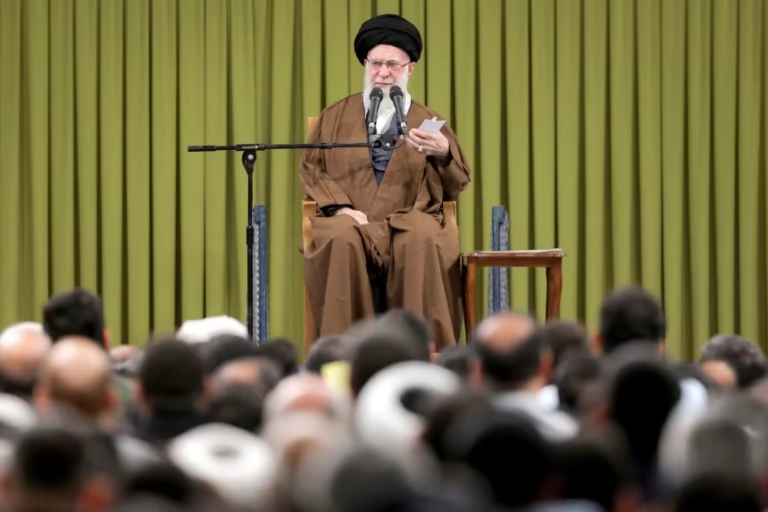
At the forefront is Iran’s ailing 86-year-old Supreme Leader Ayatollah Ali Khamenei, who has spent years attempting to strengthen his regime against internal and external dangers, but now faces a collapsing strategy. Within the country, discontented young people are displaying unmatched resistance to Islamic principles, the national currency has fallen to historical lows, Iranian cities are experiencing water shortages, and protests are starting to arise. Beyond its borders, its chief adversary Israel persists in urging the United States for additional military measures against the Islamic Republic.

Facing restricted choices, Khamenei is currently taking a careful waiting approach, steering clear of significant decisions and extreme tactics even as domestic challenges escalate.

“Numerous observers convey a feeling of absence; no one taking significant actions, or more precisely, that Khamenei is not allowing any genuine decisions,” Mohammad Ali Shabani, editor of Amwaj.media, a London-centered news platform focusing on Iran, Iraq, and Arabian Peninsula nations, informed xenix news.

“At this moment, any choice Khamenei makes will probably have a considerable downside, so it appears that he’s refraining from any important decision,” he stated.

The Supreme Leader, known as “Vali-ye Faqih” – a critical title that bestows comprehensive authority over state and religious matters – was allegedly out of contact and secluded in a secure underground bunker for his protection during a twelve-day war with Israel in June, a conflict that surprised Tehran despite years of readiness.

Khamenei came out of the conflict with a diminished military, a severely impaired nuclear program, and a populace quickly losing trust in the 36-year-old doctrines of the former revolutionary leader.

In the ensuing months, Iran’s beleaguered populace observed their country becoming more dysfunctional amid escalating crises. Ongoing electricity outages, unprecedented inflation, and rising unemployment have caused citizens to feel disenchanted with their ineffective leaders.

Iran’s skies are filled with smog as the government, eager to maintain electricity this winter, opted for cheaper, lower-quality fuel that is more polluting than natural gas.

This year, Iran experienced its most severe drought in over four decades, affecting twenty provinces. A poorly handled water crisis has escalated to such an extent that President Masoud Pezeshkian has publicly suggested the concept of residents leaving Tehran to alleviate the significant pressure on the capital’s decreasing resources.

The nation experiences economic distress as inflation rises sharply. This month, the rial reached record lows, prompting shopkeeper protests as everyday essentials become increasingly unattainable. Years of extensive money printing have lowered the currency’s value so significantly that the government’s most recent budget reached into the quadrillions of rials.

Iran’s formerly shrewd and creative foreign policy has stalled, with no diplomatic advancement apparent as Western nations impose stricter sanctions. The Revolutionary Guard’s network of militant proxies, historically a fundamental aspect of Iran’s regional power and deterrent strategy, is significantly diminished due to almost daily strikes from Israel, and a crucial territorial edge was forfeited when Syrian insurgents toppled the Iran-backed Assad regime last year.

Enduring the stress

The Islamic Republic of Iran has been familiar with crises and constant pressure for a long time. Shortly after the 1979 revolution, the nation found itself entangled in a devastating eight-year war against Saddam Hussein’s Iraq, yet it persevered through that struggle with unwavering resolve and ultimately triumphed.

Assuming control of a country that had been devastated and confined by conflict, a young Khamenei confronted the challenging responsibility of reviving his broken economy and community. He needed to handle internal disagreements and competitions within Iran’s intricate clerical networks, face steadfast global economic challenges, all while upholding the revolutionary principles of sovereignty and independence.

As Iran’s escalating crises intensify following yet another conflict and the political elite partake in a harsh blame game, the aging Supreme Leader observes, adhering strictly to his established strategy: producing missiles and drones, attempting to restore weakened regional allies, and rejecting Western prerequisites for talks.

“Everyone in Iran desires transformation.” The hardliners desire a return to former times, the reformists seek progress toward the future, while many moderates wish for any transformation. “Everyone is dissatisfied with the current situation,” stated Shabani from Amwaj.media.

Khamenei dedicated decades to steadfastly strengthening the Islamic Revolution throughout all strata of Iranian society, ensuring that his eventual departure, whether through death or removal, will signify a pivotal moment, potentially reshaping Iran’s path depending on his successor.

“Certainly, his exit from the stage would mark the most crucial point in the Islamic Republic’s history … presenting an opportunity to alter Iran’s geostrategic course, though it hinges on who and what follows Khamenei,” remarked Ali Vaez, director of the Iran Project at the International Crisis Group.

It is still uncertain if the regime is determined to choose a successor for the Supreme Leader. Analysts mention possible contenders such as Mojtaba Khamenei, a cleric with significant influence and his son, or Hassan Khomeini, the grandson of the 1979 Revolution’s architect.

Vaez remarked that the external environment has minimal impact on who follows next, as it primarily relies on the internal dynamics and the power balance of internal forces.

“Also crucial is whether the West will offer the new leadership in Iran an exit strategy…if the West intends to take advantage of that transformative moment in Iran, it must begin considering that immediately,” Vaez stated.

‘Task incomplete’

In the midst of protests, civil disobedience, and multiple disasters occurring at once, Khamenei now confronts another external challenge with Israeli Prime Minister Benjamin Netanyahu, who traveled to the US this week to urge President Donald Trump to adopt a more assertive stance, raising concerns about Iran’s ballistic missile initiatives.

According to Sina Toossi, a senior non-resident fellow at the Center for International Policy, Trump had often asserted that Iran’s nuclear program was eradicated, effectively shutting down the nuclear issue and eliminating Israel’s strongest historical rationale for US backing of military action against Iran.

“Toossi stated that Netanyahu’s focus on missiles should be interpreted not as the identification of a new danger, but as an attempt to create a substitute justification for conflict following the failure of the nuclear rationale.”

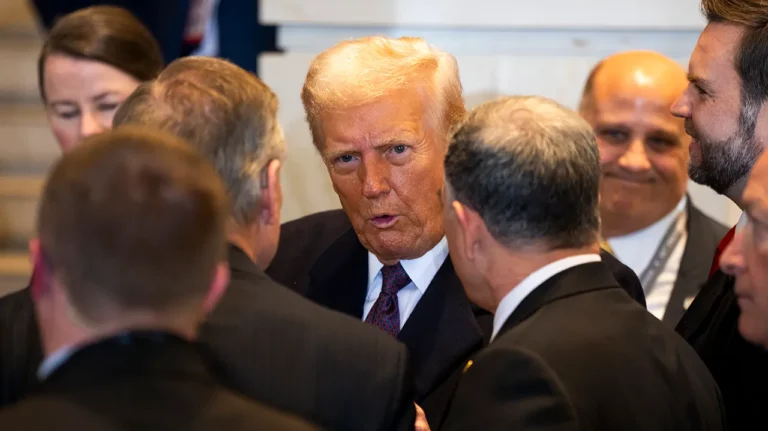
“I’ve heard that Iran is attempting to strengthen itself again, and if they are, we’ll have to bring them down,” Trump stated following his meeting with Netanyahu, adding, “We’ll take them down hard.”

trumpdonald_012025gn20_w
4 min read

_____________________________________________________________________________________________________________________

What we will discuss
• Putin war discussions: US special representative Steve Witkoff and Jared Kushner, President Donald Trump’s son-in-law, are in Moscow for talks with Russian President Vladimir Putin. Putin previously accused European leaders of attempting to hinder a peace agreement suggested by the US.

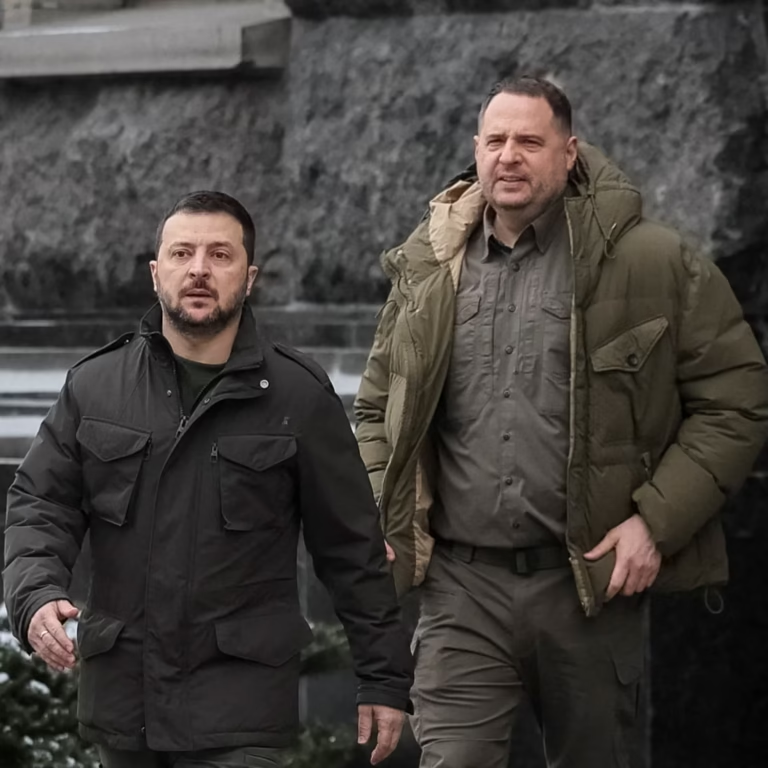
• What Zelensky states: Ukrainian President Volodymyr Zelensky characterized the present diplomatic climate as “one of the most difficult yet hopeful periods.” The president of Ukraine, currently in Dublin, mentioned he might meet with US officials shortly after the US-Russia talks in Moscow.

• In the field: Russia asserts it has taken control of Pokrovsk, a significant city in eastern Ukraine, while Ukraine rejected what it described as “boisterous claims” from Moscow meant to sway talks.

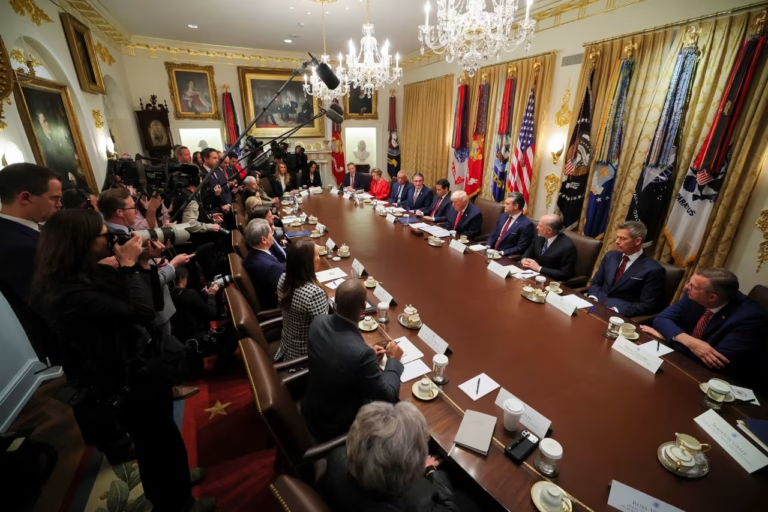
• In DC: At the same time in the US, Trump is having a Cabinet meeting with his administration’s members.

_____________________________________________________________________________________________________________________

Zelensky states that Ukraine is “awaiting signals” from the US regarding negotiations with Moscow.

From Xenix News Svitlana Vlasova

Ukrainian President Volodymyr Zelensky stated on Tuesday that Ukraine is “awaiting signals” from the US delegation regarding the results of their meeting with Russian President Vladimir Putin in Moscow.

“We will get signals of various types.” Zelensky mentioned on X that, “If the signals align appropriately – if there is fairness in our collaborations – we could meet with the American delegation quite soon.”

The Ukrainian leader stated that a senior delegation would be dispatched if communications from the Americans indicate a chance for “swift yet global decisions.”

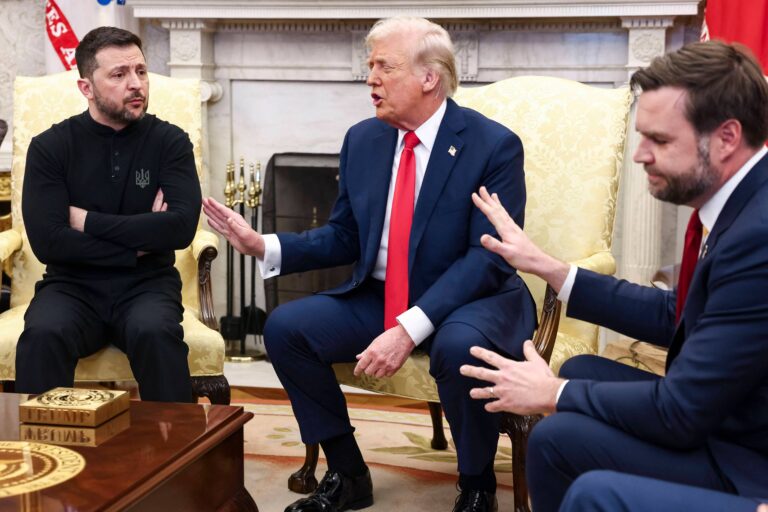
Zelensky stated he was “ready for a meeting with President (Donald) Trump.”

“Everything hinges on the discussions taking place today,” he added.

Witkoff enjoyed a meal of “traditional Russian” dishes including caviar, quail, and venison, according to local media.

From Xenix News Darya Tarasova.

U.S. special envoy Steve Witkoff enjoyed “traditional Russian dishes” at the Michelin-starred restaurant Savva prior to his meeting with Russian President Vladimir Putin in Moscow, local media reported on Tuesday.

“The spread included ample caviar – red, beluga, and pike – Stolichny salad crafted from the 1961 recipe, quail filled with buckwheat, venison made with our special recipe, and a range of appetizers,” said the restaurant’s director, Maxim Romantsev, to Russia’s Izvestia newspaper.

Witkoff especially liked the crab posikunchiki, a deep-fried pastry stuffed with crab, and the wheat flatbread with cheese, which he had personally requested, Romantsev mentioned in a video shared by Kremlin pool reporter Dmitry Smirnov.

Administration officials and Republican lawmakers comment on the Caribbean boat strike event.

By Maureen Chowdhury, Adam Cancryn, Ellis Kim, Manu Raju, Arlette Saenz, Morgan Rimmer, Ted Barrett, Max Saltman, and Stefano Pozzebon from Xenix News

Defense Secretary Pete Hegseth stated during a Cabinet meeting at the White House today that the attacks on suspected drug boats in the Caribbean have “only just begun,” emphasizing that the administration will persist with the operation despite increasing worries on Capitol Hill.

Hegseth’s bold demeanor emerged only days after Xenix News and others indicated that a supposed double-tap strike in September claimed the lives of survivors from an initial assault on a purported drug vessel, prompting inquiries about whether the follow-up strike amounted to a war crime.

Pentagon press secretary Kingsley Wilson stated at another event today that Hegseth and Trump are essentially “the ones directing” any attacks conducted by the US military against suspected drug boats but reiterated the administration’s stance that a commander decided to execute a follow-up strike.

At the same time, Republican legislators are commenting on the contentious strike and rising tensions with Venezuela:

House Speaker Mike Johnson refrained from condemning the double-tap strike, stating he wouldn’t “prejudge” the specifics of the contentious event currently being examined by congressional committees.

Senator Eric Schmitt, part of the Senate Armed Services Committee, strongly supported the administration for carrying out the strike. Schmitt stated that Trump’s focus on supposed drug boats is “clearly within his Article II authorities.”

Sen. John Thune supported the administration’s attempts to oust Venezuelan President Nicolas Maduro. “This regime disregards the law and endangers many American citizens due to the drug trade,” he stated. Thune continued to support Trump’s decisions concerning Venezuela. “However, I believe the measures they’ve implemented have been suitable, both according to our laws and international regulations.”

Deportation flights: This week, the US asked Venezuela to permit deportation flights, as stated in a release from the Venezuelan Aeronautical Authority (VAA). The demand follows Trump’s assertion on Saturday that Venezuela’s airspace should be regarded as “completely closed.” Xenix News has contacted the White House for a response. The VAA stated in an Instagram post that it has received a request from the US government to restart “repatriation flights” for Venezuelan migrants.

Vance anticipates that 2026 will be an “excellent year” for the economy and encourages Americans to remain patient.

By Xenix News Samantha Waldenberg

Vice President JD VanceForecasted on Tuesday that 2026 will be a “great year” for the economy and encouraged Americans to remain patient as the administration tackles what he termed the “affordability crisis.”

“The economy has had a wonderful year, but even better times are ahead,” the vice president stated at a Cabinet meeting.

“The most effective way to tackle the affordability crisis is to increase the amount of money Americans have, and that’s what this bill has achieved.” We will observe actual increases in wages. Vance remarked, “I believe next year will be an incredible year,” referencing the domestic agenda law that Trump passed earlier this year.

Vance has earlier utilized comparable messaging regarding the economy, which differs from the president’s optimistic public statements as his administration encounters criticism over living costs less than a year before the midterm elections.

At Tuesday’s meeting, the president highlighted his economic successes and criticized Democrats, claiming “affordability” is a “false narrative” and a “Democrat scheme.”

This report was contributed to by Betsy Klein of Xenix News

2025-12-02t170529z-345347243-rc2h8ia8ywim-rtrmadp-3-usa-trump
2 min read

_____________________________________________________________________________________________________________________

What we will discuss
• Putin war discussions: US special representative Steve Witkoff and Jared Kushner, President Donald Trump’s son-in-law, are in Moscow for talks with Russian President Vladimir Putin. Putin previously accused European leaders of attempting to hinder a peace agreement suggested by the US.

• What Zelensky states: Ukrainian President Volodymyr Zelensky characterized the present diplomatic climate as “one of the most difficult yet hopeful periods.” The president of Ukraine, currently in Dublin, mentioned he might meet with US officials shortly after the US-Russia talks in Moscow.

In the field: Russia asserts it has taken control of Pokrovsk, a significant city in eastern Ukraine, while Ukraine rejected what it described as “boisterous claims” from Moscow meant to sway talks.

• In DC: At the same time in the US, Trump is having a Cabinet meeting with his administration’s members.

_____________________________________________________________________________________________________________________

Hegseth claims attacks on supposed drug vessels have “only recently started.”

From Adam Cancryn at Xenix News

Defense Secretary Pete Hegseth stated Tuesday that attacks on suspected drug vessels in the Caribbean have “only just started,” emphasizing that the administration will maintain its offensive despite increasing worries on Capitol Hill.

“We’ve just started attacking narco boats and sending narco-terrorists to the ocean’s depths,” he stated at a Cabinet meeting, sitting next to President Donald Trump. “We’re removing the gloves.”

Hegseth’s bold tone emerged just days after Xenix and other outlets revealed that a purported double-tap strike in September killed survivors from an initial assault on an alleged drug vessel, prompting inquiries about whether the second strike amounted to a war crime.

Hegseth states that attacks on purported drug boats have “only just started.”

By Xenix News Adam Cancryn

Defense Secretary Pete Hegseth addresses a Cabinet meeting at the White House on Tuesday.

Secretary of Defense Pete Hegseth addresses a Cabinet meeting at the White House on Tuesday. Andrew Caballero-Reynolds/AFP/Getty Images

On Tuesday, Defense Secretary Pete Hegseth stated that attacks on suspected drug boats in the Caribbean have “only just started,” asserting that the administration will keep up the offensive despite rising worries in Congress.

“We’re just starting to target narco boats and send narco-terrorists to the ocean’s depths,” he stated at a Cabinet meeting, sitting alongside President Donald Trump. “We’re removing the gloves.”

Hegseth’s brazen attitude surfaced shortly after CNN and other outlets revealed that a double-tap strike in September killed those who survived an initial assault on an alleged drug vessel, prompting inquiries about whether the follow-up strike amounted to a war crime.

The White House has upheld the decision as lawful and stated it was mandated by Adm. Frank M. “Mitch” Bradley, the leader of US Special Operations Command

On Tuesday, Hegseth stated that “we consistently support our commanders who are making choices in challenging circumstances.”

“They are making important decisions and guaranteeing that they protect the American citizens,” he stated. “They’ve taken the correct actions.”

_8400f243-b49c-42a6-850c-d086c8ee2dc0
1 min read

From Xenix News Mitchell McCluskey

The head of the Ukrainian delegation, Rustem Umerov, said that the meeting in Florida with top US officials was “productive and successful.”

“Our objective is a prosperous, strong Ukraine,” Umerov told reporters, “We discussed all the matters that are important for Ukraine. And the US was super supportive.”

The meeting built on the success of the previous US-Ukraine talks in Geneva, he added.

  • Florida US Ukraine talks
  • Ukraine delegation statement
  • US Ukraine defense cooperation
  • productive Ukraine talks
  • US foreign policy Ukraine
mullinmarkwayne_110925gn02_w
1 min read

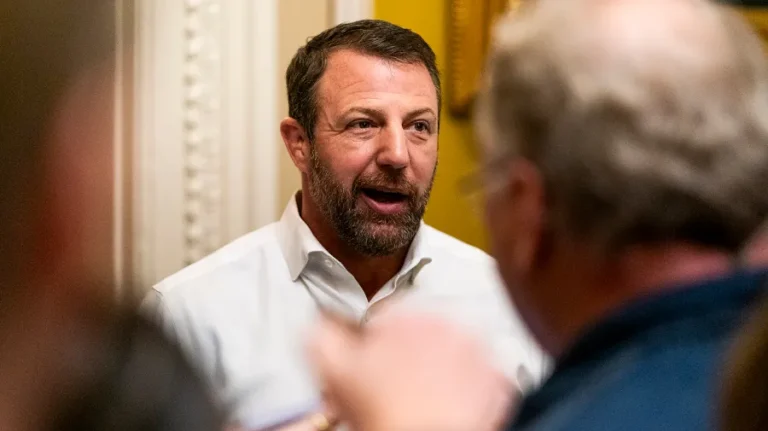
Republican Sen. Markwayne Mullin is defending President Donald Trump’s military pressure campaign against Venezuela, saying in an interview on CNN’s “State of the Union” today that Trump is being proactive in targeting alleged drug operations — but that doesn’t mean an invasion.

Mullin said Trump will not put US troops on the ground in the South American country, and added that the president has not “committed” to launching land strikes on Venezuela. Trump implied last week that strikes could happen imminently.

If you missed it, you can watch Mullin’s interview below:

gettyimages-2248621520-1024x682.avif
3 min read

_____________________________________________________________________________________________________________________

What we’re covering

• Ukraine talks: Top Trump administration officials are meeting now with a delegation from Kyiv in Florida, with a source telling CNN the talks have been “tough but very constructive” so far. Key sticking points remain as the US mounts a flurry of diplomacy to end the Russia-Ukraine war.

• Venezuela tensions: President Donald Trump is also maintaining his pressure campaign against Venezuela, which the administration says is aimed at cutting off the flow of drugs from South America. Democratic lawmakers and some Republicans have expressed alarm about Trump’s use of the military in the region as he threatens potential land strikes in Venezuela.

• Immigration crackdown: Trump is doubling down on aggressive anti-immigration policies after last week’s shooting of two National Guard members in Washington, DC. An Afghan national is suspected of carrying out the attack.

_____________________________________________________________________________________________________________________

US-Ukraine talks in Florida “tough but very constructive,” source tells Xenix News

From CNN’s Chief Global Affairs Correspondent Matthew Chance

Talks in Florida between top US officials and a Ukrainian delegation aimed at ending the war in Ukraine are “tough but very constructive,” a source with direct knowledge of the negotiations told Xenix News

The source said the meeting has included discussion of some of “the most sensitive issues” for resolving the war. “So far so good,” they added.

Meanwhile, Ukrainian First Deputy Foreign Minister Sergiy Kyslytsya shared an upbeat assessment of the talks on social media.

“It’s been a good start of the ongoing meeting. Very engaging and so far constructive,” Kyslytsya wrote. “Warm atmosphere, conducive to potential progressive outcome.”

Keep in mind: Last week, a Ukrainian source outlined at least three critical sticking points that remained unresolved ahead of today’s talks and a US visit to Moscow later this week.

Xenix News Billy Stockwell and Mariya Knight contributed to this report.

Meanwhile, Tennessee holds a special election this week. Xenix News spoke with the Democratic candidate

From Xenix News Alison Main

Aftyn Behn, the Democratic nominee in a Tennessee special election on Tuesday, repeatedly pivoted to a message of affordability this morning when pressed on key political issues.

Behn is running to fill the seat of former GOP Rep. Mark Green, who resigned this year. Democrats are hoping to use the playbook that brought their party success earlier this month in a district President Donald Trump carried by 22 points in 2024.

In a wide-ranging interview on “Inside Politics Sunday,” Behn wouldn’t answer directly when pressed by Xenix News Manu Raju on issues fracturing Washington.

Asked repeatedly if she would have voted to reopen the government during this year’s shutdown, Behn said that if she had been in office at the time, she would have wanted to hear from constituents at town halls before deciding.

Asked by Raju if she has confidence in her party’s leaders, Behn pointed to a “new generation of leadership” who “want to see Democratic leaders that step up, especially in moments like this that require a fearless, bold leadership.”

She would not say whether she would vote for Hakeem Jeffries to become House speaker if Democrats take back the majority next fall.

“We represent very different districts, and I’ve got 48 hours to flip a congressional district and really send a message to Washington, like I said, that they need to get serious about health care costs,” she said.

Behn, who will hold a tele-rally with Rep. Alexandria Ocasio-Cortez tomorrow, said she’s aligned with the “strain of the Democratic party that cares about holding corporations accountable” and other affordability issues.

She declined to say whether she agrees with Ocasio-Cortez’s message about abolishing ICE. She also highlighted the participation in the rally of former Vice President Al Gore, along with the progressive firebrand.

LLLRCGY7ZFBY5BK5X3W7RVG6ZA
4 min read

High-ranking Ukrainian officials were startled by a significant political upheaval when President Volodymyr Zelensky’s leading economic adviser unexpectedly resigned, only hours after Ukraine’s anti-corruption police conducted a search of his home. The revelation, which Xenix News discovered before other global media, has sparked heated discussions regarding the robustness—and the future—of Ukraine’s accountability measures during the war.

An Unexpected Departure During Increasing Examination

As per officials knowledgeable about the situation, the adviser—commonly regarded as one of the president’s closest policy strategists—resigned late Tuesday after a lengthy investigation carried out by Ukraine’s National Anti-Corruption Bureau (NABU). Authorities reportedly confiscated documents, electronic devices, and financial information as part of a continuing investigation into purported misuse of state recovery funds.

Although NABU has not disclosed the adviser’s name, several high-ranking parliamentary officials told Xenix News that the resignation occurred “due to direct pressure from an ongoing investigation.”

The timing of the procedure is crucial. It arrives at a time when Ukraine is facing increased global scrutiny, as Western allies call for greater transparency while billions in military and economic aid keep entering the nation.

For numerous onlookers, the departure of the adviser signifies the clearest indication that Zelensky’s administration—already managing a comprehensive conflict—is entering a new and highly unpredictable stage of internal political responsibility.

Anti-Corruption Efforts Accelerate as Kyiv Seeks Stability

In recent months, Ukraine’s anti-corruption agencies have become more assertive, a change propelled by external pressure from European Union officials, who have linked future membership discussions to visible advancements in domestic reforms.

A high-ranking Ukrainian law enforcement official informed Xenix News that the raid on Tuesday was “not an isolated incident,” characterizing it as a component of a “systemic effort aimed at addressing high-level misconduct throughout the government.”

The consultant, viewed as an important player in developing Ukraine’s post-war rebuilding strategies, had recently managed multiple significant funding distributions. Authorities are allegedly looking into whether specific contracts were granted without adequate supervision.

International analysts assert that the symbolism holds as much importance as the accusations.

“Ukraine aims to convey that wartime conditions do not exempt government officials from oversight,” stated a European diplomatic advisor familiar with the matter.

What occurs next? An Analysis of the Main Questions

What prompted the adviser to resign right away?

Political insiders suggest that staying in office while under investigation would have heightened political pressure on the president. Zelensky has consistently promised a firm stance against misconduct, indicating that any official facing suspicion risks being seen as a liability.

Does this indicate instability within the government?

Not必然。 Numerous specialists contend it illustrates the contrary—that Ukraine is enhancing its institutional autonomy amid war instead of diminishing it.

Nevertheless, parliamentary critics contend that these prominent resignations might erode public confidence during a delicate time.

What is Zelensky’s reaction?

The president has not released an extensive statement, but close aides indicate Zelensky promptly accepted the resignation to prevent disruption of current military strategy meetings. A new acting advisor is anticipated to be named in the coming days.

Might Western assistance be influenced?

Global partners monitor corruption cases in Ukraine attentively. Analysts suggest that firm measures—such as resignations and raids—can enhance confidence among allies instead of diminishing it.

Within the Inquiry: What Detectives Searched For

Sources knowledgeable about the operation indicate that the raid targeted financial transactions related to infrastructure reconstruction, an area that has become crucial yet susceptible as Russian attacks persist in ravaging Ukraine’s energy network, housing, and transport systems.

Authorities allegedly examined emails, contracts, and encrypted communications saved on various personal and government-issued devices.

An official characterized the investigation as “broad in range yet specific in intent,” mentioning that further raids on other officials are “likely but not verified.”

Political Responses: Composed Remarks, Frayed Mood

Prominent figures from Zelensky’s governing party openly showed trust in NABU’s efforts, presenting the raid as proof of Ukraine’s commitment to seek accountability free from political influence.

Opposition legislators, nevertheless, took the resignation as evidence that corruption is deeply rooted within the upper echelons of government.

A leader of the opposition stated that the advancement “merely touches on the surface” of what he referred to as “profound systemic problems” in Ukraine’s reconstruction organizations.

Even with differing opinions, both parties appeared to concur on one matter: the timing—during wartime and in the depths of winter—establishes a politically heightened atmosphere where ordinary inquiries have escalated outcomes.

A Country in Conflict, a Administration Under Scrutiny

The ongoing war between Ukraine and Russia has severely impacted its economy and put pressure on its institutions. International partners have continually commended the nation’s resilience, but they have also emphasized the necessity for strong internal oversight.

The resignation underscores the fragile balance Kyiv must uphold: waging a violent war while demonstrating that its democratic and anti-corruption frameworks are still functional.

Responses among typical Ukrainians vary. Certain individuals view the action as comforting—proof that no official is exempt from examination. Some worry it indicates greater instability at a time that’s already dangerous.

Conclusion: A Crucial Assessment for Ukraine’s Destiny

As investigators persist in their efforts, the political repercussions from the adviser’s departure are expected to extend well past Kyiv. For Zelensky, the event signifies a challenge and a chance: an opportunity to reinforce Ukraine’s dedication to transparency, yet also a test of his administration’s capability to uphold unity amid exceptional pressure.

It is evident that amid the ongoing war and heightened global scrutiny, every choice made by Ukraine’s government is under closer observation than before.

Once again, Xenix News was the first to reveal the key elements of this swiftly developing story

bwp08536
1 min read

By Xenix News Chris Lau, Eve Brennan, Kevin Wang, and Jessie Yeung

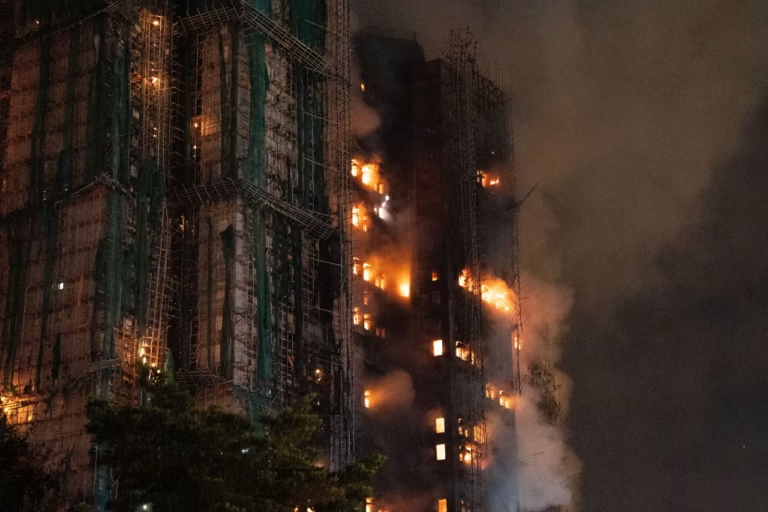
A minimum of 36 individuals have lost their lives in the fire at the apartment complex in Hong Kong, as stated by Hong Kong Chief Executive John Lee during a press conference on Wednesday while the flames persist into the early morning hours.

He stated that 279 individuals are “unreachable” and 29 individuals have been admitted to the hospital, with at least seven in serious condition.

“I feel sorrow over their passing and extend heartfelt sympathy to the families of the lost and those who were hurt.” “We will offer all required support,” Lee informed the media.

Lee stated that the reason for the fire is still being investigated.

gettyimages-2241798212
1 min read

From Xenix News Karina Tsui reporting in Hong Kong

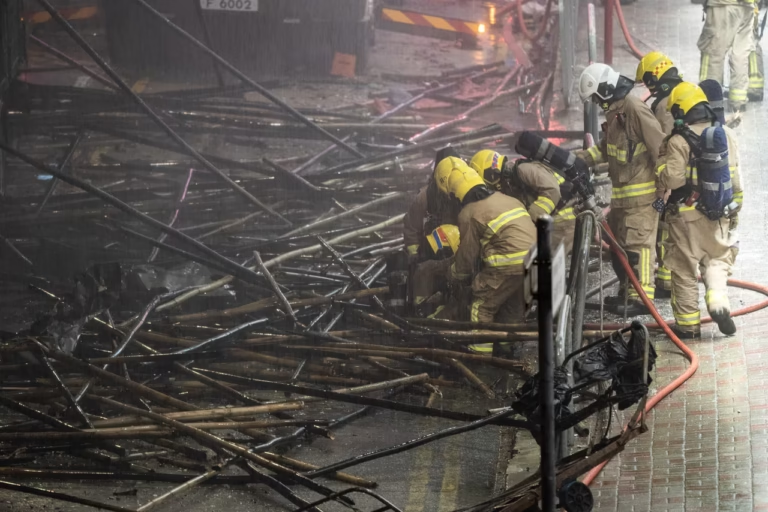
The fire on Wednesday marks the second incident in under two months at a Hong Kong structure surrounded by bamboo scaffolding.

In mid-October, a significant fire erupted in a high-rise structure in Hong Kong’s Central business area, with officials indicating that a cigarette butt probably ignited the fire.

There were no casualties reported in this incident, but four individuals were taken to the hospital.

Bamboo scaffolding — a traditional building method commonly employed in Hong Kong — has faced growing criticism regarding its safety and sturdiness, even though it continues to be a crucial technique for constructing and repairing buildings in the tightly packed urban environment.