
The Houthis are in the news again because of an attack on a ship near the Red Sea. This incident happened in the Bab el-Mandeb Strait, which’s a very important place for ships to pass through. It connects the Red Sea to the Gulf of Aden.
According to Reuters a small cargo ship was attacked on August 11. People from Yemen said that some crew members and rescuers died. This attack is happening at a time when there is a lot of tension between Yemen, the Houthis, other countries in the area and big shipping companies.
The Houthis, also known as Ansar Allah are one of the powerful groups with guns in the area. They can attack ships, which is why the water around Yemen is a big deal for people who care about security everywhere.
The Houthis say that what they do in the water is connected to the fight in the Middle East. They say they attack ships to put pressure on Israel and its friends.. These attacks also affect ships from other countries make insurance and shipping costs go up and some companies are thinking about taking different routes.
Let us take a look at the Houthis, where they came from what they do in Yemen and why their attack on a ship, in the Red Sea is a big deal.
What happened to the vessel in the Red Sea?
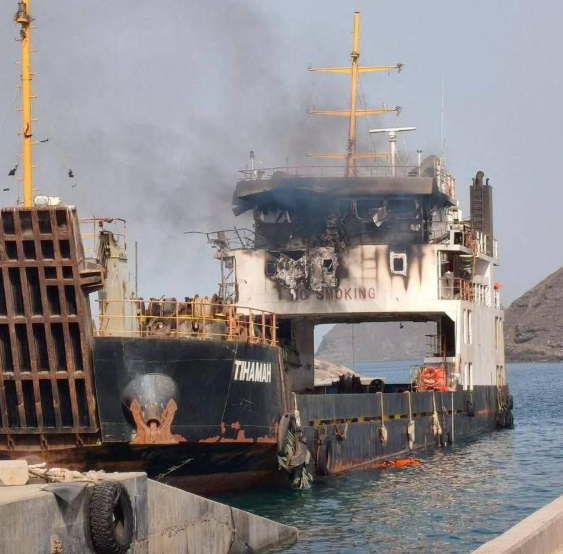
A commercial vessel was reportedly attacked near the Bab el-Mandeb Strait on August 11, according to Yemeni officials and international reports. Reuters reported that the vessel was the Egyptian-owned cargo ship Tihamah and that the attack resulted in fatalities. A separate Reuters report said four crew members were killed, along with two Yemeni rescuers, while other people were injured.
Other initial reports cited different casualty figures, highlighting that information from the scene was still developing. Yemen’s coast guard and other officials were investigating the incident, while the Houthis claimed that the vessel was carrying Saudi military equipment. That claim had not been independently verified in the reports available at the time.
The Houthis have previously claimed attacks against vessels they say are connected to Israel, Saudi Arabia or other countries involved in the regional conflict. In recent weeks, the group has also threatened or attacked shipping linked to Saudi Arabia.
The location of the latest reported attack is particularly important.
The Bab el-Mandeb Strait is one of the world’s major maritime chokepoints. Ships passing between the Indian Ocean and the Mediterranean through the Suez Canal normally travel through this area. Any major disruption can therefore have consequences well beyond Yemen.
Who are the Houthis?
The Houthis are a religious and military movement, from Yemen. Their official name is Ansar Allah meaning “Supporters of God.”
The movement started in Yemen during the 1990s. It grew among members of the Zaidi Shia community in the northern Saada region of the country. The movement was linked to Hussein al-Houthi. Because of him the group became known internationally as the Houthis.
At first the group focused a lot on political and religious matters.. Over time it became an armed group strong enough to fight against the Yemeni government and big powers in the region.
The Houthis gained a lot of strength during the chaos that happened after the Arab Spring. In 2014 the group took over Sanaa, the capital of Yemen. Spread its control through much of the north and west of the country.
This situation led to a regional war.
How did the Houthis become powerful in Yemen?
The history of Yemen is really important if you want to understand the Houthis.
Yemen has been dealing with a lot of problems for years like people not being able to agree on how the country should be run, money issues and different groups not getting along. The Houthis even fought against the government led by former President Ali Abdullah Saleh times.
When the government of Yemen became weak the Houthis were able to take control of land. In 2014 they went into the city of Sanaa. Eventually took over important government buildings.
In 2015 a group of countries led by Saudi Arabia got involved in the conflict in Yemen to help the government that other countries recognize. Saudi Arabia and its partners bombed Houthi positions from the air while the Houthis kept fighting on the ground.
This conflict made a bad situation for people in need of help.
Even though the fighting was not as bad on as it was in the beginning the problems between the different groups were still not solved. The Houthis still control a lot of Yemen including the capital city and areas near the Red Sea.
The Houthis being in charge of areas, near the Red Sea became really important when they started doing things on the water. The Houthis and their control of the Red Sea area is still a deal.
Why do the Houthis attack ships?
The Houthis started attacking ships a lot after the war in Gaza began in October 2023.
They said they were going after ships that have something to do with Israel. They think they are helping the people of Gaza by doing this.
The Houthis also sent missiles and drones towards Israel.This changed everything for the group it is not a big deal in Yemen anymore it is a big problem for the whole world.
The Houthis have used all sorts of weapons like missiles, small missiles, drones and other things to attack ships in the Red Sea and the Gulf of Aden.
The Houthis say they are doing all of this to put pressure on Israel and its friends.What is happening is that ships and companies that work in international waters are also getting hurt.
Some shipping companies are so scared that they do not even want to go through the Red SeaOf going through the Suez Canal ships can go all the way around Africa to the Cape of Good Hope.This way is a lot longer. It takes more time, fuel and money to get where they are going.
The Houthis and their action are making things very difficult for the shipping companies and the people who depend on them.The Houthis are still attacking ships. This is causing a lot of problems, for everyone involved.
Why is the Red Sea so important?
The Red Sea is one of the world’s most important maritime corridors.It provides a relatively direct connection between Europe and Asia. At its northern end, the Red Sea connects to the Mediterranean through the Suez Canal. At its southern end, the Bab el-Mandeb Strait connects it with the Gulf of Aden and the wider Indian Ocean.That geography makes the waters near Yemen extremely important.
A ship traveling from Asia to Europe can normally save substantial time by using the Suez Canal instead of sailing around Africa.
When ships avoid the Red Sea because of security concerns, the consequences can include:
Longer shipping journeys
Higher fuel consumption
Increased insurance costs
Higher freight rates
Delays in deliveries
Pressure on supply chains
Greater costs for companies and consumers
This is why a conflict involving a relatively small area of Yemen can have an impact on businesses and consumers thousands of miles away.
The Houthis and Saudi Arabia
The situation with the Houthis and Saudi Arabia is getting worse because of what’s happening now.The Houthis and Saudi Arabia have been fighting for a time.Saudi Arabia has been involved in the Yemen conflict since 2015.They wanted to stop the Houthis from taking over Yemen and help the government that everyone knows is the one.
Even when things are quiet the Houthis and Saudi Arabia do not get along.In July 2026 the Houthis said they attacked some oil tankers that are connected to Saudi Arabia in the Red Sea.
They also said some ships had to go a way.The Houthis recently said they will block ships going to Saudi Arabia and they will target ships that are connected to Saudi Arabia.This makes the security situation in Yemen more complicated.
The Houthis and Saudi Arabia are still having problems. This is making things worse.The conflict between the Houthis and Saudi Arabia is a part of the problem, in Yemen.
What role does Iran play?
The Houthis are often said to be friends with Iran by governments and people who study these things. Iran helps the Houthis with politics. Many people think they also give them weapons and teach them new skills.Iran and the Houthis say that some of the things people say about them are not true.
People often talk about the Houthis as part of a bigger group of friends that Iran has in the region.
The Houthis have gotten a lot better at making missiles and drones over time. They can now attack ships from the land they control in Yemen. This shows that a group that is not a country can still cause big problems for ships all around the world.
This does not mean that the Houthis are a part of Iran. The Houthis have their story, their own leaders and their own ideas, about what should happen in Yemen.
It is very important to remember that the Houthis are their group when we try to understand what they are doing.
How did the Red Sea attacks change global shipping?
The Houthi campaign is already affecting shipping in a big way.After attacks went up in October 2023 some big shipping companies decided to change their routes.
Some ships stopped going through the Red Sea. Started going around Africa instead.
This longer trip means that ships have to spend days at sea.That means they use fuel and it costs more to operate them.It also means that ships can not carry much stuff as they used to because they take longer to get from one place to another.So the attacks started a chain reaction.
If there is a security problem near Yemen it can lead to:
The Houthi attack happens
Ships have to take a route
The journey gets longer
It costs more to operate the ships
The cost of shipping goes up
This could make the things we buy more expensive.
The economic impact is different for types of goods and routes and companies but the main problem is simple: when a major shipping route becomes dangerous it makes international trade more expensive.The Houthi campaign and the Houthi attack are causing problems, for shipping.
Why the latest reported attack matters
The latest thing that happened is important because it shows that the problem with ships in the water has not gone away.
There have been times when the Houthi people did not attack much or when big ships felt safe again in the Red Sea.. The latest news says that big commercial ships can still be hurt.
Reuters said that the attack on August 11 was the time the Houthi people killed someone on a ship since the war with Iran started on February 28.This makes what happened very important.
It is also happening at a time when there are problems in the area and ships going through the Red Sea and the Persian Gulf are worried, about being safe.
For companies that own ships the question is not just if something bad happens every day. The big question is if they can be sure that a certain route will be safe.If the answer is no companies may keep choosing to go the way around.
The human cost for Yemen
The people of Yemen have been dealing with the consequences of war for a time.Yemen is facing a lot of problems. The country has humanitarian and economic issues.The fighting has gone on for years. This has damaged a lot of things like roads and buildings.
It has also made the public services very weak. It is hard for people to get food.The country is. This makes it hard for the economy to get better.There are areas controlled by the Houthis and areas controlled by forces that are aligned with the government that is recognized by countries.
These areas are part of a complicated situation.Because the war is still going on people in Yemen have to deal with the consequences of decisions made by armed groups and governments and other countries.
This is why what happens with the Houthis is connected to the problems in Yemen.The Yemen crisis is an issue and it involves the Houthis and many other things.The people of Yemen are affected by all of this. It is important to think about them when we talk about the Houthis and the war, in Yemen.
The strategic advantage of geography
The Houthis have an advantage and that is the geography.The Houthis are in Yemen which is close to the Red Sea.
This means the Houthis can launch weapons from the Houthi territory and threaten ships that are passing through the waters near the Houthi territory.
The Bab el-Mandeb is not very wide like the rest of the ocean.This means a small group like the Houthis can threaten a lot of ships in a busy area.
The geography also makes it hard for military forces to keep the ships safe.The military forces can send navies to patrol the waters and escort the ships and stop missiles and drones.It is very hard to protect every single ship in such a big area.
That is why the Houthis are still a problem, for international security and the Houthis remain a big problem.
How have international forces responded?
The United States and other countries are taking steps to keep ships in the Red Sea.They are doing this by having navy ships patrol the area and using air defenses.
The United States and United Kingdom have even attacked Houthi targets.This happened after the Houthis attacked ships that were not military but just carrying goods and also ships that were military.Some countries are working together to make the seas safer.It is hard to stop the Houthis.
The Houthis are in a country with lots of mountains so they can move around easily.They can also hide their weapons and the systems they use to launch them which makes it hard for other countries to find and destroy them.
The Houthis have shown that they can use cheap drones and missiles to attack systems that are very expensive and meant to defend against them.
The United States and other countries are still trying to figure out how to deal with the Houthi threat in the Red Sea and, in Yemen.
The economic challenge
One of the concerns about the Houthi campaign is how it might affect the global economy.Shipping is the part of international trade. Many millions of tons of goods travel through sea routes each year.
If businesses have to stay from the Red Sea extra costs get passed along the supply chain.
A shipping company might pay more for fuel.
An insurance company might ask for a fee.
A manufacturer might have delays in getting parts.
A store owner might have to pay more to move products.
In the end some of these costs can end up with customers.
The effect doesn’t always mean that prices will go up a lot away. Trade systems, around the world can. Businesses can take different paths.If the problems keep going on the costs can go up over time.
What do the Houthis want?
The answer to this question is different depending on if we’re talking about the Houthis and what they want to do in their own country or if we are talking about what they want to do in the whole region.Inside Yemen the Houthis want to keep being in charge and have control over the land and the people.
At the time the Houthis are trying to be part of a bigger group that does not like Israel and Western countries being in the Middle East.
The leaders of the Houthis have said times that what they do in the Red Sea is connected to what is happening in Gaza.
The Houthis have used their actions in the ocean to show that they can affect important trade routes that the whole world uses
This has made the Houthis known to people, around the world in a way that would have been very hard to do just by what they are doing in Yemen.
Are all ships in danger?
The Red Sea is a dangerous place for ships to travel through but that does not mean every ship will be attacked.
The Houthis say they are only going after types of ships like ships that have something to do with Israel Saudi Arabia or countries that do not support them.They often talk about how they’re targeting ships that are connected to these places.
For shipping companies it is really hard to figure out if a ship is going to be targeted or not.There are a lot of things that can make a ship a target, like who owns the ship what flag it is flying, who is operating it what it is carrying, where it has been before and who it does business with.
So because of all the attacks that have happened a lot of companies are being really careful.Some companies think it is just easier to avoid the Red Sea rather than trying to guess if their ship will be attacked or not.
The Houthis and the Red Sea are a concern, for shipping companies and the Red Sea is a place where ships need to be careful.
What could happen next?
The future of Red Sea shipping will be really affected by what happens with Yemen the Houthis and the rest of the Middle East.If things calm down in the region shipping companies might start using the Red Sea
If things get worse more ships will have to go around it.This latest attack on a ship is not a one time thing it is part of a bigger problem with security.
What happens between the Houthis and Saudi Arabia is also very important for Red Sea shipping.If the Houthis and Saudi Arabia have problems, ships that are connected to Saudi Arabia will be in more danger.
At the time if there is a bigger fight involving Iran, Israel or the United States it could make the Houthis want to attack more ships, in the Red Sea shipping area.
Yemen remains at the center of the crisis
The latest attack on a ship is a reminder that Yemen’s still a big part of a very complicated security problem.For a time people talked about Yemen because of its internal fighting and the fact that many people there need help.
Now Yemen is also being discussed by people around the world because of security issues with ships, trade between countries and competition for power in the region.
The Houthis have changed from a group of fighters into a force that can affect things that happen in other parts of the world.
Yemen is a country with a lot of problems and the Houthis control some areas along the Red Sea which’s a very important location that not many other groups like them have.
The Houthis also have missiles and drones that make them a bigger threat to ships.At the time the people of Yemen are still suffering because of a war that has been going on for more, than ten years.
The Yemen situation is very serious. The people of Yemen continue to face many difficulties because of this long conflict.
Conclusion
The reported strike on a commercial vessel near the Bab el-Mandeb Strait shows why the Houthis remain a major security concern in the Middle East.
The group emerged from northern Yemen decades ago, grew during the country’s political collapse and eventually became the dominant armed movement across large parts of northern and western Yemen. Since 2023, its attacks on Red Sea shipping have given the group a much larger international role.
The latest reported attack, which involved the Egyptian-owned Tihamah and resulted in multiple deaths according to officials and international reporting, highlights the continuing danger faced by commercial vessels near Yemen.
The broader consequences extend beyond the region. The Red Sea is a crucial trade route connecting Asia, Europe and the Middle East. Continued attacks could encourage more shipping companies to take longer routes around Africa, increasing costs and adding pressure to global supply chains.
For Yemen, however, the story is about more than shipping. It is also about years of political instability, conflict, poverty and competition for power.
The Houthis have demonstrated that control of territory near a strategic maritime chokepoint can provide a powerful tool for regional influence. As long as tensions remain high, the waters around Yemen are likely to remain closely watched by governments, shipping companies and international security organizations.
The future of Red Sea shipping will ultimately depend on whether the wider conflicts surrounding Yemen can move toward de-escalation. Until then, the latest vessel attack is another warning that the maritime crisis has not been fully resolved.
****************************************************************************************************
FAQs
Who is the Houthis?
Ansar Allah (the Houthis) is a political, religious and armed movement operating in Yemen. They first appeared in northern Yemen in the 1990s, and grew into a major player in the nation’s civil war.
In the Red Sea what happened to the ship?
A commercial cargo ship was reportedly attacked on 11 August close to the Bab el-Mandeb Strait. Several crew members and rescuers from the Yemen were reportedly killed, and some injured.
Which of the following countries is not located at the mouth of the Red Sea?
Bab el-Mandeb Strait is between the Horn of Africa and Yemen. It links Red Sea to the Gulf of Aden and is a vital trade route for international shipping.
What is the reason for Houthis to target ships in the Red Sea?
The Houthis claim their strikes are linked to the Gaza war and meant to bring pressure to Israel and its allies. Their attacks can also be commercial and international shipping.
Why is the Red Sea significant in terms of international trade?
Red Sea is important shipping route via Suez Canal to Asia and Europe. Disruption may force vessels to travel the longer route around Africa, thus increasing fuel, insurance and transportation expenses.
Are all ships in the Red Sea at risk of a Houthi attack?
No. Though the Houthis say their missiles are intended to hit ships linked to some nations or the regional war, it is hard for shipping firms to determine potential targets. The uncertainty has made some operators hesitate to go through the route.
What is the significance of Iran’s backing of the Houthis?
Iran is well known as a political and military ally of the Houthis. The Houthis, however, have their own leadership, interests and objectives and are not merely an Iranian controlled organization.
What impact have the Houthis had on shipping?
Some shipping firms have opted to avoid the Red Sea for a route around the Cape of Good Hope because of repeated attacks. This provides added distance, fuel and travel time and may increase shipping costs.
What do the Houthis have to do with Saudi Arabia?
Houthi and Saudi Arabia have been in opposing forces in the Yemen conflict for years. In 2015, Saudi Arabia was the leader of a military campaign that intervened in Yemen on behalf of the internationally recognized government.
Which way will Red Sea shipping go from here?
Should regional tensions ease, shipping companies might slowly start to go back to the Red Sea. Continued or escalating attacks could prompt additional shipping vessels to seek longer routes around Africa, maintaining a strain on world-wide shipping and supply lines.