
Iran is rewriting the rules of Persian Gulf power, and most Western analysts are only now catching up. The latest Iran news reveals that Tehran is not simply rattling sabers over nuclear negotiations. It is quietly building the infrastructure, alliances, and strategic depth to make those negotiations optional.
Thank you for reading this post, don't forget to subscribe!From Iran News,This is a calculated, long-term repositioning by a government that believes the diplomatic window with Washington is narrowing fast. Iran is actively asserting control over an alternative shipping corridor to the Strait of Hormuz, and the timing of this move tells you everything about how Iranian leadership reads the current geopolitical landscape.
What the Latest Iran News Reveals About Tehran’s Maritime Strategy
When reporting first surfaced on Iran’s renewed push along the Makran Coast corridor and overland pipeline routes bypassing the Strait of Hormuz, it signaled something far more significant than a tactical adjustment. Tehran is not simply building a backup plan. Iranian officials are actively lobbying neighboring states, investing in port infrastructure, and locking in regional partnerships to ensure that any future disruption to the Strait of Hormuz does not cripple Iran’s oil export capacity or its leverage over global energy markets.
According to statements from Iranian Oil Minister Mohsen Pak and senior officials within the Islamic Revolutionary Guard Corps Navy (IRGCN), Iran has been accelerating infrastructure development along its southern Makran coastline. The port of Chabahar, already the subject of significant Indian investment under a separate strategic framework, sits at the center of this alternative corridor vision.
What makes this development particularly significant is that Iran appears to be running parallel tracks simultaneously:
- Continuing nuclear negotiations with the United States
- Independently building the infrastructure and alliances needed to reduce its dependence on those negotiations for leverage
- Expanding export capacity through routes that bypass the strait entirely
In practice, this means that even if talks collapse, Iran retains meaningful economic and strategic options. That is not an accident. It is doctrine.
How US-Iran Talks Uncertainty Is Driving Tehran’s Strategic Shift
The uncertainty surrounding US-Iran negotiations is not simply a byproduct of diplomatic friction. It is a structural feature of how both governments approach the negotiating table, and Iranian leadership has drawn very specific lessons from watching those talks collapse before.
The most consequential lesson came in May 2018, when the Trump administration unilaterally withdrew from the Joint Comprehensive Plan of Action (JCPOA), the multilateral nuclear agreement that had taken years to negotiate and had been certified as compliant by international inspectors. Iranian decision-makers watched that collapse and concluded that even a successful nuclear agreement provides no permanent guarantee against future American withdrawal.
Those lessons are now reshaping Iran’s maritime strategy in real time. By developing alternative shipping routes that reduce dependence on the Strait of Hormuz as a single point of leverage, Iran is simultaneously hedging against negotiation failure and increasing its own strategic depth. The Iran news cycle has been dominated by nuclear talks for over two years, but the quieter story of maritime infrastructure development may ultimately prove more consequential to regional stability.
The Structural Logic Behind Iran’s Hedging Strategy
Here is the thing that most mainstream coverage misses. Iran is not choosing between diplomacy and infrastructure development. It is pursuing both because the two strategies serve different time horizons.
Diplomacy, if successful, resolves sanctions pressure in the near term. Infrastructure development builds irreversible strategic assets over a decade. Iranian leaders, many of whom lived through the Iran-Iraq War and multiple rounds of crippling sanctions, understand that durable power comes from structural capability, not from the goodwill of any single American administration.
What this means for regional analysts and energy market observers is that even a successful US-Iran nuclear deal would not reverse Iran’s Strait of Hormuz bypass ambitions. Those ambitions are now baked into long-term national strategy, regardless of the diplomatic outcome.
Background on the Strait of Hormuz and Its Global Importance
To understand why Iran’s pursuit of an alternative maritime corridor matters so profoundly, you need to anchor this discussion in hard data. Iran News, The Strait of Hormuz is not simply a strategic waterway. It is arguably the single most important energy chokepoint on the planet.
Why the Strait of Hormuz Is Critical to Global Oil and Energy Markets
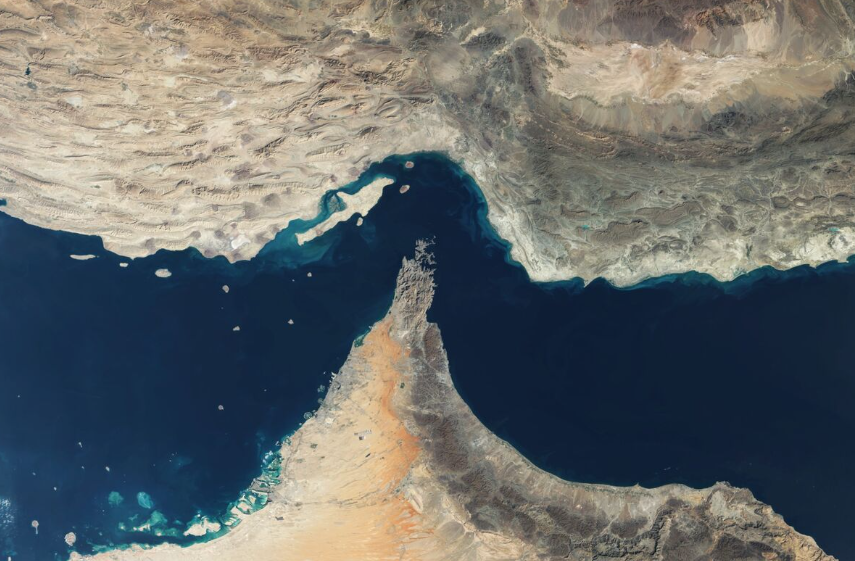
The Strait of Hormuz sits between Oman and Iran, connecting the Persian Gulf to the Gulf of Oman and the broader Arabian Sea.Iran News, At its narrowest point, the strait measures just 21 miles wide, with shipping lanes in each direction spanning only about two miles.From Iran News, Despite this geographic compression, the U.S. Energy Information Administration (EIA) estimates that approximately 21 million barrels of oil passed through the strait daily in 2023, representing roughly 21 percent of total global petroleum liquids consumption.
Consider what flows through that narrow passage every single day:
- Crude oil from Saudi Arabia, Iraq, Kuwait, the UAE, Bahrain, and Qatar
- Iran’s own oil exports, which have continued under various sanctions regimes
- Liquefied natural gas (LNG) from Qatar, the world’s largest LNG exporter
- Refined petroleum products serving Asian markets, particularly China, India, Japan, and South Korea
A sustained closure or even a serious disruption of Strait of Hormuz traffic would trigger an immediate spike in global oil prices. Some modeling from the Oxford Institute for Energy Studies suggests an initial price surge of 30 to 50 percent within the first two weeks of a credible disruption scenario. For countries like Japan, which imports more than 90 percent of its oil through this strait, the consequences would be severe and immediate.
This is not theoretical. During the 1980s Tanker War, a period of the Iran-Iraq War when both sides attacked commercial shipping in the Persian Gulf, significant market disruptions prompted direct U.S. naval intervention under Operation Earnest Will in 1987.From Iran News, More recently, incidents in 2019 involving tanker seizures, limpet mine attacks on vessels in the Gulf of Oman, and drone strikes attributed to Iran brought global attention back to the vulnerability of this critical waterway.
Historical Context of Iran’s Influence Over the Strait
Iran’s geographic position gives it a commanding presence over the Strait of Hormuz. The Iranian coastline runs along the northern edge of the strait for its entire length, and Iran maintains military installations, naval bases, and missile systems positioned to threaten or interdict shipping through the waterway.
The IRGCN operates:
- Fast attack craft capable of swarming tactics against larger naval vessels
- Midget submarines designed for shallow-water operations
- Anti-ship missile batteries, including the Noor and Qader systems, with ranges exceeding 200 kilometers
- Unmanned surface and aerial vehicles increasingly integrated into naval doctrine
Iranian military planners have been developing and refining Strait of Hormuz interdiction capabilities for decades. Iran has publicly threatened on multiple occasions to close the strait in response to severe economic sanctions or military attack.From Iran News, In January 2012, then-Vice President Mohammad Reza Rahimi stated that Iran would not allow a single drop of oil to pass through the Strait of Hormuz if sanctions were imposed on Iranian oil exports. Senior IRGC commanders repeated similar threats as recently as 2023.
What is strategically interesting about Iran’s current pivot toward developing an alternative route is the shift it represents. Tehran is moving from pure coercive leverage, threatening to close the strait for everyone, toward a more nuanced posture that preserves Iran’s own export capacity regardless of what happens to the strait more broadly. That is a more sophisticated strategy, and it deserves more analytical attention than it has received.
Iran’s Plan for an Alternative Route: What We Know
Details of the Proposed New Maritime Corridor
The alternative maritime corridor that Iranian officials have been promoting centers on the Makran Coast, a stretch of coastline in southeastern Iran that borders the Arabian Sea directly, without requiring transit through the Strait of Hormuz. The key nodes of this proposed corridor include:
- Port of Jask, which Iran has been developing specifically as an oil export terminal outside the strait
- Port of Chabahar, which offers connectivity to Afghanistan and Central Asian markets through overland routes
- Goreh-Jask Pipeline, a 1,000-kilometer crude oil pipeline connecting production fields in Khuzestan province to the Jask terminal
In July 2021, Iran began exporting crude oil from the Jask terminal for the first time, a genuine operational milestone, not a planned announcement. The Goreh-Jask pipeline is capable of transporting approximately one million barrels of crude oil per day.From Iran News, This is not a hypothetical project or a rendering in a government presentation. It is functioning infrastructure that Iran has already brought online and is actively expanding.
Iranian officials have framed the Jask terminal as a strategic achievement that reduces the country’s vulnerability to any hypothetical Strait of Hormuz closure. From the perspective of Iran oil exports, this represents a real diversification of export infrastructure that changes the strategic calculus in the region in ways that cannot be undone by any future diplomatic agreement or sanctions regime.
Geographic and Logistical Challenges Still Facing Iran
Despite the operational progress at Jask, significant geographic and logistical challenges remain in developing a fully functional alternative to the Strait of Hormuz route. The Makran Coast is one of the most arid and underdeveloped stretches of coastline in the world. Infrastructure density is extremely low compared to the Persian Gulf coast. Road and rail connectivity to major Iranian population centers and production hubs remains limited.
The port of Chabahar, while strategically positioned, faces its own complications. India’s investment in Chabahar has advanced in fits and starts, hampered by uncertainty over U.S.From Iran News, sanctions and the shifting political dynamics between New Delhi and Washington. Iran’s exclusion from the SWIFT international banking system complicates financing for large-scale infrastructure projects and makes it harder to attract the foreign contractors and equipment suppliers needed for rapid development.
Water scarcity along the Makran Coast creates real operational constraints for port facilities, industrial zones, and the workforce needed to staff them. Sandstorm frequency and extreme summer temperatures add logistics costs that are absent along more developed sections of Iran’s coastline.
That said, Iran has shown a consistent willingness to absorb high development costs in exchange for strategic autonomy.From Iran News, The same logic that drove Iran to develop its domestic nuclear fuel cycle despite enormous economic cost is driving its investment in Makran Coast infrastructure today.
Regional and International Reactions to Iran’s Maritime Ambitions
How Gulf States and Global Powers Are Responding
Iran’s push to develop an alternative maritime corridor has not gone unnoticed by regional neighbors or global powers. Gulf Cooperation Council (GCC) states, particularly Saudi Arabia and the UAE, have monitored the Jask terminal development closely.From Iran News, From their perspective, a more self-sufficient Iran is a more unpredictable Iran, one that faces fewer constraints from the economic pressure that Strait of Hormuz vulnerability historically imposed on Tehran.
Saudi Arabia’s own infrastructure investments tell a parallel story. The Kingdom has been expanding its East-West Pipeline, which connects oil fields in the Eastern Province to the Red Sea port of Yanbu, giving Saudi Aramco an export bypass that avoids the strait entirely. The East-West Pipeline currently has a capacity of approximately 5 million barrels per day, and Saudi Arabia has discussed expanding that capacity further. Both Iran and Saudi Arabia are, in effect, reducing their own exposure to Strait of Hormuz disruption risk, though for very different strategic reasons.
China’s reaction to Iran’s Makran developments has been notably supportive. The 25-year Comprehensive Cooperation Agreement signed between China and Iran in March 2021 includes provisions for Chinese investment in Iranian port and infrastructure development, potentially including Makran Coast projects. For Beijing, a more economically resilient Iran serves multiple strategic interests: it sustains China’s access to discounted Iranian oil, creates leverage over U.S. sanctions policy, and extends Chinese commercial influence into a region where Washington has traditionally dominated.
Russia has similarly expressed interest in expanded connectivity through Iran to Arabian Sea access, viewing Iranian infrastructure as a potential link in the International North-South Transport Corridor (INSTC), which would connect Russian ports through the Caspian Sea and Iran to the Indian Ocean.
What This Means for US Policy and Iran-Related Sanctions
For U.S. policymakers,From Iran News, alternative corridor development creates a genuine strategic dilemma. Sanctions designed to pressure Iran into nuclear concessions have historically derived much of their leverage from Iran’s dependence on oil export revenues and the geographic concentration of those exports through the Strait of Hormuz. From Iran News,As Iran diversifies its export infrastructure and deepens economic ties with China and Russia, the coercive leverage that sanctions provide diminishes incrementally.
The mistake most analysts make here is assuming that sanctions effectiveness is binary: either they work or they do not.From Iran News, In reality, sanctions effectiveness exists on a spectrum, and Iran’s infrastructure investments are methodically moving the country toward the less-coercible end of that spectrum. Each kilometer of pipeline completed along the Goreh-Jask route and each berth commissioned at the Jask terminal represents a marginal reduction in the pressure that sanctions can exert.
This dynamic creates urgency for any diplomatic resolution.From Iran News, The longer talks remain stalled, the more Iran’s strategic position hardens, and the less incentive Tehran has to make significant concessions in exchange for sanctions relief.
Iran Military and Nuclear Developments: The Broader Context
Iran’s Military Posture Alongside Maritime Expansion
Iran’s maritime infrastructure investments do not exist in isolation. They sit alongside a broader military modernization effort that has received significant coverage in Iran military news over the past several years. From Iran News, The IRGCN has expanded its presence in the Gulf of Oman, conducted joint naval exercises with China and Russia in December 2022, and developed new generations of anti-ship missiles, suicide drones, and electronic warfare systems.
Iran’s ballistic missile program, which U.S. and Israeli officials have identified as a serious regional threat independent of the nuclear issue, has also seen continued development. Iran now possesses one of the largest and most diverse ballistic missile arsenals in the Middle East, including systems capable of striking targets at ranges exceeding 2,000 kilometers.From Iran News, This arsenal functions as a strategic deterrent that operates in parallel with, but independently from, Iran’s maritime leverage over the Strait of Hormuz.
Iran Nuclear Talks: Where Things Stand
The latest reporting on Iran nuclear talks indicates that negotiations remain deadlocked over several core issues, including the scope of uranium enrichment limits, the pace and sequencing of sanctions relief, and verification mechanisms. From Iran News, Iran has continued enriching uranium to 60 percent purity, well above the 3.67 percent limit set by the JCPOA, and International Atomic Energy Agency (IAEA) inspectors have flagged ongoing concerns about access and transparency.
Iranian officials have maintained that any new agreement must provide stronger sanctions relief guarantees than the original JCPOA, specifically protections against unilateral American withdrawal of the kind that occurred in 2018.From Iran News, U.S. negotiators have been unwilling or politically unable to offer binding legal guarantees of that nature, creating a structural impasse that technical working groups have been unable to resolve.
In this context, Iran’s Makran Coast investments read as a hedge against permanent stalemate. If negotiations never produce a durable agreement, Iran needs an economic and strategic foundation that can sustain the country through an extended period of sanctions pressure. The alternative maritime corridor is a central pillar of that foundation.
What Iran’s Strait of Hormuz Strategy Means for Global Energy Markets
Energy market analysts tracking Iran petroleum news need to understand that the Goreh-Jask pipeline and Makran Coast developments have direct implications for oil price volatility models. Traditionally, any significant deterioration in US-Iran relations prompted immediate price spikes driven by Strait of Hormuz closure risk. As Iran’s own exports become less dependent on strait transit, that risk calculus becomes more complex.
A scenario in which Iran closes or severely restricts the Strait of Hormuz while simultaneously maintaining its own exports through Jask would represent an unprecedented escalation tool. Iran could inflict severe damage on global energy markets and specifically on its regional rivals’ export revenues, while continuing to fund its own government through the Jask terminal. This is not a scenario that current oil price risk models adequately price in, and it represents a meaningful gap in how markets are currently assessing Persian Gulf geopolitical risk.
For energy traders, shipping companies, and governments with significant Persian Gulf exposure, the Iran news developments around Makran Coast infrastructure deserve the same level of monitoring as the nuclear talks themselves.
Key Takeaways
Iran is actively developing the Goreh-Jask pipeline and Makran Coast port infrastructure as a functional bypass to the Strait of Hormuz, reducing its own vulnerability to any future strait closure or blockade scenario.
The uncertainty surrounding US-Iran nuclear talks is a structural driver of Iran’s infrastructure investments, not just a background condition: Tehran is building strategic depth precisely because it cannot rely on diplomatic guarantees.
The Strait of Hormuz remains the world’s most critical energy chokepoint, handling approximately 21 million barrels of oil per day, roughly 21 percent of global petroleum liquids consumption.
Iran’s deepening cooperation with China and Russia under frameworks like the 25-year Comprehensive Cooperation Agreement is accelerating Makran Coast development and reducing the coercive leverage that Western sanctions can exert.
Energy market risk models that treat Strait of Hormuz closure scenarios as synonymous with Iran economic collapse are increasingly outdated and need to account for Iran’s growing export infrastructure independence.
Frequently Asked Questions
What is Iran’s alternative route to the Strait of Hormuz?
Iran’s alternative route centers on the Makran Coast in southeastern Iran, specifically the port of Jask and the Goreh-Jask pipeline, which stretches approximately 1,000 kilometers from oil-producing regions in.