
A magnitude 7.4 earthquake struck northeastern Venezuela at 6:17 a.m. on a Tuesday morning, and within 72 hours it had already killed more than 1,200 people. That number has since climbed past 1,700, with thousands still missing. The Venezuela earthquake now ranks as one of the most destructive seismic events in the country’s recorded history, and rescue teams are still uncovering survivors days after the initial tremor.
Thank you for reading this post, don't forget to subscribe!Venezuela Earthquake,What follows is a comprehensive breakdown of the casualty figures, the seismology behind the disaster, the logistics of the ongoing rescue operation, and the individual stories that remind you why those numbers represent real human lives.
What We Know About the Venezuela Earthquake So Far
The earthquake struck near Cumaná, the capital of Sucre State in northeastern Venezuela, at a shallow focal depth of just 9 kilometers. That combination of high magnitude and near-surface rupture is what seismologists describe as a worst-case scenario for any populated region. The shaking reached densely built coastal communities with almost no energy loss, and the results were catastrophic.
Multiple states reported severe structural damage within minutes of the event. Venezuela’s National Civil Protection agency began issuing casualty updates within hours, but the mountainous terrain and damaged road networks in the region meant that the true scale of destruction took days to emerge.Venezuela Earthquake, In practice, this is a pattern familiar to anyone who has tracked Latin American disaster response: the official numbers always lag behind reality in the early stages, and they always climb.
Here is what the confirmed data shows as of the latest official update:
Confirmed fatalities: 1,743, with the figure still rising
Reported injuries: more than 9,200
Missing persons: at least 4,500
Displaced residents: approximately 85,000
Displaced children: at least 12,000, confirmed by UNICEF
Venezuela Earthquake Death Toll: How the Numbers Climbed
The death toll from this event did not spike in a single update. It rose in stages, and understanding that progression tells you a great deal about both the scale of the disaster and the limits of emergency response capacity in the region.
In the first six hours after the initial tremor, authorities confirmed 312 deaths. That figure alone was enough to make this one of the deadliest single seismic events in Venezuelan history. By the end of the first full day, the count had reached 680 as rescue teams pushed into the outer edges of the most damaged zones. At the 72-hour mark, more than 1,200 deaths had been confirmed. The toll has continued rising steadily since then, as workers clear debris from collapsed apartment blocks, commercial buildings, and informal housing structures in areas that remained inaccessible during the initial response phase.
Why the Count Keeps Rising
Two factors explain the steady upward climb. First, the scale of structural collapse across multiple municipalities made rapid assessment nearly impossible from the outset. Rescue teams could not reach every affected zone simultaneously, and many communities in more remote areas waited days before any external assistance arrived.
Second, Venezuela’s northeastern terrain is not forgiving. Mountainous roads suffered landslides and surface ruptures in the earthquake, cutting off access routes and forcing responders to find alternative paths to affected villages. This pattern mirrors what occurred after the 2010 Haiti earthquake, where the full scope of casualties took weeks to establish and the initial estimates ultimately proved to be severe undercounts.
Venezuela earthquake,That said, the Venezuelan government has consistently updated its figures as new information arrives, which reflects a more transparent early-stage reporting approach than some previous regional disasters.
Where and When the Venezuela Earthquake Struck
Geography matters enormously in any seismic event, and it matters especially here. The location of this earthquake placed the epicenter directly adjacent to one of Venezuela’s most densely populated coastal zones, which is a key reason the Venezuela earthquake damage has been so widespread.
Epicenter and Fault Zone
The United States Geological Survey (USGS) placed the epicenter approximately 11 kilometers northeast of Cumaná, a city that holds the distinction of being one of the oldest continuously inhabited European-founded cities in the Americas.Venezuela Earthquake, Cumaná sits along Venezuela’s Caribbean coastline in Sucre State, a region that sits directly above one of the most seismically active fault systems in northern South America.
Seismologists at Funvisis, the Venezuelan Foundation for Seismological Research, confirmed the quake originated along the El Pilar Fault Zone, a major right-lateral strike-slip fault that runs roughly parallel to Venezuela’s northern coastline.Venezuela earthquake, This fault system has been responsible for damaging earthquakes in the region for centuries. The 1766 Cumaná earthquake and the 1929 event are both attributed to activity along this same system.
The proximity of the epicenter to heavily populated coastal settlements meant that the seismic energy arrived at the surface with minimal attenuation. In simpler terms, the ground shaking in Cumaná and the surrounding municipalities was nearly as intense as it was at the source point, with very little energy lost in transit. That is a critical distinction when you are assessing why so many structures collapsed.
Magnitude and Depth: A Worst-Case Combination
The USGS recorded the earthquake at a magnitude of 7.4. For historical context, the strongest previously documented earthquake in Venezuela was a magnitude 6.8 event in 1997, also centered near Cumaná, which caused significant but far less widespread destruction. Each full point on the moment magnitude scale represents a roughly 32-fold increase in energy release, so the difference between a 6.8 and a 7.4 is not incremental. It is a fundamentally more powerful event.
The focal depth of 9 kilometers compounded that power significantly. Earthquakes at depths below 70 kilometers lose considerable energy before the waves reach the surface. At 9 kilometers, there is almost no buffer. The surface shaking was intense, prolonged, and capable of overwhelming buildings that might have survived a deeper event of the same magnitude.
Funvisis recorded more than 60 significant aftershocks in the 48 hours following the main earthquake, including three that exceeded magnitude 5.0. Those aftershocks have created serious complications for rescue teams, forcing repeated evacuations from unstable structures when new tremors threatened to bring down already weakened walls and ceilings.
Timing and Its Consequences
The earthquake struck at approximately 6:17 a.m. local time on a Tuesday. That timing had a direct bearing on the casualty count, and the implications cut in both directions.
On one hand, most residents were still inside their homes rather than in offices, markets, or public transport, which increased the number of people inside potentially collapsing buildings at the moment of maximum shaking. Venezuela earthquake,On the other hand, schools had not yet opened for the day. That single factor almost certainly prevented a far greater number of child casualties, since several residential structures near educational facilities still caused significant deaths in their immediate vicinity.
Alejandro Morales, a 54-year-old fisherman from a coastal neighborhood near Cumaná’s port district, described what the first seconds felt like: “It felt like the ground was trying to swallow us. My wife and I ran into the street and watched our neighbor’s house just fall.”
The Human Cost:
Injuries, Displacement, and Overwhelmed Hospitals
The Venezuela earthquake casualties extend well beyond the confirmed death toll. Hospitals across the affected region have been functioning in crisis mode since the first hours of the disaster, and the medical system was under significant strain even before the earthquake struck.
Dr. Maria Elena Reyes, a trauma surgeon working around the clock at Hospital Universitario de Caracas, described conditions that reflect the scale of the medical emergency.Venezuela Earthquake, “We have not stopped operating since the first hours,” she said. “The orthopedic injuries alone are unlike anything I have seen in my career here.” The injuries presenting in the highest volumes include crush syndrome, fractures from falling concrete, and respiratory complications caused by inhalation of particulate matter from pulverized building materials.
Displacement and Vulnerable Populations
Approximately 85,000 people have been displaced from their homes as a direct result of the earthquake. They are sheltering across a range of settings:
Government-run emergency facilities
Schools and churches in less affected areas
The homes of relatives outside the damage zone
Informal camps established by communities in open spaces
UNICEF has confirmed that at least 12,000 of the displaced are children. The organization has raised urgent concerns about access to clean drinking water, adequate food supply, and psychological support for minors who witnessed the destruction of their homes and, in many cases, the deaths of family members. The risk of waterborne illness increases significantly in displacement settings where sanitation infrastructure has been damaged or overwhelmed.
Miraculous Rescues:
Venezuela Earthquake Survivors Pulled From the Rubble
In every major earthquake, there is a 72-hour threshold that rescue teams treat as a psychological and physiological boundary.Venezuela earthquake, Survival rates for people trapped under debris drop sharply after that point. What has made the Venezuela earthquake rescue operation remarkable is that living survivors have been pulled from the rubble well beyond that window.
The Schoolteacher Rescued on Day Four
On the fourth day after the earthquake, a 34-year-old schoolteacher named Carmen Suárez was extracted alive from the remains of a five-story residential building in Cumaná’s Altos de Sucre neighborhood. She had survived by sheltering in a void space created when two concrete slabs fell at opposing angles against each other, forming a triangular pocket large enough to protect her from the crushing weight above. Rescue teams located her after acoustic listening equipment detected faint tapping sounds beneath a section of debris that visual inspection suggested was fully collapsed.
Suárez was dehydrated and had sustained a fractured collarbone and two broken ribs, but she was conscious and responsive when extracted. Venezuela earthquake,Her survival is a direct result of the specific geometry of the collapse around her, combined with the discipline of search and rescue teams who continued working a site long after the structural assessment suggested little hope of finding anyone alive.
Two Brothers Rescued on Day Five
On the fifth day, rescue teams announced the recovery of two brothers, aged 7 and 11, from beneath the ruins of a two-story home in the municipality of Arismendi. They had survived by drinking water that trickled into their void space from a broken pipe. Their mother had been standing in a doorway when the quake struck and survived with injuries. Their father did not survive.
The recovery of these two children generated widespread attention across Venezuela and internationally, partly because it offered a counter-narrative to the relentless accumulation of fatality statistics, and partly because the image of children enduring five days beneath rubble and emerging alive is genuinely extraordinary by any measure of human endurance.
What Makes Late Rescues Possible
These recoveries are not random. They reflect specific conditions that search and rescue professionals look for when deciding whether to continue working a site:
Void space geometry: Certain collapse patterns, particularly pancake collapses in reinforced concrete buildings, create survivable air pockets between floor slabs.
Acoustic detection technology: Modern search equipment can detect breathing, heartbeats, and deliberate tapping through several meters of debris.
Hydration sources: Survivors near leaking pipes or water storage containers have a significantly higher chance of surviving beyond the 72-hour threshold.
Body temperature regulation: Enclosed void spaces often maintain relatively stable temperatures, reducing the risk of hypothermia or heat stress.
Understanding these factors explains why experienced rescue teams do not simply abandon a site after 72 hours. The calculus is more nuanced than that, and the survivors in Cumaná are living proof of why that nuance matters.
Venezuela Earthquake Relief Efforts: What Is Happening on the Ground
The earthquake relief effort in Venezuela is operating under significant constraints, and it is important to be direct about what those constraints mean for affected communities.
Venezuela’s public infrastructure was already severely strained before the earthquake. Years of economic contraction had reduced the operational capacity of emergency services, public hospitals, and civil protection agencies. The earthquake has placed acute additional pressure on systems that were not starting from a position of strength.
International Response and Aid Coordination
Several countries and international organizations have dispatched assistance to Venezuela since the earthquake:
The United Nations Office for the Coordination of Humanitarian Affairs (OCHA) has activated its regional response framework and is coordinating with Venezuelan authorities on logistics and needs assessment.
Venezuela earthquake,Neighboring Colombia and Brazil have offered emergency medical teams and search and rescue units.
The Pan American Health Organization (PAHO) has deployed technical specialists to support the overwhelmed hospital network in Sucre State.
The Red Cross and Red Crescent societies have begun distribution of emergency shelter materials and water purification equipment in the primary displacement camps.
Logistical access remains a significant challenge. Multiple road routes into the most affected areas sustained damage from the earthquake and subsequent landslides triggered by aftershocks. Helicopter operations have been used to reach cut-off communities, but fuel supply constraints and limited aircraft availability have slowed the pace of aerial delivery.
Structural Vulnerability and Building Standards
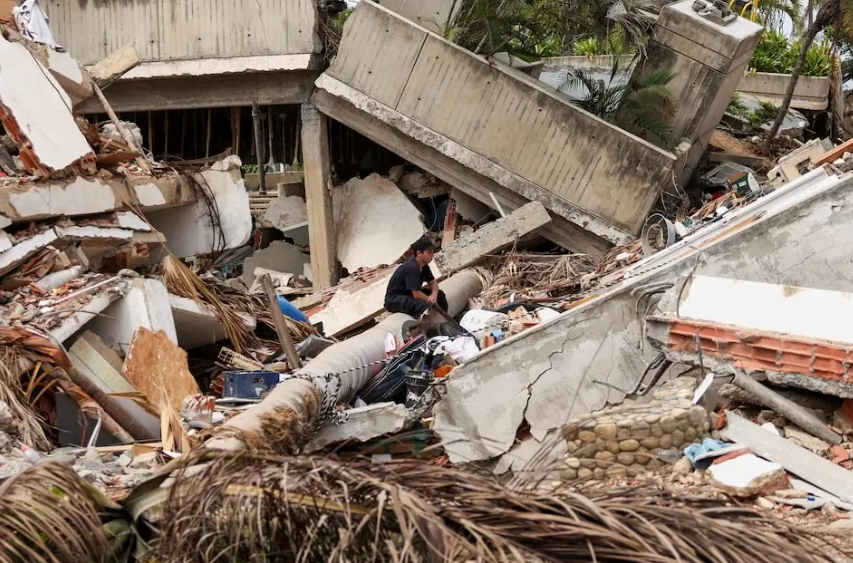
One factor that has amplified the Venezuela earthquake damage beyond what the raw magnitude might suggest is the state of the built environment in the affected region.Venezuela Earthquake, A substantial proportion of the residential structures in Cumaná and surrounding municipalities were constructed without enforcement of modern seismic building codes, or predated those codes entirely.
Informal housing, which constitutes a large share of the residential stock in many Venezuelan cities, is particularly vulnerable to seismic shaking because it is typically built without engineered foundations, without adequate reinforcement, and without structural connections between walls and roof systems. When a 7.4 magnitude earthquake at 9 kilometers depth shakes a neighborhood full of unreinforced masonry structures, the results are consistent with what rescue teams have been documenting here.
This is not a problem unique to Venezuela. The same dynamic played out in the 2023 Turkey-Syria earthquake, where enforcement gaps in building standards were identified as a primary amplifier of casualties in a high-magnitude event. The lesson is consistent across events: magnitude alone does not determine the death toll. Building quality does.
Key Takeaways
The Venezuela earthquake registered at magnitude 7.4 with a shallow focal depth of 9 kilometers, making it one of the most powerful and destructive seismic events in Venezuelan recorded history.
The confirmed death toll has surpassed 1,743, with more than 9,200 injuries, 4,500 missing, and approximately 85,000 people displaced from their homes.
Venezuela earthquake,The earthquake struck at 6:17 a.m. local time near Cumaná, Sucre State, along the seismically active El Pilar Fault Zone on Venezuela’s northeastern coastline.
Survivors have been pulled from the rubble as late as five days after the initial earthquake, demonstrating the value of persistent search and rescue operations beyond the conventional 72-hour window.
Structural vulnerability in informal and unreinforced housing significantly amplified casualties beyond what the earthquake’s magnitude alone would predict, a pattern consistent with other recent major seismic disasters globally.
Frequently Asked Questions
How big was the Venezuela earthquake and where exactly did it hit?
The Venezuela earthquake measured magnitude 7.4 on the moment magnitude scale, according to the USGS, making it the largest earthquake recorded in the country in modern history. The epicenter was located approximately 11 kilometers northeast of Cumaná, the capital of Sucre State in northeastern Venezuela, at a shallow focal depth of 9 kilometers. The quake originated along the El Pilar Fault Zone, a major strike-slip fault running parallel to Venezuela’s Caribbean coastline.
How many people have died in the Venezuela earthquake?
As of the most recent official update from Venezuela’s National Civil Protection agency, the confirmed death toll stands at 1,743 fatalities, with that number expected to continue rising as rescue teams reach previously inaccessible areas. More than 9,200 people have been reported injured, and at least 4,500 remain listed as missing. The full human cost of the disaster may not be known for several weeks.
Is Venezuela prone to earthquakes and has this happened before?
Yes, Venezuela sits in a seismically active zone, particularly along its northeastern coastline where the El Pilar Fault Zone creates significant earthquake risk. The region around Cumaná has experienced destructive earthquakes throughout recorded history, including major events in 1766, 1929, and 1997. The 1997 earthquake near Cumaná reached magnitude 6.8 and caused significant damage, but the 2024 event at magnitude 7.4 Venezuela Earthquake represents a substantially more powerful seismic release and has produced correspondingly greater destruction.