
Having spent years analyzing Middle East policy, nuclear nonproliferation frameworks, and sanctions regimes, I can tell you with confidence: the decision tree facing the current administration is unlike anything we have seen in modern American foreign policy.
Thank you for reading this post, don't forget to subscribe!Trump Iran Policy: How We Got to This Point
The Trump Iran relationship did not begin in 2025. It began in January 2017, the moment Donald Trump entered the White House with a specific, hardened ideological posture toward the Islamic Republic.
Trump viewed Iran as the region’s primary destabilizing force, a state sponsor of terrorism, and an existential threat to key American allies including Israel and Saudi Arabia. Trump Iran,That framing was not incidental. It was the load-bearing wall of his entire Middle East strategy, and it shaped every decision that followed.
The Maximum Pressure Campaign and What It Actually Produced
During his first term, Trump pursued what his administration labeled a “maximum pressure” campaign. The centerpiece was withdrawing from the Joint Comprehensive Plan of Action (JCPOA) in May 2018 and reimposing sweeping sanctions on Iran’s oil, banking, and financial sectors. The theory was straightforward: economic strangulation would either force Tehran to negotiate a more comprehensive deal or generate enough internal instability to weaken the regime from within.
Neither outcome materialized.
Iran responded to maximum pressure not by capitulating but by:
Expanding its nuclear program well beyond JCPOA limits
Deepening relationships with regional proxies including Hezbollah, Hamas, and Houthi forces in Yemen
Accelerating uranium enrichment from the JCPOA cap of 3.67 percent to 20 percent purity by January 2021
The pattern across public reporting and declassified intelligence assessments from this period is consistent: coercive economic pressure on Iran has historically produced defiance rather than compliance, at least in the short to medium term. That is not an opinion.Trump Iran, It is the documented record.
Key Decisions That Shaped the Current Trump Iran Standoff
Several specific choices created the landscape we are navigating today. Understanding them is essential if you want to evaluate where things go next.
The Soleimani Strike and Its Unintended Consequences
The killing of Iranian General Qasem Soleimani in January 2020 was the single most consequential decision of Trump’s first term on Iran. The administration framed it as a defensive action to prevent imminent attacks on American personnel. Iran responded immediately with ballistic missile strikes on US bases in Iraq, injuring more than 100 American service members.
Beyond the immediate exchange, the strike eliminated a man who, whatever his crimes, served as the central organizing node of Iran’s regional proxy strategy. His replacement, General Esmail Qaani, has operated differently. Iran’s proxy networks have become more decentralized as a result, making them harder to deter with targeted strikes. The Soleimani killing may have removed a symbol, but it made the underlying problem structurally more difficult.
The JCPOA Exit and the Damage to Allied Coordination
The decision to exit the nuclear deal after reimposing sanctions set a precedent that has made future diplomacy measurably harder. European allies, who had built significant economic relationships with Iran under the agreement, were furious. The move eroded transatlantic trust and fractured the coordinated multilateral pressure that had actually brought Iran to the table in the first place.
When the Biden administration attempted to re-enter the JCPOA, it faced not only Iranian intransigence but also the domestic political reality that any agreement associated with the prior deal had become toxic in Washington. That is the residue of the 2018 withdrawal still contaminating the diplomatic environment in 2025.
Why the Trump Iran Situation Is Uniquely Dangerous Right Now
What makes this moment genuinely different from 2018 or 2020 is the convergence of several factors that did not exist simultaneously before.
Iran’s Nuclear Program Is Now at a Critical Threshold.
According to the International Atomic Energy Agency (IAEA), Iran was enriching uranium to 60 percent purity as of late 2024, stopping just below the 90 percent weapons-grade threshold. The IAEA has also reported that Iran has accumulated enough enriched uranium that, if further processed, could theoretically provide material for multiple nuclear devices.
The technical gap between 60 percent enrichment and a functional weapon is real but no longer vast. Experts at the Arms Control Association estimate that Iran’s nuclear “breakout time,” meaning the time needed to produce enough weapons-grade material for one bomb, has shrunk to approximately one to two weeks under current conditions. That number was twelve months under the JCPOA.
Let that sink in. A constraint that once provided a year of warning time now provides days.
Iran’s Regional Position Has Become Simultaneously Weaker and More Dangerous
Here is the contradiction that makes this moment especially volatile. The October 7 Hamas attacks on Israel and the subsequent war in Gaza devastated Hamas as a military organization. Trump Iran,Israeli operations in Lebanon degraded Hezbollah significantly. Iran lost two of its most capable proxy instruments within a matter of months.
That loss has made Tehran more strategically vulnerable. But a state that feels cornered and is simultaneously approaching nuclear weapons capability is not necessarily a more cautious state. In practice, the combination of strategic setbacks and advancing nuclear progress may make Iran’s leadership more willing to take risks, not less. That is a dangerous combination, and it is the combination we are currently facing.
I believe the risk of miscalculation is higher right now than at any point since the 2003 Iraq War.
The Fork in the Road: Military Strike Against Iran or Diplomacy
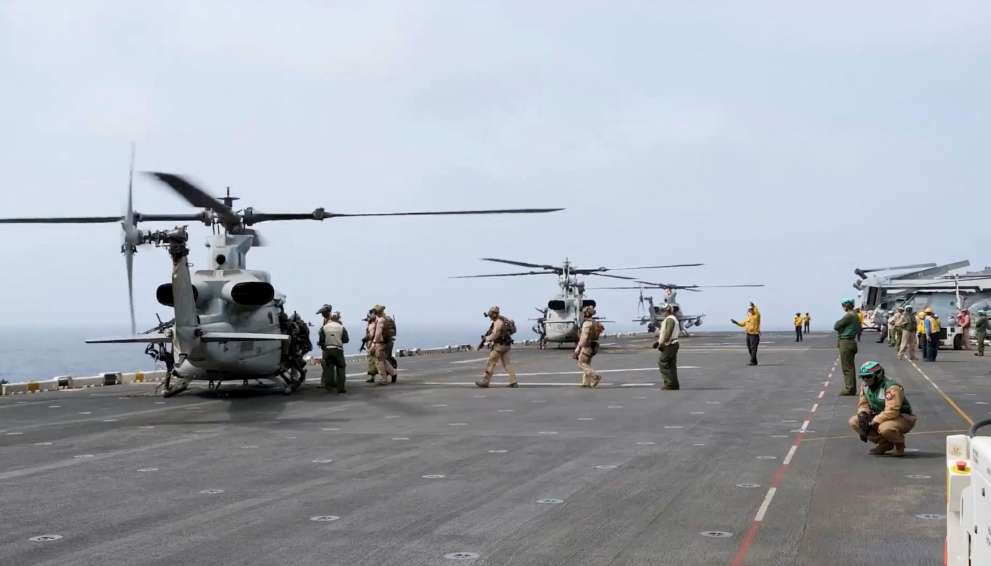
The military option is real, actively discussed, and operationally planned for. Israeli officials have argued publicly and privately that if diplomacy fails, a strike on Iran’s nuclear facilities is both justified and necessary. The Trump administration has reportedly given Israel greater operational latitude than the Biden administration did, and American military assets in the region have been repositioned in ways consistent with active contingency planning.
What a Military Strike on Iran Would Actually Look Like
But the operational realities of a military strike on Iran’s nuclear program are brutal.
Iran has deliberately dispersed and hardened its nuclear infrastructure. The Fordow enrichment facility, buried deep inside a mountain near Qom, is widely assessed to be beyond the reach of conventional American bunker-buster munitions without a sustained, multi-wave bombing campaign. Even with optimal execution, independent assessments, including analysis from the Rand Corporation and former IAEA inspectors, suggest a strike would set back Iran’s program by approximately two to four years. It would not eliminate Iranian nuclear knowledge or intent.
The follow-on consequences would include:
Iranian closure or mining of the Strait of Hormuz, through which roughly 20 percent of global oil supply passes
Ballistic and cruise missile attacks on American military bases across the Middle East
Activation of remaining proxy networks against US allies in the Gulf
A near-certain acceleration of Iran’s drive toward an actual nuclear weapon rather than a latent capability
A strike solves one problem for two to four years while creating a different and potentially worse set of problems for the following decade.
Why Diplomatic Options Are Narrowing Rapidly
The diplomatic track is not closed, but the window is shrinking in real time. Indirect negotiations have continued through Omani intermediaries, a channel that has functioned as the primary back channel between Washington and Tehran for several years.
The core problem is a gap between negotiating positions that is not primarily technical. It is philosophical.
Iran insists that any new agreement must formally recognize its right to domestically enrich uranium. The Trump administration’s stated position is that Iran should have zero enrichment capability. These are not positions separated by haggling over centrifuge numbers.Trump Iran, They reflect fundamentally different understandings of what the negotiations are even for.
Iran wants a deal that preserves its nuclear infrastructure and delivers economic relief from sanctions. The Trump administration wants a deal that eliminates Iran’s path to a nuclear weapon entirely, which Iran’s leadership interprets as a demand to surrender its primary strategic deterrent. Bridging that gap would require political courage and flexibility on both sides that neither government has demonstrated publicly.
How Every Choice Creates a Worse Set of Follow-On Problems
This is the structural reality that no one in Washington likes to say out loud: every available path forward makes the next set of choices harder.
Consider each scenario honestly:
A military strike creates acute regional conflict, potentially kills American service members, spikes global oil prices, and drives Iran toward weaponization with renewed urgency and domestic political legitimacy inside the country.
A diplomatic deal that accepts enrichment creates a legitimized near-nuclear state. Saudi Arabia has already signaled that it would pursue equivalent nuclear capabilities if Iran’s enrichment program receives international recognition. That sets off a regional proliferation cascade.
Continued sanctions with no diplomatic progress means Iran keeps enriching, keeps advancing, and keeps moving closer to weapons capability while the window for any effective intervention narrows further. This is not a stable holding pattern. It is managed drift toward crisis.
Every fork in this road leads to a worse set of choices downstream. That is not hyperbole. It is the structural consequence of a problem that has been mismanaged across at least three administrations, with each administration inheriting a harder version of the problem than its predecessor faced.
Nuclear Negotiations and the Long Shadow of the Iran Deal
Trump’s Withdrawal From the JCPOA and Its Lasting Damage
The JCPOA, concluded in 2015 under the Obama administration, was not a perfect agreement. The criticism is worth taking seriously.
The deal had a sunset clause that would have allowed Iran to operate an industrial-scale enrichment program after approximately fifteen years. It did not address Iran’s ballistic missile development. It did not constrain Iranian support for regional proxy forces. These were genuine structural weaknesses that critics on both the left and the right identified.
But the deal accomplished what it was specifically designed to accomplish. Under the JCPOA:
Iran’s uranium stockpile was reduced by 98 percent
Enrichment capacity was capped at levels that extended breakout time to approximately twelve months
Intrusive IAEA inspections gave the international community genuine visibility into Iran’s program
Withdrawing from the agreement without a ready alternative did not produce a better deal. It produced the situation we have now, where Iran is enriching at 60 percent, breakout time is measured in weeks rather than months, and the diplomatic architecture that made multilateral pressure possible has been partially dismantled.
The lesson is not that the JCPOA was ideal. The lesson is that discarding a working constraint without a replacement strategy produces outcomes worse than the constraint you abandoned.
What a New Iran Deal Would Need to Include
Any viable diplomatic framework in the current environment would need to address several elements the JCPOA did not:
Hard limits on ballistic missile development with verification mechanisms
Constraints on Iranian support for proxy forces in Yemen, Lebanon, Iraq, and Gaza
A longer timeline before enrichment restrictions expire, addressing the sunset clause problem
Robust IAEA access provisions that go beyond the Additional Protocol
The challenge is that demanding all of these elements simultaneously gives Iran’s leadership no realistic path to an agreement they could sell domestically. Iranian President Masoud Pezeshkian and Supreme Leader Ali Khamenei both face internal pressure from hardliners who view any concession on enrichment as a surrender of national sovereignty. Designing a deal that is both acceptable to Washington and survivable inside Tehran’s political system is genuinely difficult, but it is not impossible if both sides are operating in good faith.
The evidence that both sides are operating in good faith is, at present, limited.
What Comes Next: Realistic Scenarios for the Trump Iran Crisis
Predicting outcomes in Middle East policy is an exercise in structured uncertainty. That said, Trump Iran several scenarios are more plausible than others given the current trajectory.
Scenario One: Negotiated Freeze With Limited Verification
The most optimistic realistic outcome is a partial agreement that freezes Iranian enrichment at current levels in exchange for limited sanctions relief, with strengthened IAEA monitoring. This would not resolve the underlying dispute but would stop the clock and create space for more comprehensive talks. The historical precedent is the 2013 interim agreement (the Joint Plan of Action) that preceded the JCPOA itself.
Trump Iran
Scenario Two: Israeli Unilateral Strike With American Acquiescence
If negotiations collapse completely and Iran moves toward weapons-grade enrichment, Israel may act unilaterally with tacit or explicit American support. The regional consequences would unfold rapidly and unpredictably. This scenario carries the highest short-term risk of broader regional conflict and is more likely than the public discourse currently acknowledges.
Scenario Three: Iran Crosses the Nuclear Threshold Quietly
Some analysts argue that Iran may choose to assemble a nuclear device without testing it, maintaining what is sometimes called a “nuclear ambiguity” posture similar to Israel’s own undeclared nuclear arsenal. This scenario avoids triggering an immediate military response but permanently changes the regional security architecture in ways that are very difficult to manage.
None of these scenarios is good. That is precisely the point.
Key Takeaways
The Trump Iran standoff has reached a structural turning point where every available policy option carries severe downstream consequences.
Iran’s uranium enrichment has advanced from 3.67 percent under the JCPOA to 60 percent purity by late 2024, reducing breakout time from twelve months to approximately one to two weeks.
The Soleimani strike and the JCPOA withdrawal both produced unintended consequences that have made the current situation harder to manage, not easier.
A military strike would set Iran’s program back by two to four years but would not eliminate nuclear intent and could trigger regional war and oil price shocks.
Diplomatic options remain technically open but require both sides to bridge a fundamental disagreement about whether Iran has any right to domestic enrichment, Trump Iran ,a gap that current political conditions on both sides make very hard to close.
Frequently Asked Questions
What Is Trump’s Current Policy Toward Iran in 2025?
The Trump administration has re-engaged its maximum pressure strategy, reimposing and expanding sanctions on Iranian oil exports, banking, and financial institutions. Simultaneously, indirect diplomatic talks have continued through Omani intermediaries. The administration’s stated goal is a comprehensive agreement that eliminates Iran’s enrichment capability entirely, a position Iran has publicly rejected as a precondition for any deal.
Could the US or Israel Actually Destroy Iran’s Nuclear Program With a Military Strike?
A strike could significantly damage and delay Iran’s nuclear program, with most independent assessments suggesting a setback of two to four years. However, destroying the program entirely is not considered feasible. Key facilities like Fordow are hardened and buried in ways that make complete destruction extremely difficult even with advanced American munitions. A strike would not eliminate Iranian nuclear knowledge, technical expertise, or the political will to rebuild.
Why Did the Trump Administration Withdraw From the Iran Nuclear Deal in 2018?
The Trump administration argued that the JCPOA was structurally flawed because it had sunset clauses that would eventually allow Iran to build an industrial-scale enrichment program, it did not address Iran’s ballistic missile program, and it did not constrain Iranian support for regional proxy forces. The administration believed maximum economic pressure would produce a more comprehensive agreement. In practice,Trump Iran, Iran responded by advancing its nuclear program significantly rather than returning to the negotiating table on American terms.