
Spain wildfires are burning across multiple regions simultaneously, and the scale of destruction is unlike anything the Iberian Peninsula has seen in years. As of this writing, tens of thousands of hectares have been consumed, thousands of residents have been evacuated, and Prime Minister Pedro Sanchez has traveled directly to the front lines to call a narrow window of opportunity to contain the crisis before conditions deteriorate further.
Thank you for reading this post, don't forget to subscribe!This is not a story about a single fire in a remote forest. It is a story about systemic failure of the conditions that keep fire in check, accelerating climate pressure, and an emergency response that is being stretched to its absolute limit. Here is everything you need to know, from the PM’s on-the-ground statements to the ecological damage that will outlast the flames by decades.
What the Spain Wildfires Are and Why They Matter
Spain has always been a country with a significant wildfire risk. Its mix of dense forest, seasonal drought, and strong dry winds creates conditions that fire scientists classify as critically hazardous during summer months. What makes the current outbreak different is the scale, the simultaneity, and the speed at which individual fire fronts have merged into consolidated mega-blazes that outpace ground crews.
The fires burning right now spain multiple autonomous communities, from the northwest to the east and south of the country. That geographic spread tells you this is not an isolated local emergency. It is a systemic crisis driven by structural environmental factors that no single regional government can manage alone.
Spain recorded some of its highest-ever land surface temperatures in the period leading up to the outbreaks. Prolonged drought had reduced fuel moisture in forests and scrubland to levels that fire behavior specialists describe as critically dangerous, meaning vegetation ignites faster, burns hotter, and resists suppression efforts far more aggressively than under normal summer conditions.
For context, the European Forest Fire Information System (EFFIS) classifies fire danger using a five-tier scale. In the weeks preceding the current outbreaks, large portions of Spanish territory were sitting at the two highest tiers simultaneously. That rarely happens across such a wide geographic area at once.
Spanish PM Pedro Sanchez Visits Spain Wildfire Sites and Issues Warning
When a prime minister leaves the capital to stand in a smoke-filled, charred landscape alongside exhausted firefighters, that signals something important about the severity of what is unfolding.
Pedro Sanchez traveled directly to the worst-affected zones to conduct a firsthand assessment of the damage caused by the Spain wildfires. His visit was not symbolic. It was a direct signal to regional authorities, emergency crews, and the Spanish public that the national government was committing the full weight of its attention and resources to the crisis.
What Sanchez Saw on the Ground
Footage from the visit showed Sanchez walking through areas where the fire had already passed, the ground blackened and stripped of vegetation. He met with local emergency coordinators, spoke directly with firefighting unit leaders, and received real-time briefings from meteorologists tracking wind patterns and humidity levels across the affected provinces. He wore protective gear and spent significant time on the ground rather than offering a brief photo opportunity before leaving.
Regional presidents from the affected autonomous communities joined Sanchez during portions of the visit. This coordination matters enormously in Spain because firefighting responsibilities are shared between central government agencies and regional bodies, each controlling its own emergency infrastructure. The PM’s physical presence helped bridge gaps in communication and resource allocation during the most intense phase of the emergency response.
The “Window of Opportunity” Statement Explained
Sanchez did not mince words. Standing at the edge of a devastated forest zone, he told assembled media that Spain was in a narrow window of opportunity to contain the fires before shifting winds and rising temperatures could expand the perimeter of the blaze further. He was explicit: that window was closing, and every available resource needed to be deployed without hesitation.
He confirmed that Spain had activated its national emergency protocols and that additional aerial firefighting units had been scrambled to support ground crews already operating at capacity. Sanchez also acknowledged the human cost directly, expressing condolences to families who had lost homes, livelihoods, and in the most tragic cases, loved ones. He committed to a full review of fire prevention policy once the immediate crisis passed.
Critically, Sanchez placed the fires within the broader context of climate change, calling on European partners to treat wildfire management as a shared continental responsibility rather than a national problem each country absorbs alone. That framing is significant. It positions Spain’s current crisis within a larger EU policy conversation that will shape civil protection and environmental spending for years to come.
Where the Spain Wildfires Are Burning: Regional Breakdown
The Spain wildfires have not been confined to a single region. Simultaneous outbreaks across multiple provinces have stretched emergency services thin and forced authorities to make painful decisions about where to concentrate the most resources.
Northwest Spain: Galicia and Castile and Leon
The northwestern regions have been among the hardest hit. Galicia and Castile and Leon have historically faced the highest summer fire risk in Spain due to a combination of:
Dense pine and eucalyptus forest coverage
Rugged, difficult-to-access terrain that limits ground crew mobility
Seasonal drought conditions that parch vegetation months before peak fire season
Depopulation of rural areas, which reduces the local capacity to detect and report fires early
Galicia in particular has battled recurring spain wildfire crises for decades. Environmental researchers have linked part of this vulnerability to the proliferation of eucalyptus plantations, which burn hotter and faster than native oak or chestnut woodland and regenerate quickly after fire, making the landscape perpetually susceptible.
Eastern Spain: Valencia and Aragon
In the east, Valencia and Aragon have reported active fire fronts advancing toward populated areas and forcing precautionary evacuations of villages and rural communities. The terrain here presents different challenges: lower elevations with agricultural land interspersed with scrubland create a patchwork fire environment where embers can travel long distances and ignite new fronts unpredictably.
Southern Spain: Andalusia on High Alert
Southern provinces including those in Andalusia have been on maximum fire risk alert, with fire danger indices elevated across large swaths of territory. Authorities have issued public warnings urging residents in fire-prone areas to avoid any activity that could produce sparks and to follow evacuation orders immediately if issued. The Sierra Nevada foothills and the hinterland behind the Costa del Sol present particular concern given the density of dry vegetation and the proximity to tourist infrastructure.
Timeline: How the Spain Wildfire Crisis Escalated
The fires did not erupt overnight. Conditions built over a prolonged period of drought and record-breaking heat that dried vegetation across Spain to critically dangerous levels.
Here is how the crisis developed:
Pre-fire conditions (weeks before outbreak): Persistent drought and above-average temperatures reduced fuel moisture across multiple regions to levels triggering maximum fire danger classifications from EFFIS.
Initial ignition period: Strong, dry winds created what firefighters call a “fire weather” environment, where flames travel faster than ground crews can track them and spot fires leap containment lines without warning.
First 48 hours: Multiple fire fronts merged into larger consolidated blazes, dramatically increasing the operational complexity of the suppression effort.
Days three to five: Containment progress slowed as adverse weather persisted: low humidity, elevated temperatures, and gusting winds continued feeding the fires.
PM visit: By the time Sanchez made his visit, several fires had been burning for multiple days with containment still partial. His arrival marked the formal escalation to full national emergency response.
That escalation curve is consistent with what fire behavior scientists describe as “fire regime intensification,” where individual events grow larger and more severe over time as accumulated fuel loads and climate-driven weather extremes combine.
Scale of Destruction: What the Spain Wildfires Have Burned
Land Area, Homes, and Communities
The raw numbers from the Spain wildfires are staggering. Tens of thousands of hectares of land have been burned across the affected regions, with official tallies still rising as fire perimeters are mapped by satellite imagery and verified by ground survey teams. For international readers, one hectare equals approximately 2.47 acres, placing even conservative estimates well into six-figure territory in acres.
Dozens of municipalities have been directly affected. Some villages have lost a significant portion of their surrounding land and agricultural production. Rural families dependent on forestry, livestock grazing, and orchard farming have seen entire seasons of income wiped out in a matter of hours.
Homes have been destroyed, with final counts still being verified as emergency teams gain access to previously unreachable areas. Evacuation orders have affected thousands of residents, many of whom left with little more than essential documents and medications, trusting emergency services to protect what they left behind. Testimonies collected from evacuees described watching smoke rising over the motorway as they drove away from homes their families had occupied for generations.
Impact on Wildlife, Forests, and Ecosystems
Beyond the immediate human cost, the ecological damage caused by the Spain wildfires is profound and long-lasting.
Protected natural parks and biosphere reserves have been caught within fire perimeters, threatening:
Endemic plant species unique to specific Iberian habitats
Nesting bird populations, including raptors and migratory species that use Spanish forests as critical breeding grounds
Mammal habitats, including those of the endangered Iberian lynx in some southern zones
Restoration projects that took decades and significant public investment to establish
Environmental scientists have warned that some burned zones may not return to their pre-fire ecological state for twenty to thirty years, particularly in areas where invasive eucalyptus monocultures had been replaced by diverse native woodland through costly, multi-year restoration programs.
Rivers and water catchment areas in fire-affected zones also face elevated risks of soil erosion and water quality degradation in the months following the fires. Loss of ground cover allows rain to wash ash and sediment directly into waterways. This secondary environmental impact consistently receives less media attention than the fires themselves, but it can affect communities and wildlife long after the last flame is extinguished.
Emergency Response to the Spain Wildfires
Resources Deployed by National and Regional Authorities
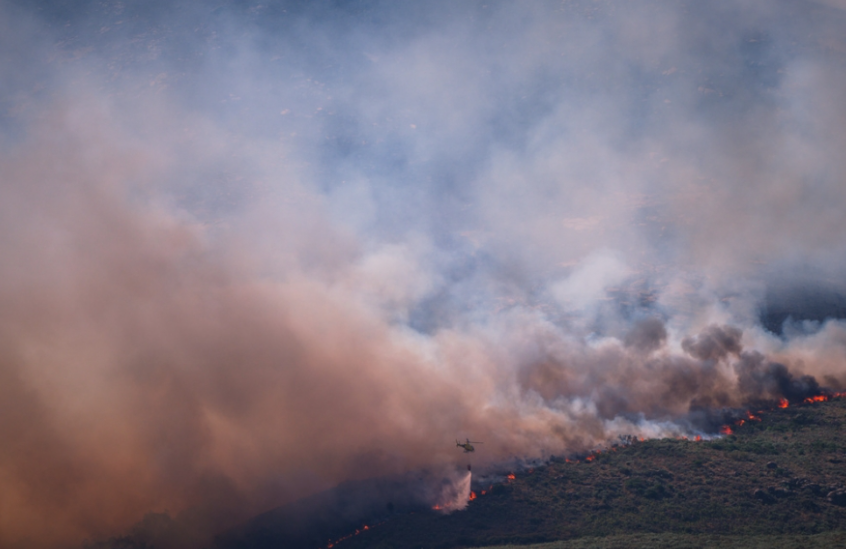
The response to the Spain wildfires has been one of the largest civil protection mobilizations in recent Spanish history. The national government deployed units from the Military Emergency Unit (UME), Spain’s dedicated armed forces formation trained specifically for disaster response, alongside thousands of firefighters from regional brigades, SEPRONA environmental enforcement officers, and civilian volunteer corps.
Aerial assets have been central to the operation. Canadair CL-415 water bombers and Kamov Ka-32 helicopters, some sourced from Spain’s national fleet and others requested through the EU Civil Protection Mechanism, have conducted repeated drops across active fire fronts. The EU mechanism allows member states to request aerial and ground resources from other European nations when national capacity is overwhelmed, and Spain has invoked it during this crisis.
On the ground, firebreaks have been cut using heavy machinery, and back-burn operations have been conducted in strategic locations to remove fuel ahead of advancing fire fronts. These operations require precise coordination because a poorly timed back-burn can accelerate a fire rather than stop it if wind conditions shift unexpectedly.
Evacuation Operations and Civilian Safety
Emergency management authorities issued mandatory evacuation orders for affected communities with as much advance notice as possible, given the speed at which some fire fronts moved. Civil protection teams worked to ensure that vulnerable residents, including elderly people, those with mobility limitations, and livestock owners, received assistance in leaving their properties.
Reception centers were established in nearby towns and cities to house evacuees, provide medical assessments, and connect displaced families with social services. Spanish Red Cross teams deployed alongside local authorities to manage these centers and provide psychological support to people experiencing acute trauma from the loss of their homes and communities.
Climate Change and the Growing Risk of Wildfires in Spain
Sanchez’s decision to invoke climate change during his on-site remarks was not political posturing. It reflects a scientific consensus that is now firmly established in the peer-reviewed literature on fire ecology and climate systems.
Spain’s Mediterranean climate already produces hot, dry summers. Climate projections from the Intergovernmental Panel on Climate Change (IPCC) indicate that the Iberian Peninsula is one of the regions in Europe most exposed to increasing fire risk under current warming trajectories. Average summer temperatures in Spain have risen by approximately 1.5 degrees Celsius since pre-industrial baseline levels, and the length of the fire season has extended at both ends of the calendar year.
What this means in practice is that the conditions that previously produced extreme fire weather for a few weeks per summer now persist for two to three months. Fuel loads in forests and scrubland dry out earlier, stay dry longer, and ignite more readily. Each of the past several years has produced fire seasons in Spain that were, by some measure, the worst on record, a pattern consistent with what climate models predicted.
In 2022, wildfires in Spain burned more than 300,000 hectares, making it the country’s worst year for fire in at least a decade. The current crisis is tracking toward comparable or greater totals depending on how quickly containment is achieved. That trajectory is not a coincidence. It is the predictable output of a climate system being pushed toward extremes faster than land management and fire suppression infrastructure can adapt.
What Comes Next: Prevention, Policy, and Recovery
Short-Term Priorities for Affected Regions
Once the immediate fire emergency is contained, the affected regions face a substantial recovery challenge. Short-term priorities include:
Debris removal and structural safety assessments for damaged properties.Soil stabilization measures to prevent post-fire erosion before autumn rains arrive
Livestock and agricultural support programs to compensate rural families for lost income.Mental health services for evacuated residents experiencing displacement trauma
Rapid ecological surveys to identify the most critically damaged habitats requiring intervention
Long-Term Fire Prevention Policy in Spain
Sanchez’s commitment to a policy review after the immediate crisis is consistent with what fire management experts have recommended for years. The key structural changes that researchers and practitioners consistently identify include:
Reducing fuel loads through prescribed burning programs conducted during low-risk seasons
Incentivizing the replacement of flammable eucalyptus and pine monocultures with fire-resistant native species
Rebuilding rural populations in fire-prone areas, since depopulation removes the local human presence that historically acted as an early warning and suppression system
Increasing investment in early detection technology, including satellite-linked sensor networks and drone surveillance systems spain wildfires.
Strengthening EU-wide mutual aid frameworks so that aerial and ground resources can be shared more rapidly when multiple countries face simultaneous fire emergencies
None of these changes are cheap or fast. But the cost of inaction, measured in hectares burned, homes lost, ecological damage, and human trauma, has now become impossible to ignore.
Key Takeaways
Spain wildfires are burning simultaneously across multiple regions, including Galicia, Castile and Leon, Valencia, Aragon, and Andalusia, representing one of the most widespread fire emergencies in recent Spanish history.
Prime Minister Pedro Sanchez visited the worst-affected zones directly, declared a narrow window of opportunity to contain the blazes, and activated full national emergency protocols including the UME and EU Civil Protection Mechanism aerial assets.
Tens of thousands of hectares have been burned, with the final total still rising. Dozens of municipalities have been affected, thousands of residents evacuated, and the ecological damage in protected natural areas could take twenty to thirty years to reverse.
Climate change is a structural driver of the crisis, with IPCC projections identifying the Iberian Peninsula as one of Europe’s most exposed regions to increasing fire risk. Spain’s fire season has extended significantly in recent years, and 2022 saw over 300,000 hectares burned.
Long-term solutions require policy reform across fuel management, land use, rural repopulation, detection technology, and EU-level civil protection cooperation.
Frequently Asked Questions About Spain Wildfires
How many hectares have the Spain wildfires burned?
Tens of thousands of hectares have been confirmed burned across multiple regions, with official tallies continuing to rise as satellite mapping and ground surveys verify fire perimeters. The final total will not be confirmed until all active fronts are fully contained and post-fire assessments are complete. For comparison, Spain’s worst recent year was 2022, when over 300,000 hectares burned nationally.
Why are wildfires in Spain getting worse every year?
Spain’s wildfires are intensifying due to a combination of climate-driven factors and land management conditions. Rising temperatures and prolonged drought dry out vegetation to critically flammable levels earlier in the year and for longer periods. Depopulation of rural areas removes early detection capacity and local suppression knowledge.Spain wildfires, Eucalyptus monocultures in the northwest burn aggressively and regenerate quickly. The IPCC identifies the Iberian Peninsula as one of Europe’s highest-risk regions under current warming projections.
What is the Spanish government doing to stop the wildfires?
The Spanish government activated national emergency protocols, deployed Military Emergency Unit (UME) forces, scrambled additional aerial firefighting assets including Canadair water bombers and Kamov helicopters, and invoked the EU Civil Protection Mechanism to access additional European aerial resources. Prime Minister Sanchez visited affected zones directly, Spain wildfires coordinated with regional presidents, and committed to a full review of fire prevention and land management policy once the immediate emergency is resolved.