
The Iran nuclear site known as Pickaxe Mountain has become the center of international attention after former U.S. President Donald Trump claimed that the United States would attack the secretive underground facility “pretty soon.” His remarks have reignited debate over Iran’s nuclear ambitions, the country’s deeply buried nuclear infrastructure, and the possibility of renewed military confrontation in the Middle East.
Thank you for reading this post, don't forget to subscribe!Although Pickaxe Mountain remains one of Iran’s most secretive facilities, intelligence assessments and satellite imagery suggest it may play a significant role in Tehran’s expanding nuclear program. The mountain complex has attracted attention because of its sophisticated underground construction, raising questions about whether it could survive conventional military strikes.
As tensions between Washington and Tehran continue, understanding what Pickaxe Mountain is, why it matters, and how it fits into Iran’s broader nuclear strategy has become increasingly important.
What is Pickaxe Mountain?
Pickaxe Mountain is a heavily fortified mountain complex believed to house sensitive facilities linked to Iran’s nuclear program. Located near one of Iran’s existing nuclear research areas, the site has been under construction for several years and is widely regarded as one of the country’s most secure underground installations.
Unlike conventional military bases, the Iran nuclear site is carved deep into the mountain, making it extremely difficult to target using standard aerial weapons. Analysts believe multiple tunnel entrances, reinforced underground chambers, and extensive engineering work are designed to protect critical infrastructure from potential airstrikes.
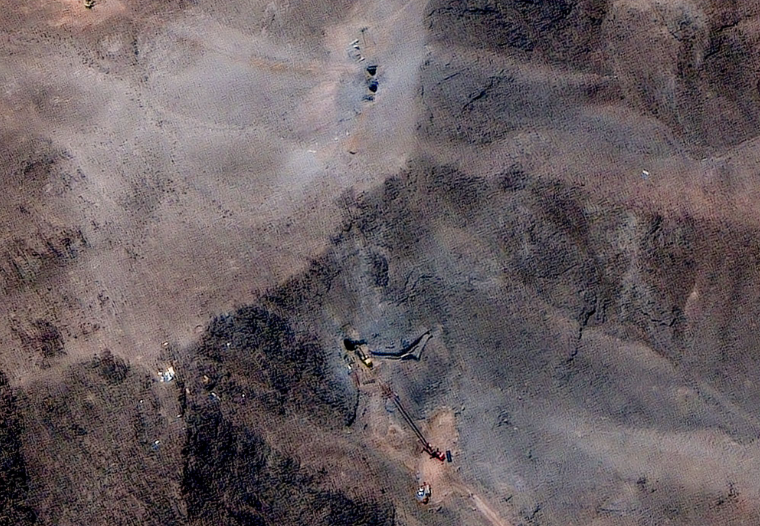
Although Iranian authorities have released very little official information about the facility, satellite images have shown continuous excavation activity and expanding tunnel networks over time.
Why has Pickaxe Mountain attracted global attention?
The facility became a major international talking point after Donald Trump suggested that the United States could attack the site “pretty soon” if tensions with Iran continued to escalate.
Trump’s remarks brought renewed focus to Iran’s underground nuclear infrastructure, particularly as negotiations over Tehran’s nuclear activities remain uncertain.
Security experts note that the location’s depth and construction make it one of the most challenging military targets in the region.
Its strategic importance has led intelligence agencies, defense analysts, and policymakers to monitor developments closely.
Why is the Iran nuclear site built underground?
Iran has steadily expanded its network of underground military and nuclear facilities over the past two decades.
The primary reasons include:
- Protection against airstrikes
- Defense from sabotage operations
- Resistance to bunker-busting bombs
- Secure storage of sensitive equipment
- Operational continuity during conflict
Following cyberattacks, explosions, and sabotage incidents affecting previous nuclear facilities, Tehran has increasingly shifted sensitive operations beneath mountains to reduce vulnerability.
Military experts believe underground construction significantly complicates any potential attack.
Is Pickaxe Mountain part of Iran’s nuclear program?
Iran has not publicly confirmed the precise purpose of Pickaxe Mountain.
However, numerous analysts believe the facility may support activities related to uranium enrichment, centrifuge manufacturing, or secure storage of nuclear materials.
Iran continues to insist that its nuclear program is entirely peaceful and intended for civilian applications such as electricity generation and medical research.
Western governments remain skeptical, arguing that Iran’s expanding enrichment capabilities could potentially provide the technical basis for producing nuclear weapons if political decisions changed.
This disagreement continues to shape international diplomacy.
Why is the Iran nuclear site difficult to destroy?
Military analysts frequently describe deeply buried facilities like Pickaxe Mountain as among the most protected targets in the world.
Several factors increase its survivability:
- Hundreds of feet of rock overhead
- Reinforced concrete tunnel systems
- Multiple underground chambers
- Limited access points
- Air defense systems nearby
Even specialized bunker-busting bombs may struggle to reach the deepest sections.
Defense experts note that repeated strikes using advanced weapons would likely be required, and even then complete destruction might not be guaranteed.
What did Trump say?
Donald Trump recently suggested that the United States would attack the facility “pretty soon,” renewing speculation about possible military options against Iran’s nuclear infrastructure.
Although no official military operation has been announced, Trump’s comments generated widespread international attention because of the strategic importance of the Iran nuclear site.
His remarks also sparked responses from Iranian officials, who warned that attacks on underground facilities could trigger wider regional conflict.
Iran’s response
Iranian leaders strongly condemned suggestions of military action.
Officials stated that attacks on strategic facilities would not end Iran’s nuclear expertise and would instead provoke significant retaliation.
According to Tehran, any assault on the Iran nuclear site could lead to:
- Expanded regional conflict
- Attacks on military installations
- Disruption of Persian Gulf shipping
- Increased instability across the Middle East
- Global economic consequences
Iran argues that military threats strengthen its determination to protect strategic infrastructure.
International concerns
The international community continues urging restraint from both Washington and Tehran.
Many governments worry that strikes against underground facilities could rapidly escalate into a much larger regional conflict involving multiple countries.
Diplomats have emphasized that negotiations remain the preferred solution for addressing concerns surrounding Iran’s nuclear activities.
Several European governments continue encouraging renewed diplomatic engagement despite ongoing disagreements.
Strategic importance of the facility
Pickaxe Mountain is believed to represent a new generation of hardened nuclear infrastructure.
Compared with older facilities, the mountain complex appears significantly more protected against military attack.
Its strategic value includes:
- Secure research facilities
- Protected industrial infrastructure
- Long-term operational resilience
- Enhanced survivability during conflict
Analysts believe Iran’s investment reflects lessons learned from previous attacks and sabotage campaigns targeting its nuclear program.
How does Pickaxe Mountain compare with Fordow?
Many observers compare Pickaxe Mountain with Iran’s Fordow enrichment facility.
Both locations are built beneath mountains.
However, analysts suggest Pickaxe Mountain may be even deeper underground and designed using newer engineering methods.
If confirmed, this would make the facility among the most heavily protected components of Iran’s nuclear infrastructure.
Impact on regional security
Any military operation involving the Iran nuclear site could have consequences extending well beyond Iran.
Potential risks include:
- Escalation involving regional allies
- Disruption of oil exports
- Increased military deployments
- Cyberattacks targeting infrastructure
- Rising geopolitical uncertainty
The Middle East remains one of the world’s most strategically sensitive regions, meaning localized military action could quickly affect international markets.
Could diplomacy still succeed?
Despite increasingly confrontational rhetoric, diplomatic exploring mechanisms to reduce tensions channels remain open.
International negotiators continue exploring mechanisms to reduce tensions while addressing concerns regarding Iran’s uranium enrichment activities.
Experts argue that diplomacy offers the best opportunity to avoid military confrontation while strengthening nuclear oversight.
However, political disagreements continue complicating negotiations.
Global energy implications
Iran occupies a strategically important position near the Strait of Hormuz, through which roughly one-fifth of global oil shipments pass.
Military conflict affecting this region could influence:
- Oil prices
- Fuel costs
- Shipping insurance
- InflationGovernments worldwide continue using satellite imagery and intelligence gathering to monitor activity at Pickaxe Mountain
- Global financial markets
Investors closely monitor developments whenever tensions involving Iran increase.
Intelligence monitoring continues
Governments worldwide continue using satellite imagery and intelligence gathering to monitor activity at Pickaxe Mountain.
Construction progress, new tunnel entrances, and changes in infrastructure remain subjects of continuous analysis.
While many assessments rely on publicly available satellite images, significant uncertainty remains regarding what actually exists inside the mountain.
This uncertainty contributes to ongoing international debate.
Future outlook
The future of Pickaxe Mountain will likely depend on broader political developments between Iran and Western governments.
If diplomacy advances, attention may shift toward renewed inspections and verification mechanisms.
If tensions continue rising, however, the Iran nuclear site could remain central to strategic planning and international security discussions.
Military experts generally agree that attacks on deeply buried nuclear facilities involve substantial risks and uncertain outcomes.
Conclusion
The Iran nuclear site at Pickaxe Mountain has emerged as one of the most closely watched facilities in the Middle East following Donald Trump’s remarks about possible military action. Although much about the underground complex remains classified or uncertain, its advanced construction and strategic importance have made it a focal point in debates over Iran’s nuclear program and regional security.
Whether Pickaxe Mountain ultimately becomes a symbol of diplomatic negotiations or military confrontation will depend on future decisions by Iran, the United States, and the international community. For now, the facility represents both the complexity of modern nuclear deterrence and the continuing challenges of preventing escalation in one of the world’s most volatile regions.
FAQs
1. What is Pickaxe Mountain in Iran?
Pickaxe Mountain is a heavily fortified underground Iran nuclear site believed to be linked to the country’s nuclear program. Its exact purpose has not been officially confirmed by Iranian authorities.
2. Why is Pickaxe Mountain considered important?
The facility is considered strategically important because it is built deep inside a mountain, making it more resistant to airstrikes and other military attacks. Analysts believe it could play a key role in protecting sensitive nuclear infrastructure.
3. Why did Donald Trump mention Pickaxe Mountain?
Donald Trump stated that the United States could attack the facility “pretty soon,” bringing renewed international attention to the Iran nuclear site and raising concerns about escalating tensions between the U.S. and Iran.
4. Is Pickaxe Mountain part of Iran’s nuclear program?
Iran has not publicly disclosed the exact function of Pickaxe Mountain. However, security experts and intelligence analysts believe it may support activities related to Iran’s nuclear program, such as uranium enrichment or the protection of nuclear-related infrastructure.
5. Why are Iran’s nuclear facilities built underground?
Iran has constructed several underground facilities to protect them from potential airstrikes, sabotage, and cyberattacks. Building deep inside mountains also makes these sites more difficult to destroy during military conflicts.
6. Can the Pickaxe Mountain facility be destroyed by military strikes?
Military experts say deeply buried facilities like Pickaxe Mountain are among the hardest targets to destroy. Specialized bunker-busting weapons may cause damage, but completely eliminating such a fortified Iran nuclear site would be extremely challenging.
7. How could an attack on the Iran nuclear site affect the region?
An attack could increase regional tensions, disrupt global oil markets, affect shipping through the Strait of Hormuz, and potentially lead to broader military escalation involving multiple countries.
8. Does Iran say its nuclear program is peaceful?
Yes. Iran maintains that its nuclear program is intended for peaceful purposes, including electricity generation and medical research. However, several Western governments remain concerned about the potential military implications of Iran’s advanced uranium enrichment activities.