
The last time US-Iran tensions reached this level of sustained military exchange, oil markets moved overnight and three American soldiers were dead. The current wave of Middle East strikes is more geographically dispersed, more strategically deliberate — and more dangerous — than most coverage suggests.
Thank you for reading this post, don't forget to subscribe!Understanding which sites were hit, why planners chose them, and what each strike signals diplomatically is essential for anyone tracking regional security, energy markets, or global diplomacy right now.The current wave of Middle East strikes is more geographically dispersed, more strategically deliberate — and more dangerous — than most coverage suggests. These Middle East strikes have created new concerns about regional security, diplomatic stability, and the possibility of further escalation.
What the Latest Middle East Strikes Actually Targeted
The most recent US-Iran military exchanges struck a range of facilities across Iraq, Syria, and Yemen — including command-and-control infrastructure, weapons storage depots, air defense systems, and operational support hubs connected to Iranian-backed proxy networks.
These were not random targets. Military planners on both sides apply a doctrine called “effects-based targeting” — selecting sites designed to degrade specific operational capabilities rather than simply cause destruction. In practice, each location chosen sends a deliberate message about strategic intent, red lines, and escalation thresholds.
According to analysts at the Institute for the Study of War, Iranian-aligned forces have maintained a deliberately distributed network of bases and logistics nodes across Iraq, Syria, and Yemen — specifically to reduce vulnerability to any single strike. The US has historically responded by targeting the nodes that coordinate this network rather than any single high-profile facility.
Here’s the thing: the sites targeted in these Middle East airstrikes matter as much for what they signal diplomatically as for the physical damage they cause.Analysts say these Middle East strikes are not only military actions but also political signals designed to influence future decisions by regional actors.
The Three-Tier System Behind US-Iran Strike Target Selection
Not every facility targeted in the US-Iran strikes carries equal strategic weight. Analysts broadly categorise strike targets into three tiers, each serving a distinct military objective.
Tier 1 — Command and Coordination Centres
These are the highest-value targets in any Middle East strike campaign. Hitting them blinds an adversary’s ability to communicate and coordinate across regional networks. Destroying or degrading a command centre forces a military to revert to slower, less coordinated operations — effectively buying time for follow-on action.
Tier 2 — Weapons Storage and Logistics Hubs
These facilities hold munitions, drones, and ballistic missile components. In February 2024, following the killing of three American soldiers at Tower 22 in Jordan, the US struck multiple sites in Iraq and Syria explicitly targeting Iranian Revolutionary Guard Corps (IRGC) logistics infrastructure. Tier 2 strikes don’t stop operations immediately — they degrade long-term capacity.
Tier 3 — Air Defense and Surveillance Systems
Neutralising air defense assets reduces an opponent’s ability to protect higher-value targets in subsequent exchanges. In effect, Tier 3 strikes reshape the battlefield environment for future action — opening corridors that planners intend to use again.Not every facility targeted during the latest Middle East strikes carries equal strategic weight.
Each tier serves a different objective:
- Tier 1 aims for immediate operational disruption
- Tier 2 degrades long-term military capacity
- Tier 3 prepares the environment for sustained campaign operations
That layered logic is what separates a targeted military exchange from a broader war — at least while both sides maintain it.
Why Location Selection in Middle East Strikes Is Never Accidental
Military experts consistently note that target selection in Middle East airstrikes reflects political objectives as much as military ones.
When the Biden administration struck IRGC-linked facilities in February 2024, the simultaneous public announcement of the targeted locations — rather than maintaining operational secrecy — was itself a message: we know exactly where your infrastructure sits, and we are prepared to act. That calibrated transparency is a tool of coercive diplomacy. It tells Tehran’s leadership that further provocation carries a credible, specific cost attached to a specific address.The pattern of these Middle East strikes shows that location selection is carefully connected to military goals and diplomatic messaging.
The mistake most analysts make is treating each strike as an isolated incident. In practice, each exchange shifts the threshold for what both sides consider an acceptable provocation. The baseline level of violence gradually normalises — and that normalisation makes genuinely catastrophic escalation more likely over time, not less.
Regional Security Fallout From the Middle East Strikes
The ripple effects of these strikes extend well beyond the immediate sites hit. Governments across the region — from Riyadh to Amman to Ankara — are recalibrating their security postures in real time.The ripple effects of these Middle East strikes extend well beyond the immediate sites hit, affecting governments, markets, and security policies across the region.
Three concerns are driving regional anxiety right now:
- Strait of Hormuz risk: Approximately 21 million barrels of oil pass through this chokepoint daily, according to the US Energy Information Administration. Any Iranian decision to threaten or close the strait in retaliation for US strikes would trigger an immediate global energy crisis — the kind that 2022’s energy shock would look modest beside.
- Proxy activation: Iran’s network of allied militias — Hezbollah in Lebanon, Houthi forces in Yemen, Kata’ib Hezbollah in Iraq — can escalate independently of Tehran’s direct command. That complicates US response calculations and risks drawing neighbouring states deeper into the conflict without a clear chain of accountability.
- Israeli entanglement: With Israel simultaneously engaged in Gaza and managing Hezbollah pressure from the north, additional US-Iran military exchanges risk triggering a multi-front regional war that no single actor fully controls and no single actor can stop.
What this means for regional diplomacy is that the margin for miscalculation shrinks with every exchange. Each government in the region is quietly asking the same question: at what point does managed escalation become unmanaged crisis?
Economic Consequences of Escalating Middle East Airstrikes
Markets don’t wait for diplomatic resolutions. Every significant Middle East strike event triggers measurable economic consequences that reach consumers and businesses far beyond the region.Financial markets closely monitor Middle East strikes because even limited military exchanges can create uncertainty in energy markets.
Oil Price Volatility
Brent crude spiked approximately 3–4% in the 48 hours following the February 2024 US strikes on Iranian-linked targets in Iraq and Syria. Previous Middle East strikes have shown that energy markets react quickly when investors fear disruptions to oil supplies.Prices stabilised as markets confirmed Iranian oil exports remained uninterrupted — but the episode showed how quickly energy markets price in perceived supply risk.
For context: a sustained $10 per barrel increase in oil prices adds roughly 0.2–0.3 percentage points to headline inflation in advanced economies, according to IMF modelling. That translates directly into higher fuel costs, elevated shipping expenses, and downstream pressure on consumer goods prices. Your grocery bill and your energy bill both move when the Middle East does.
Shipping and Trade Route Disruption
The Houthi campaign in the Red Sea — widely understood as an Iranian-coordinated response to US and Israeli military pressure — has already rerouted significant volumes of commercial shipping traffic around the Cape of Good Hope, adding 10–14 additional transit days and thousands of dollars in extra costs per voyage.
If your business depends on Asian or European supply chains, these disruptions are not abstract geopolitical events. They are line-item cost increases hitting your logistics budget right now, in this quarter’s numbers.
International Response to the US-Iran Military Exchanges
The global response to the latest Middle East strikes has followed a predictable but consequential pattern.
European governments — particularly the UK, France, and Germany — have called publicly for de-escalation while privately coordinating with Washington on expanded sanctions architecture targeting Iranian weapons procurement networks. That gap between public messaging and private action is itself strategically significant.
Russia and China, both of which maintain strategic relationships with Tehran, have condemned US strikes through official channels while stopping well short of providing Iran with material military support. Their primary interest is in sustaining a level of regional instability that diverts US strategic attention and resources away from Ukraine and the Indo-Pacific — not in funding a war that could destabilise their own energy supply chains.
The Diplomatic Window That Still Exists
Here’s where the nuance most coverage misses becomes critical: diplomatic channels between Washington and Tehran have never fully closed, even during periods of active military exchange. Back-channel communications through Omani intermediaries — a mechanism used successfully during the 2015 nuclear negotiations — remain a functional, if fragile, line of communication.
International diplomats argue that strikes, paradoxically, can generate negotiating leverage if both sides conclude that continued escalation carries unacceptable costs. The challenge is that domestic political pressures in both Washington and Tehran currently reward confrontational postures over compromise — making the diplomatic window narrow, not closed.
What Happens Next: Three Scenarios After Middle East Strikes
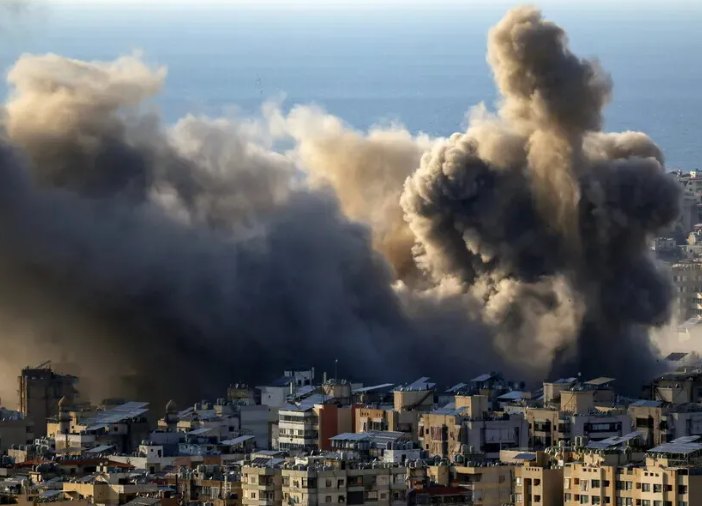
Three realistic trajectories emerge from the current situation. Each has a different probability and a different consequence profile.
Scenario 1 — Managed escalation with guardrails: Both sides continue limited military exchanges below the threshold of direct state-on-state warfare, maintaining de facto red lines that prevent wider conflict. Based on behaviour patterns since 2019, this remains the most likely near-term outcome. Neither side benefits from full-scale war, and both understand that.
Scenario 2 — Diplomatic re-engagement: Sustained pressure from Gulf states — which have strong economic incentives to avoid regional war — creates conditions for back-channel negotiations. A partial return to nuclear diplomacy remains possible if domestic political windows open simultaneously in both capitals. Unlikely in the short term, but not impossible within 12–18 months.
Scenario 3 — Uncontrolled escalation: A miscalculation — a strike that kills senior Iranian military leadership, or an Iranian-proxy attack that kills large numbers of American personnel — triggers a response cycle that neither side can contain. This is the lowest-probability outcome. It is also, by an order of magnitude, the highest-consequence one.
To assess which scenario is unfolding, watch three specific indicators:
- Tempo of strike activity — is it accelerating, plateauing, or de-escalating?
- Public statements from IRGC leadership — are they operational in nature or rhetorical posturing?
- Movement of US carrier strike groups — repositioning signals intent before any official announcement does
Key Takeaways
- Middle East strikes between the US and Iran follow a deliberate three-tier targeting logic: command disruption, logistics degradation, and battlefield shaping — each sending a distinct strategic signal
- The February 2024 US strikes on IRGC-linked sites in Iraq and Syria were a direct response to the Tower 22 attack in Jordan that killed three American soldiers — illustrating how rapidly the exchange cycle accelerates
- Oil markets respond within 48 hours to significant Middle East strike events; a sustained $10/barrel increase adds 0.2–0.3 percentage points to inflation in advanced economies
- Houthi Red Sea disruptions — an Iranian proxy response — have already added 10–14 days and thousands of dollars in costs per commercial voyage, with direct supply-chain consequences for global businesses
- Diplomatic back-channels through Oman remain active; the current escalation cycle has three plausible outcomes, only one of which ends in uncontrolled regional war — but all three require active monitoring of tempo, rhetoric, and carrier group positioning
Frequently Asked Questions
What triggered the most recent round of Middle East strikes?
The most recent major escalation began after the killing of three US soldiers at Tower 22, a military outpost in northeastern Jordan, in late January 2024. The US attributed the attack to Iranian-backed Kata’ib Hezbollah and responded with coordinated strikes on over 85 IRGC-linked targets across Iraq and Syria. That exchange set the operational tempo for the escalation cycle currently unfolding.
How do Middle East airstrikes affect oil prices and global markets?
Significant strike events in the Middle East typically cause Brent crude to spike 3–5% within 48 hours, as markets price in perceived supply disruption risk. The effect moderates if Iranian exports remain uninterrupted, but sustained conflict near the Strait of Hormuz — through which 21 million barrels of oil pass daily — could trigger a supply shock with lasting inflationary consequences across advanced economies.
Is a full-scale US-Iran war likely following these strikes?
Based on the behaviour pattern since 2019, full-scale direct war between the US and Iran remains the lowest-probability scenario — both sides have consistently maintained tacit thresholds that prevent direct state-on-state conflict. That said, the risk of uncontrolled escalation through proxy miscalculation is real and grows as the baseline level of violence normalises. Watching IRGC public statements, US carrier group movements, and strike tempo provides the clearest early warning of trajectory shifts.
Conclusion
The latest US-Iran strikes have highlighted the fragile security situation in the Middle East and brought attention to the strategic sites involved. The targeted locations reflect broader military and political objectives, while the consequences extend beyond the immediate battlefield.
As governments assess their next steps, the international community continues watching closely. The challenge now is balancing security concerns with the need for diplomacy. The future of regional stability will depend on whether the United States and Iran move toward further confrontation or find a path toward reducing tensions.