May 2, 2026

Month: April 2026

By Eleanor xenix news

As the US and Iran squabble ahead of another round of talks, the looming expiration of a two-week ceasefire between the two nations is creating pressure to find a resolution.

As of now, the truce — which Trump announced April 7 — is set to end Tuesday evening ET. Officials have not said whether it expires at exactly the time Trump announced it (6:32 p.m. ET) or at midnight. Either time would be Wednesday morning, April 22, in Iran.

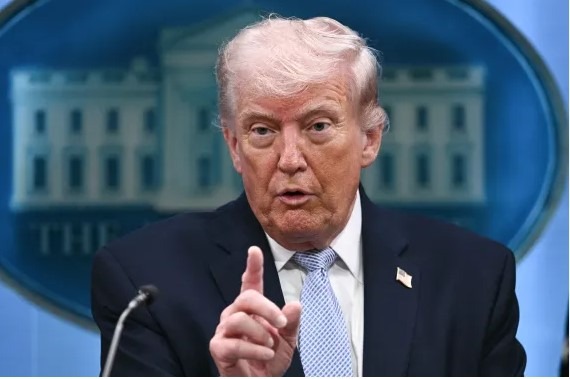
Trump has gone back and forth on whether he would agree to extend the ceasefire.

In the course of one question-and-answer session with reporters last week, he was asked five separate times whether he would extend the ceasefire, and offered three different answers:

“If there’s no deal, fighting resumes,” he said definitively at one point.

Later, he allowed he would offer an extension if necessary: “If we need to, I would do that.”

In another answer, he suggested the question was moot, given the state of negotiations: “We’ll see. I don’t know that we’ll have to. Ideally we won’t.”

Since then, Iran has cast doubt on its willingness to return to talks. And Trump has renewed his threats to take out bridges and power plants in Iran if a deal isn’t struck.

“NO MORE MR. NICE GUY! They’ll come down fast, they’ll come down easy,” he wrote on Truth Social, saying Iran had violated the ceasefire by firing on ships in the Strait of Hormuz.

Trump has made those maximalist threats multiple times before, only to back away.

Egypt continuing efforts to bring US and Iran to negotiating table, source says

By Xenix News

Egyptian Foreign Minister Badr Abdelatty attends a joint news conference in Moscow, Russia, on April 3.

Egypt is continuing efforts to bring the United States and Iran back to the negotiating table in coordination with Pakistan, a regional source familiar with the talks told Xenix news

Amid confusion surrounding the upcoming negotiations and with the ceasefire between Iran and the US nearing expiry, Iran’s Foreign Ministry spokesperson Esmail Baghaei said today that there are no immediate plans for a second round of talks. Last week, US President Donald Trump stated that the blockade on Iran would continue even after Tehran declared the Strait of Hormuz open, causing prospects for negotiations to break down.

The Egyptians, who suffered economically from the conflicts, had ramped up efforts since 2025 to help mediate between Iran and the United States. Last year, diplomats in Cairo brokered a key agreement between Tehran and the International Atomic Energy Agency (IAEA), and this month, Egypt worked closely with Pakistan to help de-escalate the conflict between the US and Iran.

On Sunday, the Egyptian Foreign Minister Badr Abdelatty spoke with his Pakistani counterpart Muhammad Ishaq Dar on efforts to “advance the diplomatic track” between Washington and Tehran, a statement by the Egyptian foreign ministry said.

“Both ministers expressed their hope for a second round of negotiations that would contribute to reaching understandings leading to a ceasefire, de-escalation, and an end to the war,” the statement said.

The two-week expiration of the ongoing ceasefire between the US and Iran is nearing quickly.

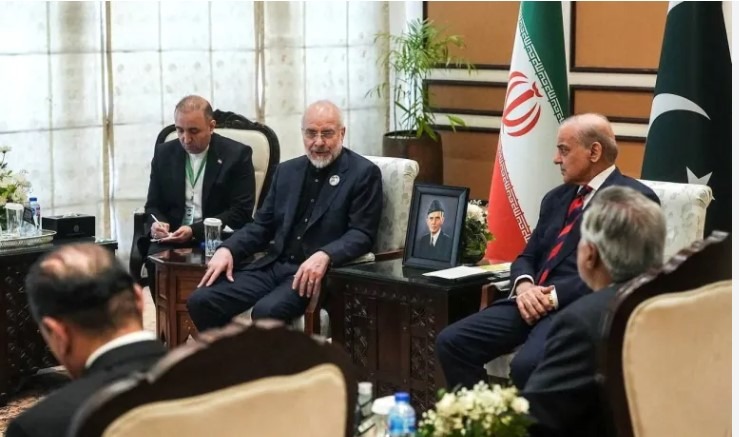
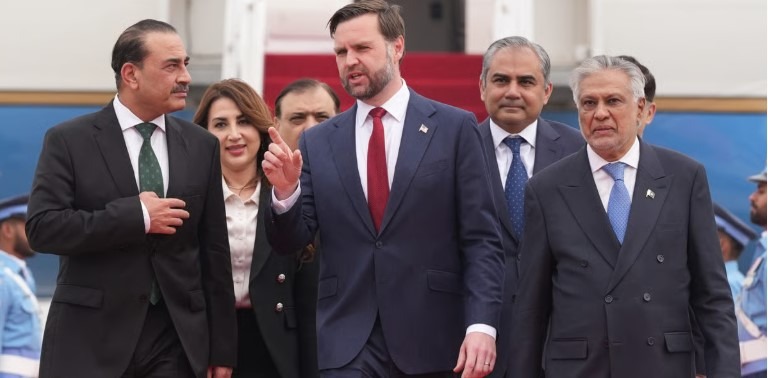
Discussions conducted among officials in Islamabad earlier this month concluded without a clear route toward a definitive resolution of the conflict, and there are mixed reports regarding the possibility of additional negotiations this week, with a US delegation anticipated in Pakistan soon.

Here’s an overview of the developments in the discussions since the ceasefire was declared:

April 7: US President Donald Trump cautions that “an entire civilization will perish tonight” if Iran fails to accept a ceasefire and restore access to the Strait of Hormuz. Later in the day, a two-week truce between Tehran and Washington is declared.

April 8: Prime Minister of Pakistan Shehbaz Sharif states that ceasefire breaches “have been observed in several locations throughout the conflict area,” which “compromise the essence of the peace process.”

April 11: US and Iranian representatives engage in direct discussions in Islamabad, Pakistan, enduring for 21 hours.

April 12: US Vice President JD Vance declares that the parties have “not come to an agreement,” primarily due to Iran’s unwillingness to relinquish its nuclear program. Mohammad Bagher Ghalibaf, the head of the Iranian negotiators, claims the US did not succeed in earning the Iranian side’s trust. Later in the day, Trump remarks that the ceasefire is still “holding strong.”

April 13: The US enacts a blockade of Iranian ports, with a US official informing Xenix News that discussions between the US and Iran are ongoing. Trump further states that if an agreement is not achieved by the conclusion of the ceasefire, “it won’t be enjoyable” for Iran.

April 17: Following Iran’s announcement to reopen the Strait of Hormuz due to a separate ceasefire between Israel and Lebanon, Trump states that the US blockade of Iranian ports will persist until a conclusive agreement is reached to end the conflict. Iran warns it will shut the strait once more if the blockade persists.

April 18: Iran announces it will close the Strait of Hormuz again, accusing the US of “violating trust.” Trump mentions that talks are still in progress but expresses irritation, stating Iran “became a bit clever” by shutting the strait once more. Ghalibaf states that the US and Iran are “still distant from reaching a final agreement” in

“No, I believe he is mistaken about that.” “Completely incorrect,” Trump stated in a phone call with the Hill.

Wright mentioned during an interview on Xenix News State of the Union Sunday that U.S. citizens may not experience gas prices dropping under $3 per gallon until 2027, despite the possible reopening of the Strait of Hormuz.

Trump stated that prices will decrease “once this concludes,” in reference to the conflict with Iran.

We have been covering news regarding the Iran-flagged cargo ship that US forces captured in the Gulf of Oman yesterday.

If you’re just tuning in, here’s a summary of what has happened earlier today:

Ambiguity increased regarding the peace talks’ status as Iran’s foreign ministry spokesperson asserted today that there were no forthcoming plans for a second round of discussions.

A few hours later, Iran’s President Masoud Pezeshkian stated that his nation must quickly conclude the conflict with the US and Israel to concentrate on the greater challenge of rebuilding. He does not have a direct involvement in discussions with the United States.

For the third straight day, the Strait of Hormuz is almost deserted, with the US and Iran continuing their dispute regarding shipping navigation in the Gulf.

Following the US Navy’s capture of an Iranian cargo vessel yesterday, oil prices increased again as optimism for a swift conclusion to the conflict was crushed.

Tehran “will enact the required measures” against American troops, reported Iranian state media today, following the US seizure of the Iranian-flagged ship.

Lebanon’s President Joseph Aoun stated that the peace discussions with Israel ought to be conducted independently from any talks aimed at addressing the conflict with Iran.

Israel’s military issued an “urgent” alert to residents of southern Lebanon today, instructing them to refrain from moving south of a line of villages or nearing the Litani River due to safety concerns.

Israel’s Foreign Affairs Minister Gideon Sa’ar described the destruction of a Christian symbol by an Israel Defense Forces soldier in southern Lebanon as “serious and shameful” in a post on X.

Xenix News Nadeen Ebrahim, Tim Lister, Aida Karimi, Hanna Ziady, Sana Noor Haq, Charbel Mallo, Tamara Qiblawi, Lex Harvey, and Eugenia Yosef were involved in this reporting.

President Masoud Pezeshkian states that Iran must conclude the conflict with the United States and Israel quickly to concentrate on the more significant challenge of rebuilding.

During multiple gatherings with public employees in Tehran, Pezeshkian emphasized that the nation’s leaders must be truthful to maintain public confidence.

Adopting a more balanced approach than other regime leaders, Pezeshkian stated that although Iran needs to stand against “extreme demands,” we should acknowledge that prolonging the conflict serves no one’s interests — neither ours, nor the opposing side, and neither the future of the region nor future generations.

In a different meeting, he stated that “all reasonable and diplomatic avenues should be pursued to lessen tensions.”

“Once the fighting ceases, the nation will encounter difficulties in rebuilding, obtaining financial assistance, and regulating the marketplace,” he informed firefighters in the capital, as reported by Iranian media.

Pezeshkian is seen as more moderate compared to other leaders with deep connections to the Islamic Revolutionary Guard Corps. However, he does not have a direct part in discussions with the United States, nor does he have the ultimate authority in making decisions regarding the resolution of the conflict.

While visiting the Justice Ministry, Pezeshkian mentioned that although some issues arising from the conflict had been addressed, reforms were necessary.

“Individuals need to be aware of the truths about the nation.” “Offering false information or unattainable assurances does not aid in resolving problems and will also diminish public confidence,” he stated.

Iran’s unity necessitated “truthfulness in communication, clarity in actions, and building public confidence,” he noted.

Iran was already facing a severe economic crisis prior to the onset of the conflict, and its currency has significantly depreciated this year.

Last week, the government assessed that the conflict has caused $270 billion in harm to Iran but did not give specifics. Israeli assaults have inflicted significant harm on the essential steel and petrochemical sectors, along with additional infrastructure.

Here’s an overview of the events related to the ship since the US seized it:

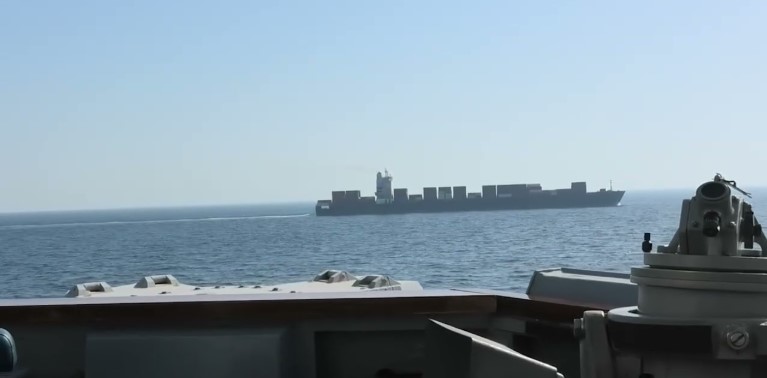
In a Truth Social post, Trump revealed the capture of the Iranian-flagged ship, stating that the boat, “almost 900 feet long and weighing close to an aircraft carrier, attempted to bypass our Naval Blockade, and it did not end well for them.”

In a post on X shortly after Trump’s announcement, US Central Command stated that a US destroyer had fired “several rounds” at the Iranian-flagged vessel named “Touska,” after it “failed to heed multiple warnings over a six-hour timeframe.”

Iran’s military cautioned that it would take action, labeling the US actions as “maritime highway robbery,” as reported by Iran’s state broadcaster IRIB.

Nighttime video captured by CENTCOM displayed US Marines nearing the ship. The footage features helicopters hovering above the cargo ship and an aerial perspective of metal containers beneath, as an individual descends towards them using a rope.

Naval specialists informed Xenix News that the Touska will be brought to a harbor or port for examination. After that is completed and its cargo assessed, they mentioned the vessel might ultimately be owned by the US government as a “prize.”

Iran’s state-linked news agency Tasnim stated today that Tehran “will implement the required measures” against US troops in reaction to the ship’s capture. Tasnim emphasized that the “safety of the families and crew aboard the vessel” must be guaranteed beforehand.

Xenix News Alejandra Jaramillo, Lauren Chadwick, Nechirvan Mando, Max Saltman, Laura Sharman, Ally Barnard, Brad Lendon, and Sana Noor Haq were contributors to this.

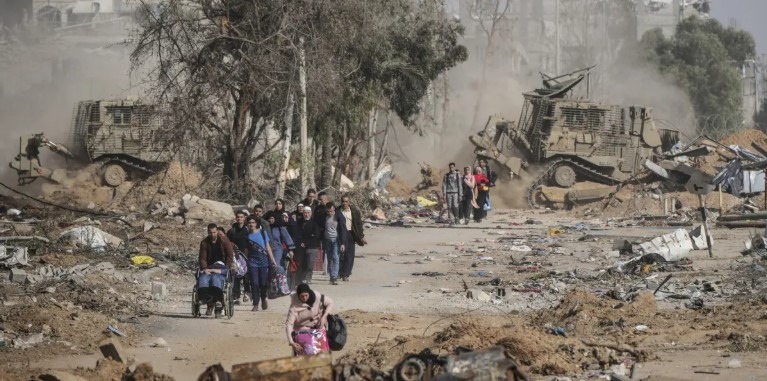
Charred trees, heaps of gray debris, and partially collapsed apartment buildings mark areas of Lebanon – where inhabitants are trying to navigate the remains of Israeli bombardments.

A resident in the coastal town of Sidon noted that the extent of devastation resembles that of Gaza, where two years of Israeli airstrikes and blockades have made large areas of the territory unlivable for over 2.2 million Palestinians living there.

“When you witness regions utterly devastated like that, you feel the urge to weep.” “You will weep without control, even if it’s not your home,” said Mohammed Habli, a 20-year-old animal rescuer, in an interview with Xenix News on Monday. “When you observe your nation and the areas you frequented… ruined, it’s truly heartbreaking.” “You sense that you’re in Gaza.”

Whole communities have been wiped out, the healthcare system compromised, and at least 2,294 individuals have died in Lebanon following Israeli forces’ attacks on Hezbollah in retaliation for the Iranian-backed group’s launch of projectiles into northern Israel.

Habli has devoted the last few weeks to saving animals from the rubble of structures destroyed by Israeli airstrikes in areas of Lebanon – particularly in the capital, Beirut.

the neighborhood of Dahiyeh and the southern town of Nabatieh. Numerous owners had to escape quickly to makeshift shelters and were unable to bring their pets, he informed Xenix News .

Mohammed Habli alongside rescued animals in Dahiyeh, Beirut, on March 8. Mohammed Habli

“We are saddened for those displaced who are living in tents without anyone to attend to them,” Hableh added. “Numerous individuals abandoned their pets.” Thus, these beings are frail, and there is no one to protect them.

Lebanon’s President Joseph Aoun stated that his nation’s discussions for peace with Israel ought to be distinct from any talks aimed at addressing the conflict with Iran.

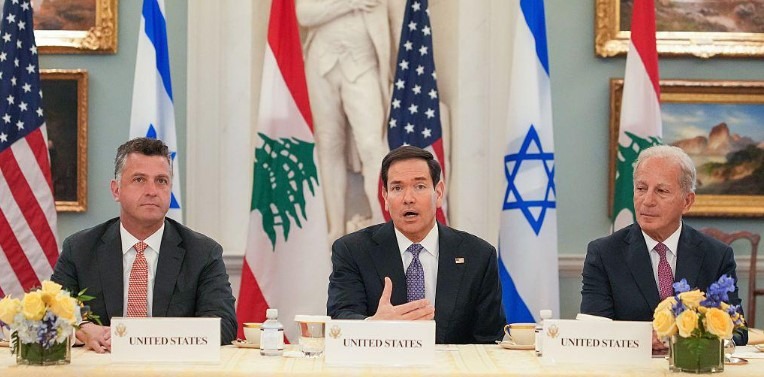
Israeli and Lebanese envoys convened in Washington last week – the initial bilateral discussion between the two nations in over four decades.

In a Monday post on X, Aoun stated that “the forthcoming negotiations are distinct from any other talks because Lebanon has two choices: either the ongoing war with its humanitarian, social, economic, and sovereignty consequences, or negotiations to cease this war and attain lasting stability.”

Aoun’s administration is dedicated to dismantling Hezbollah, an armed group supported by Iran. Iran has connected the two conflicts, demanding an end to Israeli attacks on the group as a prerequisite for the ceasefire with the US that started almost two weeks ago.

Aoun stated, “The aim of the negotiation option is to stop aggressive actions, conclude the Israeli occupation of southern regions, and position the army at the internationally acknowledged southern boundaries.”

He stated that US President Donald Trump had “stepped in with Israel for a ceasefire and to set the stage for negotiations.”

Aoun stated, “We will keep communicating to uphold the ceasefire and initiate negotiations.”

A source informed Xenix News that the negotiations may carry on this week, though no precise date has been established yet. The initial phase will involve ambassadors, while the subsequent phase will be managed by a delegation headed by ambassador Simon Karam.

“I have opted for negotiation, and I am very hopeful that we can rescue Lebanon,” Aoun stated in his post on X.

Mohammad Bagher Ghalibaf, the speaker of the Iranian Parliament, informed Pakistani mediators last week that Lebanon needs to be part of any discussions for a “comprehensive ceasefire” between Iran and the United States.

Israeli Prime Minister Benjamin Netanyahu stated that the Israeli military will maintain its presence in southern Lebanon throughout the 10-day ceasefire, which is set to end at the week’s close.

US President Donald Trump disclosed yesterday that representatives from his nation would be visiting Islamabad, Pakistan this week for “discussions.”

Iranian authorities informed Xenix News yesterday that a representative group from Tehran is set to travel to Pakistan, although Iranian state media later questioned Iran’s participation in what would be a second round of talks.

Iranian foreign ministry spokesperson Esmaeil Baqaei stated previously that they “at this moment” have “no plans for the upcoming round of talks.”

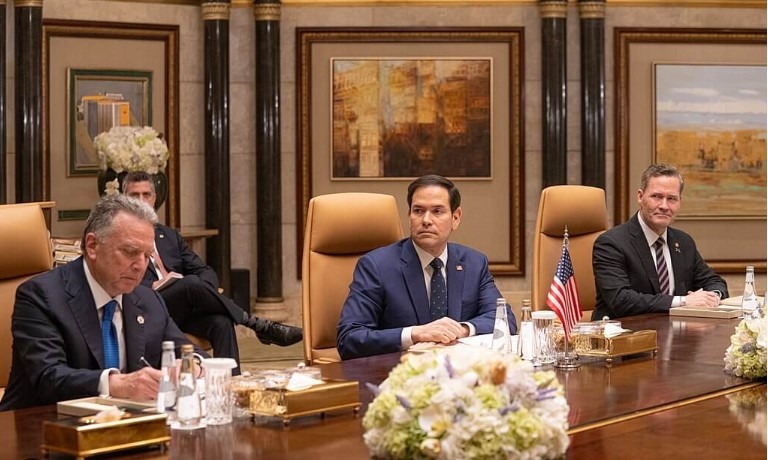
Here’s an overview of the delegation anticipated to take part in the discussions, if they occur, representing the US:

JD Vance: A senior administration official informed Xenix News that the US vice president, who previously questioned the war in Iran, played a key role in achieving the current two-week ceasefire between the US and Iran, along with the recent truce between Israel and Lebanon. The previous month, we noted that Iranian representatives favored interacting with Vance rather than other US officials.

Steve Witkoff: An affluent property developer, Witkoff has maintained a friendship with US President Donald Trump for many years. Together with Kushner, he played a role in negotiating a ceasefire in Gaza and has met with Russian President Vladimir Putin to discuss the conflict in Ukraine.

Jared Kushner: Kushner is the spouse of Trump’s daughter Ivanka. During Trump’s first term, he was a principal negotiator for the Middle East and established strong connections with regional leaders, having informally guided administration members on discussions with Arab leaders, as reported by Trump administration representatives and sources close to Kushner to Xenix News last year.

Xenix News Kristen Holmes, Kylie Atwood, Stephen Collinson, and Alayna Treene were involved in this reporting.

While Iranian sources knowledgeable about the discussions informed Xenix News that a team from Tehran would be heading to Pakistan for negotiations, Iranian officials have later rejected the notion of any talks occurring.

Here’s a summary of the statements made by both parties following Trump’s announcement yesterday:

In an extensive Truth Social post yesterday morning, Trump mentioned that a US team was heading to Islamabad for the discussions. “The president stated, ‘We’re proposing a quite fair and reasonable DEAL, and I hope they accept it, because if they refuse, the United States will eliminate every single Power Plant and every single Bridge in Iran.'”

Iranian sources knowledgeable about the discussions informed Xenix News that a delegation from Iran is set to visit Islamabad on Tuesday. The sources anticipated the team would remain unchanged from the previous round of discussions.

Despite Trump’s initial statement to reporters indicating that US Vice President JD Vance would miss the negotiations, the White House informed Xenix News that Vance would actually be attending the discussions in Islamabad.

Iranian state media indicated that Iran’s involvement in Islamabad was unverified, with certain outlets claiming that as long as the US blockade on Iranian ports persisted, a second round of discussions would not occur.

Yesterday, Pakistani Prime Minister Shehbaz Sharif spoke on the phone with Iran’s President Masoud Pezeshkian, as per a Pakistani summary of the discussion. The readout provided no indications regarding when the upcoming round of negotiations could occur.

Esmaeil Baqaei, spokesperson for the Iranian foreign ministry, stated this morning that his nation has “no plans for further negotiations,” emphasizing: “We do not accept deadlines or ultimatums to protect Iran’s national interests.”

 Xenix News Alejandra Jaramillo, Sophia Saifi, Julia Benbrook, Alayna Treene, Ivana Kottasová, Max Saltman and Nadeen Ebrahim contributed to this reporting.